




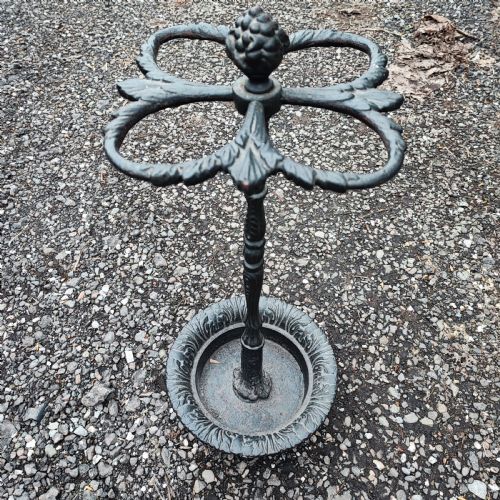
Black Umbrella Holder
A black umbrella holder keeps hallways tidy, and this selection ranges from Victorian cast iron to carved Black Forest bears.
Black Umbrella Holder
A black umbrella holder serves as a practical hallway furnishing designed to store wet sticks, canes, and umbrellas neatly out of the way. When searching for a black umbrella holder, buyers frequently encounter heavy Victorian cast iron examples alongside carved wooden Black Forest figures and later tubular metal Art Deco designs.
The materials span cast iron, brass, nickel plating, boiled leather, and lindenwood, reflecting styles from Gothic Revival and Aesthetic Movement to Art Nouveau. Many pieces date from the nineteenth century, including marked foundry items and decorative hall stands.
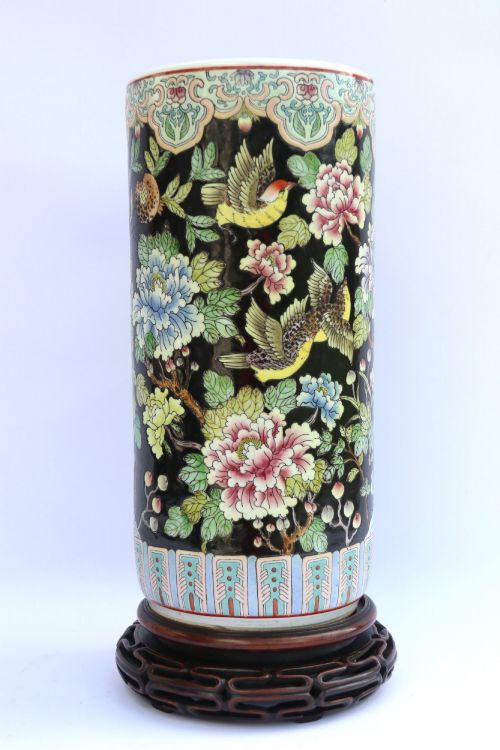
The primary forms on this page include umbrella stands, stick stands, hall stands, buckets, and vases, providing various capacities for everyday household use.
How they were made
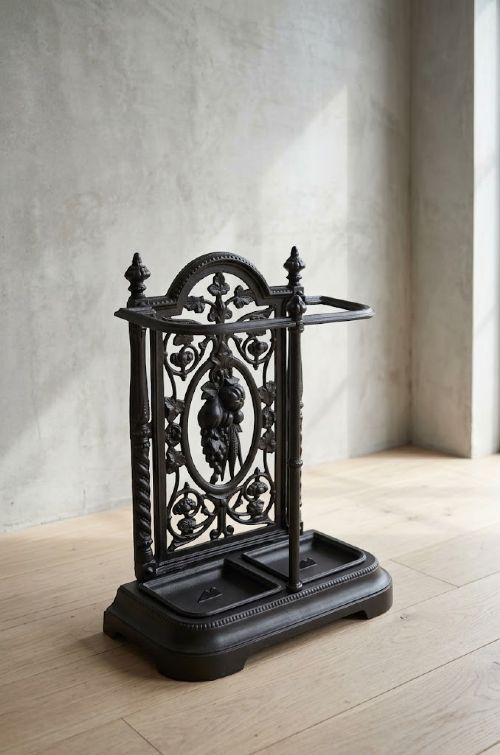
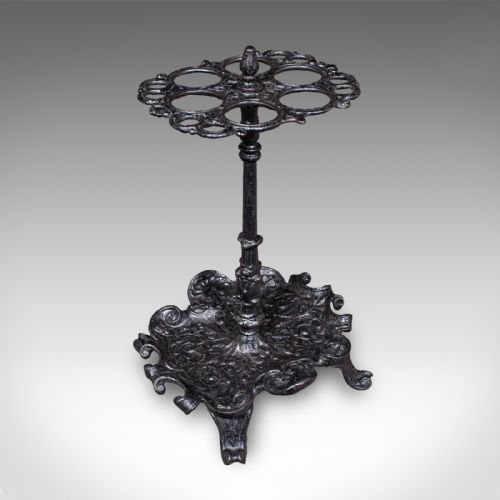
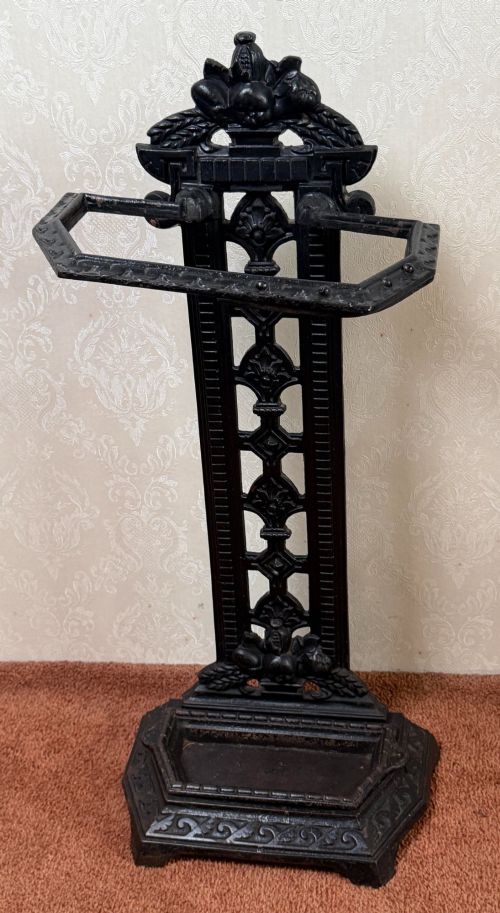
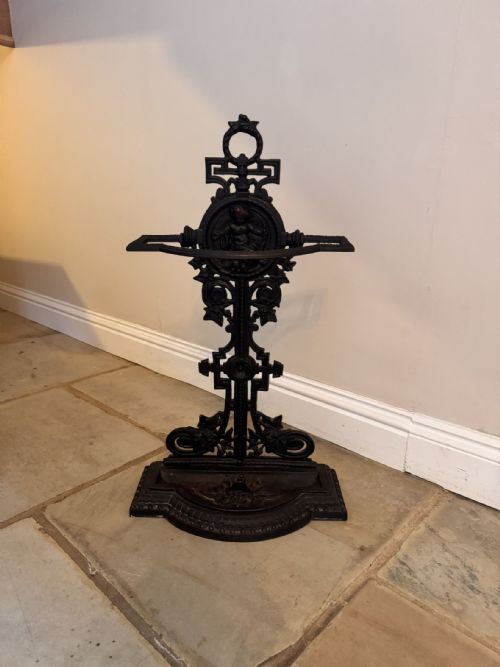
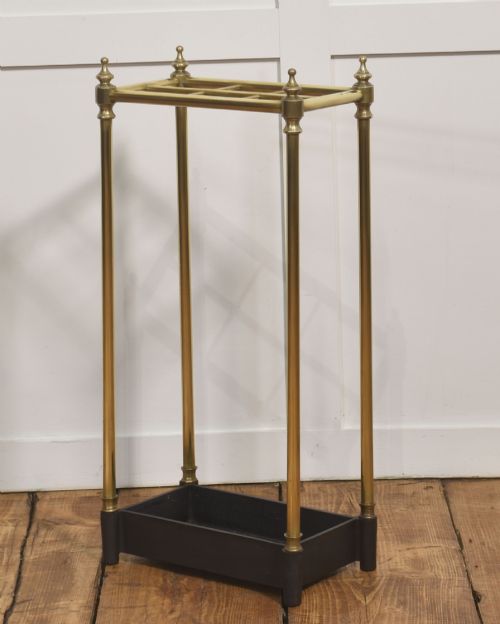
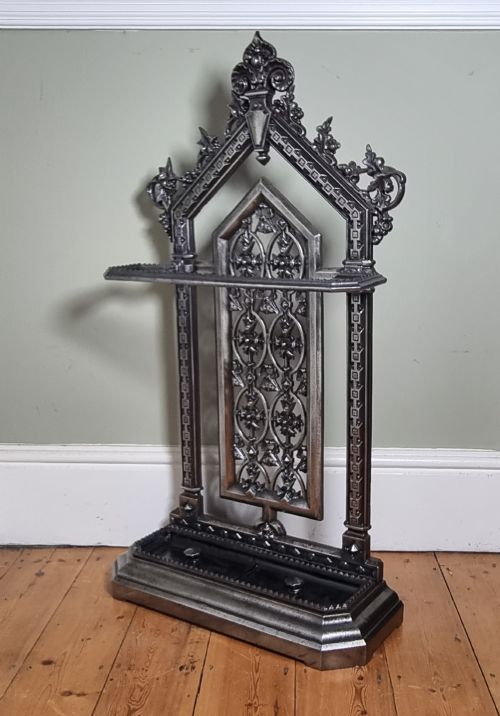
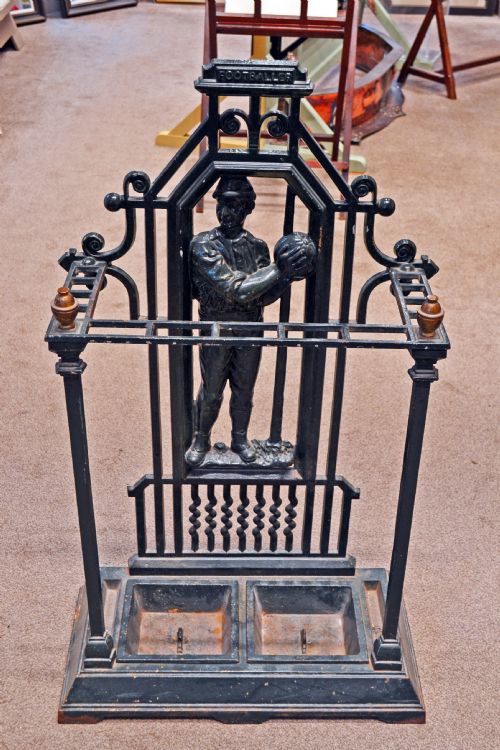
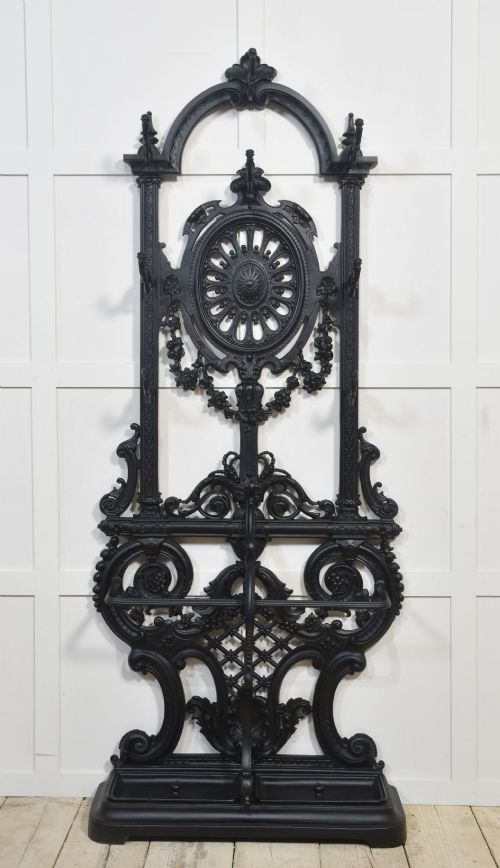
Cast iron umbrella stands were produced using foundry techniques, often featuring openwork scroll patterns, stick loops, and drip pans to catch water. Many pieces utilise iron combined with brass elements or finishings such as black paint and ebonising.
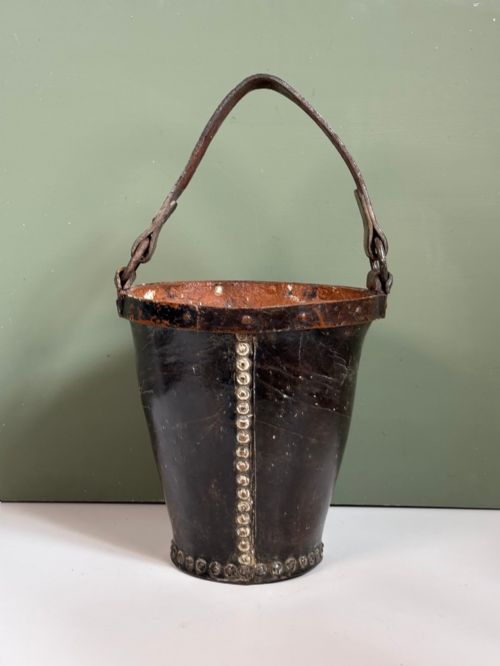
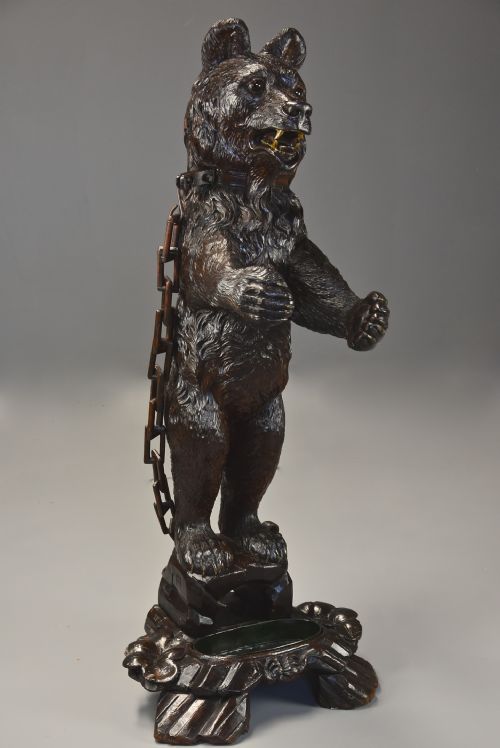
Carved wooden versions from the Black Forest region utilise lindenwood or oak, shaped into detailed animal figures like bears holding tree trunks. Metalwork from the twentieth century introduces nickel plating and tubular metal construction, alongside boiled leather buckets.
Black Umbrella Holder Retail Price Guide 2026
Typical asking prices for black umbrella holder among the pieces listed under this phrase on Sellingantiques today, from the lower quarter to the upper quarter. They describe what is for sale here now, not the wider market.
Several Victorian pieces enlist carved bears and gundogs to hold your wet umbrellas.
What varies in quality
Quality in cast iron holders depends on the crispness of the casting detail, the complexity of the division rings, and whether maker marks or registration dates appear on the base. Foundry attribution to makers such as Kenrick or Coalbrookdale style influences the character of the piece.
In carved wooden examples, quality rests upon the depth and realism of the carving, particularly in animal subjects such as bears, and the survival of original components like drip trays and hardwood stands.
Kenrick·Coalbrookdale·Falkirk
The Black Umbrella Holder Glossary
- Cast iron
- An iron-carbon alloy poured into moulds to create rigid forms. It allows for intricate openwork patterns and robust utility in umbrella stands.
- Black Forest
- A style of wood carving originating in Central Europe during the nineteenth century. Pieces often depict naturalistic animals such as bears carved from lindenwood.
- Hall stand
- A larger hallway piece combining a mirror, coat hooks, and an umbrella holder with a drip tray at the base.
- Demi-lune
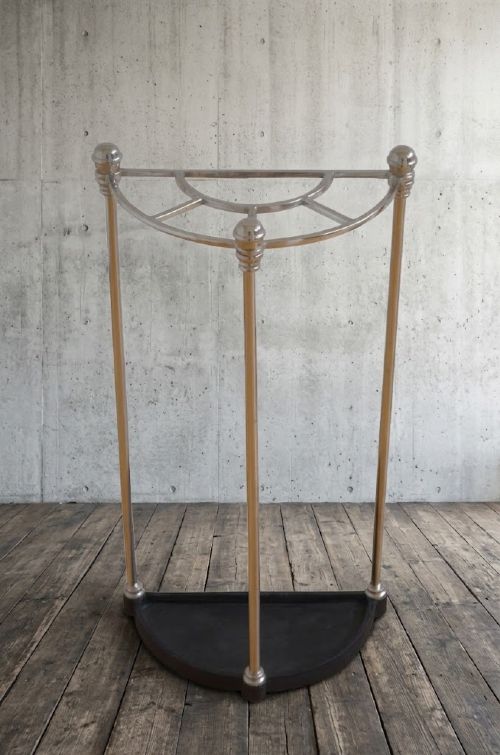
- A half-moon or semicircular shape. This profile allows umbrella stands to fit closely against a hallway wall.
- Ebonised
- Wood treated with a dark stain or finish to imitate ebony. This technique appears on nineteenth century hall furniture.
Black Umbrella Holder: Frequently Asked Questions
Where should a stick stand go?
A stick stand belongs in an entrance hall, porch, or boot room where wet items are easily deposited upon entry.
Positioning the holder near the front door protects flooring and keeps walking aids accessible.
How do I manage water drainage?
Most cast iron stands include a removable metal tray at the base to catch rainwater from dripping umbrellas.
Emptying and drying this tray periodically prevents moisture accumulation and protects the surrounding floor.
What styles are available?
The selection includes Victorian Gothic revival pieces, Aesthetic Movement designs, and carved wooden Black Forest bear figures.
Later twentieth century examples feature Art Deco tubular metal and nickel plating.
Are these stands heavy?
Cast iron and metal umbrella holders are substantially weighted to prevent tipping when holding heavy walking sticks.
Wooden Black Forest stands also offer stability due to solid carved construction and dense timber bases.