



Dark Iron Cane Holder
These dark iron cane holder pieces are robust hallway essentials designed to keep walking gear tidy, offering enduring utility alongside period character.
Dark Iron Cane Holder
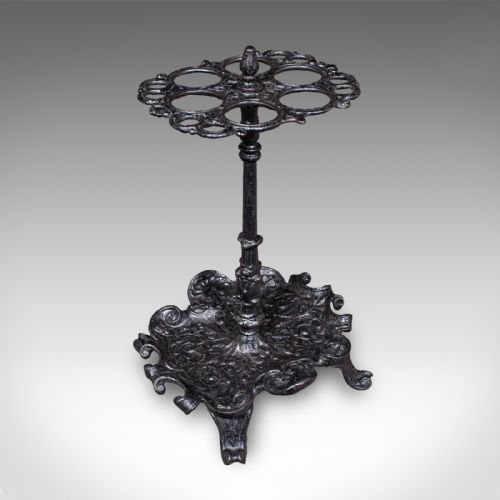
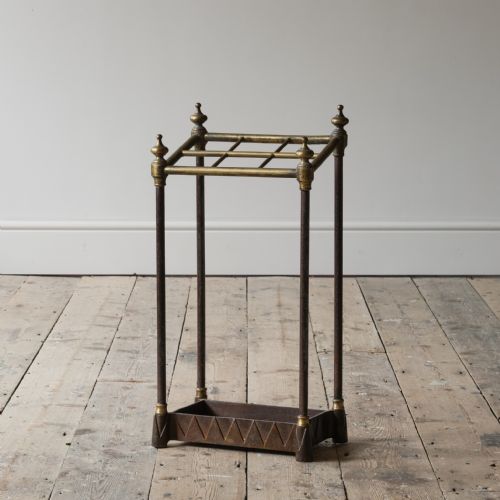
When searching for a dark iron cane holder, buyers encounter heavy hallway furnishings designed to organise walking sticks and umbrellas in domestic entrances. These practical items serve reception spaces by gathering wet or unwieldy items into a dedicated vessel near the front door.
The versions most frequently met on this page date from the Victorian and Edwardian eras, utilising durable metal casting techniques to form sturdy loops and frames. English and continental workshops produced these objects in varied historical tastes, ranging from straightforward utilitarian designs to elaborate aesthetic interpretations.
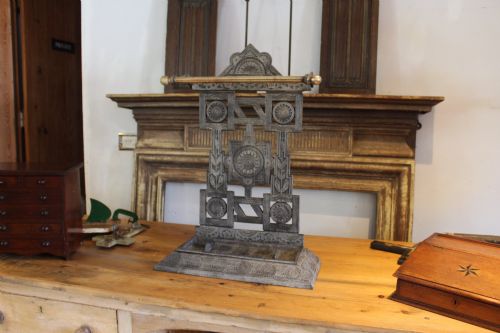
Makers shaped these hall accessories using heavy metals alongside timber and ceramic components to handle daily household traffic. Forms span simple stick loops to ornate stands echoing Jacobean, Gothic, or Art Nouveau movements popular during the nineteenth and early twentieth centuries.
Methods of construction
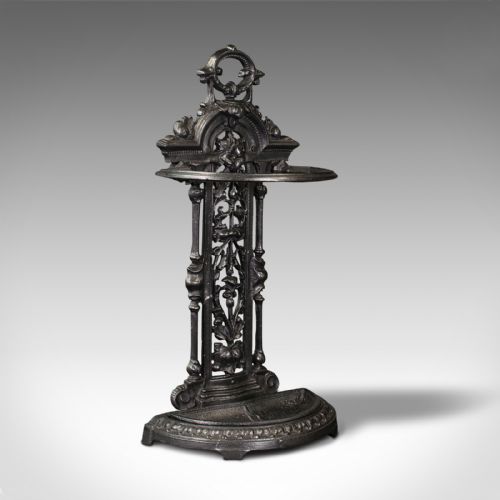
Foundries utilised traditional casting methods to shape molten iron into intricate structural frameworks and decorative stick loops. This process allowed makers to achieve high levels of surface detail, from naturalistic foliage to geometric patterns.
Secondary materials such as oak and mahogany appear alongside the primary metal structures, often bound with coopered techniques or fitted with ceramic drip pans. These combinations provided structural stability and protected hallway floors from moisture.
Heavy iron frames occasionally feature hidden water bowls that have quietly caught hallway drips for well over a century.
Distinctions in quality
Quality rests upon the crispness of the cast iron detail and the integrity of the structural joints. Superior examples display clean casting lines without excessive pitting, maintaining structural balance even when fully loaded with heavy walking sticks.
The refinement of the decorative style and the preservation of original surface finishes separate standard utility pieces from more ambitious artistic commissions. Better pieces retain clear stylistic intent, whether interpreting the Aesthetic Movement or Gothic revival tastes.
Thomas Jeckyll·Shoolbred·Falkirk·Coalbrookdale
The Dark Iron Cane Holder Glossary
- Cast iron
- A strong, hard alloy of iron and carbon poured into moulds to create rigid forms. This material defines the heavy framework of most Victorian hall stands.
- Stick loop
- An individual metal ring or aperture designed to separate and hold walking canes upright. These loops prevent items from tangling within the stand.
- Coopered
- Constructed from wooden staves bound together with metal bands, resembling miniature barrel building. This technique appears in wooden hybrid versions.
- Aesthetic Movement
- A late nineteenth-century design current emphasising visual beauty over narrative function. Pieces in this style often incorporate stylised plant motifs and refined geometry.
- Drip pan
- A removable tray placed at the base of the stand to catch moisture from wet umbrellas. These components protect flooring and prevent interior rusting.
Dark Iron Cane Holder: Frequently Asked Questions
Where were these stands placed?
These items traditionally stood in the entrance hall or reception vestibule of a nineteenth-century home.
They provided an immediate drop-off point for guests and residents arriving with wet umbrellas or walking canes.
How do I protect my floor?
Ensure the stand retains its original metal or ceramic base tray to catch water running down wet umbrellas.
Adding discreet felt pads beneath heavy iron feet also prevents scratching on delicate wood or stone flooring.
Are these items heavy?
Cast iron construction makes these stands exceptionally heavy and stable by design.
This substantial weight ensures the stand remains upright even when holding multiple heavy walking sticks or damp umbrellas.
How do I date a stand?
Dating relies on observing stylistic markers such as Gothic revival motifs, Aesthetic Movement lines, or later Art Nouveau curves.
Construction methods, including the presence of bolted joints or maker stamps, also help establish the production era.