


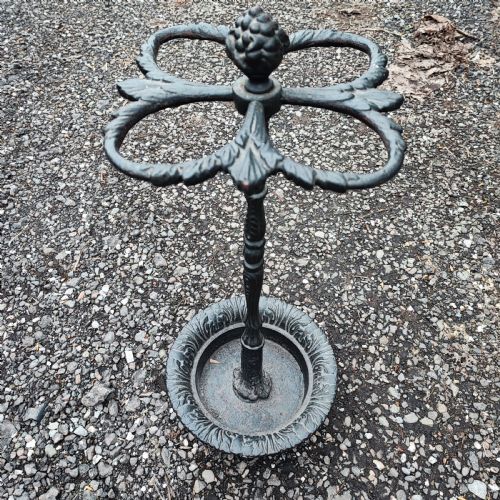


Black Iron Umbrella Holder
A black iron umbrella holder brings solid utility and distinct Victorian or Art Deco character to an entrance hall.
Black Iron Umbrella Holder
A black iron umbrella holder functions as a heavy hall accessory designed to keep walking sticks and wet umbrellas organised. These objects emerge most frequently from the nineteenth century and the Victorian period, though Edwardian and Art Deco examples also appear.
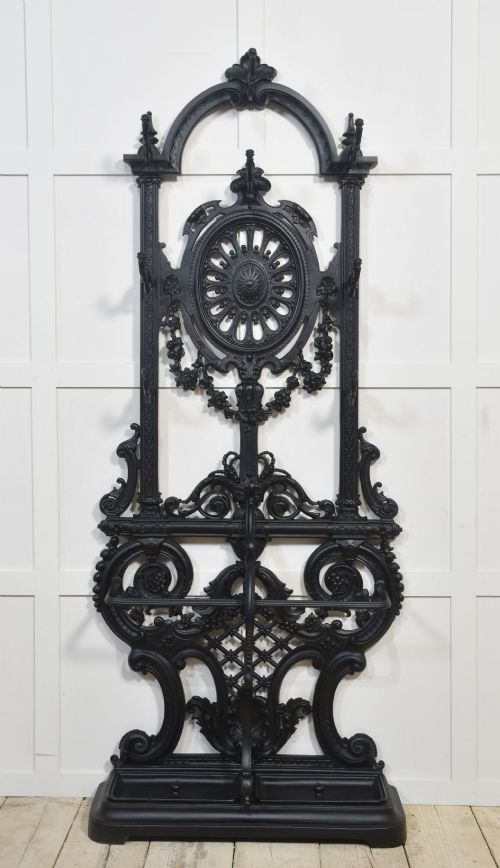
The standard form takes the shape of a freestanding stand or a larger hall stand incorporating umbrella loops and sometimes a mirror or coat hooks. Victorian casts dominate the selection, often finished in black paint alongside brass accents or nickel plating.
Materials and Construction
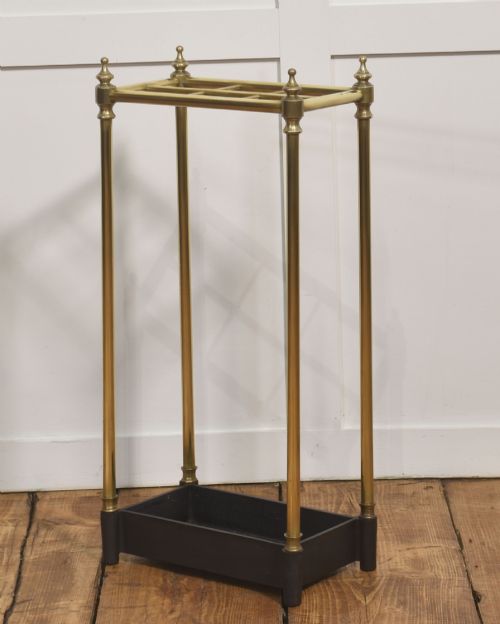
Foundries utilised cast iron and wrought iron as the primary structural materials, shaping them through sand casting or forging to create rigid frames and decorative openwork patterns. Tubular metal and brass components frequently appear alongside the iron framework to provide contrast and structural division.
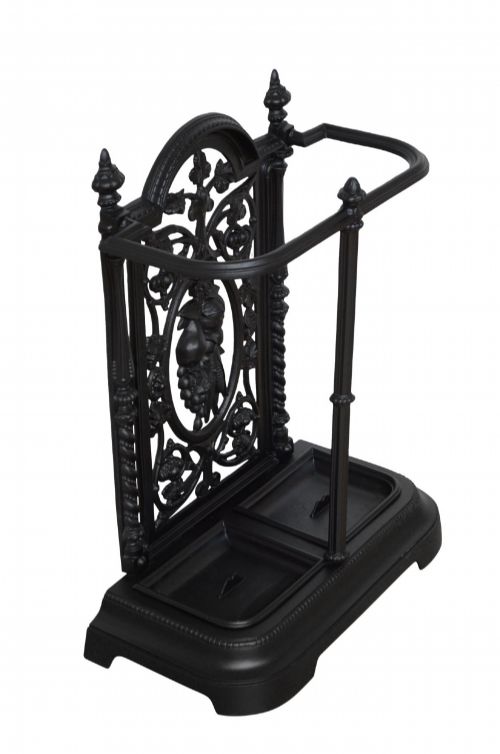
Makers integrated painted surfaces, nickel plating, and occasionally marble bases to finish the pieces. Many stands incorporate removable drip trays at the base to catch water from wet umbrellas and protect hallway floors.
Black Iron Umbrella Holder Retail Price Guide 2026
Typical asking prices for black iron umbrella holder among the pieces listed under this phrase on Sellingantiques today, from the lower quarter to the upper quarter. They describe what is for sale here now, not the wider market.
Listings feature periods from the nineteenth-century Victorian era through to Art Deco and Edwardian designs, constructed in cast iron, brass, and painted metal.
Quality and Design
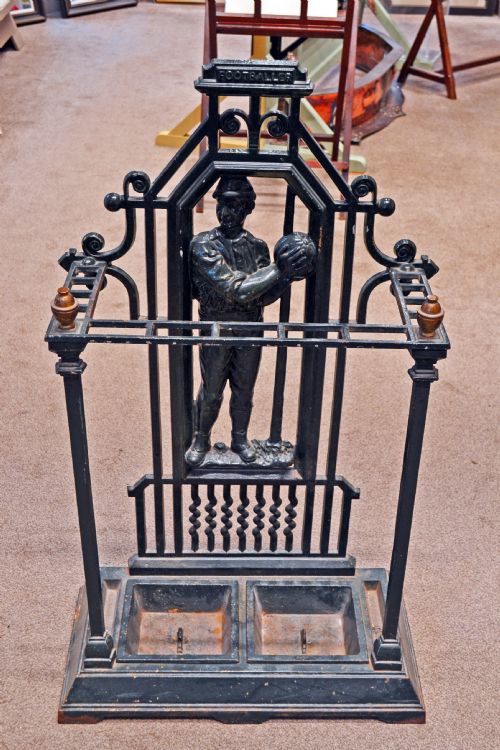
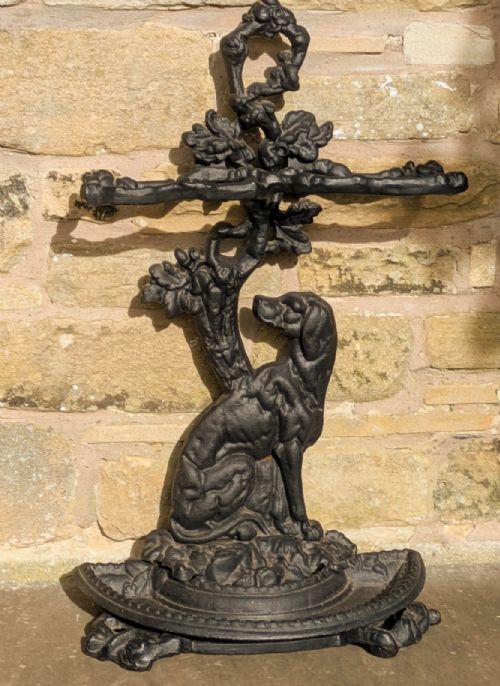
The distinction between standard production and superior work lies in the crispness of the casting and the ambition of the design. Foundries that employed detailed figural motifs, such as gun dogs or narrative scenes, produced stands of greater visual complexity than those restricted to repetitive geometric rings.
The integrity of the metalwork and the preservation of original decorative elements dictate the standing of a piece. Finer examples retain their original painted surfaces, manufacturer markings, and functional drip pans without structural compromise.
Coalbrookdale·Kenrick·Falkirk
The Black Iron Umbrella Holder Glossary
- Cast iron
- A strong, rigid alloy poured into moulds to create intricate decorative patterns and heavy structural frames. This material forms the primary body of almost every piece on this page.
- Demi-lune
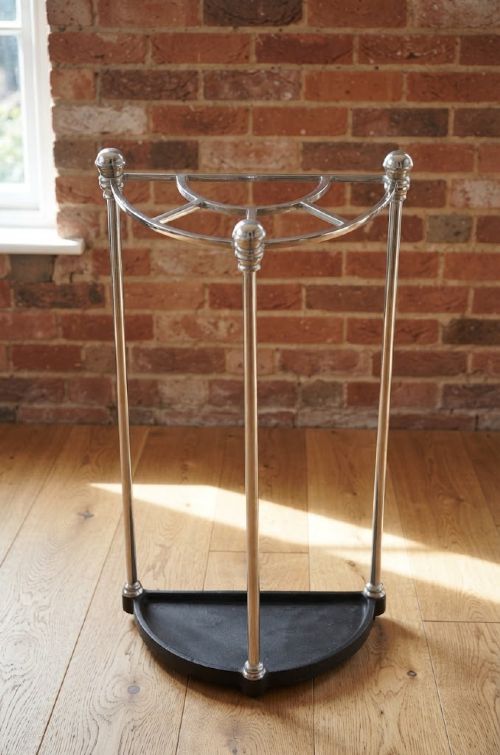
- A half-moon shape that allows an umbrella stand to sit flush against a hallway wall. This profile saves floor space in narrow corridors.
- Drip pan
- A shallow metal tray situated at the base of the stand to collect water runoff. It prevents moisture from damaging interior flooring.
- Aesthetic Movement
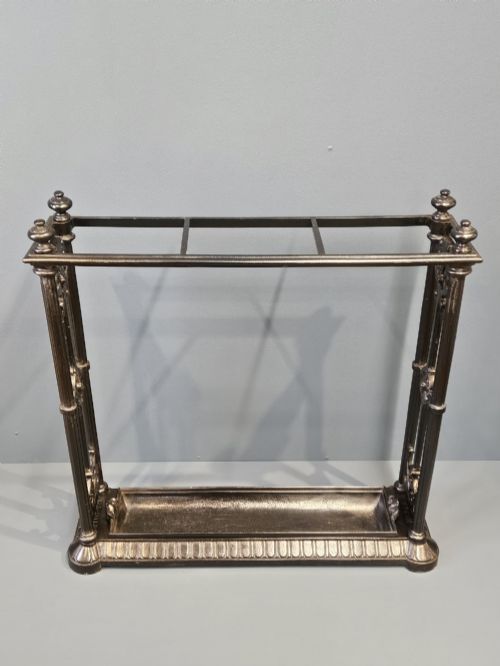
- A late nineteenth-century design style that emphasised visual beauty and artistic expression over strict historical revival. Pieces from this movement often feature stylised natural motifs and faux bamboo framing.
- Hall stand
- A larger piece of furniture combining an umbrella holder with coat hooks, glove boxes, and mirror panels. These serve as comprehensive entryway furnishings.
Black Iron Umbrella Holder: Frequently Asked Questions
How do I clean a cast iron umbrella holder?
Maintenance requires only a soft brush to remove dust and a dry cloth to wipe down the surface. Avoid harsh chemical cleaners that can strip original painted finishes.
Keeping the iron dry prevents surface corrosion, particularly around the base where moisture from wet umbrellas collects over time.
Where should I place a heavy stick stand?
These stands suit entrance halls, porches, and boot rooms where guests deposit wet outerwear. Their substantial weight provides stability against heavy walking sticks and large umbrellas.
Positioning the stand near the main entrance ensures practical daily use while showcasing the decorative ironwork as you enter the home.
How can I tell a Victorian stand from a later piece?
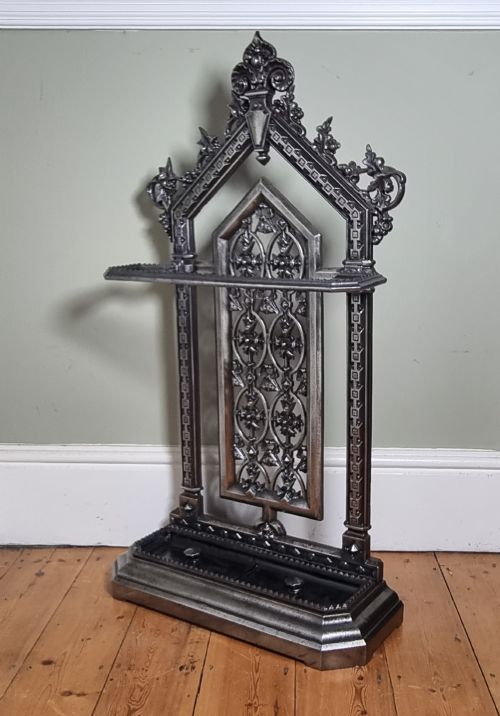
Victorian stands typically display heavier casting, Gothic Revival or Aesthetic Movement motifs, and heavier structural proportions. Maker marks stamped into the iron often point to nineteenth-century foundry production.
Later Edwardian and Art Deco examples shift toward cleaner lines, tubular metal construction, and lighter frames designed for smaller urban hallways.
What is the difference between an umbrella stand and a hall stand?
An umbrella stand functions solely as a vessel for sticks and umbrellas, featuring ring divisions and a base tray. A hall stand is a larger multifunctional piece that includes a mirror, coat hooks, and umbrella storage combined into a single structure.
Both items serve the same transitional hallway space but offer different levels of furniture presence and storage utility.