
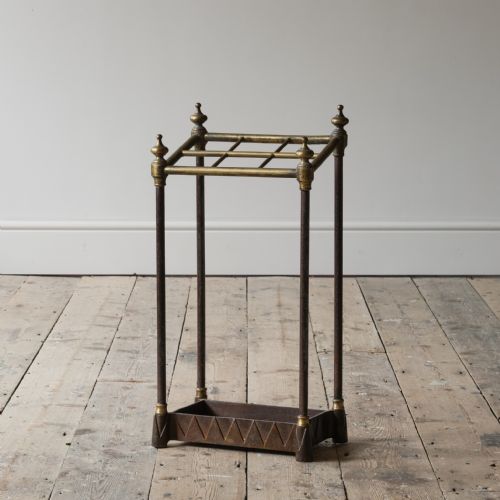
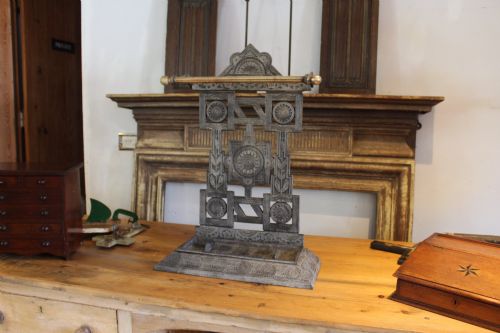
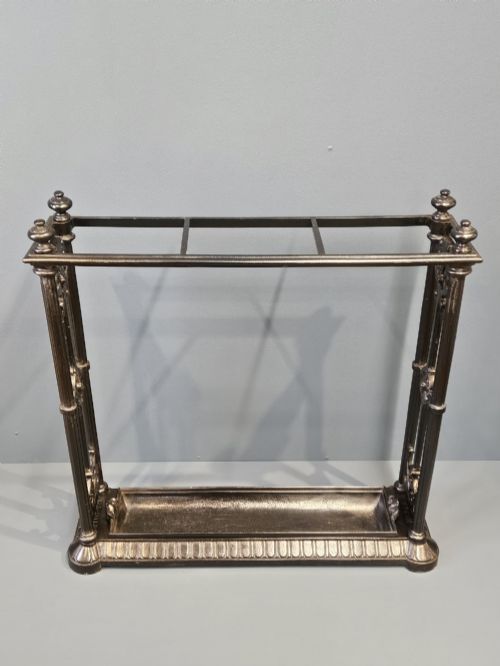


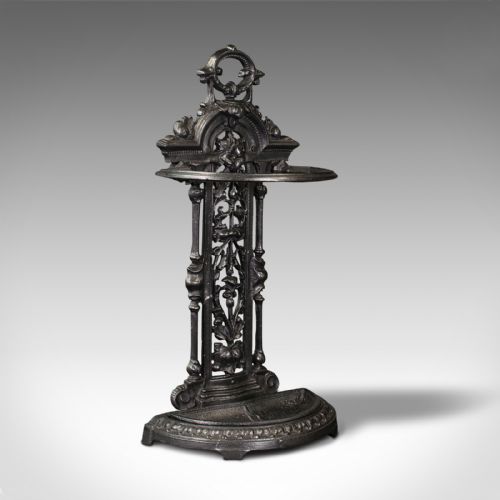

Dark Iron Cane Stand
These dark iron cane stand examples bring heavy metal utility to the hallway, offering a sturdy spot for wet weather gear.
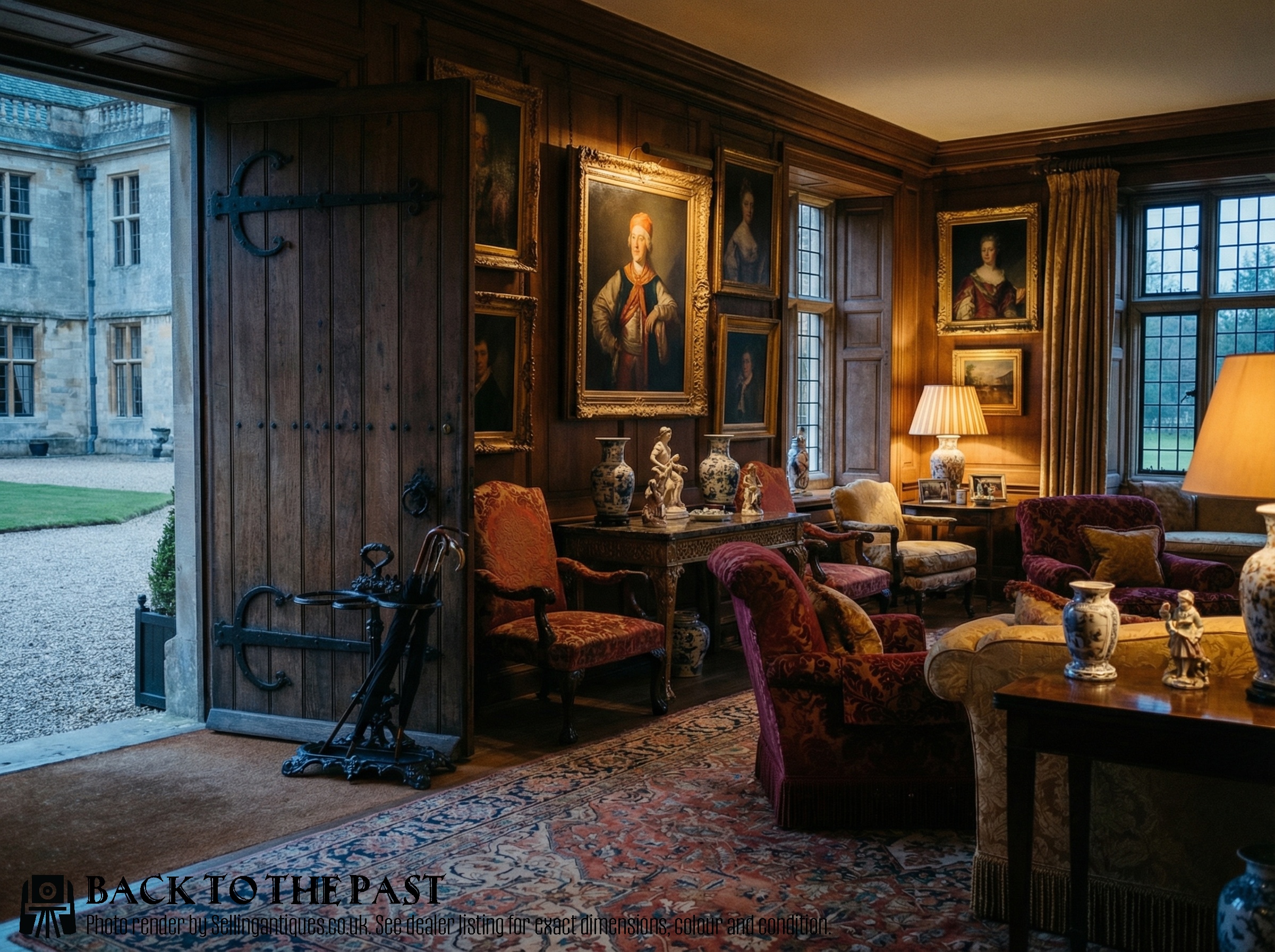
Dark Iron Cane Stand
A dark iron cane stand is a hall furnishing designed to hold walking sticks, umbrellas and parasols upright in the entranceway. The examples seen here belong primarily to the Victorian and Edwardian periods, stretching from the mid nineteenth century into the early twentieth century.
Most pieces encountered on this page utilise cast iron as the primary medium, frequently paired with drip trays to catch rainwater from the streets. Forms range from utilitarian loops to heavily decorated figurative designs and aesthetic movement patterns.
Materials and construction
Foundry work dominates the production of these hall stands, utilising cast iron poured into moulds to create intricate openwork patterns and robust frames. Makers also incorporated brass elements, ceramic liners, and wooden bases made from oak and mahogany.
Surface finishes were applied to protect the metal from damp umbrellas, whilst secondary materials like coopered oak added traditional barrel forms to the hall environment.
One notable Victorian stand depicts the Scottish knight William Wallace, ready to guard your hallway against damp weather.
Distinctions in quality
Quality in these hall stands lies in the crispness of the casting and the ambition of the design, moving from simple loop frames to complex artistic compositions. Finer examples display sharp relief work in the metal and complete, original drip pans.
Attribution to known designers or prominent foundries elevates an item above standard utility pieces, as does the integration of contrasting materials like polished brass and decorative ceramic components.
Thomas Jeckyll·Shoolbred·Coalbrookdale·Falkirk
The Dark Iron Cane Stand Glossary
- Cast iron
- A strong, hard alloy of iron and carbon that is poured into moulds to create complex shapes. It forms the heavy structural body of these hall stands.
- Drip tray
- A shallow metal or ceramic dish placed at the base of the stand to collect water from wet umbrellas. These trays are often removable for emptying.
- Aesthetic movement
- A late nineteenth century design style emphasising visual beauty over narrative subject matter. Pieces in this taste feature stylised plant motifs and geometric organisation.
- Coopered
- Woodwork constructed from staves bound together with metal hoops, resembling a barrel. This technique appears in wooden barrel stick stands.
Dark Iron Cane Stand: Frequently Asked Questions
What is a dark iron cane stand?
A dark iron cane stand is a hall accessory built to store walking sticks, canes and umbrellas near the entrance of a home.
They emerged as popular domestic items during the Victorian period, combining heavy metal structure with decorative hall styling.
How were these stands used historically?
Families placed them in hallways and vestibules to keep wet umbrellas and walking aids organised and accessible upon entering the house.
The integrated metal bases caught the rainwater, protecting wooden floorboards from dampness.
How do I date a cast iron stick stand?
Dating relies on stylistic clues such as Victorian Gothic motifs, Aesthetic movement geometry, or later Edwardian simplicity.
Foundry marks and registration numbers cast into the iron can also help pinpoint the year of production.
Are these stands suitable for modern hallways?
Their compact footprints and heavy metal construction make them practical for holding modern umbrellas and walking poles in tight entrance spaces.
The dark metal surfaces coordinate easily with contemporary and traditional interior schemes.