
Cased Sterling Silver Spoons
These cased sterling silver spoons bring together fitted presentation boxes and precious metal tableware from the Georgian, Victorian and mid-century eras.
Cased Sterling Silver Spoons
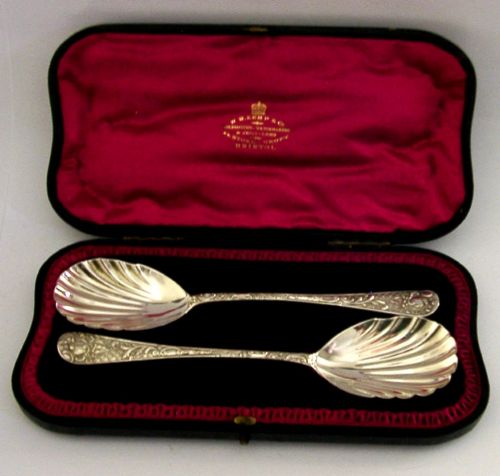
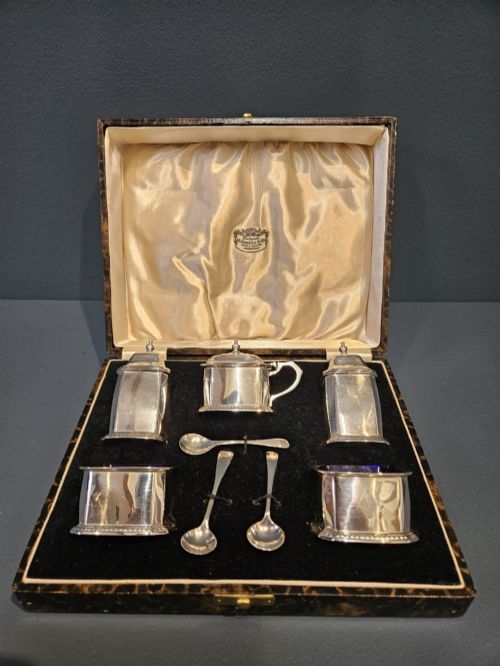
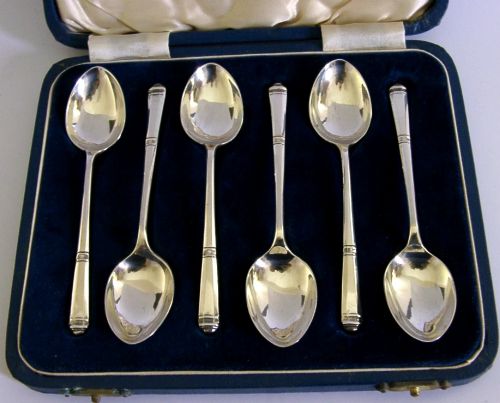
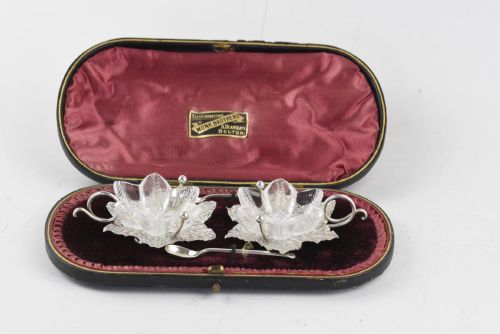
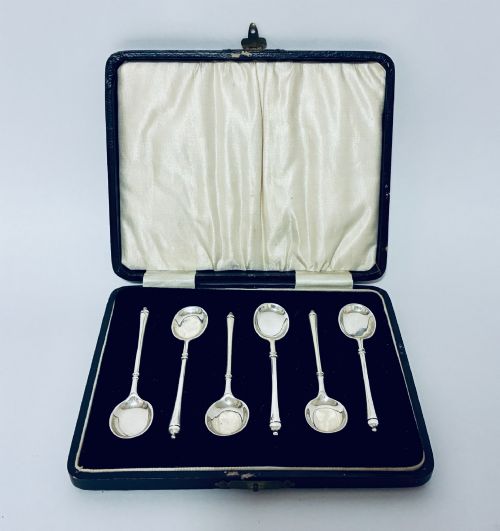
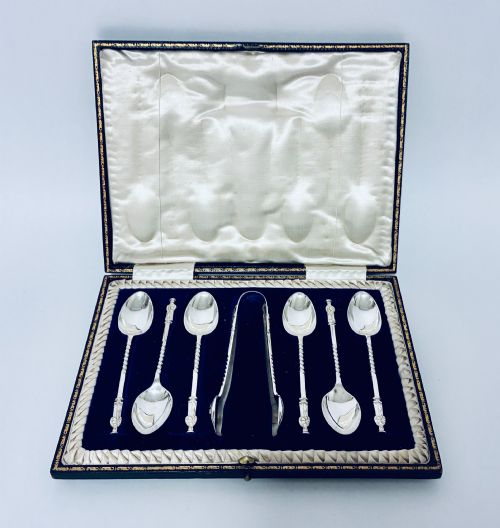
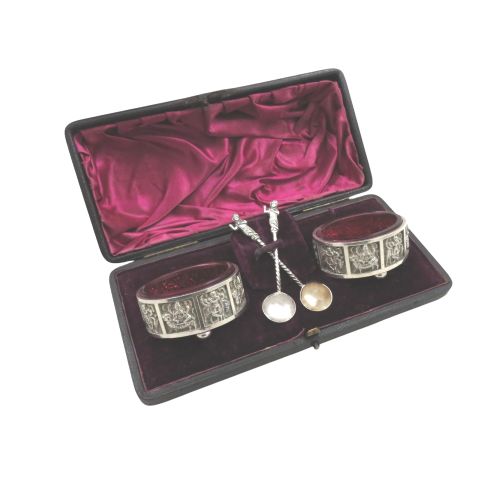
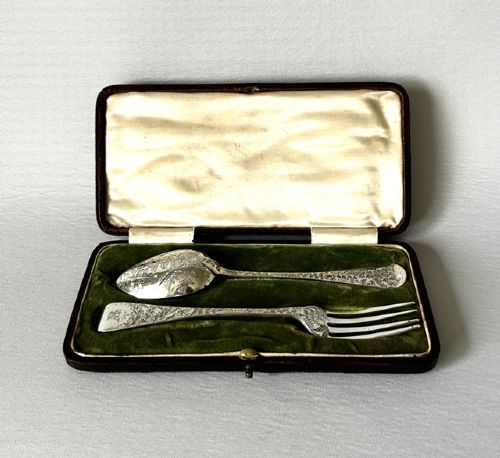
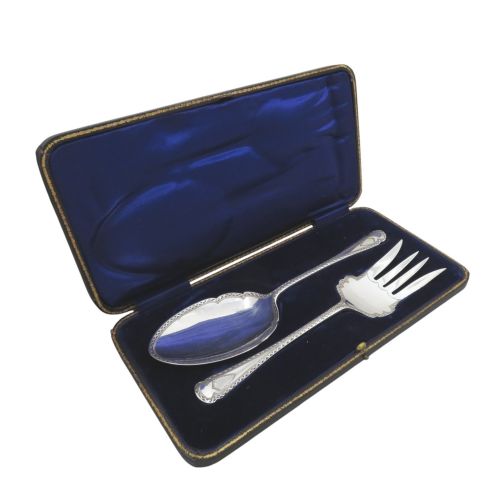
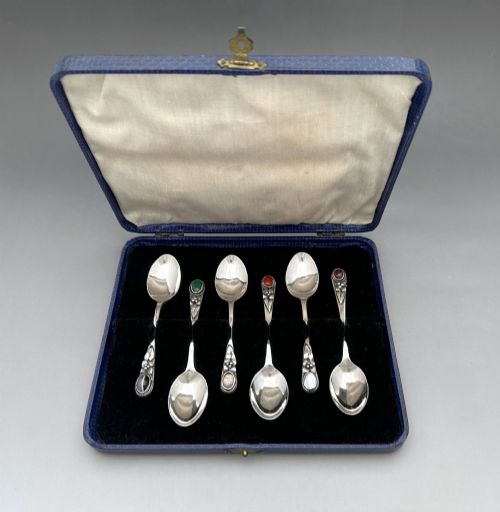
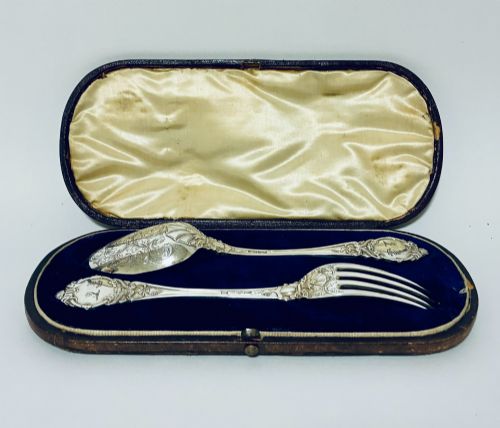
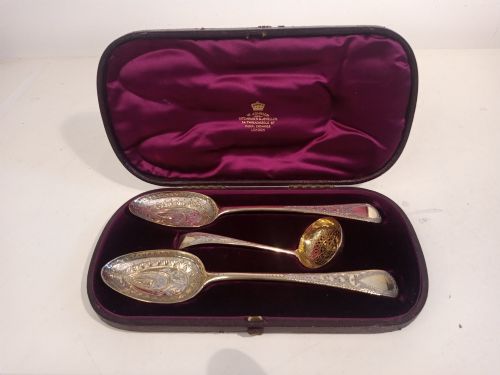
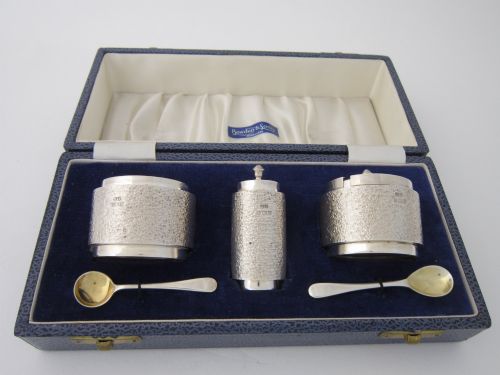
When searching for cased sterling silver spoons, buyers encounter everything from single christening sets to six-piece afternoon tea sets nestled in velvet-lined boxes. The pieces frequently span the Victorian, Edwardian and Art Deco periods, alongside Georgian berry spoons and later mid-century modern designs.
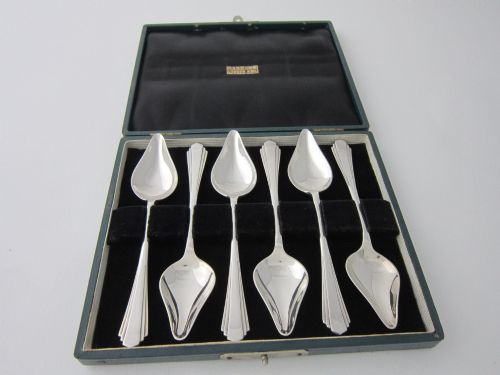
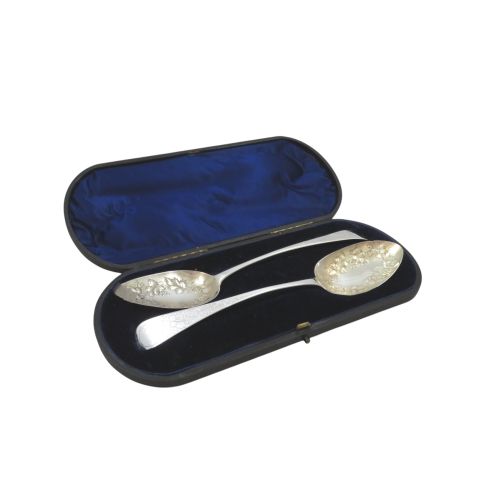
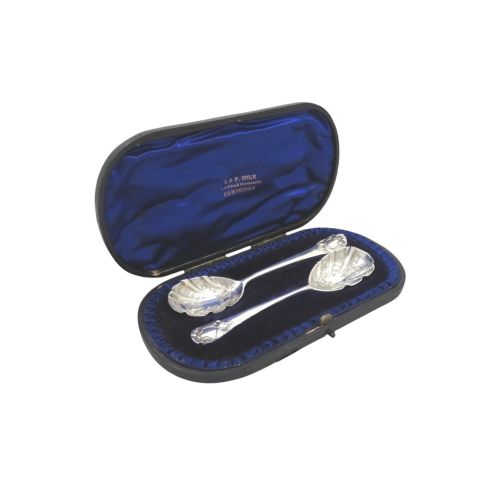
Sets are typically housed in fitted wooden boxes covered in leatherette or leather, protecting the delicate bowls and chased handles inside. The assortment ranges from apostle spoons and coffee bean spoons to jam servers and grapefruit spoons, often accompanied by matching sugar tongs.
Victorian and Edwardian examples dominate the selection, featuring detailed repoussé work, gilt bowls and intricate crests. Later twentieth-century sets introduce vibrant enamel work and clean geometric lines typical of Art Deco production.
Materials and Technique
The objects are formed from sterling silver, sometimes accented with partial gilding, known as silver gilt, or finished with vitreous enamel in shades of yellow and blue. Interiors of the presentation cases utilise soft linings of silk, satin or velvet to cradle each spoon securely.
Silversmiths employed techniques such as casting, piercing, chasing and engraving to decorate the handles and bowls. Many pieces bear British hallmarks stamped directly into the metal, indicating the assay office, standard and year of manufacture.
Listings feature sterling silver cased items produced across eight distinct decades, spanning from the Georgian period through to the mid-century modern era.
Quality and Preservation
Quality rests upon the crispness of the original chasing on the silver and the structural integrity of the fitted case. Pieces featuring hand-applied enamel or semi-precious stones demand precision from the maker to survive decades of storage without loss or damage.
The survival of the original velvet or silk interior lining in clean condition elevates an ensemble. Maker marks from established firms and complete sets retaining every original spoon and tong add significant merit to a collection.
Goldsmiths & Silversmiths·Josiah Williams & Co·Walker & Hall·John Locker
The Cased Sterling Silver Spoons Glossary
- Berry spoon
- A large serving spoon, often Georgian or Victorian, decorated with fruit repoussé work on the bowl. These pieces were frequently converted from earlier spoons later in the nineteenth century.
- Apostle spoon
- A spoon featuring the figure of an apostle cast or chased on the terminal of the handle. Complete sets typically represent twelve distinct figures.
- Hallmark
- A series of stamped marks indicating the metal standard, assay office, and date letter of the piece. British sterling silver carries the lion passant alongside other regional symbols.
- Repoussé
- A metalworking technique where the design is hammered into relief from the reverse side. This method creates the raised floral and fruit motifs seen on many Victorian serving spoons.
- Silver gilt
- Sterling silver that has been coated with a thin layer of gold. This treatment provides a contrasting golden interior to spoon bowls.
Cased Sterling Silver Spoons: Frequently Asked Questions
How should I store cased silver spoons?
Keep the presentation box in a stable environment away from direct sunlight and excessive humidity. Consistent temperature helps preserve the delicate velvet or satin linings inside.
Avoid wrapping the silver in ordinary rubber bands or plastic bags, which can tarnish the metal. Let the fitted case do its job of protecting the spoons from dust and friction.
How do I identify the date of my spoons?
Examine the small stamped hallmarks on the back of the stem or handle. Each British assay office used specific letter punches corresponding to the year of manufacture.
Matching the design style, such as Art Deco enamel or Victorian repoussé, helps confirm the era. Fitted box styles and retailer marks inside the lid also offer chronological clues.
Why are some spoon bowls gilded?
Gilding applies a thin layer of gold over the sterling silver bowl to prevent corrosion from acidic foods like fruit, jam or citrus. This technique was common on serving spoons, berry spoons and jam preserves.
The warm gold tone also created a striking visual contrast against polished silver handles and coloured enamel details.