




Edwardian Silver Coffee Spoons
Edwardian silver coffee spoons are small, elegant items designed for after-dinner service, housed in fitted velvet or silk-lined boxes.
Edwardian Silver Coffee Spoons
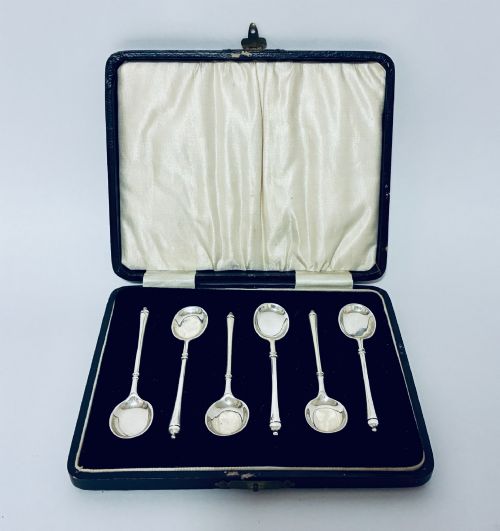
Edwardian silver coffee spoons are diminutive flatware items primarily designed for stirring demitasse coffee, typically measuring smaller than standard teaspoons. You will most frequently encounter cased sets of six, often complete with original presentation boxes lined in silk, satin, velvet, or leatherette.
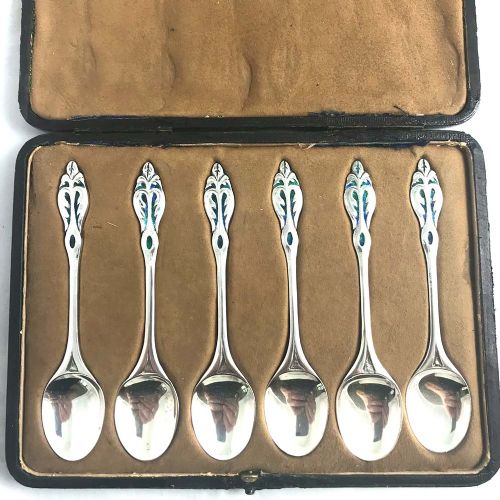
The pieces listed here span the broader Edwardian era and adjacent periods, taking the form of sets of coffee spoons, tea spoons, and silvergilt flatware. Alongside standard sterling silver designs, you find examples incorporating Arts & Crafts aesthetics, Art Nouveau styling, and vibrant enamel work.
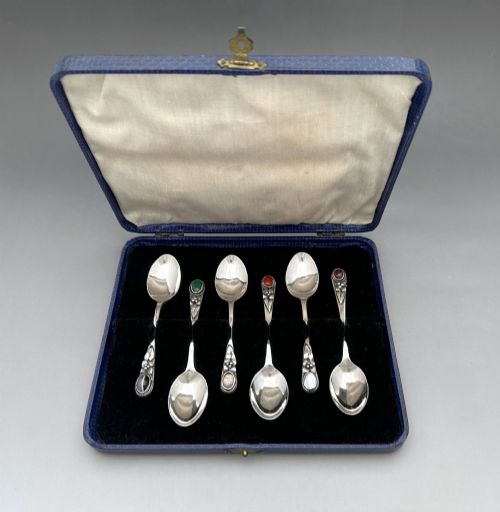
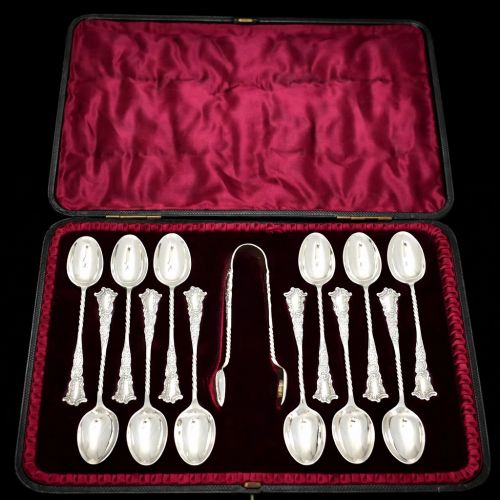
Many of these spoons arrive as complete boxed sets, sometimes accompanied by matching sugar tongs or featuring decorative elements such as semi-precious stones. Origins range from general silverware to specific regional workshops and major retailers like Liberty & Co.
How they were made
Makers utilised sterling silver and silver-gilt as the primary media for these spoons, applying traditional smithing and casting techniques to achieve the slender bowls and decorative handles. Surface decoration frequently involved vitreous enamel applied in coloured patterns, or the mounting of semi-precious stones into the terminal ends.
Presentation cases were constructed from rigid materials and lined with tactile textiles such as velvet, silk, satin, or leatherette to safely cradle the cutlery. Hallmarking was routinely stamped directly onto the silver, recording assay office locations and manufacturing dates.
Many a Victorian afternoon halted abruptly when someone realised the sugar tongs had vanished into the velvet lining.
What varies in quality
Quality in these spoons is distinguished by the crispness of the casting and the artistic ambition of the design, particularly in pieces influenced by the Arts & Crafts and Art Nouveau movements. Sets that integrate hand-applied enamel work or secure semi-precious stone settings demonstrate a higher tier of craftsmanship than plain utility flatware.
The preservation and integrity of the original presentation case also dictate the overall desirability, especially when the interior silk, velvet, or satin lining remains intact alongside a complete matching set of spoons and tongs.
Liberty & Co·Robert Stebbings·Cooper Bros & Sons
The Edwardian Silver Coffee Spoons Glossary
- Sterling silver
- A silver alloy containing 92.5 percent pure silver and 7.5 percent other metals, usually copper, ensuring durability for functional tableware.
- Silver-gilt
- Sterling silver that has been coated with a thin layer of gold on the surface, producing a rich, yellow-gold appearance.
- Demitasse
- A small cup used for serving black coffee, requiring the correspondingly diminutive spoons found in these sets.
- Enamel
- A decorative glassy substance fused to the surface of the silver through high-temperature firing, creating smooth coloured designs.
- Hallmark
- An official stamp or series of marks applied to precious metals in Britain to certify purity, maker, and assay office.
Edwardian Silver Coffee Spoons: Frequently Asked Questions
What are edwardian silver coffee spoons used for?
These small spoons are designed specifically for stirring sugar into after-dinner demitasse coffee. Their compact bowls scale correctly with small coffee cups.
Historically, they formed part of polite dining rituals and were routinely kept in presentation cases for special occasions rather than everyday family use.
How do I care for silver spoons?
Clean the silver gently with a specialist microfibre cloth to remove tarnish without abrading the metal surface. Avoid harsh chemical dips, particularly on pieces with enamel or mounted stones.
Store the spoons within their fitted velvet or silk-lined boxes to protect them from dust and accidental scratching when not on display.
Are these spoons made of solid silver?
The pieces listed utilise sterling silver or silver-gilt, which consists of precious metal throughout rather than mere plating. Hallmarks stamped onto the metal confirm this composition.
Some variations include applied decorative elements like enamel or semi-precious stones, but the structural base remains silver.
Why do many sets include boxes?
Presentation packaging was standard practice for better quality cutlery sets during the Edwardian period. Boxes lined with silk, satin, or velvet protected the delicate items from damage.
These fitted cases also made the sets ideal for gifting, which explains why many survive complete with all six spoons and matching tongs.