

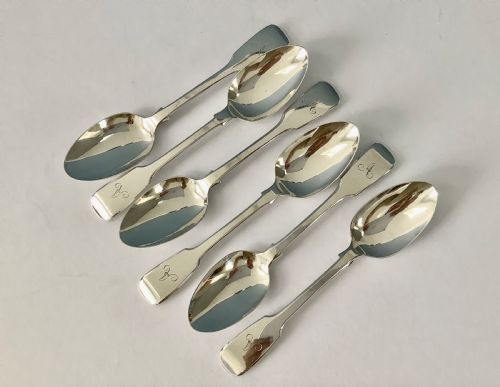


Engraved Silver Teaspoons
These engraved silver teaspoons combine nineteenth-century domestic ritual with fine metalwork, offering collectors a tactile piece of dining history.
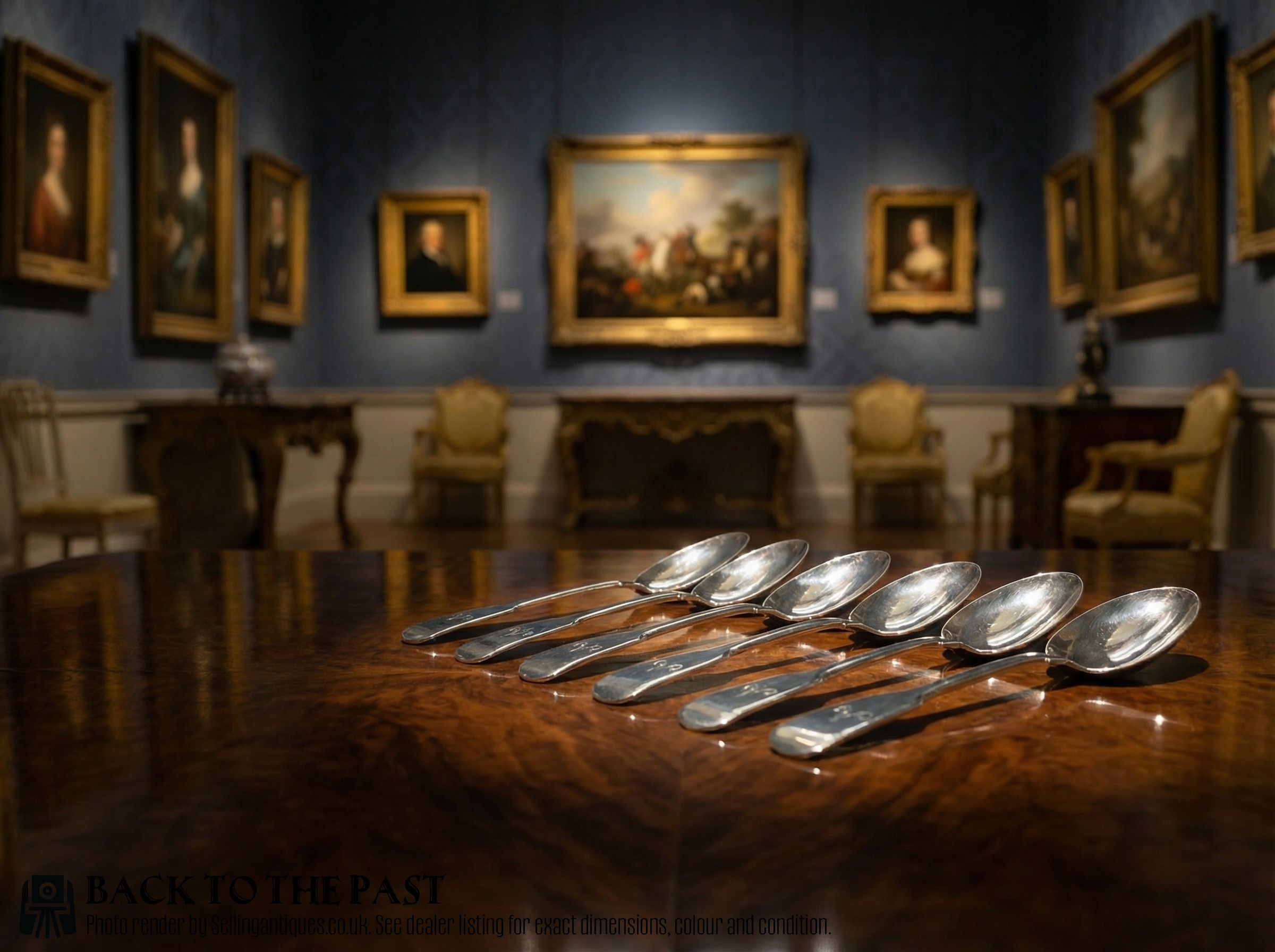
What these pieces are
When searching for engraved silver teaspoons, buyers encounter small tableware items designed for nineteenth-century tea service and later nineteenth and early twentieth-century dining. The examples recorded here span the Victorian era up to nineteen-ten, presenting both individual pieces and matched sets.
Most items appear as part of larger services, often accompanied by matching tongs or presented within fitted boxes lined with velvet, silk, or leatherette. The dominant style is Victorian, reflecting the period's preference for decorative domestic flatware.
These spoons function both as usable cutlery and as collectible silver flatware sets. The surviving pieces demonstrate the typical domestic output of their respective manufacturing decades.
How they were made
The objects recorded here are constructed from silver, sterling silver, and silver-gilt, utilising the standard metalworking techniques of the Victorian period. Silversmiths shaped the bowls and handles before applying surface ornamentation through hand engraving.
Sets frequently include supplementary pieces like tongs and are housed in protective cases lined with textiles such as silk, velvet, or leatherette. The craftsmanship relies on traditional forging and finishing methods characteristic of nineteenth-century workshops.
Some Victorian teaspoons come with tiny matching tongs, proving that even sugar cubes required proper etiquette.
What varies in quality
Quality in these teaspoons rests upon the crispness of the hand engraving and the overall preservation of the silver surface. Finer examples retain sharp decorative lines and balanced proportions across the entire set.
The completeness and integrity of the original presentation case, whether lined with silk, velvet, or leatherette, influence the standing of a set. Matching elements like accompanying tongs also contribute to the distinction between individual spoons and comprehensive services.
Robert Stebbings
The Engraved Silver Teaspoons Glossary
- Silver-gilt
- Silver that has been coated with a thin layer of gold on its surface. This technique adds a warm, two-tone finish to the metal.
- Sterling silver
- An alloy consisting of ninety-two point five percent silver and seven point five percent other metals, usually copper. It provides the standard durability for quality British flatware.
- Flatware sets
- Collections of dining utensils designed to match in style and material. These often include specialised pieces like teaspoons and serving tongs.
- Victorian
- The period of British history covering the reign of Queen Victoria from eighteen thirty-seven to nineteen oh one. Items from this era reflect diverse revivalist and ornate design styles.
Frequently Asked Questions
What are engraved silver teaspoons?
These are small nineteenth and early twentieth-century eating utensils featuring decorative hand engraving on the handle or bowl. They were produced primarily during the Victorian era for domestic tea consumption.
Today they survive both as individual items and complete sets, sometimes housed in original fitted cases.
How were these spoons used?
Victorian households utilised these spoons specifically for stirring sugar or milk into tea. They formed part of the formal table service during the height of the British tea ritual.
Sets were frequently kept in specialised presentation boxes lined with silk or velvet when not in active use.
How do I store silver spoons?
Silver flatware benefits from storage in dry, tarnish-resistant environments away from direct light. Fitted cases lined with silk, velvet, or leatherette help protect the metal from excessive scratching.
Proper handling prevents unnecessary wear to the delicate engraved details on the handles and bowls.
How do I identify Victorian silver?
Victorian silver can be identified through stylistic markers typical of the nineteenth century, alongside specific manufacturing traits recorded in the piece details. The evidence shows a heavy reliance on traditional silver and silver-gilt materials.
Consulting accompanying items like fitted boxes and matching tongs can also help place the flatware within its historical period.