




Cased Silverware Set
A cased silverware set brings together matched silver service pieces in fitted protective boxes, offering both traditional elegance and practical utility.
Cased Silverware Set
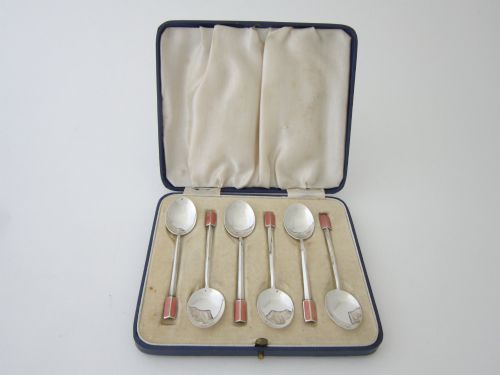
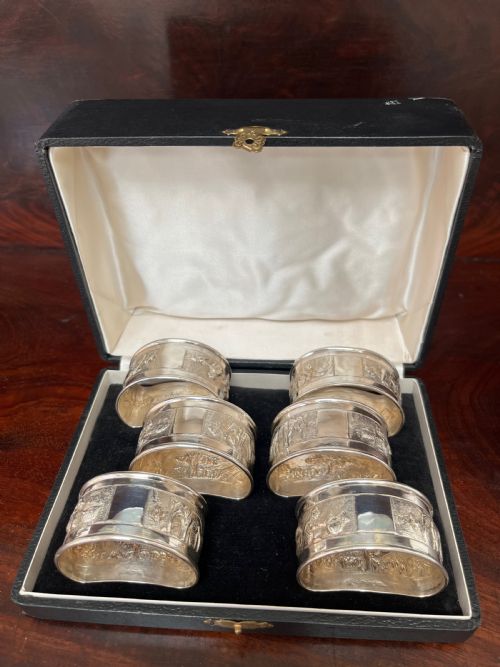
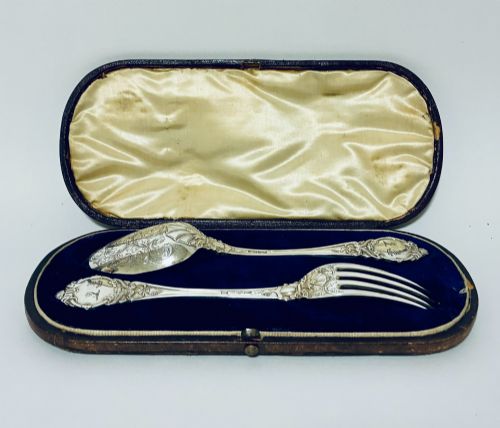
When you search for a cased silverware set, you are looking at matched groupings of spoons, forks, knives, and serving vessels housed in custom fitted boxes. These collections range from simple sets of teaspoons and napkin rings to elaborate Christening sets and fish serving suites.
The versions you are most likely to meet on this page span the Victorian, Edwardian, and Art Deco periods. They cover forms such as coffee spoons, salt and pepper shakers, sugar bowls with tongs, and butter knives.
Origins represented in these listings include British makers alongside continental pieces like Norwegian enamel items. Each grouping reflects the dining habits and presentation standards of its specific era.
How they were made
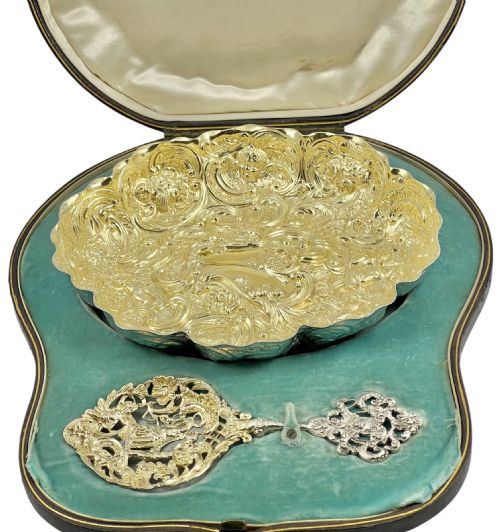
These sets utilise sterling silver and silver-gilt formed into cutlery and hollowware, often paired with vitreous enamel for colourful decorative effects. Metalworking techniques involve casting, shaping, and delicate hand-engraving.
The fitted presentation cases are constructed from materials like leather and wood, then lined internally with plush velvet and silk to securely hold each individual piece in place.
Someone once preserved a tiny set of salt shakers so securely in velvet that they likely haven't seen a grain of salt in a century.
What varies in quality
Quality in these sets depends upon the weight and thickness of the silver used in each component, alongside the crispness of any engraved or enamelled detail. Pieces that retain their original fitted box with intact velvet or silk linings command greater attention.
The artistry applied to the individual items, such as the translucent quality of the enamel on Art Deco spoons or the heavy cast execution of Victorian serving pieces, defines the upper tier of the range.
Waring & Gillows·Robert Stebbings
The Cased Silverware Set Glossary
- Sterling silver
- A standard alloy of silver consisting of 925 parts per thousand by weight of silver and 75 parts of other metals, usually copper. This alloy provides durability while maintaining a bright metallic appearance.
- Silver-gilt
- Silver that has been coated with a thin layer of gold over its surface. This technique produces a rich golden glow while retaining a solid silver base.
- Vitreous enamel
- Glass fused to the surface of metal through high-temperature firing. It provides smooth, durable colour decoration on pieces like spoons and salts.
- Campaign
- A style and form of portable equipment designed for travel and military use. These sets are compact and built for transport.
Cased Silverware Set: Frequently Asked Questions
What is included in a cased silverware set?
These sets typically contain matching groups of cutlery, teaspoons, coffee spoons, or serving pieces such as sugar tongs and butter knives. They are organised for specific dining tasks like tea service or dessert.
Each item rests within a custom-fitted housing designed specifically for that collection of utensils.
How do I care for silver and enamel sets?
Silver components require periodic gentle polishing with a soft cloth to maintain their shine without abrading the metal surface. Enamelled pieces need careful handling to avoid scratching or chipping the glass coating.
Store the items within their original fitted cases away from direct sunlight and damp environments.
How can I tell Victorian sets from Art Deco sets?
Victorian sets often feature ornate floral engraving, heavier cast forms, and traditional motifs. Art Deco sets display geometric lines, streamlined shapes, and vibrant enamel work.
The overall design language and the lining materials of the protective box usually point directly to the era of manufacture.
Were these sets used every day?
Many of these groupings were acquired as presentation pieces for weddings, christenings, or formal dining occasions. Consequently, they often saw limited use and were carefully stored away between events.
This preservation explains why the interior velvet and silk linings frequently survive in good condition.