
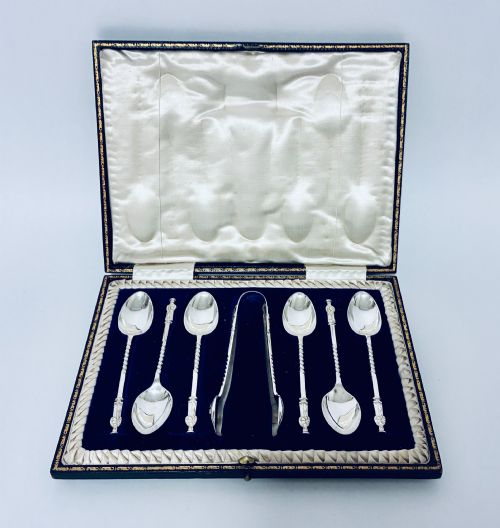
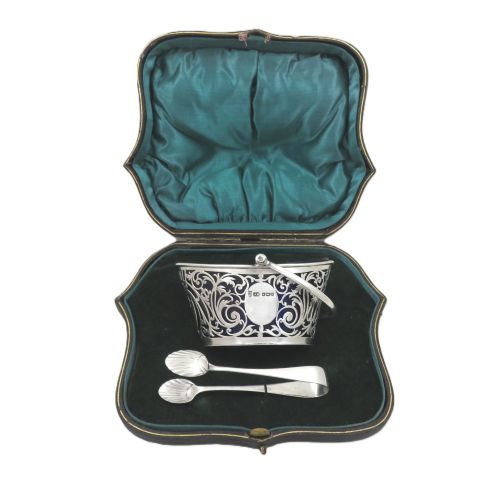
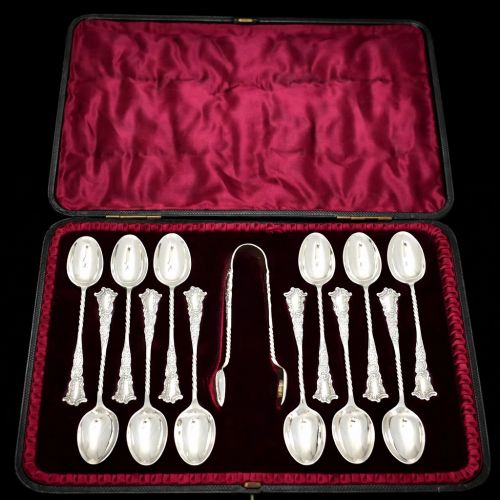


Cased Silver Sugar Tongs
These cased silver sugar tongs are proper table silver designed for the sugar bowl, pairing practical service with the protection of a fitted box.
Cased Silver Sugar Tongs
When you search for cased silver sugar tongs, you find fitted sets intended for tea service and hospitality, often grouped with matching teaspoons, bowls, or jugs. These pieces appear across Victorian, Edwardian, and Art Deco periods, spanning years from the late nineteenth century into the twentieth.
The version most commonly met on this page is part of a matched set housed in a rigid presentation case lined with silk, satin, or velvet. They originate from British assay offices including Birmingham, Sheffield, London, Chester, and Exeter.
How they were made
The tongs themselves are formed from sterling silver or silver gilt, shaped to provide spring in the arms for handling sugar lumps. Makers sometimes utilised gilding to apply a gold wash over the silver surface.
The protective cases are constructed from leatherette or leather, lined internally with soft velvet, satin, or silk to cushion the metalwork and glass components securely.
What varies in quality
Quality rests in the weight of the silver and the precision of the spring action in the tongs. Heavier gauge metal and crisp hallmarks indicate superior production standards.
The fitted case also dictates the overall standard, where intact leatherette exteriors and pristine silk or velvet linings reflect better preservation and original care.
Robert Stebbings·Robert Pringle and Sons·James Deakin and Sons·Aldwinckle and Slater
The Cased Silver Sugar Tongs Glossary
- Sterling silver
- A silver alloy containing 92.5 percent pure silver and 7.5 percent other metals, usually copper, ensuring durability for tableware.
- Silver-gilt
- Silver objects that have been coated with a thin layer of gold on the surface, sometimes referred to as vermeil.
- Leatherette
- A synthetic material designed to imitate leather, commonly used for the exterior of presentation cases in the late Victorian and Edwardian eras.
- Assay office
- An official body that tests the purity of precious metals and stamps items with hallmarks, such as those found in Birmingham, Sheffield, and London.
Cased Silver Sugar Tongs: Frequently Asked Questions
What are cased silver sugar tongs used for?
These tongs were designed to lift sugar lumps from a bowl into a teacup during formal tea service. Their compact size allowed them to sit neatly inside fitted presentation boxes alongside teaspoons.
They formed part of standard dining table accessories in wealthy households throughout the Victorian and Edwardian periods.
How do I date cased silver sugar tongs?
Dating relies on the hallmarks stamped onto the silver, which identify the assay office and the specific year of testing. Additional clues come from the style of the case and the period typography used on the interior silk linings.
Items from the archive and current listings span from the late nineteenth century through to the Art Deco period of the 1930s.
Why were these items kept in cases?
Fitted cases protected polished sterling silver from tarnishing when not in use on the tea table. The velvet and satin linings also secured the tongs and matching spoons during storage or transport.
Such presentation sets were frequently given as wedding gifts or special household presents.
Are all cased sets made of solid silver?
Most pieces listed are made from sterling silver, though some incorporate silver-gilt finishes or accompany glass sugar bowls and ceramic cream jugs. The protective exterior boxes use leatherette or leather over a rigid core rather than solid hide.
Checking the individual item descriptions clarifies whether the set includes supplementary items like apostle spoons or butter knives.