


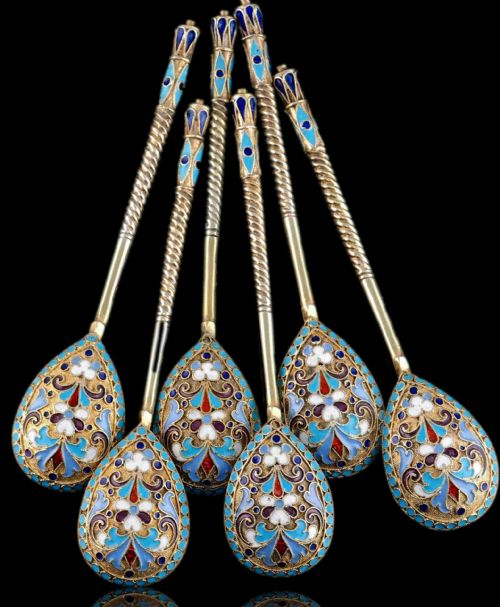


Victorian Silver Gilt Spoons
Victorian silver gilt spoons bring bright gold washes over sterling surfaces, catching the eye in cabinets and across nineteenth-century dining tables.
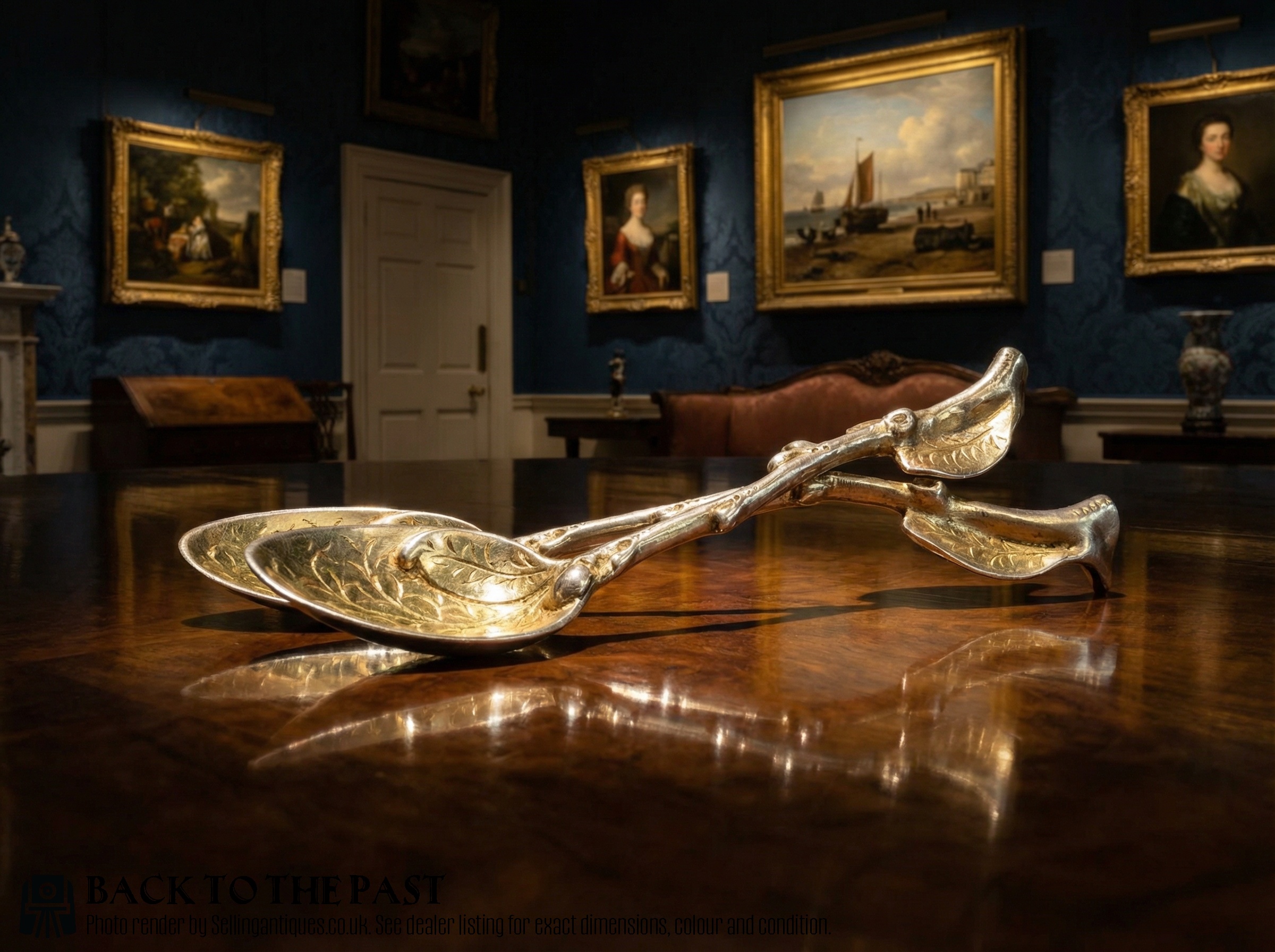
Victorian Silver Gilt Spoons
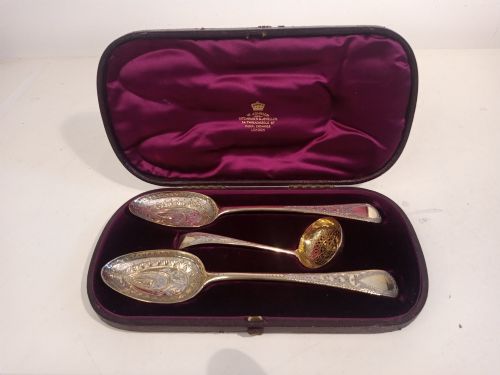
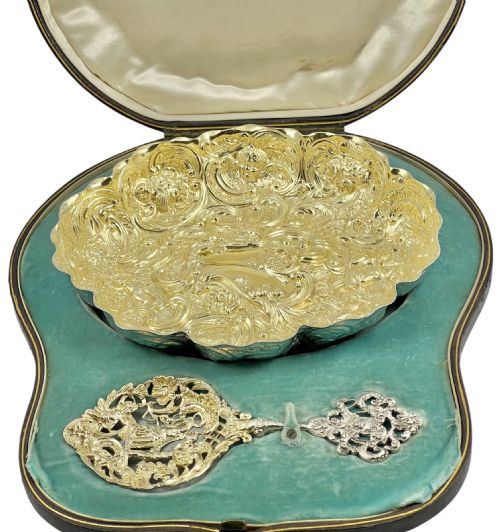
When you search for Victorian silver gilt spoons, you look at items designed for serving fruit, sugar, dessert or condiments, often found in fitted presentation cases alongside matching bowls or tongs. These pieces emerge from the nineteenth century, bearing rich gilding over sterling silver or, in certain instances, silver-plated surfaces.
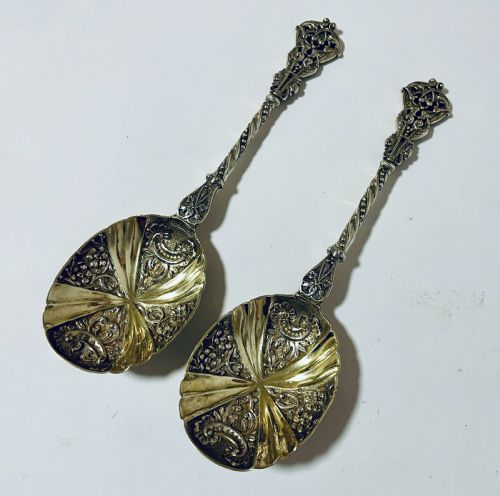
The varieties on this page range from single mustard or cayenne spoons with cut glass handles to pairs of berry spoons and boxed sets of six or twelve teaspoons. Makers during this era embraced styles spanning from rococo revival and naturalistic leaf designs to aesthetic movement parcel gilt finishes.
The forms reflect dining habits of the period, separating functional everyday cutlery from ornate serving pieces meant for display during formal courses. Many items retain their original velvet and silk-lined boxes, indicating their initial purpose as gifts or presentation pieces.
Judging quality
Quality rests upon the crispness of the chased or engraved detail and the depth of the remaining gold wash across the silver surface. Spoons retaining thick gilding and sharp, un-rubbed ornamentation stand apart from examples where daily use has worn the gold down to the bare metal underneath.
The weight of the solid sterling silver and the presence of fully struck hallmarks provide a clear measure of distinction against lighter silver-plated alternatives. Cased sets complete with their original fitted silk and velvet linings carry greater integrity than scattered pieces assembled later.
Some Victorian diners required a dedicated spoon warmer filled with hot water to ensure their melted butter did not solidify.
Sebastian Crespell·Francis Higgins·Charles Boyton·George Adams·Dmitrii Nikolaevich Nikolaev
The Victorian Silver Gilt Spoons Glossary
- Silver-gilt
- Sterling silver that has been coated with a thin layer of gold, combining the strength of silver with the rich colour of gold. This technique is often called vermeil.
- Berry spoon
- A large serving spoon with a bowl heavily embossed and engraved with fruit and foliage, typically adapted or created during the nineteenth century. These spoons were used for serving soft fruits.
- Parcel gilt
- An object where only specific areas are gilded while other parts remain in polished silver, creating a two-tone decorative effect. This style appears frequently on aesthetic movement flatware.
- Hallmark
- A stamped mark on precious metals indicating the standard of purity, the assay office, the maker and the year of testing. British silver carries distinct date letters for each year.
- Sifter spoon
- A spoon with a pierced or slotted bowl used for dusting sugar over fruit or pastries. They frequently appear in fitted presentation cases alongside matching sugar bowls.
Victorian Silver Gilt Spoons: Frequently Asked Questions
Were these spoons used for eating daily?
Most ornate Victorian silver gilt spoons served specific dining functions such as handling sugar, fruit, berries or condiments rather than everyday meals. Their gilt surfaces were easily scratched by abrasive foods and frequent washing.
Heavier dessert spoons and teaspoons saw service during formal dinners and afternoon tea, while cased sets remained safely stored until guests arrived.
How do I clean silver gilt spoons?
Silver gilt requires gentle care because harsh silver dips or aggressive rubbing will strip away the delicate gold layer over the silver base. Warm water, mild soap and a soft cloth suffice for removing dust and oils.
Store them away from rubber and certain papers that release sulphur, which accelerates tarnishing on both the exposed silver and the gilt coating.
What does parcel gilt mean on these?
Parcel gilt describes an object where only certain parts are coated in gold, leaving the rest of the silver in its natural bright finish. On Victorian spoons, the bowl might be richly gilded while the handle remains polished silver.
This two-tone approach highlights engraved details and adds visual depth to naturalistic leaf or floral designs.
Are cased sets original to the period?
Many Victorian spoon sets and matching sugar bowls remain in their original velvet and silk-lined presentation boxes from the nineteenth century. Retailers of the era supplied fitted cases for gifts, weddings and special occasions.
Examining the interior contours and hinges helps confirm whether the case was made specifically to house those particular items.