



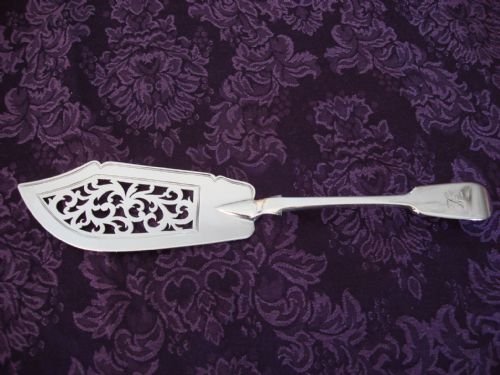
Victorian Fiddle Pattern Silver
Victorian fiddle pattern silver delivers the heavy weight and distinctive shoulder shape that defined nineteenth-century dining tables.
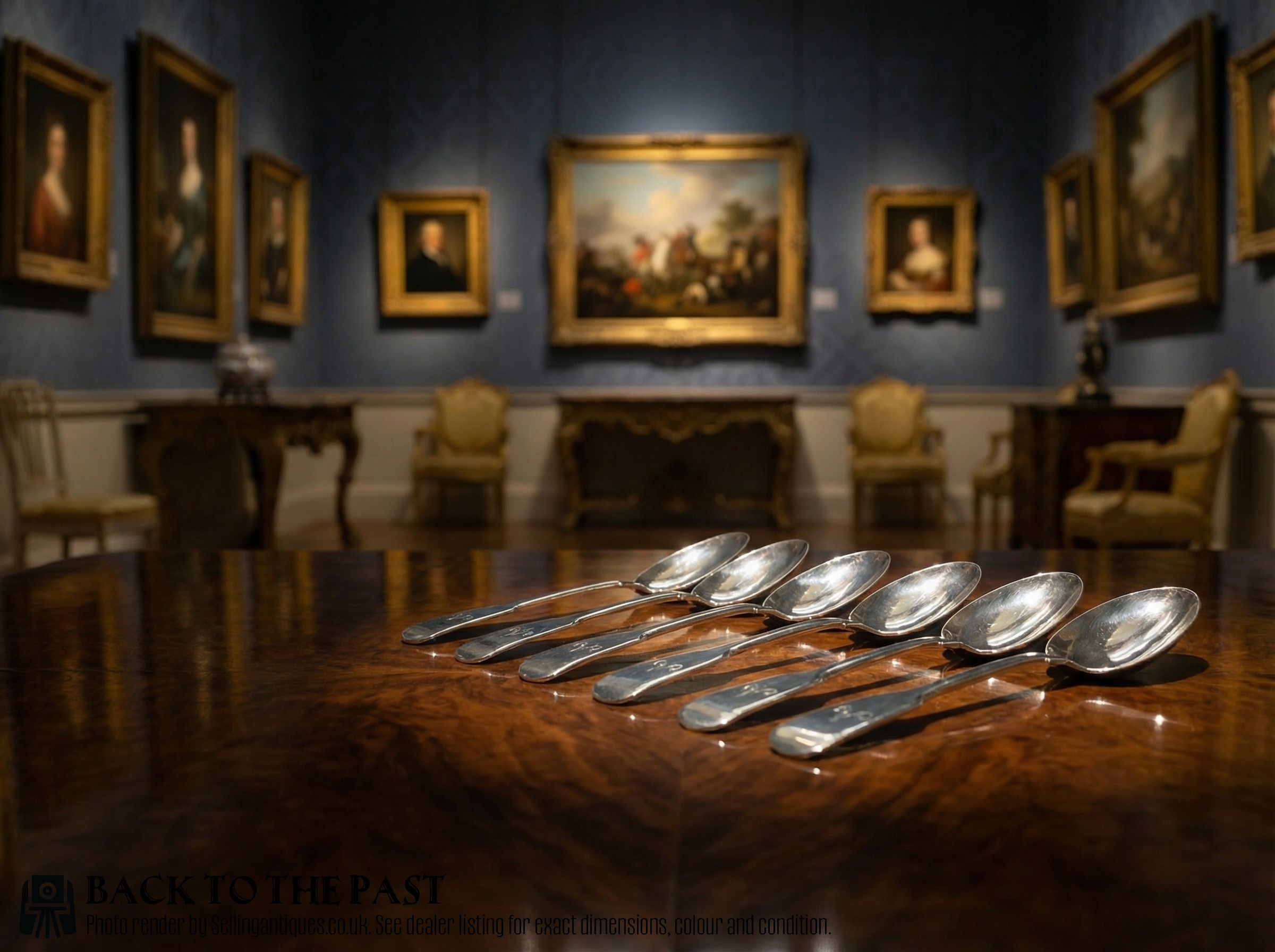
Victorian Fiddle Pattern Silver
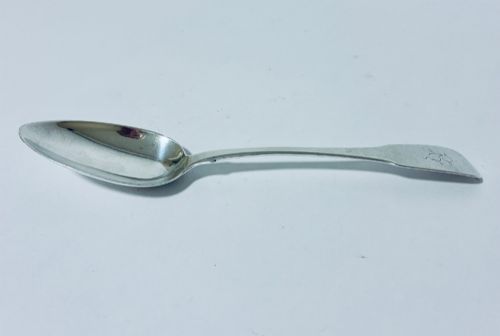
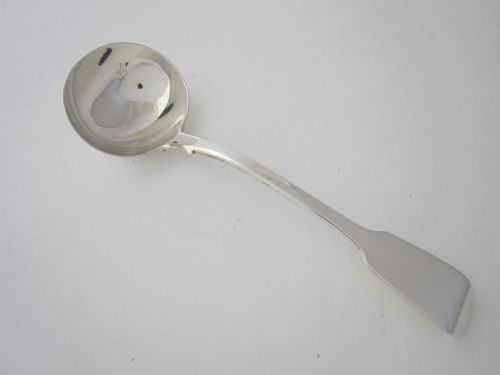
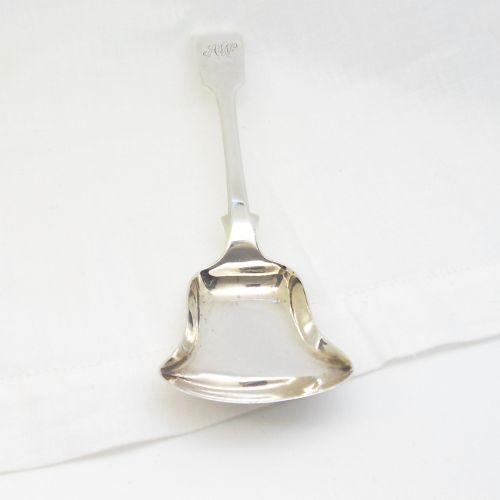
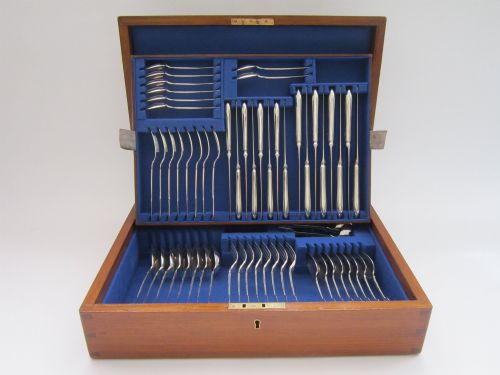
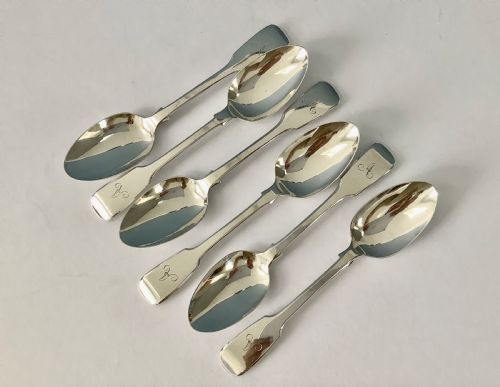
Victorian fiddle pattern silver comprises flatware and cutlery shaped with a distinct shoulder taper reminiscent of a stringed instrument, appearing predominantly across the Victorian period alongside occasional Georgian pieces. Buyers encounter everything from single tea spoons and condiment spoons to complete canteens for twelve persons, spanning serving utensils, sauce ladles, and fish slices.
The form appears in standard fiddle designs as well as embellished variants incorporating thread and shell motifs. Scottish provincial examples and Dublin pieces join London-assayed items, demonstrating the geographical spread of this domestic silver across the nineteenth century.
Materials and construction
The material record relies on sterling silver and solid silver, worked into flatware, serving spoons, and canteens alongside associated wooden and lined storage containers utilising oak, mahogany, brass, felt, and velvet. Smiths forged the distinctive handle profile and pierced functional blades such as fish slices by hand.
Makers struck their pieces with city assay marks, date letters, and maker's stamps to certify the metal standard. Variant patterns like fiddle, thread and shell added cast or applied decorative borders to the fundamental shoulder shape.
The listings show sterling silver flatware forms spanning the Georgian period and the broader Victorian era, including Exeter and Newcastle provincial assay marks.
Distinctions in standard
Quality separates ordinary domestic sets from pieces bearing provincial assay office marks or distinguished maker stamps. The depth of the hallmarks, the crispness of the shoulder drop, and the retention of original bowl and tine proportions dictate the standing of individual items.
Full canteens matching across decades differ from assembled mixed sets, while added thread and shell enrichment elevates plain fiddle silhouettes. Maker attribution to notable workshops or provincial hubs adds archival weight to a service.
John Walton·George Adams·Chawner and Co·John Smith
The Victorian Fiddle Pattern Silver Glossary
- Fiddle pattern
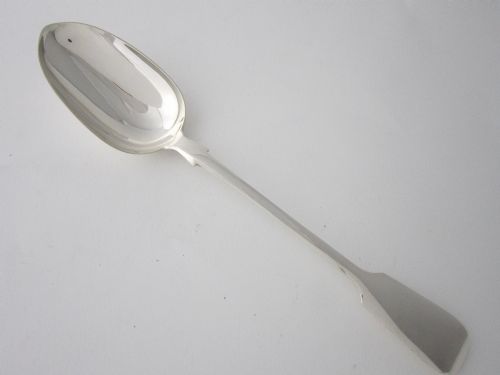
- A nineteenth-century flatware silhouette defined by an expanded shoulder just above the stem, tapering towards the terminal. This profile dominated domestic cutlery production throughout the Victorian era.
- Assay office
- The official body responsible for testing precious metals and stamping items with hallmarks. Provincial offices such as Exeter, Newcastle, and Dublin mark regional pieces sought by collectors.
- Basting spoon
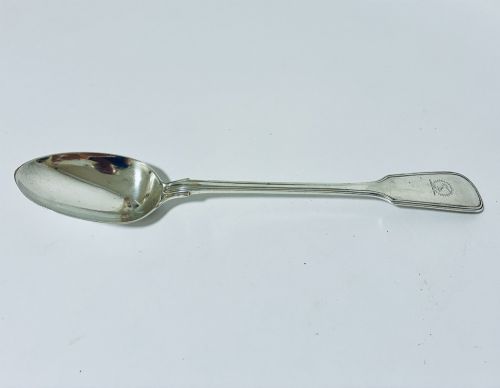
- A large serving utensil designed for doling out juices during carving. These items represent the heavier end of domestic holloware and flatware production.
- Fish slice
- A wide, often pierced flatware implement engineered for serving fish courses. Blades frequently feature engraved detailing alongside the fiddle handle.
- Canteen
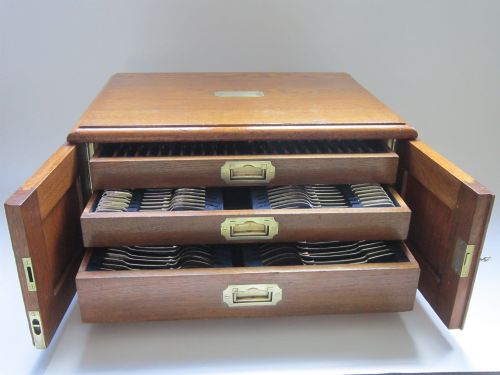
- A fitted box or chest housing a matched set of cutlery for multiple diners. Interiors typically feature wooden construction lined with felt or velvet.
Victorian Fiddle Pattern Silver: Frequently Asked Questions
How do I date Victorian silver?
Assay office letters stamped into the metal indicate the exact year of production alongside the maker's mark.
Matching these punch marks against standard town hallmarks reveals the year and location of manufacture.
What is a fiddle thread and shell pattern?
This variant adds raised border threads and shell appliqués to the standard fiddle shoulder profile.
Such enrichment appears frequently on gravy ladles, sauce spoons, and serving tongs.
Are provincial silver pieces different?
Provincial items carry town marks from regional assay offices outside London, including Exeter and Newcastle.
Collectors often seek these regional marks for their relative scarcity compared to capital output.
How were these sets used?
Families utilised these flatware collections for daily dining and formal entertaining across the nineteenth century.
Complete canteens provided coordinated cutlery for up to twelve persons at substantial Victorian dinner tables.