




Sterling Silver Demitasse Spoons
These sterling silver demitasse spoons are small antique and vintage vessels for after-dinner coffee, prized for their fine proportions and decorative detail.
Sterling Silver Demitasse Spoons
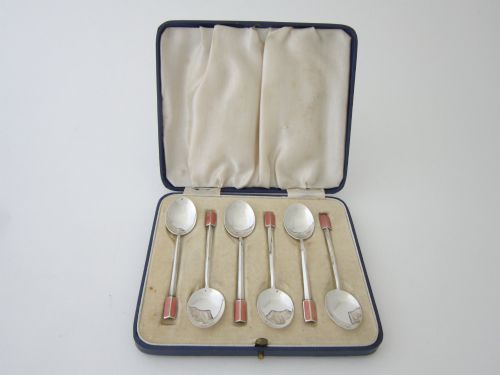
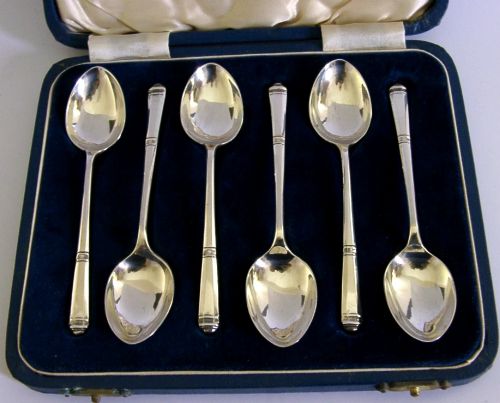
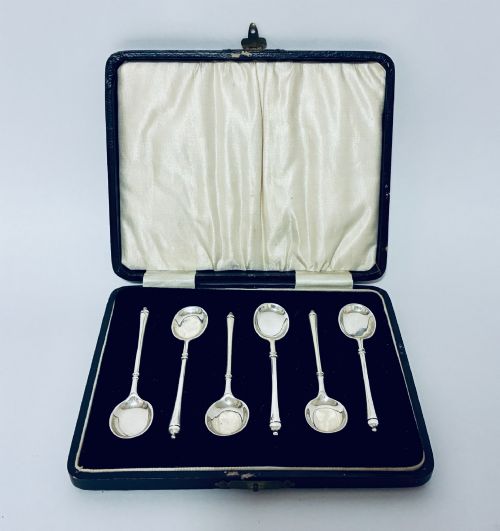
When you search for sterling silver demitasse spoons, you encounter miniature utensils designed specifically for small cups of black coffee after a meal. Most pieces on this page appear in matched sets of six or twelve, frequently housed in their original fitted presentation cases lined with velvet, satin, or silk.
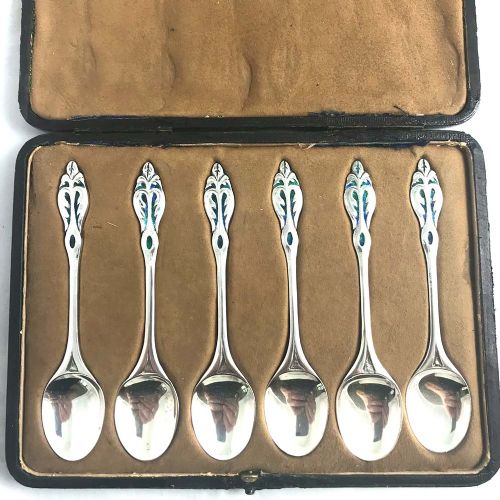
The selection ranges from simple provincial flatware to colourful enamelled sets produced across the decades from the Victorian era through the mid twentieth century. Alongside plain silverware, you find silver gilt finishes and items accompanied by ceramic coffee cans and saucers.
How they were made
Maker workshops produced these items in sterling silver, sometimes applying a thin layer of gold over the metal to create a rich silver-gilt appearance. Many twentieth century examples incorporate vitreous enamel decoration fused to the metal surface in geometric Art Deco patterns or flowing Art Nouveau motifs.
Makers formed the spoons using traditional silversmithing techniques, stamping or casting the metal before finishing each piece by hand. Fitted presentation boxes utilise materials like leatherette on the exterior with soft fabric interiors to protect the delicate flatware.
One complete boxed set comes neatly paired with its own set of matching silver sugar tongs for the discerning coffee drinker.
What varies in quality
Quality in these small spoons rests on the crispness of the hallmarks, the weight of the silver, and the precision of any applied enamel work. Stronger examples display clean lines and securely seated bowls without thinning from excessive polishing over the decades.
The presentation housing also affects the overall standing of a set, as original fitted boxes with intact hinges and undamaged velvet or silk linings elevate the piece. Plain utility items sit at the simpler end, whilst marked designer sets with intricate coloured enamel represent more ambitious manufacturing.
Walker and Hall·Liberty and Co·Cooper Brothers and Sons
The Sterling Silver Demitasse Spoons Glossary
- Demitasse
- A small cup used for serving after-dinner black coffee or espresso, which these miniature spoons accompany.
- Silver-gilt
- Sterling silver that has been coated with a thin layer of gold, sometimes referred to as vermeil.
- Vitreous enamel
- Glass powder fused to metal at high temperatures to produce a glossy, coloured decorative surface.
- Hallmark
- An official stamp applied to precious metals indicating the standard of purity, the assay office, and the year of manufacture.
- Flatware
- Table utensils used for eating, serving, and stirring food and drink.
Sterling Silver Demitasse Spoons: Frequently Asked Questions
What are sterling silver demitasse spoons used for?
These small spoons are designed to stir sugar into demitasse cups of strong black coffee served after meals. Their reduced scale matches the smaller size of the coffee cups.
Today, collectors also use them for serving condiments or simply display them within their fitted presentation boxes.
How do I know if the spoons are sterling silver?
You can verify the material by locating the official hallmarks stamped directly onto the stem or back of the spoon. These tiny impressed marks indicate the silver standard, the assay office, and the year the piece was made.
Items without clear hallmarks require testing by a specialist to confirm the metal purity.
Are most sets found in original boxes?
Many sets survive inside their original fitted cases, which were lined with materials like silk, satin, or velvet to protect the delicate spoons. These boxes often feature shaped recesses designed to hold each spoon and pair of tongs securely.
Sets without boxes are also common, having been stored loose in drawers or cutlery rolls over the decades.
How do I date an antique silver spoon?
Dating relies heavily upon the letter mark stamped within the official hallmarking sequence, which corresponds to a specific assay office year cycle. Stylistic clues such as Art Deco geometric enamelling or Victorian scrollwork also point to the era of manufacture.
Design registrations and maker marks help narrow the production window further.