

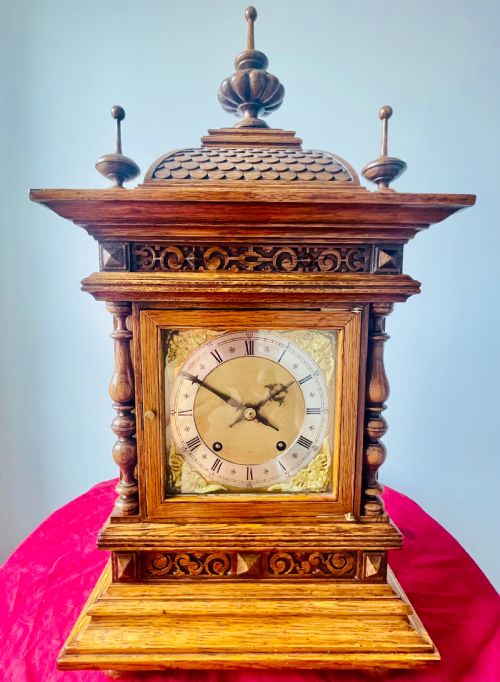
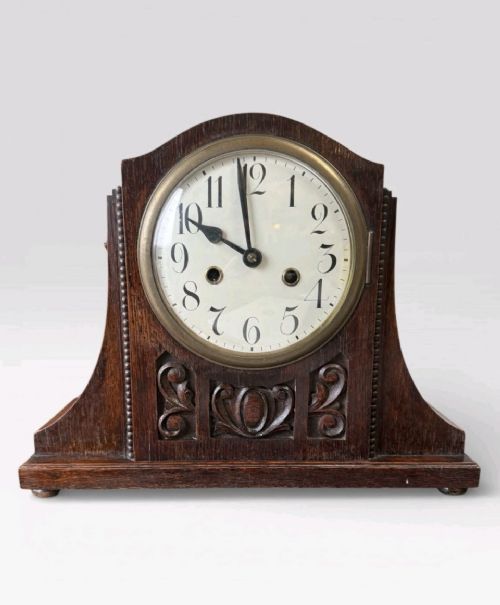


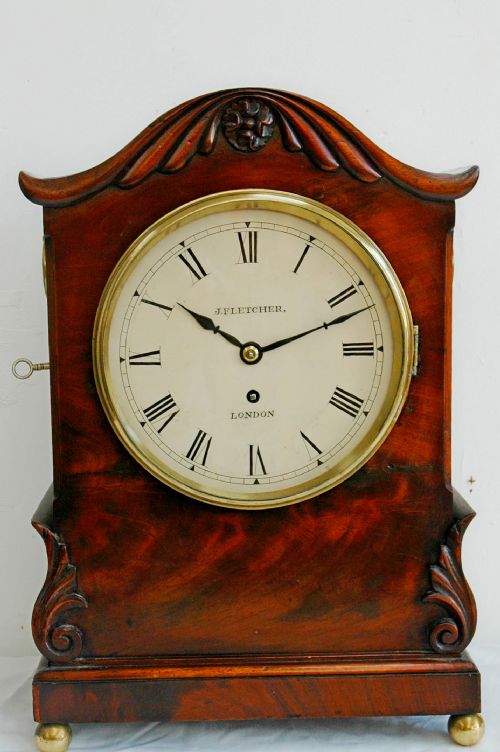

Carved Wooden Mantel Clock
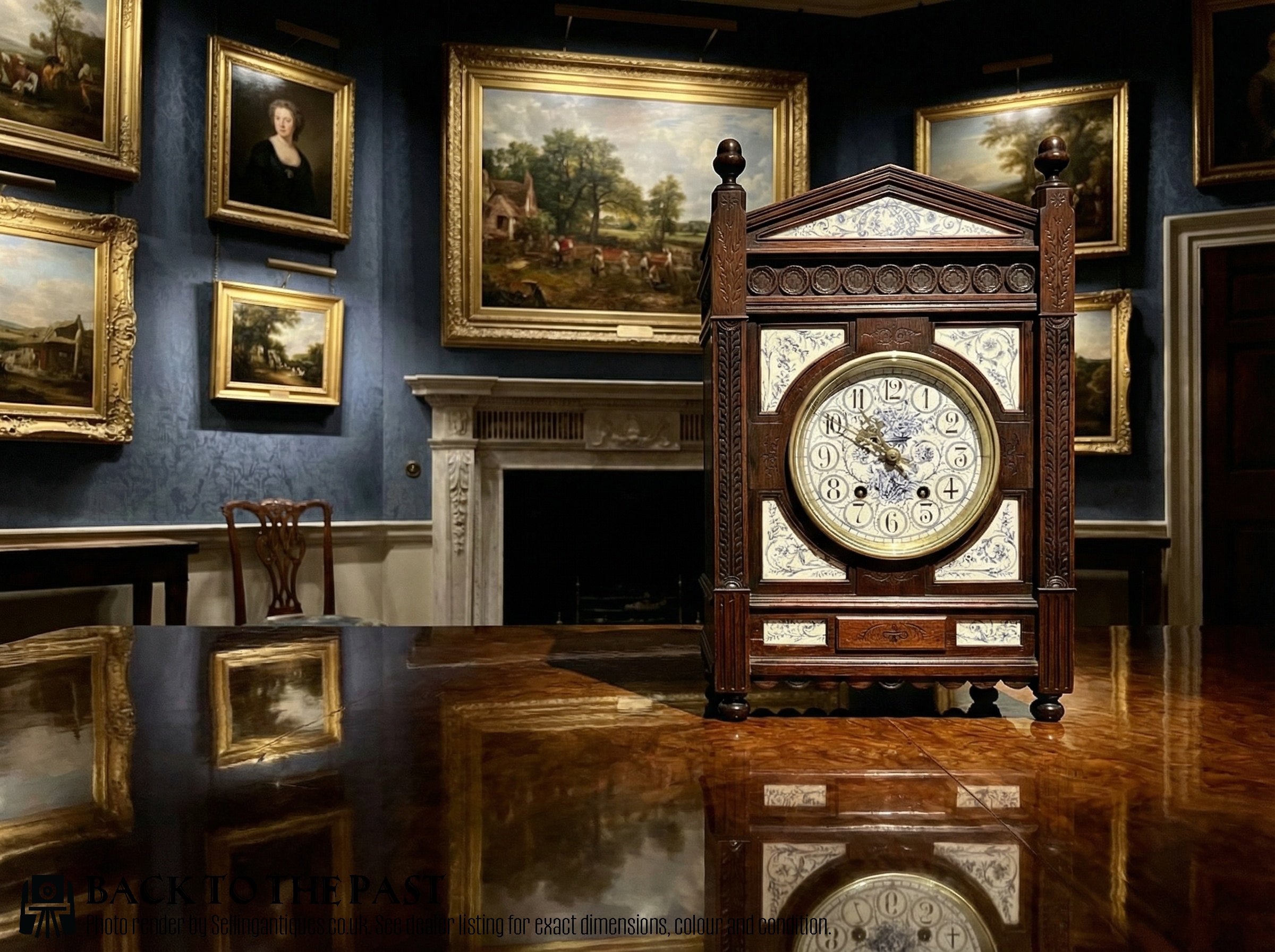
A carved wooden mantel clock brings mechanical timekeeping into a room through rich timber cases and detailed hand-cut ornament.
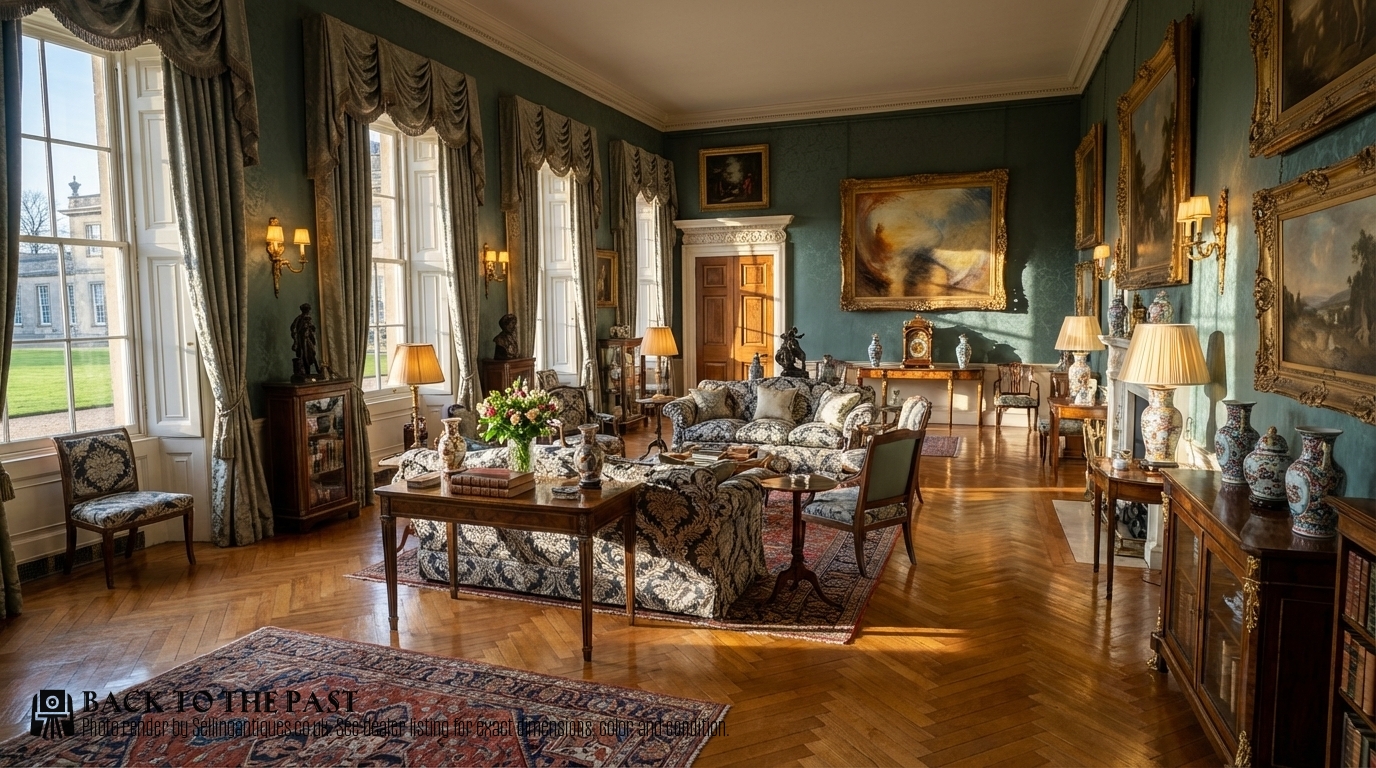
Carved Wooden Mantel Clock
A carved wooden mantel clock sits on a shelf, table or bracket, combining precision gearwork with a decorative timber housing. Buyers searching this phrase seek traditional household timepieces that double as sculptural woodwork.
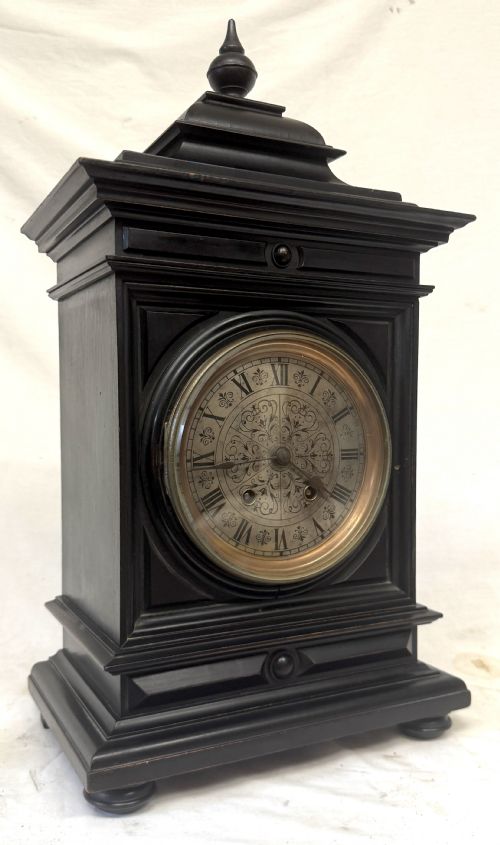
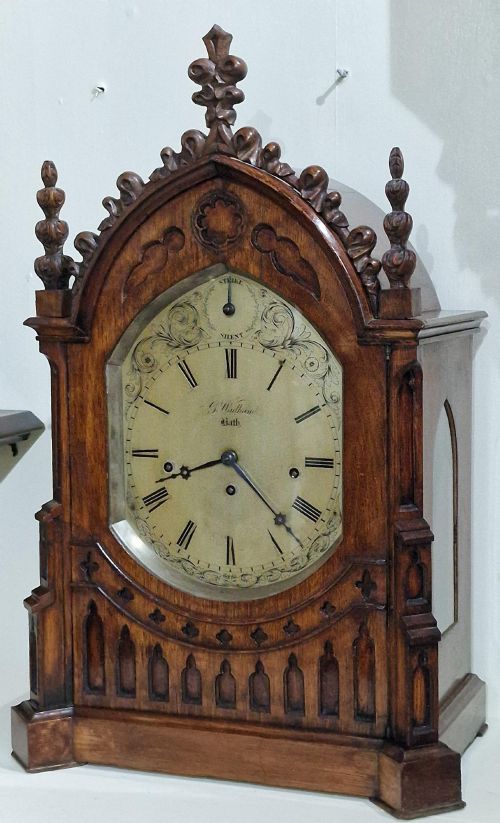
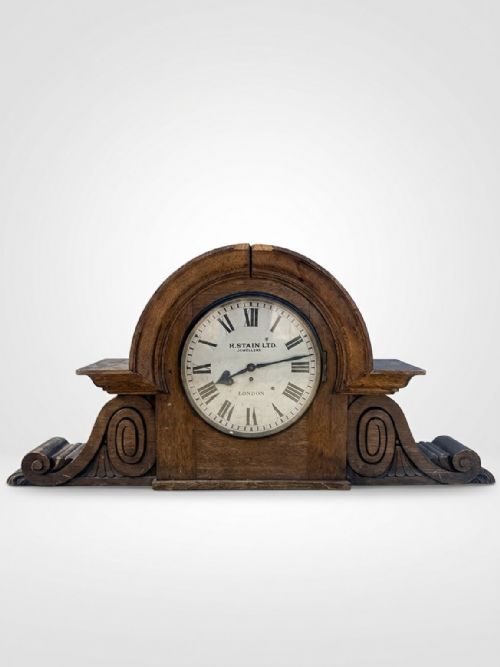
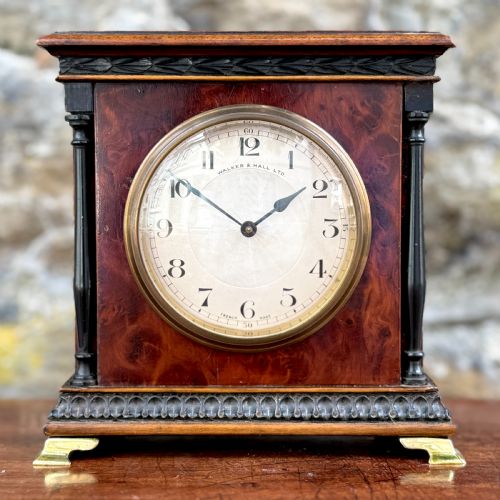
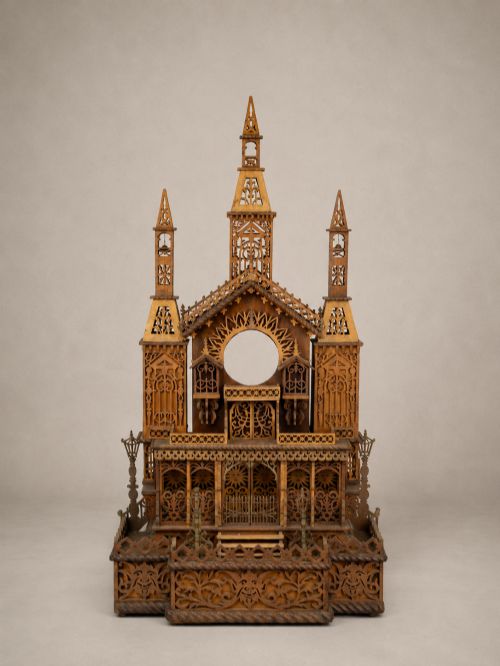
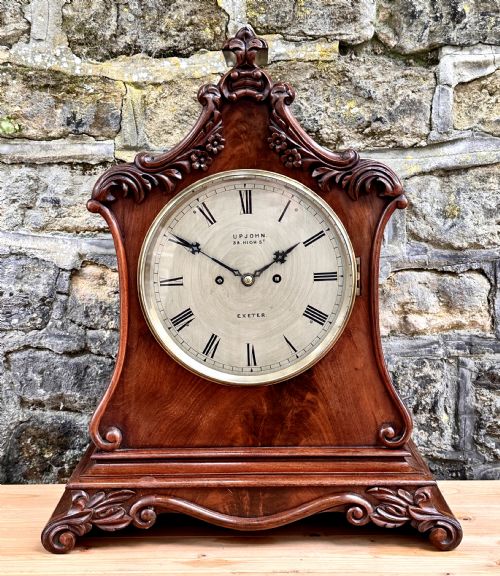
The selections available range from sturdy oak and mahogany library pieces to elaborate Black Forest linden wood carvings and architectural fretwork designs. Victorian and Edwardian examples dominate the offerings, spanning the nineteenth and early twentieth centuries.
Formats vary from simple domestic clocks to complex bracket and table clocks fitted with striking movements. Each piece reflects the domestic interior tastes of its era, from Georgian formality to Art Nouveau styling.

What varies in quality
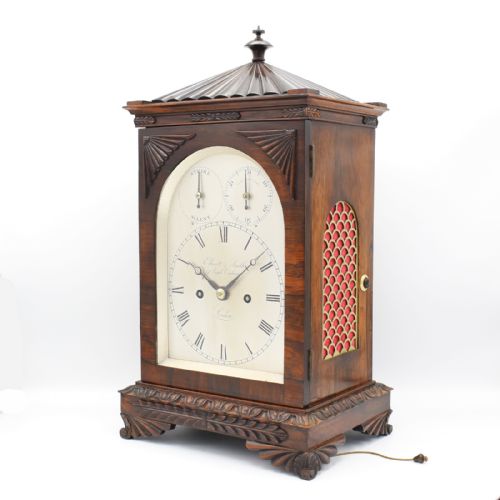
The distinction between standard domestic clocks and superior workshop examples lies in the crispness of the timber carving and the complexity of the internal movement. High-grade pieces feature substantial brass plates, signed movements by notable makers and finely figured wood veneers.
Proportion and cabinet construction also dictate worth, where balanced architectural cases and clean joinery elevate a clock far beyond mass-produced factory alternatives.
Carved Wooden Mantel Clock Retail Price Guide 2026
Typical asking prices for carved wooden mantel clock among the pieces listed under this phrase on Sellingantiques today, from the lower quarter to the upper quarter. They describe what is for sale here now, not the wider market.
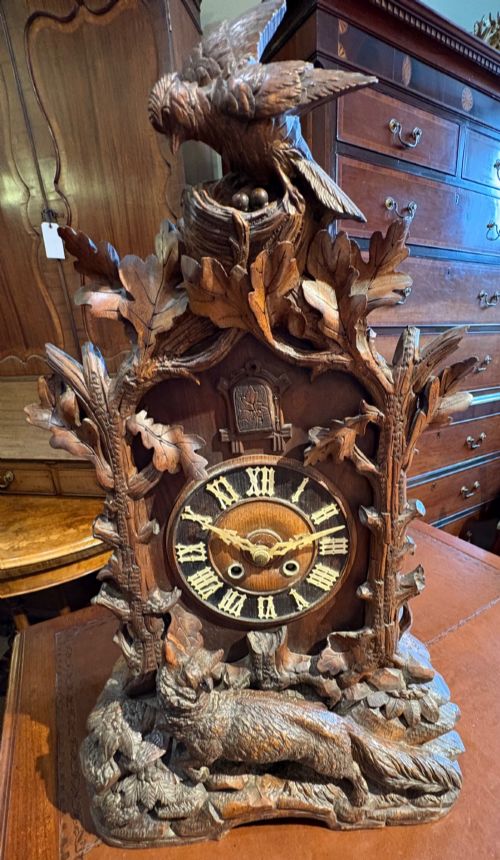
Several Black Forest clocks enlist carved linden wood animals and cuckoo mechanisms to bring the nineteenth-century forest directly onto the shelf.
Winterhalder And Hofmeier·George Wadham·Lenzkirch·Mappin And Webb·Ellicott And Smith
The Carved Wooden Mantel Clock Glossary
- Fusee
- A conical pulley connected to the mainspring by a chain or cord, designed to equalise the force of the spring as it unwinds. This mechanism ensures more consistent timekeeping throughout the power reserve.
- Bracket clock
- A portable table clock originally designed to sit on a wall bracket or a dedicated wooden base. Over time, the term came to describe larger table and mantel clocks of formal design.
- Silvered dial
- A brass or metal clock face treated with a silver solution to create a matte white finish, usually featuring engraved numerals and black wax infill. It provides high contrast and a refined appearance.
- Striking movement
- A mechanical gear train that chimes the hours or quarters on bells or gongs. These movements require additional spring power and precise coordination with the timekeeping train.
- Black Forest
- A mountainous region in Germany known for intricate woodcarving and clockmaking. Clocks from this origin frequently feature naturalistic flora, fauna and figural motifs carved from linden wood or walnut.
Carved Wooden Mantel Clock: Frequently Asked Questions
How do I wind a mechanical mantel clock?
Use the designated winding key to turn the arbors clockwise or anticlockwise depending on the specific movement design. Take care not to over-wind the mainsprings, stopping as soon as resistance increases.
Ensure you handle the key gently and support the case if it requires opening a rear door or lifting a glass bezel to access the dial.
Where should I place a wooden mantel clock?
Position the clock on a stable, level surface away from direct sunlight, heating vents and damp walls. Wood expansion from temperature swings can affect both the timber case and internal alignment.
Mantel shelves, sideboards and dedicated wall brackets provide ideal settings that allow the sound of the tick and chime to carry naturally.
How do I tell a Victorian clock from an Edwardian one?
Victorian clocks frequently display heavier proportions, dark mahogany or walnut cases, and rich carved details influenced by Gothic or Rococo revivals. Dials often feature ornate brass spandrels and Roman numerals.
Edwardian and later twentieth-century pieces tend toward lighter oak tones, simpler geometric lines, and occasional Art Nouveau or Art Deco styling with cleaner, less cluttered dial layouts.
What is the difference between a timepiece and a striking clock?
A timepiece simply measures and displays the hours and minutes without producing any sound. It contains a single gear train dedicated entirely to the escapement and hands.
A striking clock includes secondary and tertiary gear trains that drive gongs or bells to announce hours, half-hours or quarters, requiring separate winding arbors for the chime function.