
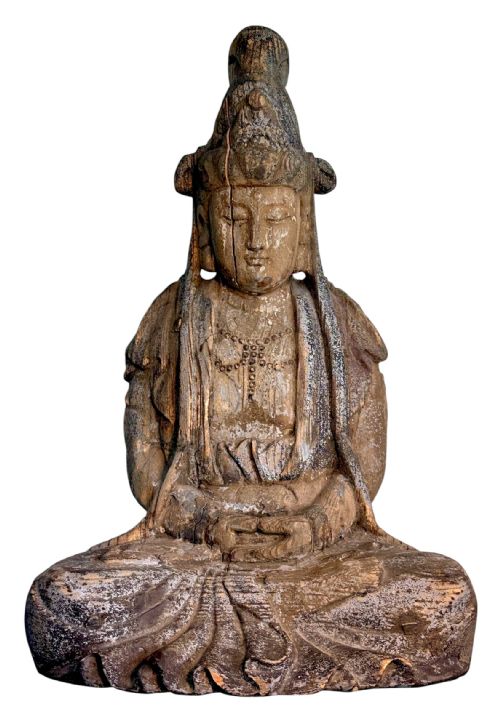


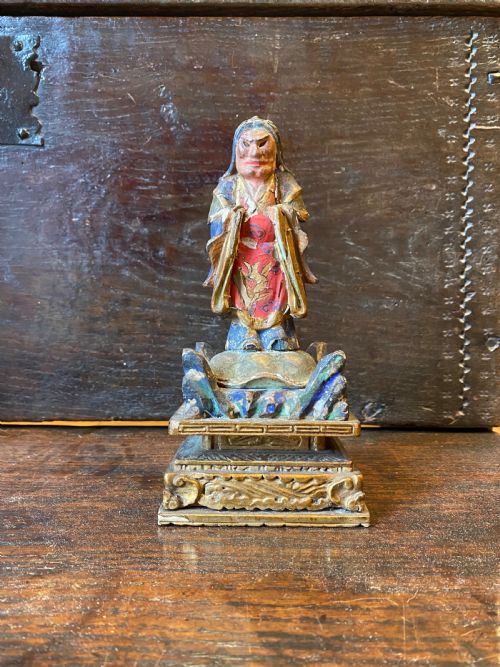

Carved Wooden Buddha Figure
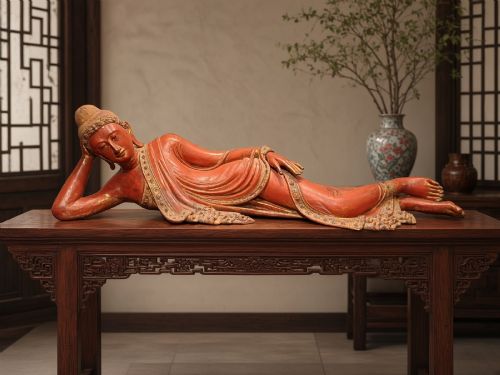
A carved wooden buddha figure brings serenity and age into a room, taking the form of seated deities, reclining figures, and temple guardians.
Carved Wooden Buddha Figure
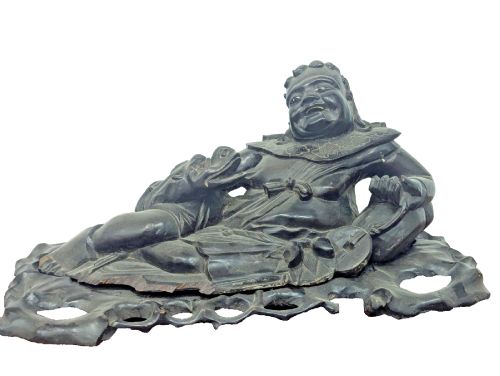
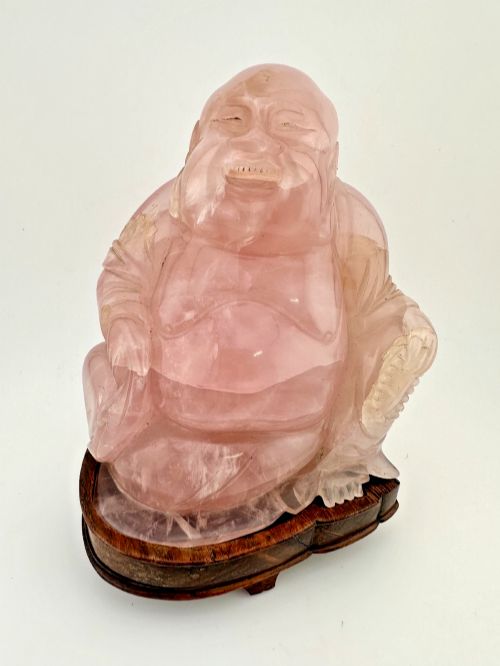
A carved wooden buddha figure encompasses a variety of regional styles, including Chinese Qing Dynasty pieces, 19th-century Burmese works, and Sri Lankan examples. The selection ranges from monumental temple guardians and medicine figures to domestic sculptures of the Laughing Buddha and Guanyin.
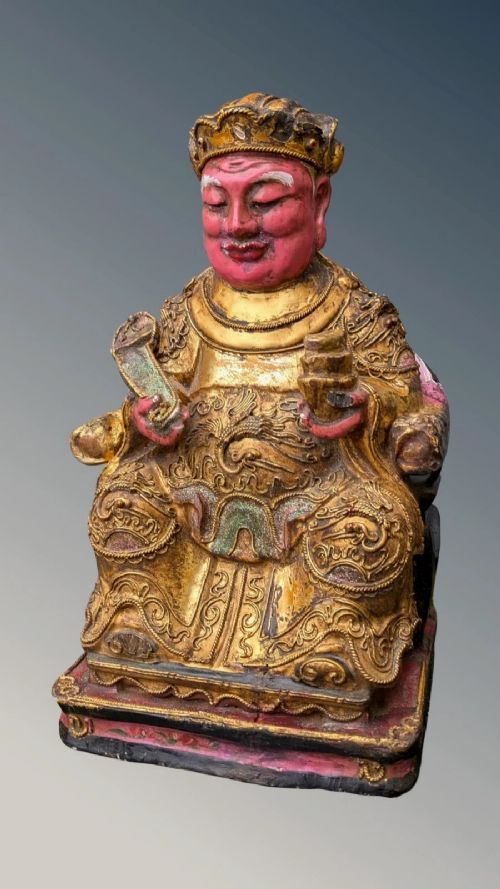
Most pieces date from the 18th and 19th centuries through to the early 20th century, spanning periods such as the Edwardian era and the Qing Dynasty. Buyers frequently encounter forms decorated with polychrome paint, lacquer, or gilt wood.
These religious statues and ritual figures serve as sculptural works of art that reflect centuries of craftsmanship. The offerings include specific iconography such as reclining Buddhas and corpulent figures on wooden stands.
Methods of construction
Surfaces were frequently finished with layers of gesso, lacquer, and gold leaf, or painted with polychrome pigments. Some examples also incorporate glass inlay to enhance the ornamentation of the deity's attire and accessories.
Listings feature wood, lacquer, gold leaf, gesso, and glass inlay across pieces dating from 1750 to the 1930s.
Assessing quality
The integrity of the timber and the depth of the relief work distinguish finer sculptures from simpler items. Pieces that retain their original temple stands or retain undisturbed layers of lacquer and gold leaf command greater interest.
The Carved Wooden Buddha Figure Glossary
- Budai
- A representation of a corpulent, laughing monk often associated with Maitreya Buddha. This figure is typically depicted with a large bare belly symbolising contentment.
- Guanyin
- An East Asian bodhisattva associated with compassion. These figures appear in carved wood wearing elaborate flowing robes.
- Gilt wood
- Wood that has been coated with a thin layer of gold leaf or gold paint. This technique was widely utilised on temple statues to signify sacred status.
- Polychrome
- Decorated in multiple colours. This refers to the painted surface treatments found on many 19th-century Chinese temple figures.
- Zhenwu
- A powerful Taoist deity and temple guardian. These monumental wooden figures often appear with fierce expressions and warrior attire.
Carved Wooden Buddha Figure: Frequently Asked Questions
How do I date a wooden buddha?
Dating relies on tool marks, the style of the carving, and the composition of surface layers like gesso and lacquer. Regional artistic conventions from periods such as the Qing Dynasty also help establish an approximate age.
Examination of the timber shrinkage and wear patterns provides further clues to a piece's antiquity.
Where were these figures placed?
Original locations included Buddhist and Taoist temples, household altars, and shrines across China, Burma, and Sri Lanka. Monumental guardian figures stood at temple entrances to ward off malevolent forces.
Smaller domestic statues occupied private spaces for daily devotion and meditation.
How should I clean a wooden buddha?
Dusting should be performed gently with a dry, soft brush to avoid disturbing delicate surfaces like gold leaf and polychrome paint. Water and chemical cleaning agents must be avoided as they damage historic finishes.
Consult a professional conservator if the sculpture requires deeper cleaning.
What is the difference between a buddha and a deity?
A Buddha is an enlightened being who has achieved spiritual awakening, such as Siddhartha Gautama or historical manifestations like reclining figures. Deities include bodhisattvas like Guanyin, Taoist immortals, and temple guardians.
Iconography and posture generally distinguish one category from the other.