





Carved Timber Religious Art
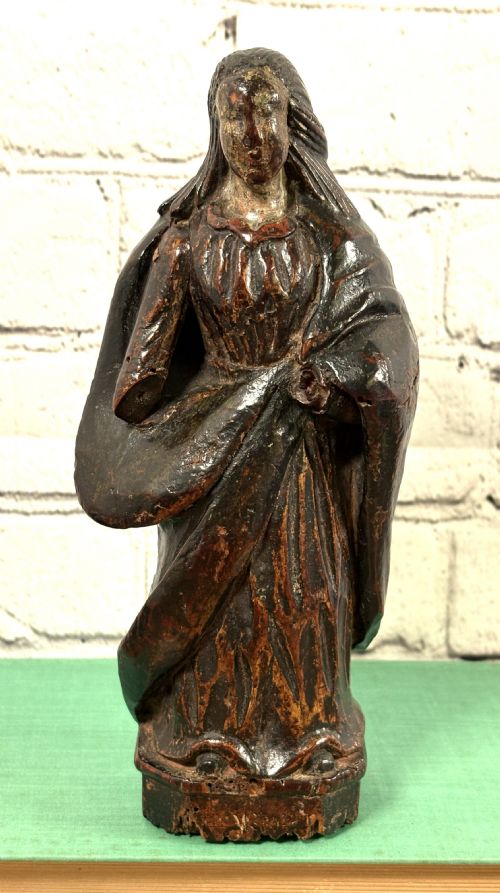
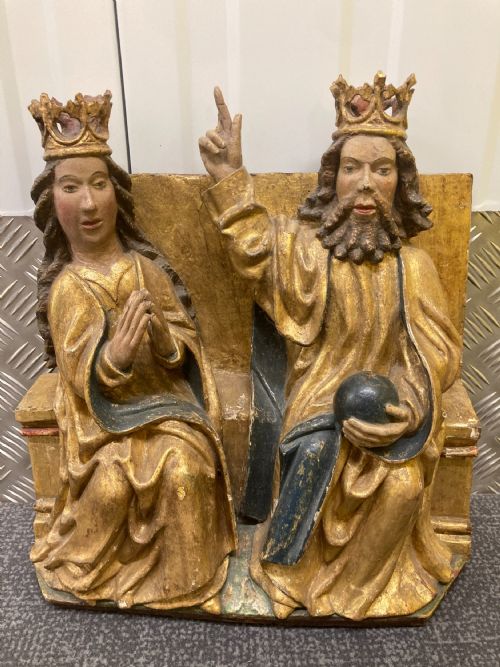
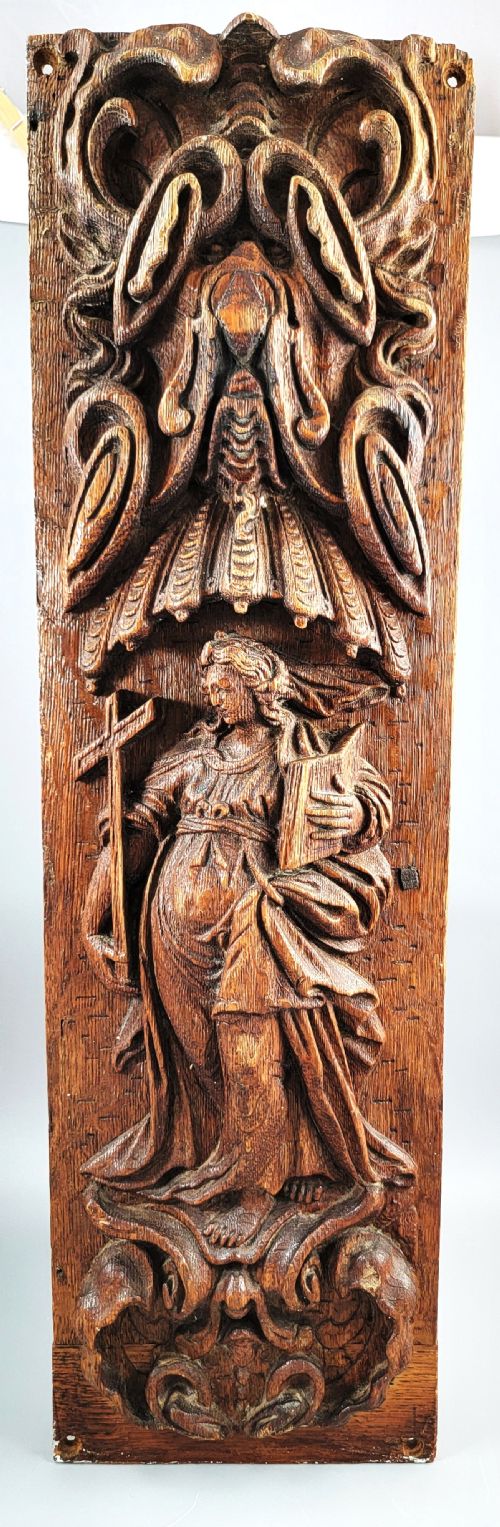
These pieces of carved timber religious art span centuries of devotion, bringing tangible spiritual history straight into a room.
Carved Timber Religious Art
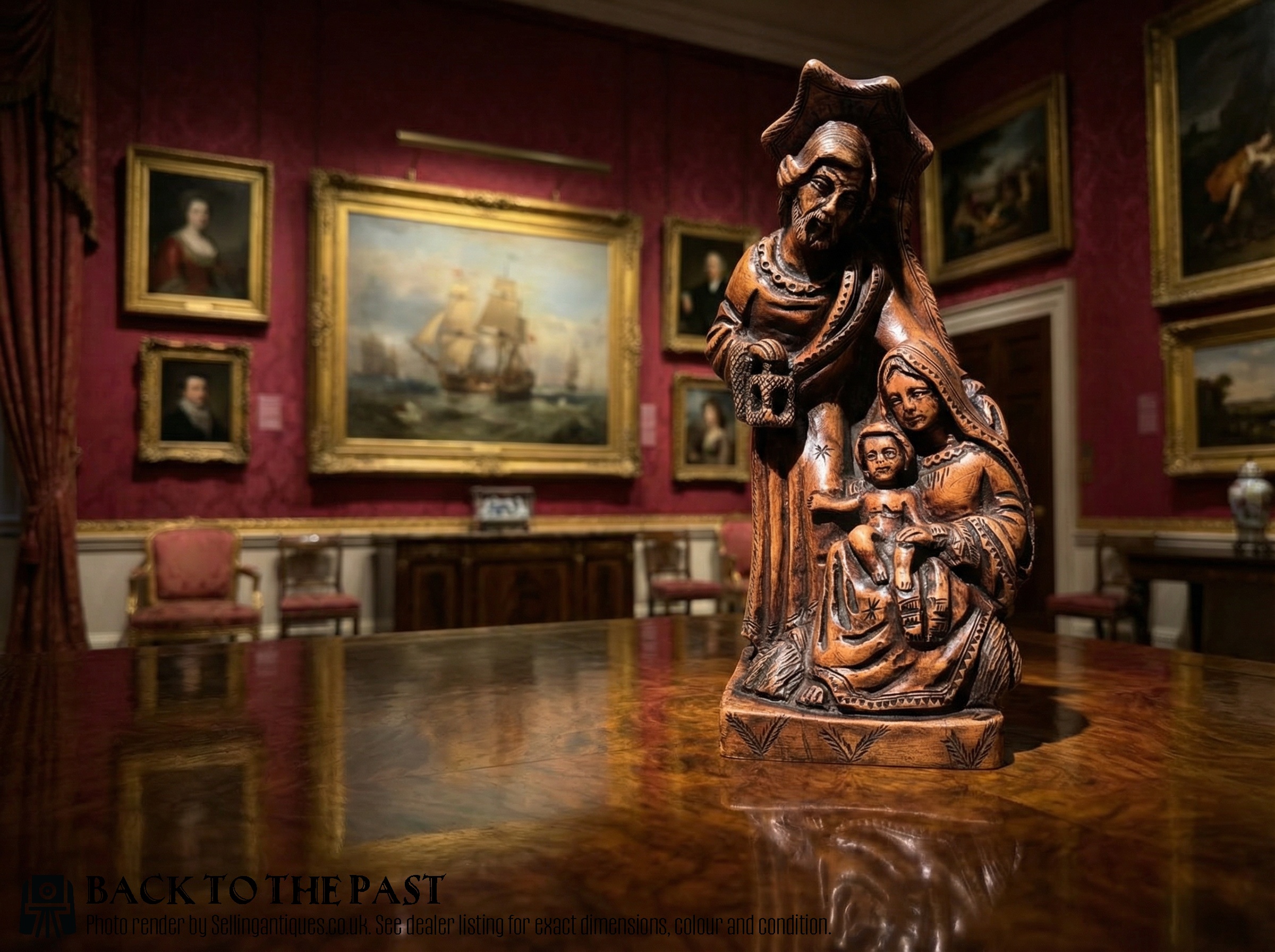
Figures of saints, crucifixes, and sculptural groups form the primary objects met on this page. Pieces originate from workshops in Italy, Spain, France, Germany, and the Low Countries, alongside Asian and Anglo-Indian examples. Oak, pine, walnut, and fruitwoods provide the physical foundation for these devotional works.
How they were made
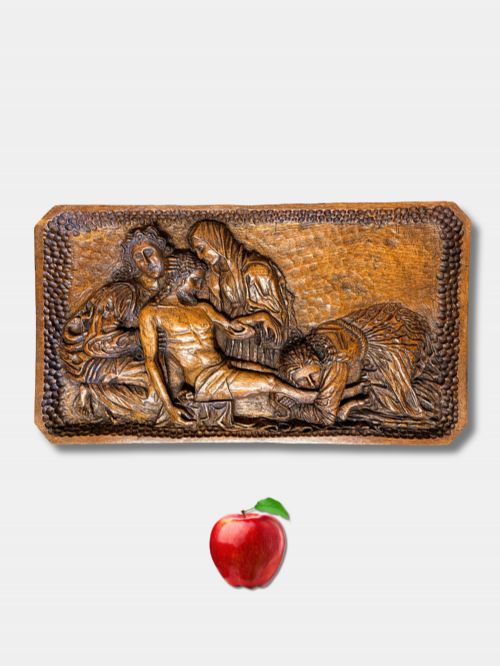
Artisans carved these works from dense timbers such as oak, walnut, chestnut, applewood, limewood, olive wood, and pine. Woods were selected for their grain stability and suitability for detailed chisel work. Panels and sculptures rely on the natural properties of these hardwoods and softwoods to hold intricate forms over centuries.
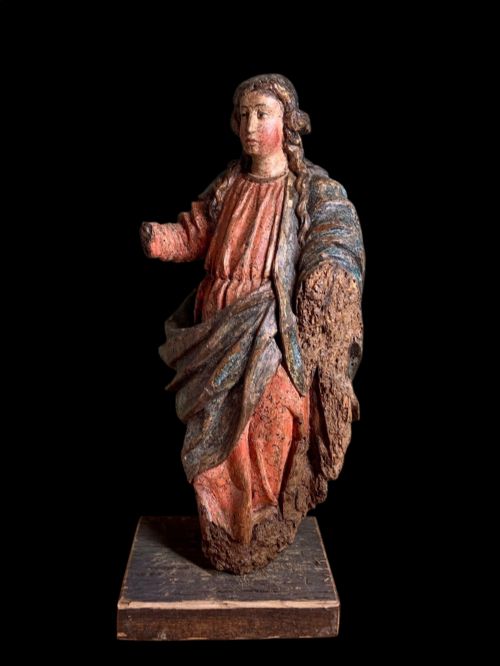
Many surfaces received layers of gesso followed by polychrome paint and gold leaf. Pigments were applied to garments and flesh to heighten realism and devotional impact. Gilding added luminous detail to halos, robes, and architectural elements within the panels and figures.
Some saints arrive with remarkably cheerful expressions, proving that medieval and Renaissance carvers occasionally favoured a smiling holy figure.
What varies in quality
The survival of original polychrome paint and gold leaf substantially alters the character of a piece. Surfaces retaining early layers of pigment and gilding offer a truer record of the maker's original intention. Stripped wood surfaces reveal the raw carpentry but lose the intended colour scheme.
Franz Keller
The Carved Timber Religious Art Glossary
- Polychrome
- Painted in several colours. This finish was commonly applied to wood sculptures to depict garments and flesh with lifelike detail.
- Corpus Christi
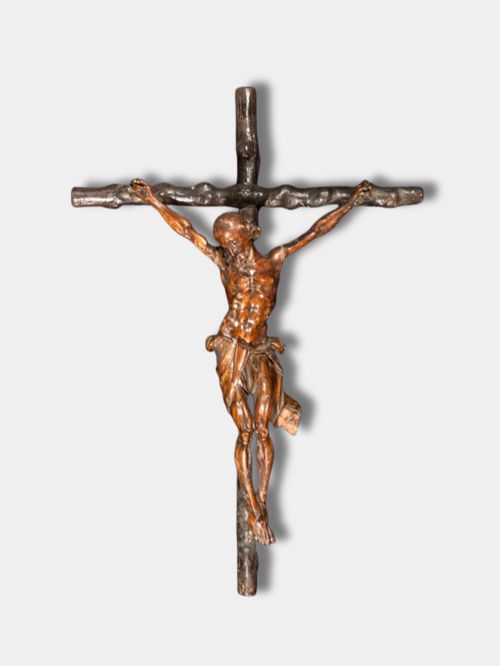
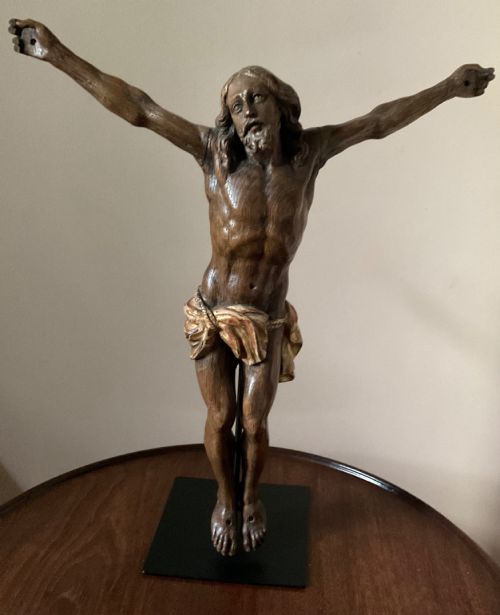
- The body of Jesus Christ depicted on a cross. These sculptures focus on the anatomical details of the crucifixion.
- Gesso
- A plaster mixture used as a smooth base for paint and gold leaf on wood. It created an even surface for detailed decoration.
- Giltwood
- Wood that has been decorated with thin sheets of gold leaf. This technique illuminated sacred figures in dim interiors.
- Corpus
- The central body of a sculpture or figure. The term frequently applies to the figure of Christ on a crucifix.
Carved Timber Religious Art: Frequently Asked Questions
How should I display a wooden crucifix?
Mount the crucifix securely on a solid wall using appropriate fixings suited to the weight of the timber. Keep the piece away from direct heat sources and strong sunlight to protect the wood and any remaining polychrome paint.
Ensure the room maintains stable humidity levels to prevent the wood from warping or cracking over time. Gentle dusting with a dry, soft cloth is sufficient for routine maintenance.
What is an Anna Selbdritt sculpture?
An Anna Selbdritt depicts Saint Anne with her daughter the Virgin Mary and the infant Jesus. This traditional iconography groups three generations together in a single carved wooden piece.
Such sculptures were popular in medieval and Renaissance devotional art. They symbolise lineage and maternal heritage within Christian tradition.
How can I tell the period of a carved panel?
Examine the tool marks and the style of the carving to identify period characteristics. Baroque panels often display dynamic movement and deep undercut foliage, while Gothic pieces show more linear and restrained drapery.
Wood shrinkage, insect flight holes, and patina also offer clues to age. Comparing the style to dated examples from the same region helps narrow down the century of creation.
Are these pieces cleaned or restored?
Many antique carvings retain their age-related wear, surface dirt, and distressed finishes acquired over centuries of use. Some pieces have undergone past conservation to secure loose joints or stabilise flaking paint.
Inspect the surface under good light to distinguish original pigment from later overpainting. Dealers often note major restorations in the item description.