



Baroque Carved Wooden Saint
A baroque carved wooden saint brings deep devotional presence and dramatic movement to a room through skilled period craftsmanship.
Baroque Carved Wooden Saint
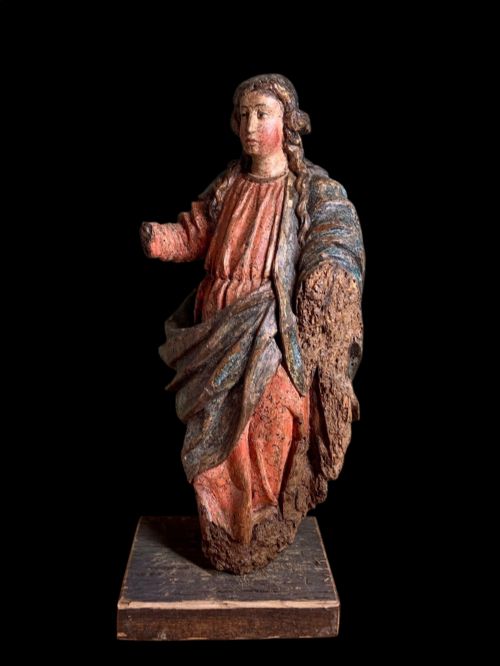
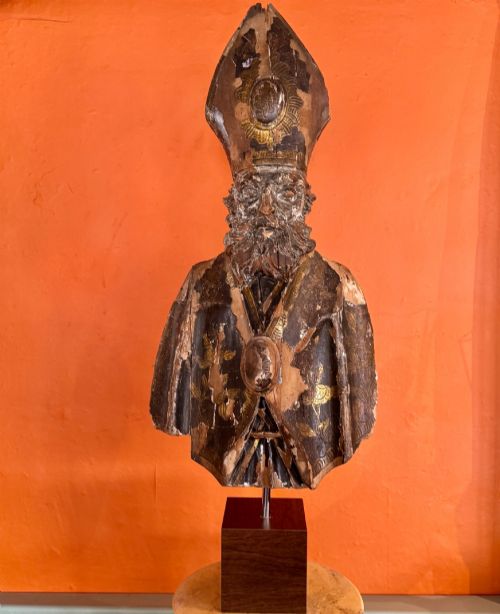
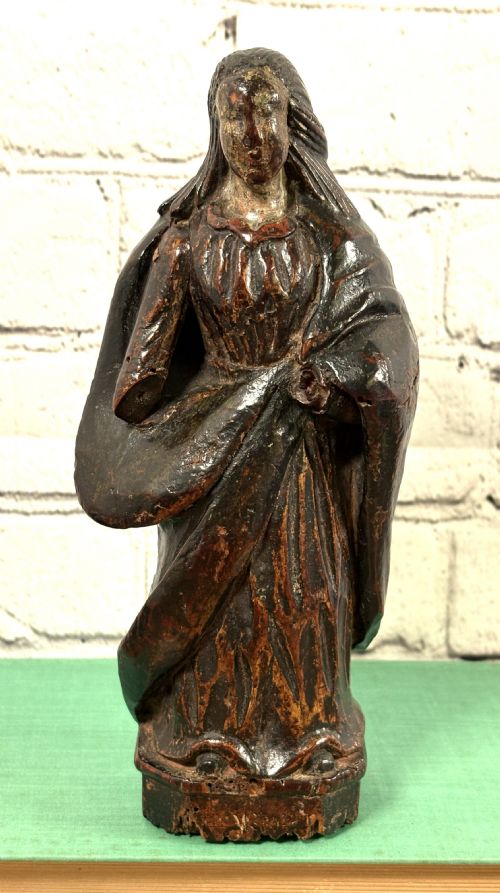
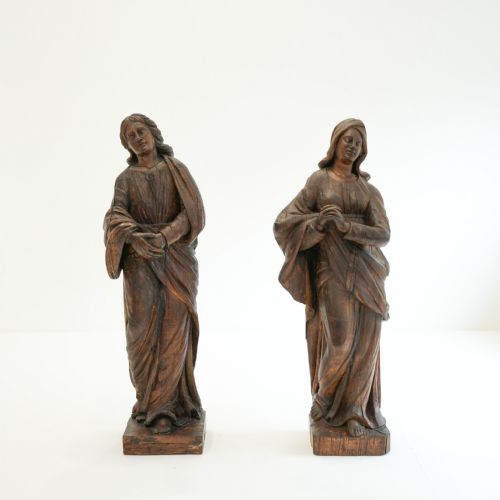
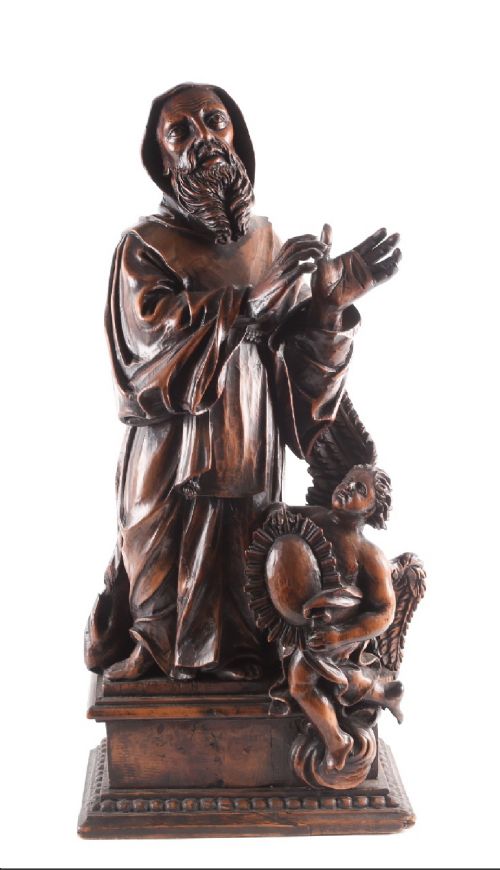
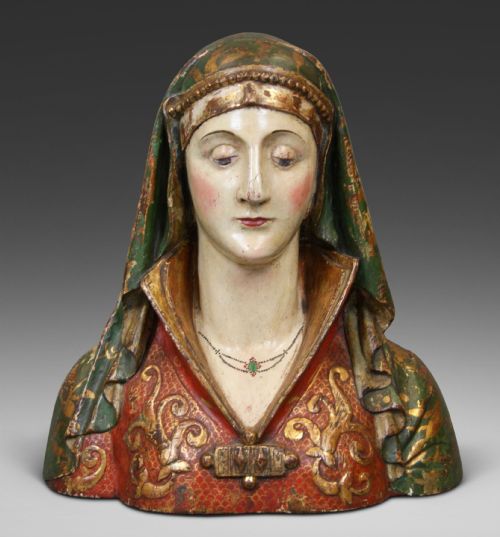
A baroque carved wooden saint represents a religious figure created during a period defined by theatricality, emotion, and dynamic forms. These sculptures take the shape of full figures, bishops, busts, and acolyte candlestick statues originating from continental workshops.
Most examples found here date from the seventeenth and eighteenth centuries, with occasional nineteenth-century pieces. Common subjects include specific figures such as Saint Barbara, Saint Francis, Saint John, and Saint Nicholas alongside fragments and character heads.
The objects serve as tangible fragments of ecclesiastical history, reflecting the intense devotional art of Italian, Spanish, and German traditions. Collectors encounter both standing statues and framed groupings that reveal the profound religious function of these works.
Materials and construction methods
Carvers utilised regional timbers including oak, limewood, walnut, applewood, and general hardwoods to shape the primary forms of each figure. Wood selection depended on availability and the level of intricate detail required for drapery and facial expressions.
Surfaces were frequently finished with gesso before receiving layers of polychrome paint or gold leaf to enhance realism and divine splendour. Artisans applied pigments and gilding to accentuate the swirling folds characteristic of the baroque style.
Determinants of quality
The preservation of original surface treatments, such as polychrome pigment and gold leaf, significantly elevates the stature of a carving. Pieces retain varying degrees of their initial colour and gilding, which directly influences their historical integrity.
The Baroque Carved Wooden Saint Glossary
- Polychrome
- Decorated in multiple colours. This technique brought realism to devotional statues through applied paint.
- Gesso
- A plaster mixture applied as a base. It prepared wooden surfaces for subsequent gilding or painting.
- Giltwood
- Wood covered with gold leaf. This finish added luminous splendour to ecclesiastical furnishings.
- Ecclesiastical
- Relating to the Christian Church. These items were made specifically for religious spaces and worship.
- Limewood
- A fine-grained timber favoured by carvers. Its consistent density allowed for intricate detail work.
Baroque Carved Wooden Saint: Frequently Asked Questions
How were these statues used?
These figures stood in churches, private chapels, and monastic settings for devotional focus and liturgical display during religious services. They often occupied altars or niches where the faithful offered prayers.
Some pieces functioned as reliquaries or supported candles, integrating sacred art directly into ritual practices.
How do I date a wooden saint?
Dating relies on analysing tool marks, timber types, and the stylistic evolution of the carving from rigid forms to theatrical baroque movement. The specific treatment of the gesso and paint layers also offers clues to the period.
Comparative study of regional clothing styles and facial idioms helps narrow the century of creation.
Where did these carvings originate?
Workshop production centred across continental Europe, with strong traditions found in Italy, Spain, and Germany. Each region developed distinct artistic traits in posture, pigment application, and wood choice.
Italian and Spanish pieces often exhibit high theatricality, while German workshops utilised dense timbers like limewood.
How should I display a wooden saint?
Place the sculpture away from direct sunlight and sudden temperature shifts to protect the wood and fragile surface layers. Stable indoor environments prevent the timber from splitting.
Mount sculptures securely on sturdy surfaces or display them within dedicated cabinets to ensure physical stability.