




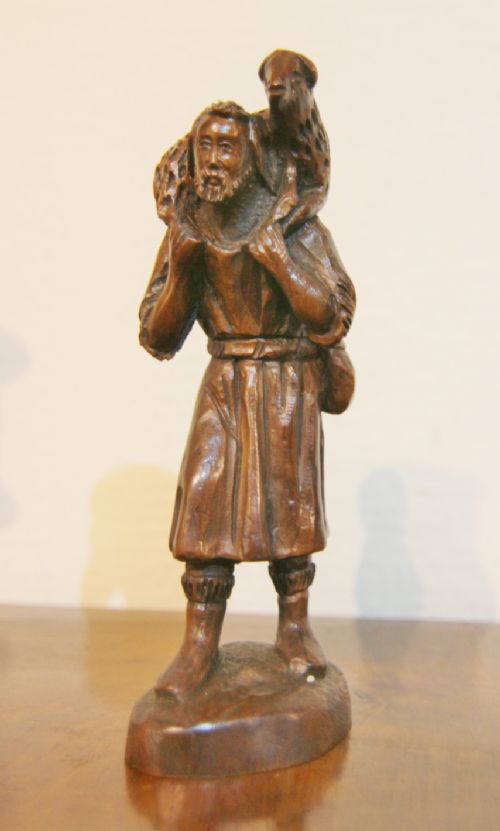


Dark Wood Religious Statue
A dark wood religious statue brings centuries of devotion, ritual and master carver craftsmanship directly into a room.
Dark Wood Religious Statue
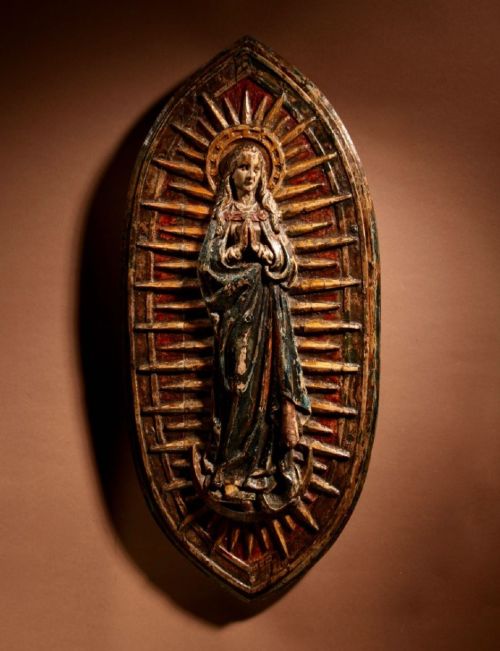
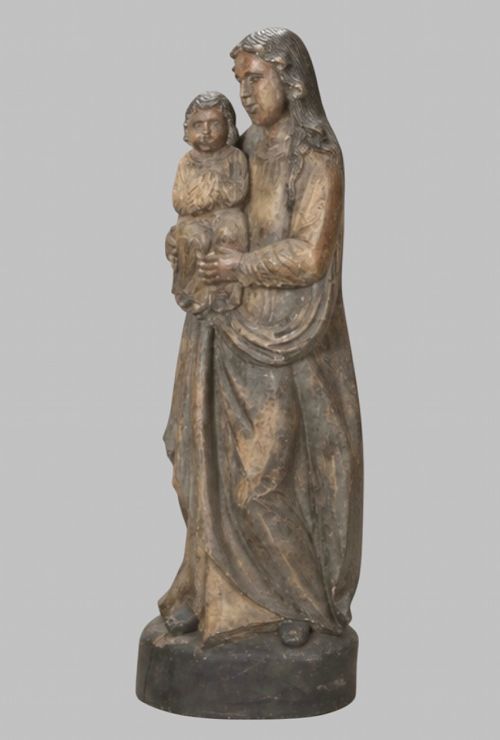
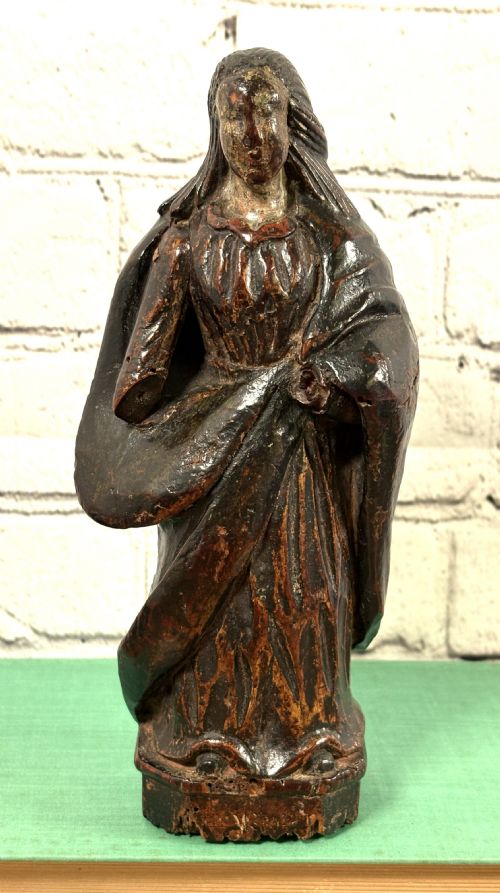
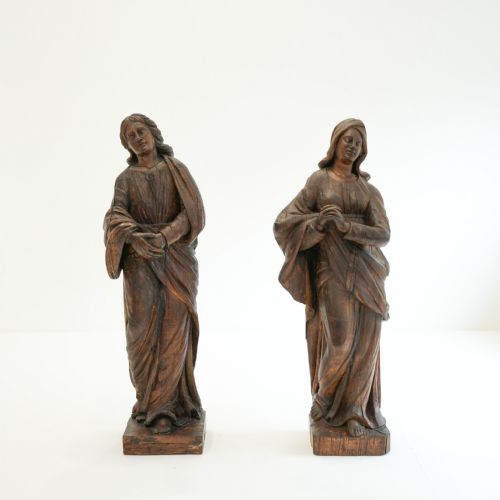
A dark wood religious statue encompasses devotional figures, saints, deities and altarpiece panels spanning multiple centuries of sacred art. Buyers seeking a dark wood religious statue encounter representations ranging from medieval European saints to Asian deities and figures carved from oak, limewood and hardwood.
The selections on this page draw predominantly from the sixteenth, seventeenth and eighteenth centuries, alongside later nineteenth century and early twentieth century examples. Formats vary from small devotional figures and detached statue heads to substantial sculptures originating from regions including South Germany, the Low Countries, the Upper Rhine and Asia.
Subject matter reflects diverse spiritual traditions, featuring Madonna and Child groups, praying figures, donors, shepherds and revered holy figures accompanied by traditional iconography such as the half moon, snake or eagle. These carvings served private contemplation, domestic shrines and larger ecclesiastical settings.
Materials and construction methods
Carvers shaped these works primarily from dense timbers such as oak, limewood and assorted hardwoods, selecting woods capable of holding intricate detail over centuries. Artisans employed hand chisels and gouges to form the deep drapery folds, facial expressions and symbolic attributes recorded in the evidence.
One seventeenth century saint stands patiently with a cherub tucked permanently around his ankles.
Distinctions in quality and execution
Condition and completeness also influence the standing of a piece, separating intact figures from those retaining only partial elements such as statue heads or fragments of larger altarpieces. The depth of the carver's understanding of posture and traditional iconography determines the visual power of the finished sculpture.
The Dark Wood Religious Statue Glossary
- Polychrome
- Painted in several colours. This surface treatment was frequently applied to wooden statues to bring realism to vestments and flesh tones.
- Gesso
- A white paint mixture consisting of a binder mixed with chalk, gypsum or pigment. It served as a prepared base for gilding and painting on wood.
- Altarpiece
- A structure depicting a religious subject placed behind or on an altar. Central panels from these large wooden constructions often survive as independent sculptures.
- Iconography
- The traditional or conventional images and symbols associated with a subject. In religious art, these symbols identify specific saints and biblical figures.
- Limewood
- A pale timber commonly utilised by European carvers for detailed sculpture. Its fine, even grain permits intricate undercut carving without splitting.
Dark Wood Religious Statue: Frequently Asked Questions
How do I date a wooden statue?
Dating relies upon stylistic markers in the carving of hair, drapery folds and facial types that align with specific periods like the Gothic or Baroque eras. Tool marks and the natural ageing of the timber provide further physical confirmation.
Examining the underside or back of the sculpture often reveals historical construction methods that help narrow down the century of manufacture.
Where were these statues displayed originally?
Many examples originated inside churches, abbeys and monastic chapels as part of larger altarpieces, rood screens or wall niches. Others served private devotional use in domestic shrines and household rooms.
Smaller figures were intended for portable altars or personal contemplation by devout individuals within the home.
How should I care for dark wood?
Maintain stable indoor humidity levels and keep wooden sculptures away from direct heat sources and strong sunlight to prevent timber shrinkage and cracking. Dust gently with a dry, soft brush rather than using liquid polishes or chemical cleaners.
Allowing the wood to age naturally preserves the historical surface patination built up over centuries of handling.
What do the animal symbols mean?
Animals in religious sculpture serve as traditional attributes identifying specific saints or theological concepts. For example, an eagle frequently accompanies Saint John, while a snake beneath a figure often references the Madonna.
These symbols allowed illiterate congregations to immediately recognise the narrative identity of each carved statue.