


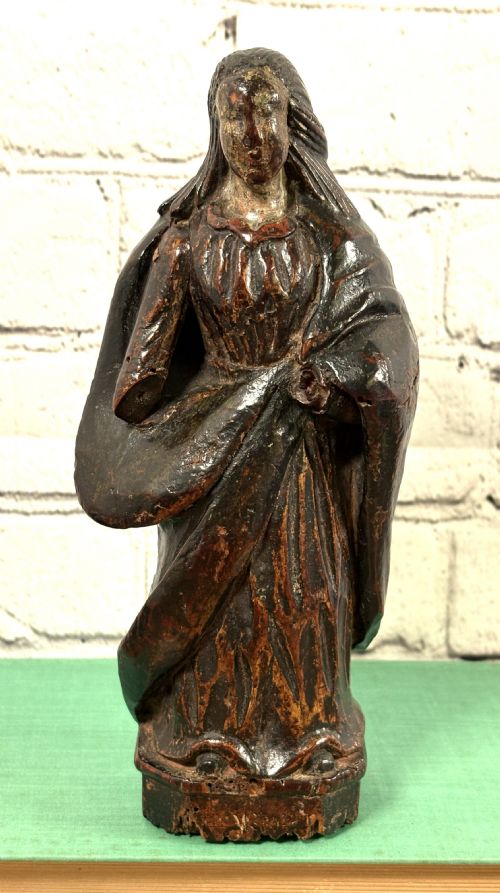

Ecclesiastical Wooden Sculpture
These pieces are ecclesiastical wooden sculpture, surviving devotional carvings that bring centuries of sacred craft and quiet contemplation into a room.
Ecclesiastical Wooden Sculpture
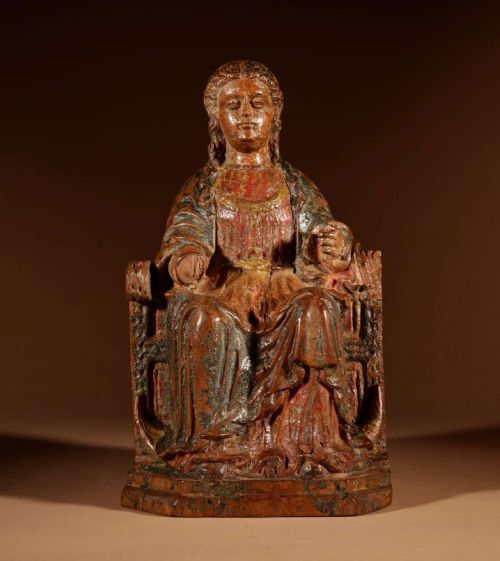
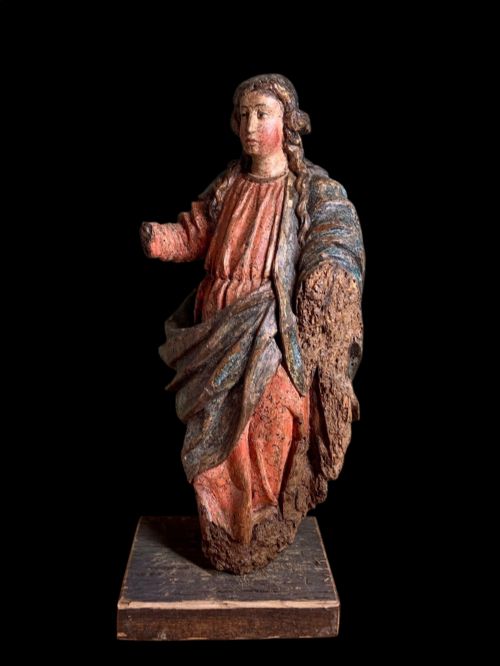
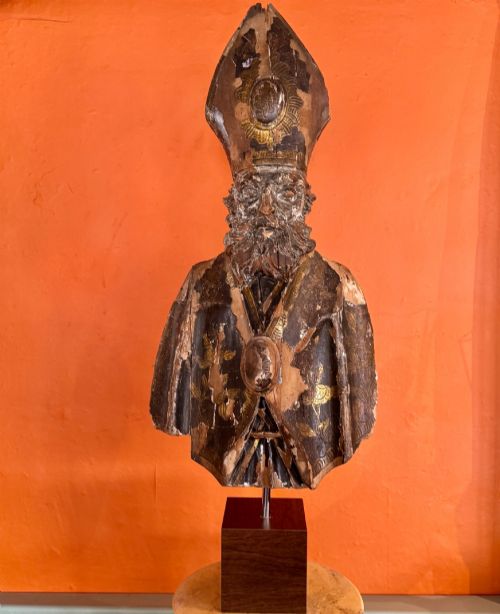
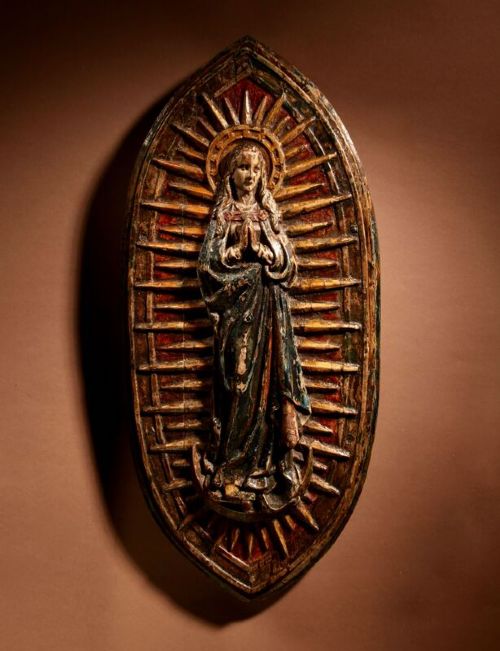
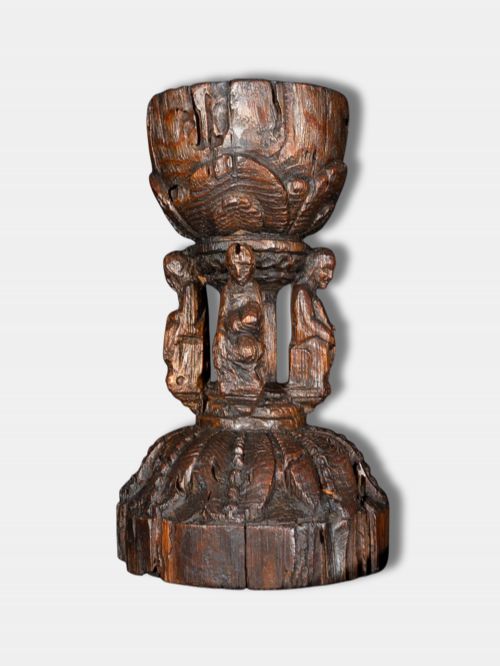
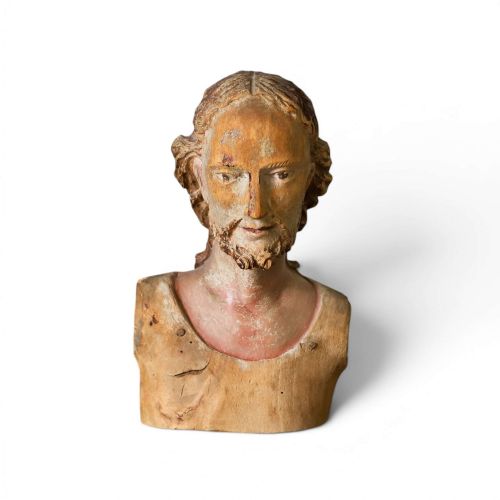
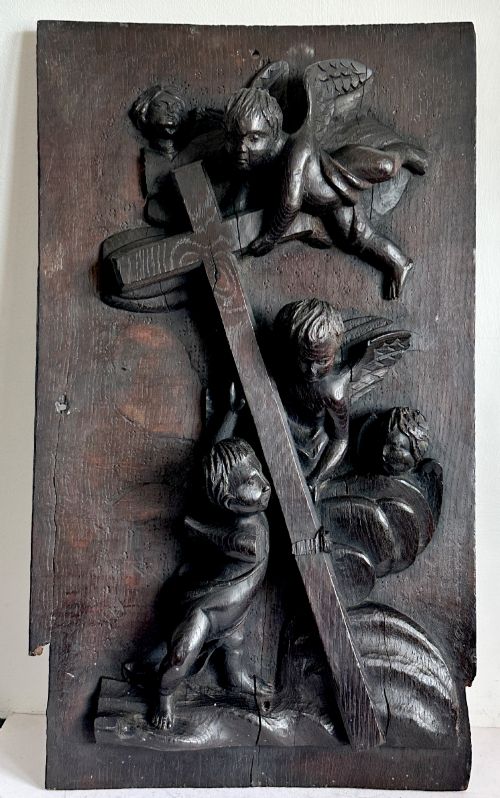
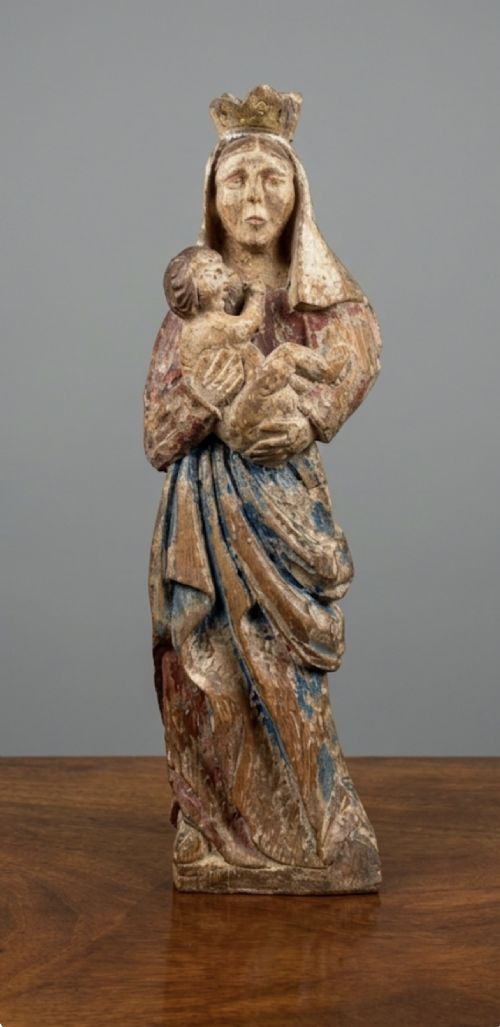
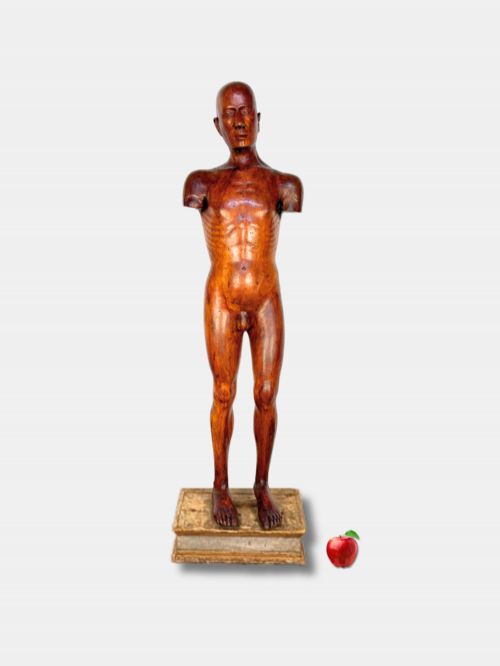
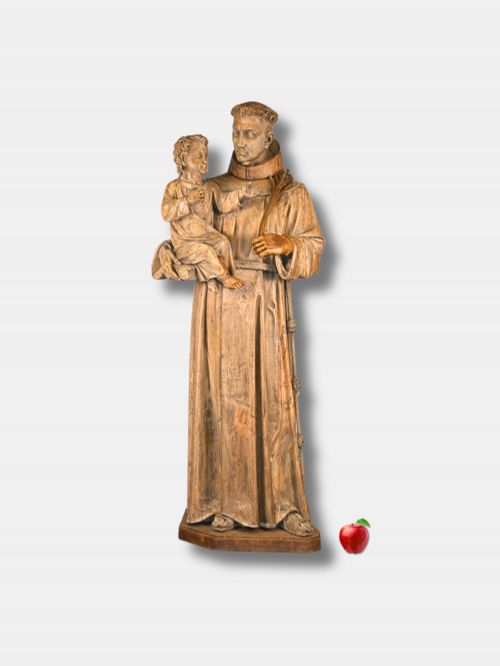
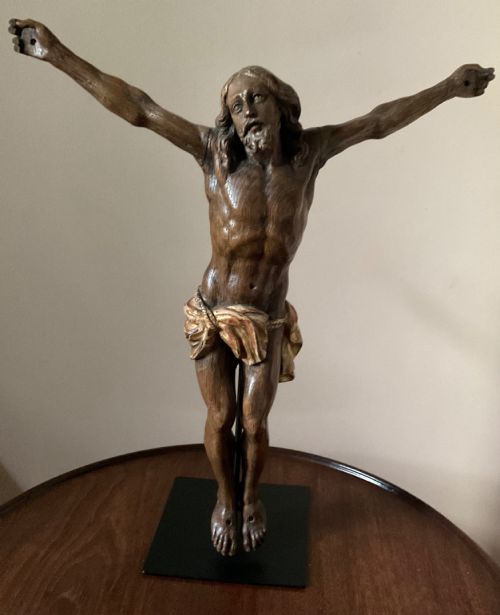
When you search for ecclesiastical wooden sculpture, you encounter devotional figures, panels, and architectural fragments rooted in Christian worship. These objects range from late medieval depictions of saints and biblical figures to Baroque angels and nineteenth-century statues.
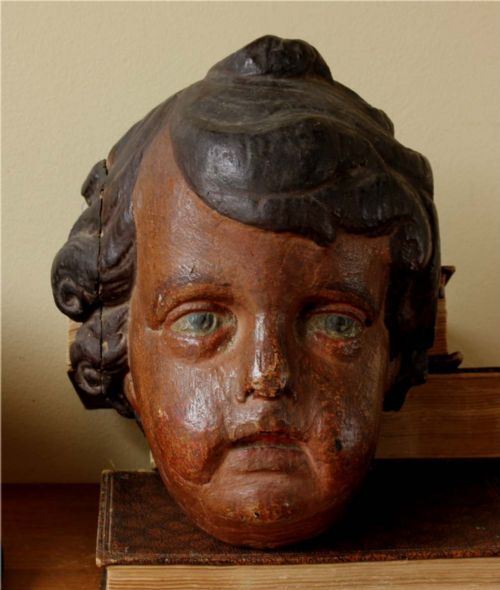
The pieces appearing most frequently on this page span the sixteenth through the nineteenth centuries, drawing on Gothic, Renaissance, and Baroque styles. You will find figures of the Virgin Mary, various saints, and cherubs carved in oak, walnut, and limewood.
Originating largely from continental workshops in Italy, France, and Germany, these sculptures served as focal points in churches, altarpieces, and private chapels. They survive today as tangible links to historical religious art and traditional woodcarving.
How They Were Made
Many surfaces received a layer of gesso, a prepared chalk and glue mixture, which provided a smooth ground for subsequent gilding with gold leaf or application of polychrome paint. Pigments brought the saints, angels, and biblical figures to life with vivid colour and depth.
Listings feature oak, walnut, limewood, and olive wood, spanning styles from late medieval to Gothic Revival.
What Varies in Quality
The standard of a carving rests on the anatomical proportion, the expressive depth of the face, and the confidence of the tool work in the drapery. Master carvers achieved a natural flow in garments and convincing posture that lesser artisans missed.
The survival of original surface treatments, whether remnants of polychrome paint or gold leaf over gesso, greatly influences the character of a piece. Finer examples retain clear tool marks and harmonious ageing across the wood and its finishes.
The Ecclesiastical Wooden Sculpture Glossary
- Polychrome
- Painted in several colours. This finish was commonly applied over wood or gesso to enhance realism in religious figures.
- Gesso
- A plaster mixture used as a coating for wood before painting or gilding. It creates a smooth surface for fine artistic work.
- Corpus Christi
- A Latin term meaning body of Christ. It refers specifically to sculptures of Jesus on the cross.
- Putti
- Depictions of chubby male children, often winged. They appear frequently in Baroque religious art as cherubs or angels.
- Altarpiece
- A structured artwork placed behind an altar. Central panels and architectural fragments often originated from these larger devotional assemblies.
Ecclesiastical Wooden Sculpture: Frequently Asked Questions
What are ecclesiastical wooden sculptures?
These works are carved wooden figures, panels, and architectural elements created for religious settings across Europe.
They depict saints, angels, and biblical scenes, serving devotional purposes in churches and chapels.
How were these sculptures used?
Historic pieces functioned as focal points for prayer, altarpiece components, or architectural ornaments within sacred spaces.
Today, they are collected as historical works of art and displayed in domestic interiors.
How do I care for wooden sculptures?
Keep the pieces away from direct sunlight and sudden temperature changes to protect the dry wood and historic paint.
Dust gently with a soft, dry brush and avoid applying modern polishes or cleaning agents to old surfaces.
How can I tell the period apart?
Stylistic clues such as Gothic drapery, Renaissance proportions, or Baroque theatricality help date the carving.
Material choices, tool marks, and the presence of early gesso or polychrome layers also indicate the era of manufacture.