

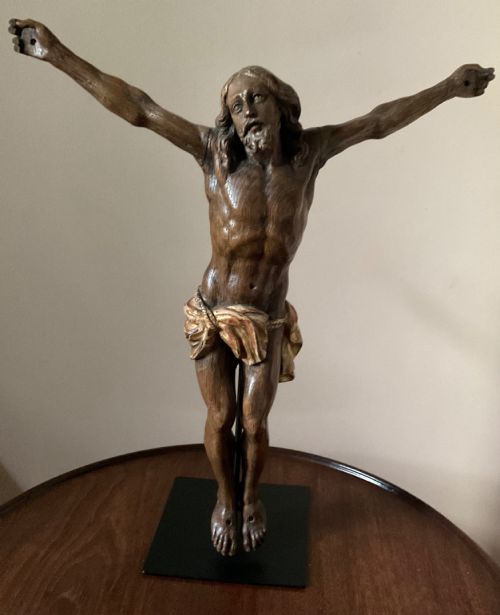


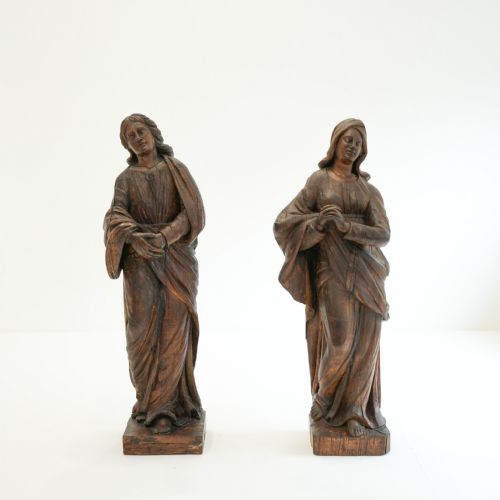


Carved Oak Religious Figure
Every carved oak religious figure captures centuries of devotion, presenting saints, angels and holy figures shaped from durable timber by historical hands.
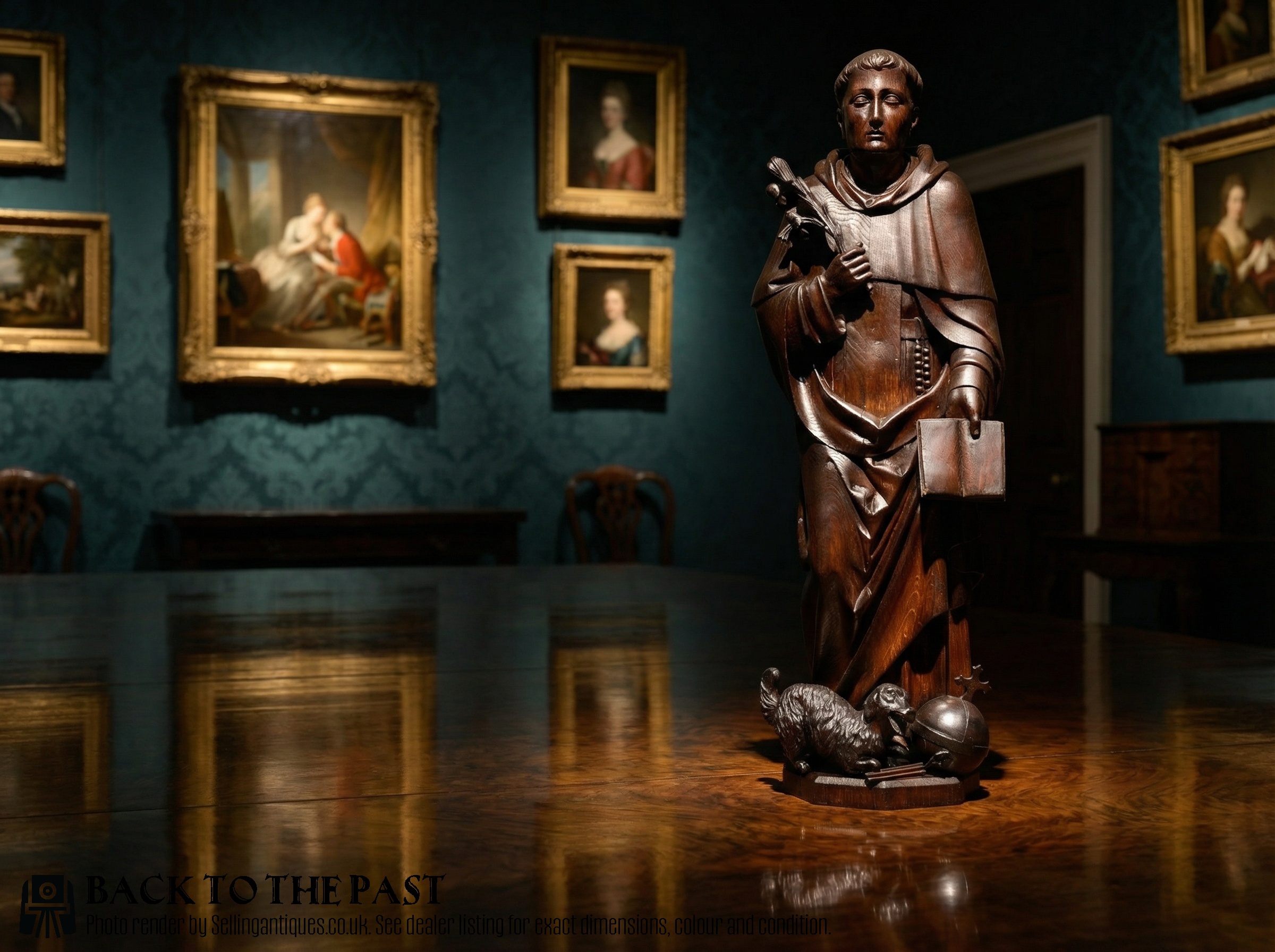
Carved Oak Religious Figure
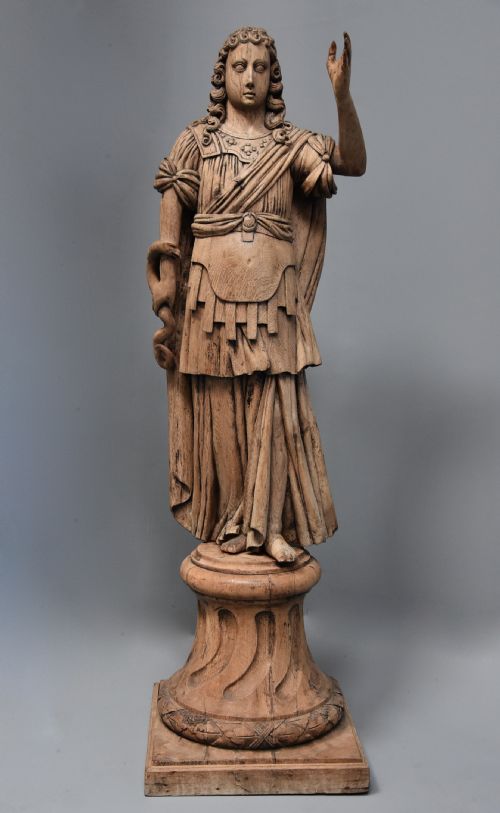
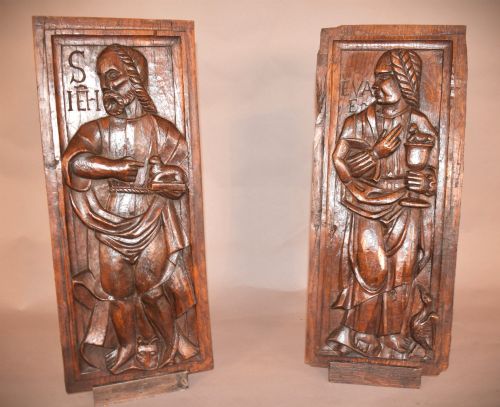
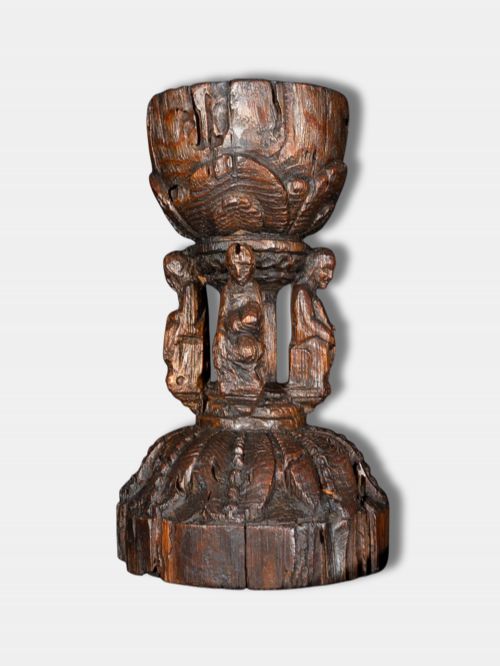
A carved oak religious figure represents saints, biblical personages, and ecclesiastical scenes intended for private contemplation or church decoration. Buyers encounter examples spanning from pre-sixteenth century Gothic works to nineteenth century revivals, encompassing freestanding statues, wall sculptures, and architectural fragments.
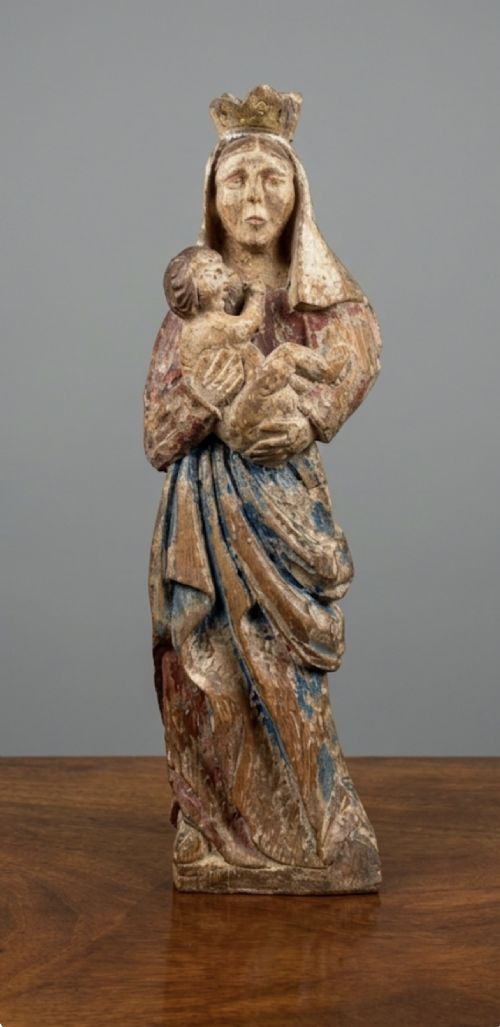
The selection ranges from early continental pieces depicting the Madonna and child, saints, and angels to later decorative interpretations. Regional origins stretch across France, Germany, Italy, Flanders, and the Low Countries, reflecting diverse sculptural traditions from medieval workshops onwards.
Materials and construction
Carvers worked with chisels and gouges, sometimes constructing composite groups from multiple timber blocks or integrating relief panels into architectural settings. Certain figures retain original surface treatments that reveal the historical application of pigments directly onto the wooden substrate.
Carved Oak Religious Figure Retail Price Guide 2026
Typical asking prices for carved oak religious figure among the pieces listed under this phrase on Sellingantiques today, from the lower quarter to the upper quarter. They describe what is for sale here now, not the wider market.
Angels carved in seventeenth century workshops frequently appear kneeling on clouds, frozen mid-devotion above earthly viewers.
Assessing quality
The standard of a carved oak religious figure depends upon the depth of the carving, the anatomical proportion, and the expressive power of the countenance. Master carvers achieved fluid movement in heavy fabric folds and lifelike hands, whereas lesser works rely on stiff repetition and shallow tool marks.
Preservation of original surface layers, such as polychrome paint or gilding, alters the desirability of a piece. Retaining untouched historical finishes elevates a sculpture above examples stripped to bare wood or heavily restored in later centuries.
Franz Keller
The Carved Oak Religious Figure Glossary
- Polychrome
- Painted in several colours. This surface treatment brought realism to wooden religious statues in medieval and renaissance churches.
- Gesso
- A plaster mixture used as a base for paint or gold leaf. It provided a smooth ground on carved wood surfaces.
- Parcel Gilt
- Partially gilded with gold leaf. This technique highlighted specific areas of clothing or hair on a wooden figure.
- Pieta
- A representation of the Virgin Mary holding the dead body of Jesus. It forms a common subject in medieval and later continental sculpture.
- Corpus Christi
- The body of Jesus depicted on a crucifix. These wooden carvings focus on the physical form during the crucifixion.
Carved Oak Religious Figure: Frequently Asked Questions
What periods do these figures come from?
The inventory encompasses periods ranging from pre-sixteenth century medieval pieces to nineteenth century revivals. Examples span the fourteenth century through to the Edwardian era.
Most items originate from the sixteenth, seventeenth, and eighteenth centuries, reflecting Renaissance, Baroque, and Gothic traditions.
How should I display a religious figure?
Wall sculptures and reliefs suit secure mounting on vertical surfaces, while freestanding statues require stable placement on pedestals or sturdy furniture. Placing them away from direct heat sources protects the aged wood.
Stable indoor humidity prevents the oak substrate and any remaining polychrome paint or gesso from drying out or cracking.
Are these figures painted or bare wood?
Many pieces retain historical traces of polychrome paint, gesso, or gold leaf upon their surfaces. These remnants show how carvers originally intended the sculptures to appear in ecclesiastical settings.
Other examples present bare oak due to historical stripping or the natural ageing of the timber over centuries of exposure.