




Dark Wood Saint Statue
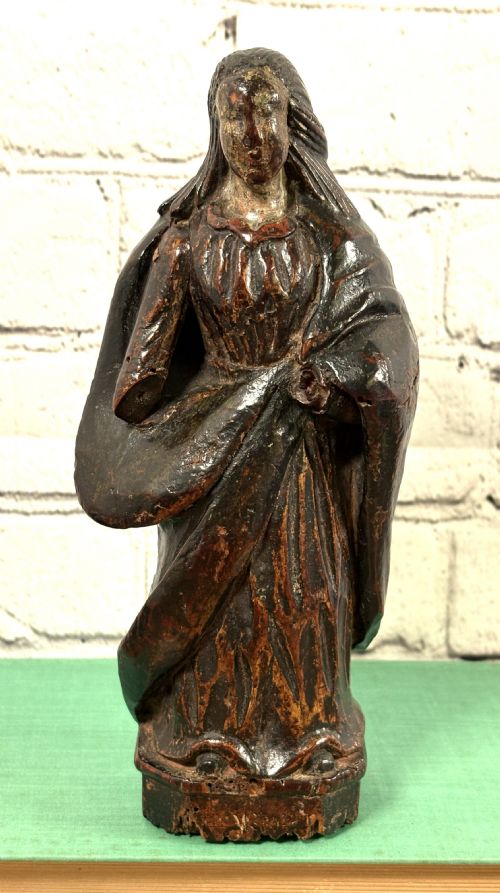
A dark wood saint statue brings centuries of devotion and craftsmanship into a room, offering tactile presence through deep grain and hand-chiseled folds.
Dark Wood Saint Statue
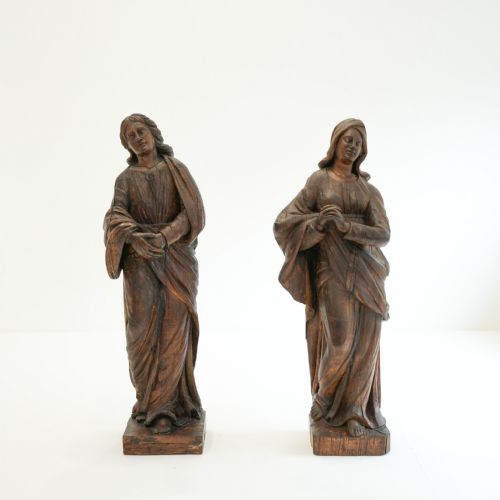
A dark wood saint statue represents figures from religious history, carved across several centuries from the sixteenth to the nineteenth. These sculptures take the form of individual figures, donor carvings, and pairs originating from European traditions like the Upper Rhine or broader ecclesiastical workshops.
The pieces appearing on this page span styles from Late Gothic and Renaissance to Baroque and Gothic Revival. Oak and limewood dominate the materials, often showing the deep patination of age alongside traces of older gesso and gilding.
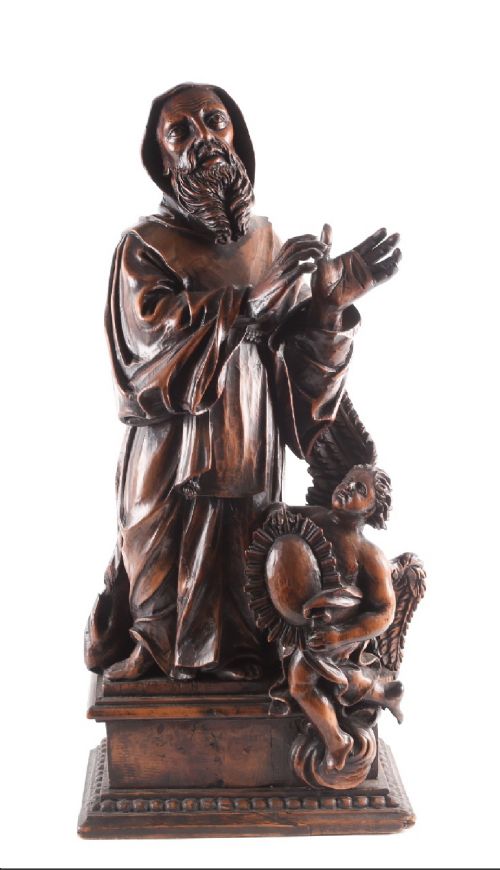
Buyers encounter distinct forms, from Saint Nicholas and Saint John with his eagle to anonymous donors accompanied by cherubs. Each piece reflects the sculptural language of its period, whether the austere piety of the sixteenth century or the dramatic flair of the eighteenth.
Materials and construction
Carvers shaped these statues primarily from solid timbers like oak, limewood, and assorted hardwoods. The choice of wood dictated the fineness of the detail, with limewood allowing intricate drapery and oak providing robust structural mass.
Surfaces were frequently prepared with gesso before receiving application of gold leaf or polychrome pigments. Over centuries, much of the original paint has worn away to reveal the dark, textured grain of the timber beneath.
One seventeenth-century saint comes complete with a diminutive cherub positioned attentively at his feet.
Judging quality and depth of carving
Quality rests in the anatomical confidence of the carving and the vitality retained in the folds of fabric. A superior hand achieves natural movement in stiff timber, whereas lesser work remains rigid and flat.
The preservation of original surface treatments, such as remnants of gilding and gesso, adds depth to the material history of the piece. Handling wear tells the story of centuries of touch without obscuring the original chisel work.
The Dark Wood Saint Statue Glossary
- Limewood
- A fine-grained European timber favoured by carvers for its even texture and suitability for intricate undercut details. It accepts sharp chisel work without splitting easily along the grain.
- Gesso
- A plaster mixture applied to wood surfaces as a smooth base for gilding and paint. It creates a bright foundation that enhances applied metal leaf.
- Polychrome
- The practice of decorating sculpture in multiple colours using various pigments. Traces often survive in the recessed areas of older carvings.
- Donor figure
- A sculpture depicting the person who commissioned a religious work, often shown kneeling or presenting the object. These figures appear frequently in medieval and Renaissance ecclesiastical art.
- Late Gothic
- An architectural and artistic style spanning the fifteenth and early sixteenth centuries characterised by intricate vertical lines and emotional intensity in sculpture.
Dark Wood Saint Statue: Frequently Asked Questions
How old are these wooden saint statues?
The pieces span from the sixteenth century through to the nineteenth century, encompassing periods like the Late Gothic, Renaissance, and Baroque.
Earlier examples from the sixteenth and seventeenth centuries show distinct regional carving styles, while later nineteenth-century pieces often reflect Gothic Revival movements.
What types of wood were used?
Carvers utilised dense and durable timbers including oak, limewood, and general hardwoods. Oak provides a heavy, visible grain, while limewood permits softer, more fluid sculptural details.
Many surfaces also incorporate historical layers of gesso, gilding, and metal elements.
Where were these statues originally placed?
These sculptures typically stood in churches, private chapels, or domestic shrines as objects of veneration and prayer. Some figures originated as architectural elements or parts of larger altarpieces.
Donor figures were often positioned near altars to represent the patrons who funded the ecclesiastical artwork.
How should I care for a wooden statue?
Keep wooden sculptures away from direct sunlight, radiators, and rapid fluctuations in humidity to prevent the timber from splitting. Dust them gently with a dry, soft brush rather than using liquid polishes.
Allowing the wood to breathe preserves the historic surface patination and any remaining traces of gesso or pigment.