





Antique Wooden Saint Statue
An antique wooden saint statue brings centuries of devotion, ritual, and hand carving directly into domestic spaces.
Antique Wooden Saint Statue
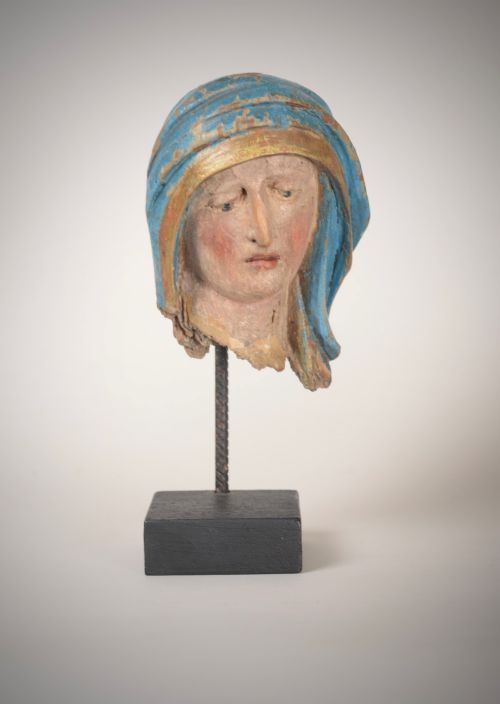
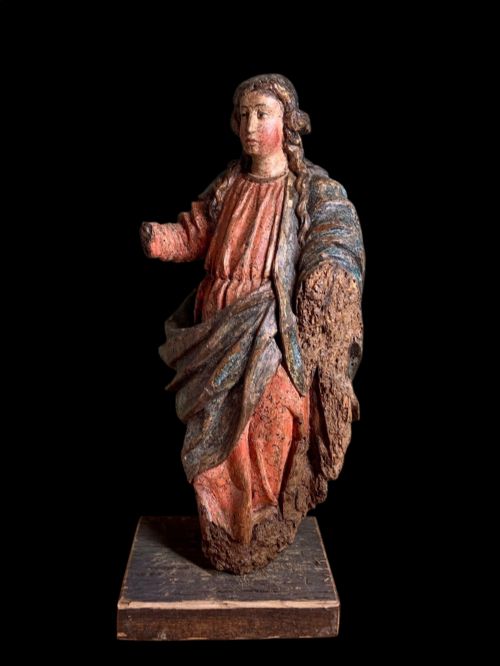
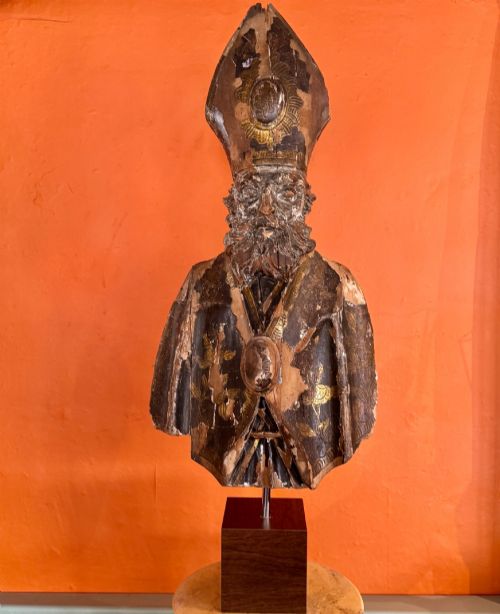
An antique wooden saint statue represents religious figures, bishops, and biblical characters carved across European workshops over many centuries. Buyers encounter pieces ranging from pre-sixteenth century Gothic oak carvings to seventeenth-century Baroque figures and later nineteenth-century folk art representations.
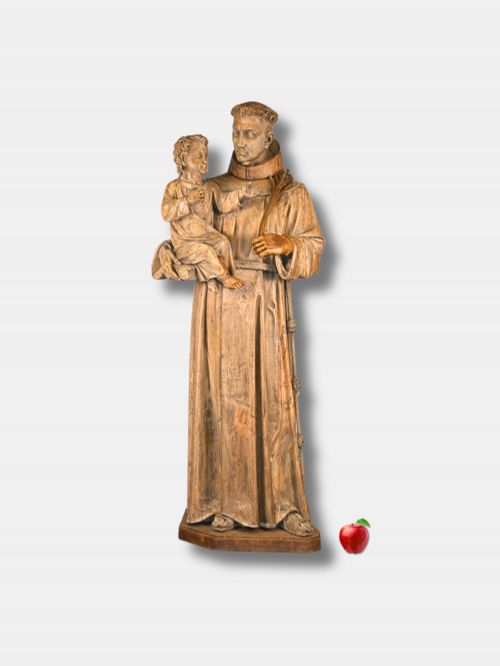
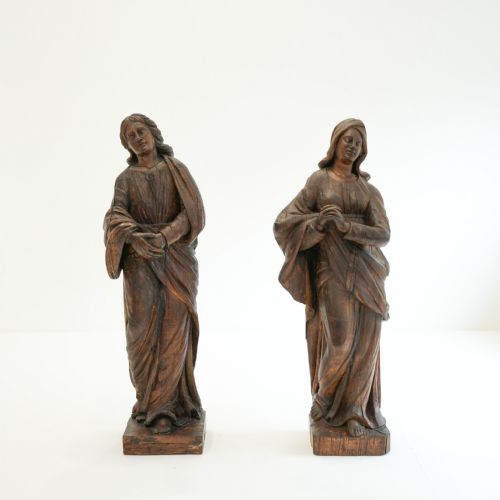
The forms span full-size church figures, processional statues, home altars, and architectural fragments. Many depict specific figures such as Saint Anthony, the Virgin Mary and Child, or Saint John, often identifiable by traditional attributes like books, animals, or vestments.
Continental origins dominate, with German, Italian, French, Spanish, and Flemish pieces appearing frequently. These objects transition from ecclesiastical settings into private collections, retaining their carved presence and historical patination.
Materials and construction methods
Carvers utilised local timbers suited to regional traditions, selecting durable oak, fine-grained limewood, applewood, or general carved wood. Wood selection dictated the depth of detail achievable, particularly in drapery folds and facial expressions.
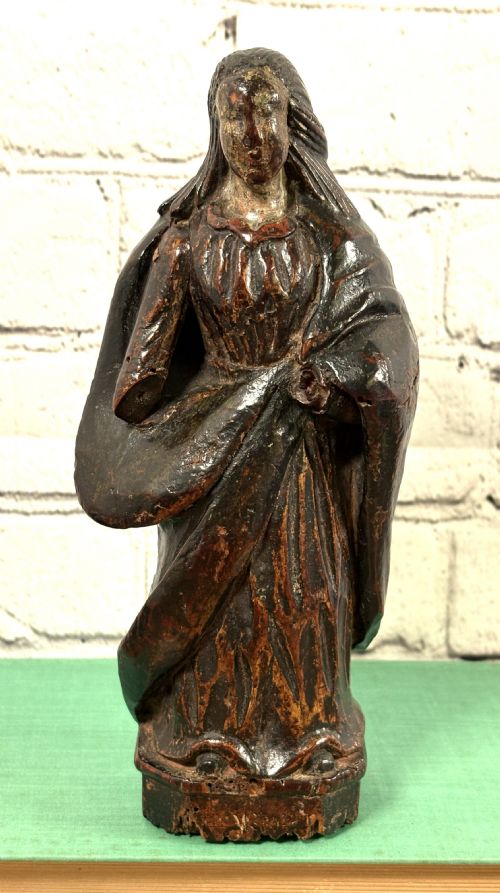
Surface decoration frequently involved layers of gesso applied beneath paint or gold leaf. Polychrome finishes brought garments and flesh tones to life, though centuries have often left these pigments weathered, chipped, or partially exposed.
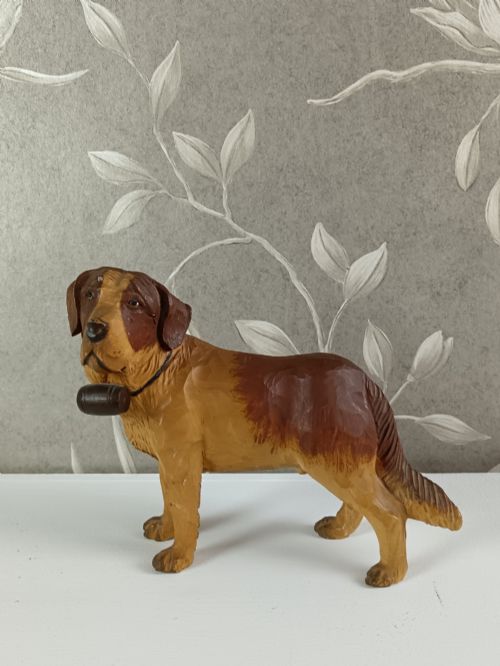
Among the solemn bishops and saints sits a sturdy wooden rescue dog complete with a collar, proving sculptors occasionally looked to four-legged heroes.
Assessing sculptural standard
Quality rests primarily in the anatomical proportion, hand carving execution, and expressiveness given to the face and hands. Master carvers achieved fluid, naturalistic folds in heavy vestments, whereas lesser works remain stiff and blocky.
The survival of original surface finishes significantly influences a piece. Intact polychrome paint or gilding demonstrates superior preservation, whereas aggressive later stripping or repainting alters the historical integrity of the timber.
Franz Keller
The Antique Wooden Saint Statue Glossary
- Polychrome
- Decoration applied in multiple colours, typically using paint on wood or gesso surfaces. This finish defined the original appearance of medieval and Baroque church figures.
- Gesso
- A plaster mixture applied as a smooth preparation layer over wood before gilding or painting. It provides a stable base for delicate surface decoration.
- Giltwood
- Timber decorated with thin sheets of gold leaf over a prepared ground. It was widely used in ecclesiastical furnishings and statues to catch candlelight.
- Capipote
- A Spanish devotional figure with a carved wooden head and hands attached to a framework dressed in real fabric garments. These statues were often used in religious processions.
- Ecclesiastical
- Relating to the Christian Church or its clergy. Pieces described thus were originally made for use in churches, abbeys, or chapels.
Antique Wooden Saint Statue: Frequently Asked Questions
How were these statues originally used?
These figures stood in churches, private chapels, and roadside shrines to aid prayer and contemplation. Some took part in outdoor religious processions, carried on platforms by local parishioners.
Smaller examples served domestic devotion within home altars. They functioned as visual focal points for households seeking spiritual protection.
How do I distinguish medieval pieces from later revivals?
Pre-sixteenth century and sixteenth-century carvings display tool marks, timber shrinkage, and wear patterns consistent with genuine age. The style of drapery and facial carving aligns with Gothic or Renaissance traditions.
Nineteenth-century Gothic Revival pieces often utilise older stylistic motifs but exhibit different surface patination and machine assistance in preparation. Examining the grain and joins helps determine the true period.
Why do so many statues lack paint?
Centuries of changing aesthetic tastes led many owners or dealers to strip polychrome paint down to bare wood. Fashions in different eras favoured exposed timber grain over brightly coloured medieval surfaces.
Natural degradation and cleaning also caused original paint layers to flake away over time. Surviving traces beneath crevices often indicate where full colour once existed.
How should I care for an antique wooden statue?
Keep wooden sculptures away from direct heat sources, radiators, and rapid humidity changes to prevent the timber from splitting. Dust them gently with a soft, dry brush without applying modern polishes or cleaning agents.
Stable indoor environments preserve remaining gesso and paint layers. Handling should be minimal, supporting the base rather than projecting limbs or carved details.