



Carved Wooden Mannequin
A carved wooden mannequin is a striking sculptural object of utility and display, highly sought after for its historic craftsmanship and distinct character.
Carved Wooden Mannequin
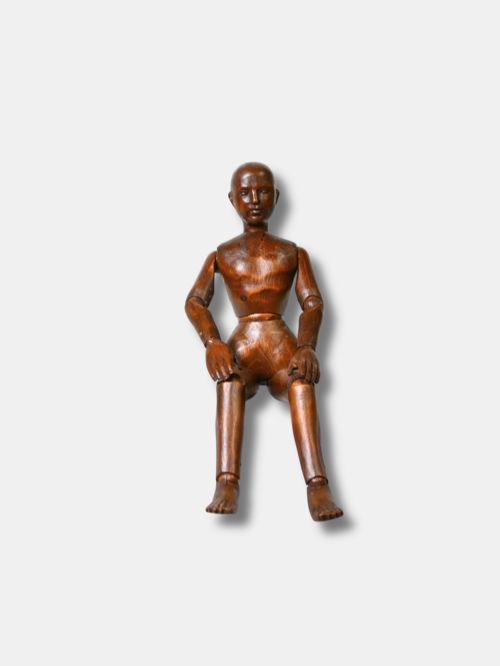
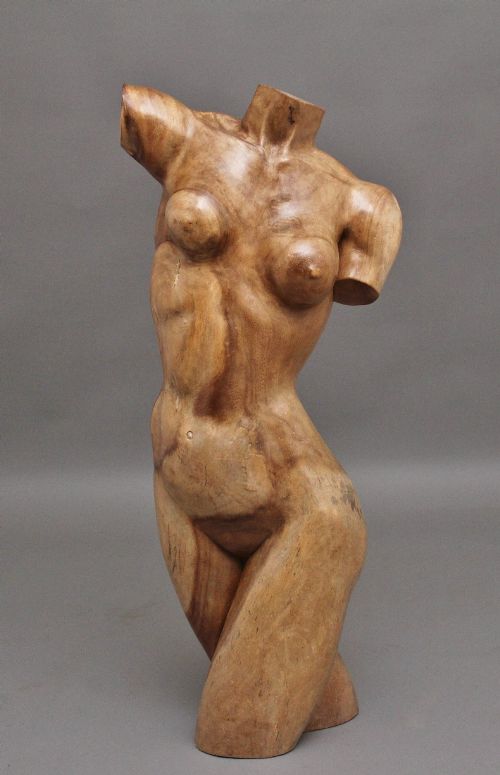
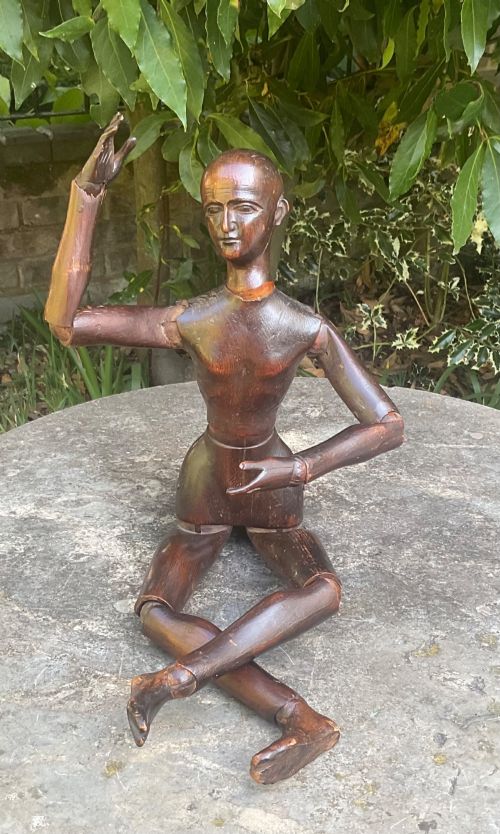
A carved wooden mannequin serves primarily as an artist lay figure, milliner head, or trade sign, originating from workshops across Europe and beyond. These figures appear in various forms including life-size torsos, fully articulated models, and processional figures.
The selection ranges from nineteenth-century French and German studio models to eighteenth-century Italian and Spanish religious statues. Buyers encounter utilitarian millinery blocks alongside expressive folk art carvings and trade figures.
Originating from diverse traditions spanning the eighteenth to the early twentieth centuries, each piece reflects the specific sculptural demands of its era, whether for artistic study or commercial display.
How they were made
Skilled carvers shaped solid blocks into anatomical forms or trade displays, employing joints fastened with metal or wood to achieve mobility in artist models. Surfaces received layers of gesso and paint to create smooth textures or detailed coloration.
Carved Wooden Mannequin Retail Price Guide 2026
Typical asking prices for carved wooden mannequin among the pieces listed under this phrase on Sellingantiques today, from the lower quarter to the upper quarter. They describe what is for sale here now, not the wider market.
A stoic wooden cricketer stands ready for a match, proving that early twentieth-century carvers applied their skills to sports just as readily as studio anatomy.
What varies in quality
The degree of anatomical precision and articulation sophistication separates standard studio models from exceptional workshop carvings. Finer examples display meticulous joint engineering and sensitive facial modeling that reflect the hand of a skilled sculptor.
Original surface treatments, such as untouched polychrome paint or aged gesso patination, heavily influence the visual integrity of a piece. Retained original fixtures, bases, and functional hardware preserve the historical context and integrity of the object.
The Carved Wooden Mannequin Glossary
- Lay figure
- An articulated wooden model used by artists to study human anatomy, drapery, and posture. These figures feature movable joints held together by pegs or internal wire.
- Santos
- A carved wooden religious figure representing a saint or sacred personage, often dressed in real textiles or finished with polychrome paint. Originating largely from Catholic traditions, they served devotional or processional purposes.
- Millinery head
- A carved wooden or gesso-coated block used by hat makers to shape and display millinery. They frequently date to the nineteenth and early twentieth centuries.
- Capipote
- A Spanish devotional figure with a carved wooden head and hands attached to a framework or robes. These sculptures were often utilised in religious processions.
Carved Wooden Mannequin: Frequently Asked Questions
What is a lay figure?
A lay figure is an articulated wooden mannequin designed with movable joints to assist artists in drawing complex clothing folds and human proportions.
Historically utilised in studios across Europe, these models allowed painters to arrange drapery precisely without requiring a live model to hold a static pose for long periods.
What are Santos figures?
Santos figures are carved wooden sculptures representing saints, traditionally created for devotional display or religious processions in Italy and Spain.
Many examples feature articulated arms or detailed polychrome paintwork, reflecting the religious customs of their period of origin.
How do I care for wooden mannequins?
Care involves keeping the objects away from direct heat sources and drastic humidity fluctuations to prevent wood splitting and paint flaking.
Dusting gently with a dry, soft cloth preserves the original gesso and polychrome surfaces without introducing moisture that could damage historic finishes.