



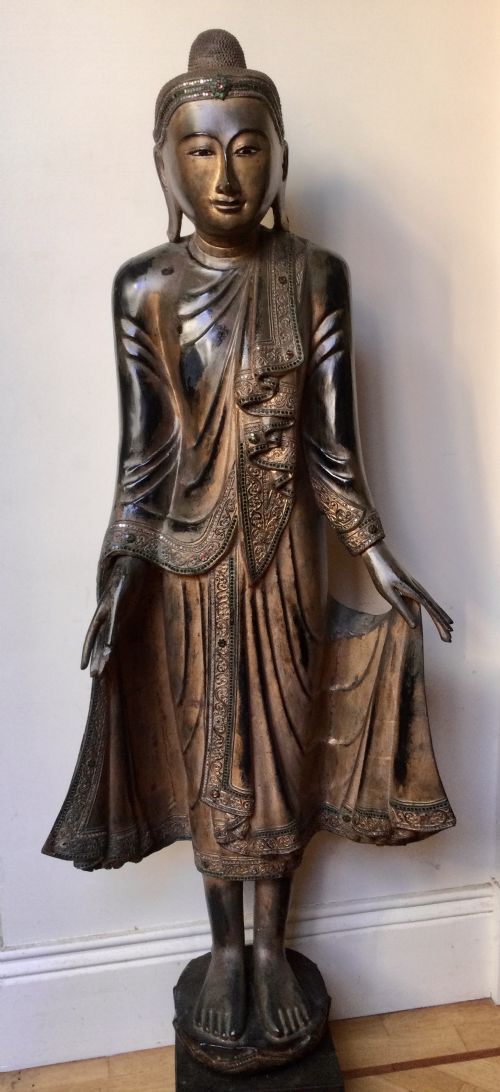
Gilded Wooden Buddha Figure
A gilded wooden buddha figure brings serenity and profound presence to a room, carved by hand and layered with rich gold leaf over timber.
Gilded Wooden Buddha Figure
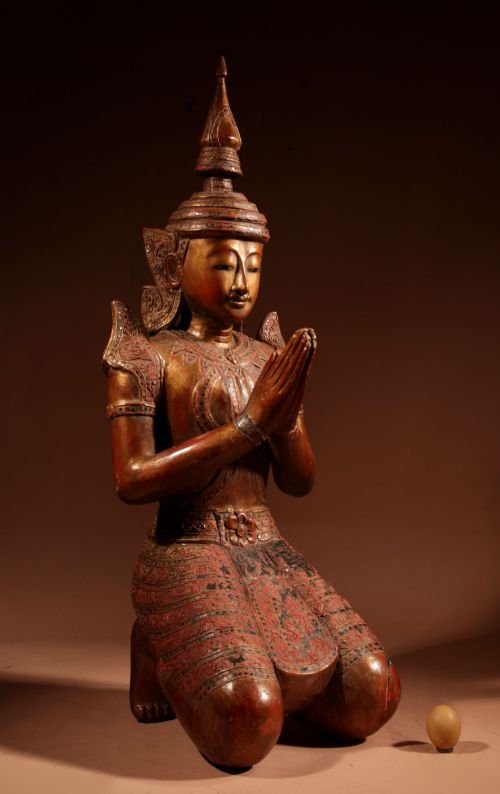
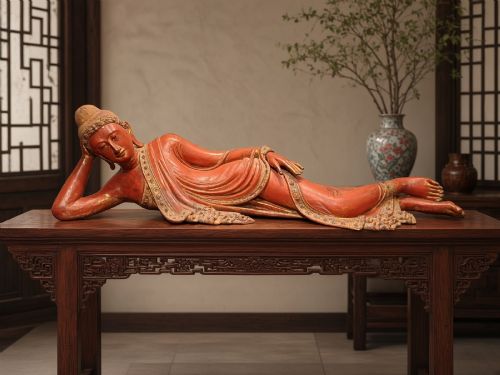
When you search for a gilded wooden buddha figure, you encounter sacred sculptures carved from timber and finished with gold leaf, lacquer, or gesso. These pieces span traditions from Chinese dynasties to Burmese monastic workshops, taking forms that range from serene seated figures to monumental temple guardians and reclining buddhas.
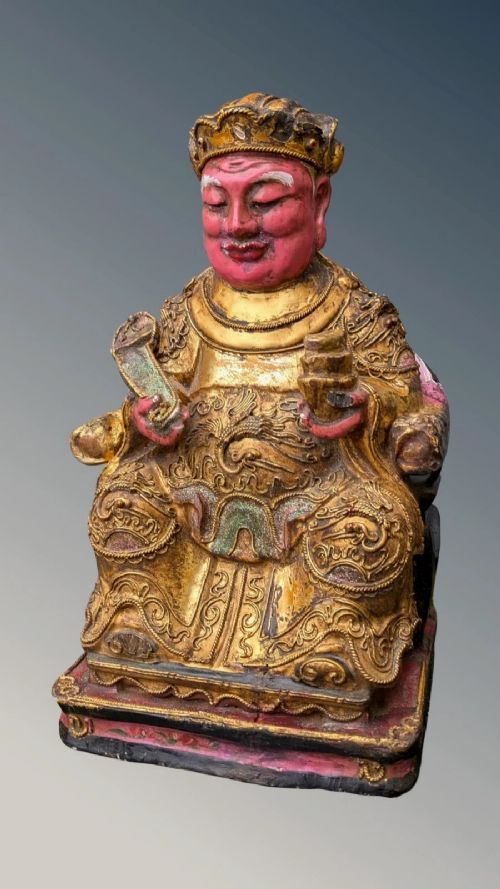
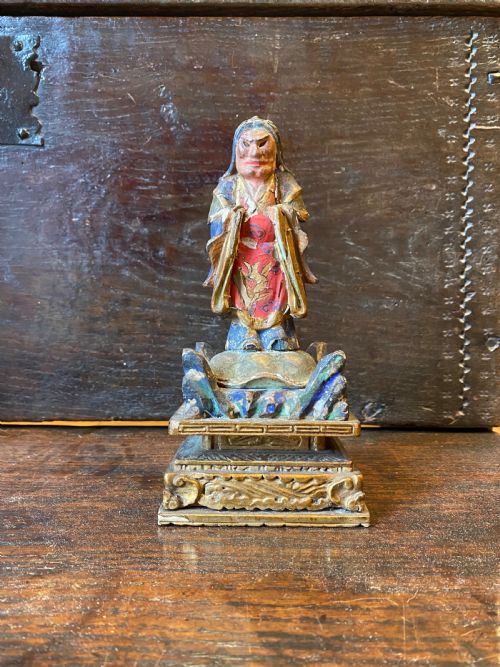
You are most likely to meet 19th-century Burmese and Chinese examples on this page, reflecting periods such as the Qing dynasty and the Edwardian era. The selection includes figures of deities, Guanyin, and temple guardians alongside traditional buddhas, each showing distinct regional carving styles and surface decoration.
The materials and forms vary from simple carved wood to complex compositions featuring polychrome paint and glass inlay. Their origins trace back to religious settings and temples, where artisans created them for devotion and ritual before they entered the decorative sphere.
How they were made
Craftsmen shaped these figures using carved wood as the foundational medium, often selecting timbers that could hold fine details for drapery and facial expressions. The carvers worked by hand, utilising traditional chisel and gouge techniques to bring depth and proportion to each deity or buddha.
Once carved, the wooden surface received coats of gesso and lacquer to smooth the grain and provide a stable base for the metallic finish. Artisans then applied delicate gold leaf or gilt wood layers by hand, occasionally augmenting the visual richness with polychrome paint and glass inlay.
Temple guardians occasionally sport remarkably fierce expressions designed to scare away evil spirits while stubbornly keeping their gilded eyebrows intact.
What varies in quality
The survival and application of the surface finish also dictate the tier of a piece, with intact gold leaf and rich layers of lacquer elevating the visual impact. Patination earned through age and ritual use adds depth to the material, distinguishing masterworks from simpler provincial pieces.
The Gilded Wooden Buddha Figure Glossary
- Gesso
- A plaster-like mixture applied to wood to create a smooth surface before gilding. It provides the essential preparation layer for gold leaf application.
- Polychrome
- Painted in several colours. This decorative technique often complements the gilding on Chinese and Burmese temple figures.
- Gilt wood
- Wood that has been coated with a thin layer of gold leaf or powder. It gives sculptures a luminous and enduring metallic surface.
- Glass inlay
- Small pieces of coloured glass embedded into the wooden frame or sculpture. This technique adds sparkle and intricate detail to traditional garments.
- Lacquer
- A clear or coloured varnish made from tree sap that hardens into a durable finish. It protects the carved wood and enhances the depth of the object.
Gilded Wooden Buddha Figure: Frequently Asked Questions
What is a gilded wooden buddha figure?
A gilded wooden buddha figure is a sacred sculpture carved from timber and finished with gold leaf over a prepared base. These pieces originate from various Asian traditions and time periods.
Craftsmen created them for temples and domestic shrines, combining devotional purpose with high artistic skill in carving and surface decoration.
How were these figures used originally?
These sculptures served as focal points for meditation, prayer, and ritual veneration within monastic or temple environments. Monks and worshippers offered incense and devotions before them.
Over time, many figures transitioned from active religious contexts into collections and secular interiors, retaining their meditative atmosphere.
How do I live with a wooden buddha?
Display your figure in a stable environment away from direct sunlight and sudden humidity changes to protect the delicate wood and gold leaf. Place it at a height where you can appreciate the carving and serene expression.
Keep the surrounding space uncluttered to allow the sculptural presence and historical character of the piece to anchor the room.
How do I tell different periods apart?
Differentiating periods relies on observing the carving style, the type of lacquer or paint used, and regional aesthetic conventions. Burmese Mandalay pieces often feature distinct crown and robe treatments compared to Chinese Qing dynasty figures.
Examining the wear patterns, tool marks, and materials helps connect a sculpture to its historical era and workshop tradition.