

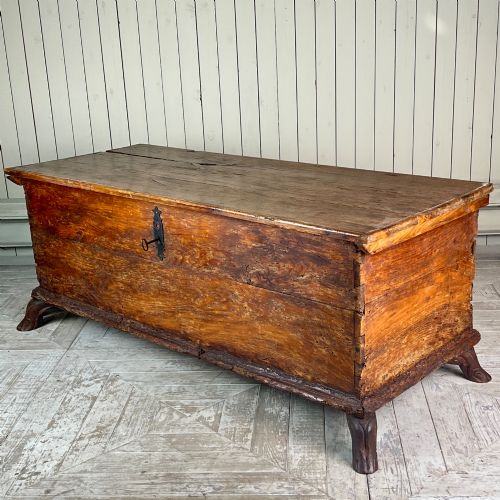
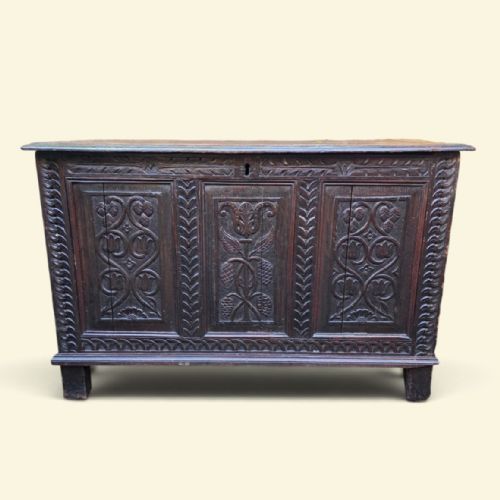
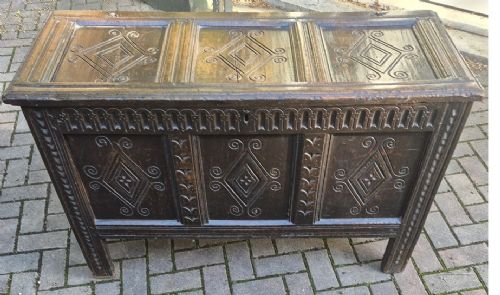

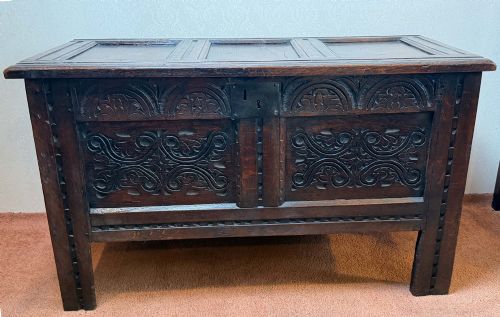

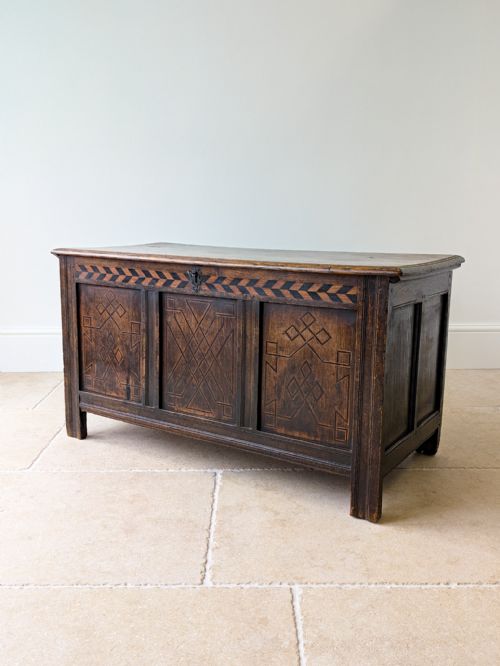
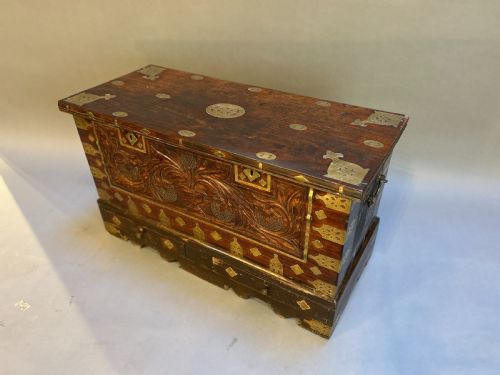
Carved Wooden Blanket Box
A carved wooden blanket box brings tactile depth and sturdy storage to a room, holding centuries of regional craftsmanship in heavy timber.
Carved Wooden Blanket Box
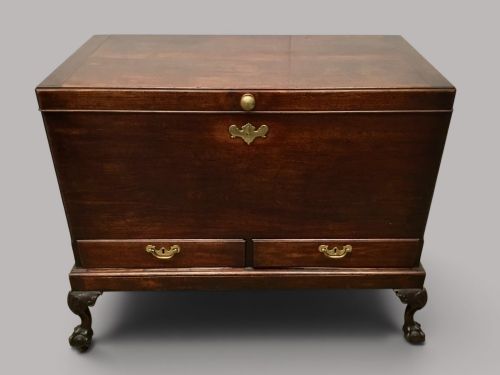
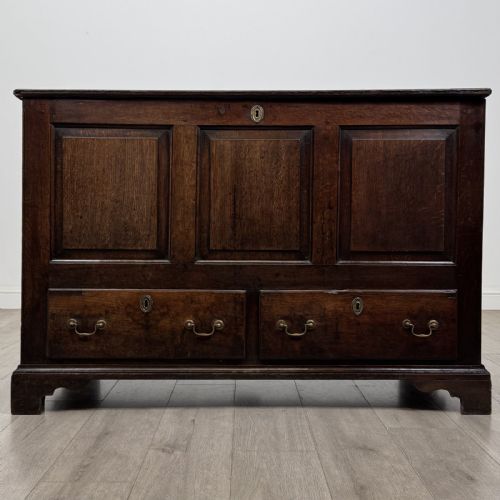
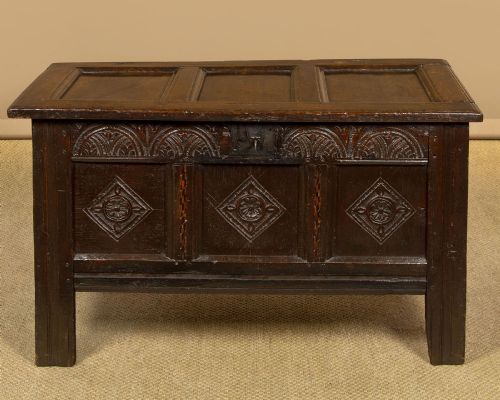
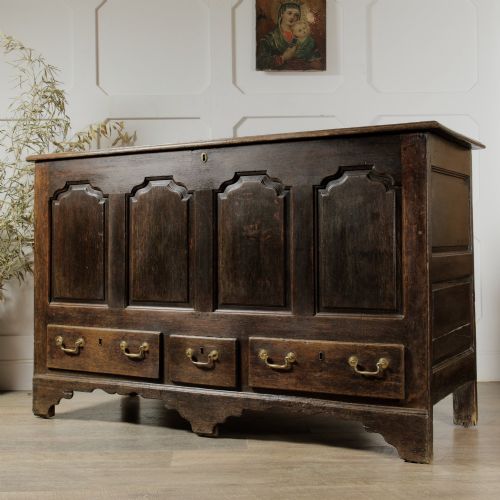
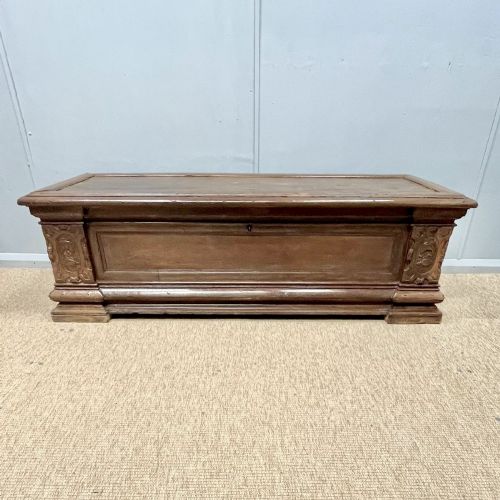
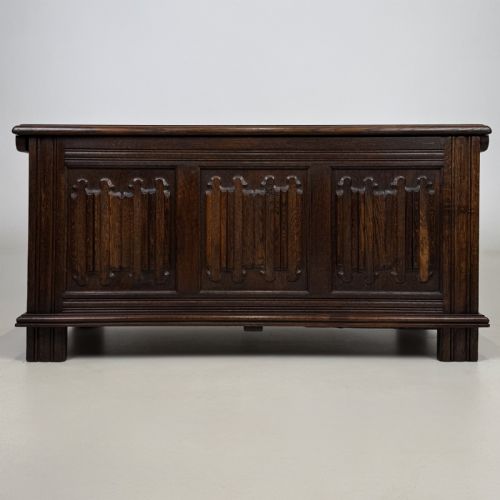
A carved wooden blanket box encompasses a diverse group of storage furniture including coffers, chests, trunks, and hall benches. These pieces emerge from periods spanning the seventeenth century through to the nineteen thirties, covering diverse regional traditions.
The selection includes Welsh oak coffers, Anglo-Indian and Chinese export trunks in camphor wood or teak, and revival styles in walnut and oak. Buyers frequently encounter nineteenth-century pieces alongside older seventeenth-century examples and twentieth-century export items.
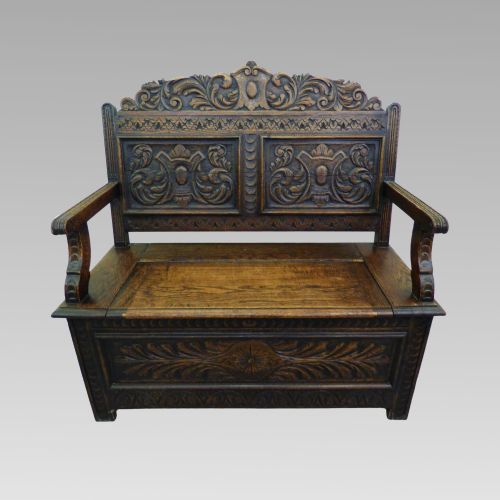
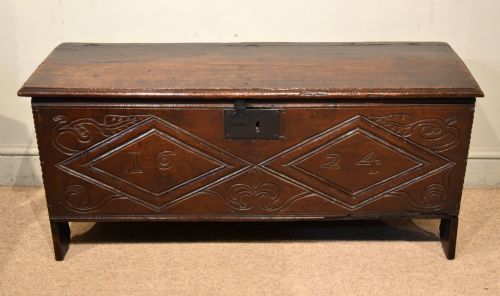
Forms range from traditional panelled oak coffers with carved decoration to brass-studded celebration chests and carved walnut hall seats. Each piece serves as a functional container while displaying distinct stylistic origins from Britain, Asia, and the broader empire.
How they were made
Construction relies on solid timbers such as oak, walnut, teak, camphor wood, and unspecified hardwoods. Artisans build these robust containers using heavy boards joined to withstand generations of daily utility.
Decoration is achieved through hand carving directly into the timber surface, creating raised panels, geometric motifs, and figurative details. Metal elements like brass and iron provide structural reinforcement, hinges, and decorative studwork.
Carved Wooden Blanket Box Retail Price Guide 2026
Typical asking prices for carved wooden blanket box among the pieces listed under this phrase on Sellingantiques today, from the lower quarter to the upper quarter. They describe what is for sale here now, not the wider market.
The available listings feature pieces spanning the seventeenth century, Victorian era, and nineteen thirties, constructed from oak, teak, camphor wood, and walnut.
What varies in quality
Quality rests upon the crispness of the hand carving and the integrity of the timber used in construction. Earlier seventeenth-century pieces display regional British joinery traditions, whereas export pieces from Asia showcase intricate botanical or pictorial relief work in exotic woods.
The sophistication of the hardware, including original brass straps and iron hinges, elevates a piece from a simple utility trunk to a finely resolved work of art. The condition of the original timber surface and the depth of the relief carving dictate the standing of each box within its period.
The Carved Wooden Blanket Box Glossary
- Coffer
- A heavy wooden chest traditionally used for storing valuables or textiles. These sturdy receptacles often feature hinged lids and raised panel construction.
- Camphor wood
- An aromatic hardwood frequently utilised in export chests from Asia. Its distinct scent naturally deters insects from stored garments.
- Jacobean Revival
- A nineteenth-century stylistic movement copying seventeenth-century British furniture designs. Pieces in this style typically feature heavy oak and deep geometric carving.
- Zanzibar chest
- A distinct type of heavily ornamented merchant chest originating from East Africa and India. They are characterised by brass studding and strapwork over hardwood.
- Hall bench
- A seating form created by adapting a chest or coffer with the addition of a backrest. These items combine utility storage with hallway seating.
Carved Wooden Blanket Box: Frequently Asked Questions
Where were these chests made?
The pieces originate from diverse workshops spanning Britain, Wales, India, China, and Zanzibar. Regional traditions heavily influence the choice of timber and the style of decoration.
British examples typically utilise local oak or walnut, while export pieces showcase Asian hardwoods like camphor wood and teak.
How do I care for antique wood?
Maintain the timber by keeping the box away from direct heat sources and sudden temperature fluctuations. Regular application of suitable wax preserves the finish without building up residue.
Allow the natural grain to breathe and avoid placing damp items directly onto the interior wood surfaces.
Are these boxes suitable for daily seating?
Certain forms, particularly those designated as hall seats, are engineered to support regular sitting. Standard coffers and storage trunks are primarily designed to hold textiles and possessions rather than bear active weight.
Check the structural rigidity of the lid and hinges before using any chest as a regular bench.
How can I tell the period?
Dating relies on examining the tool marks, construction methods, and timber species characteristic of specific centuries. Seventeenth-century pieces display hand-riven oak and traditional pegged joinery.
Later Victorian revival items and twentieth-century export pieces show machine assistance alongside hand-carved decorative surfaces.