

Carved Walnut Sofa
A carved walnut sofa brings substantial timber framing and deep relief carving into a room, spanning nineteenth-century revivalist periods and twentieth-century interpretations.

Carved Walnut Sofa
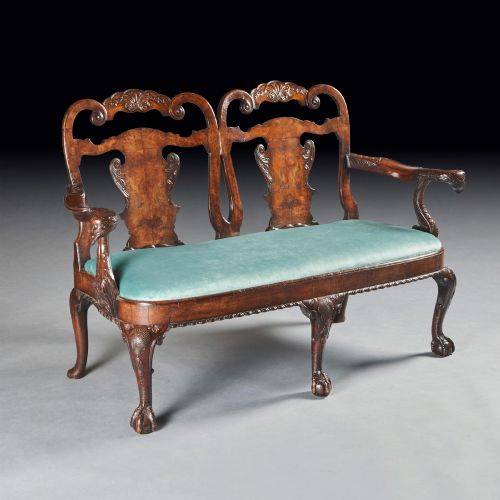
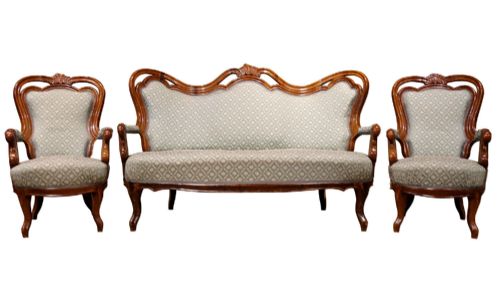
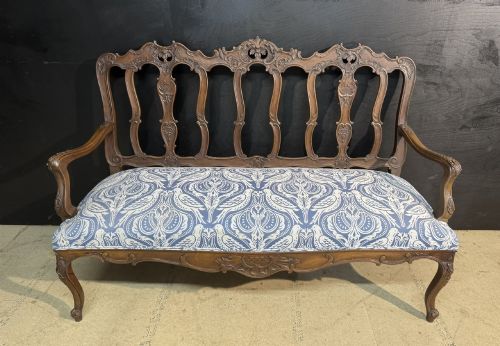
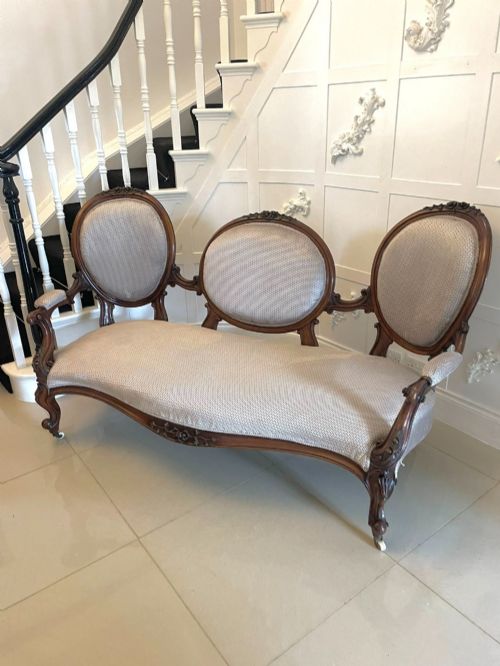
A carved walnut sofa unites a solid hardwood frame with decorative moulded or chisel work, appearing frequently in Victorian iterations alongside French styles. Buyers exploring a carved walnut sofa encounter pieces defined by exposed timber frameworks, curved backrests, and upholstered seating sections.
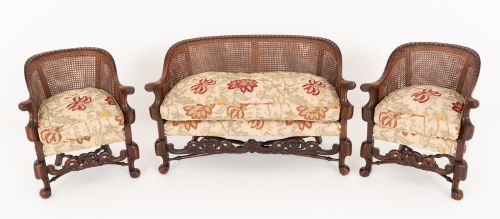
The historical span reaches from mid-Victorian decades through Edwardian revivals and later twentieth-century interpretations. These frameworks take various structural forms, from cameo backs and double end chaise longue designs to larger multi-seat salon suites.
Origin points diverge between British workshops following Georgian or Queen Anne designs and continental European makers producing French Louis XV and baroque revival pieces. Each variant relies on the dense grain of the timber to support elaborate floral or scroll ornamentation along the crest rail and cabriole legs.
How they were made
Cabinet makers utilised dense walnut and burr walnut veneers over secondary timbers to construct stable frameworks capable of withstanding deep hand-carving. Artisans shaped the crest rails, arms, and cabriole legs using gouges and chisels to achieve high-relief floral motifs or scrolling foliage.
Upholstery techniques combined traditional stuffing materials with durable textiles, velvet, leather, or cane panels integrated directly into the wooden framework. Frames were assembled using pegged mortise and tenon joints before being polished to enhance the natural dark figuring of the wood.
Carved Walnut Sofa Retail Price Guide 2026
Typical asking prices for carved walnut sofa among the pieces listed under this phrase on Sellingantiques today, from the lower quarter to the upper quarter. They describe what is for sale here now, not the wider market.
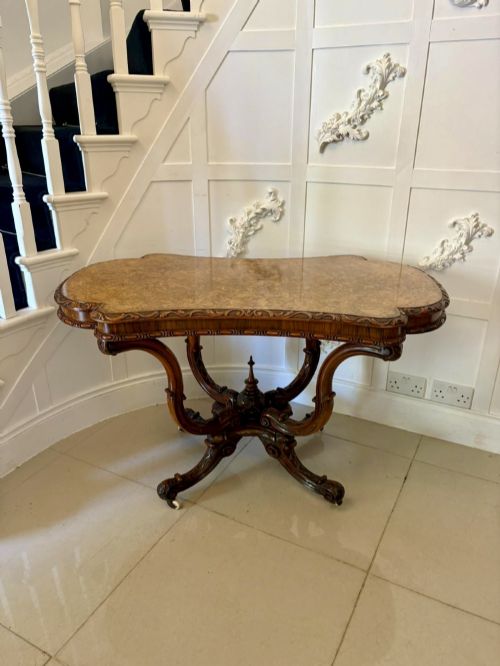
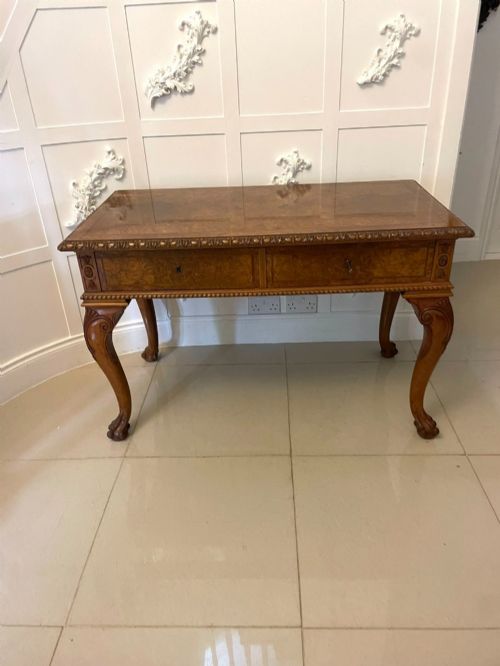
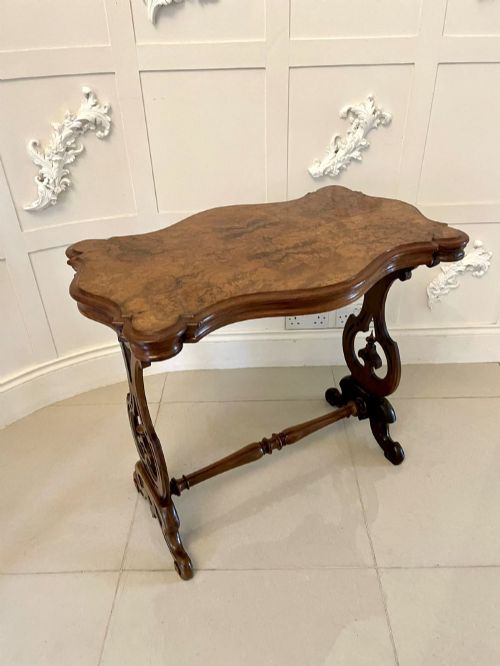
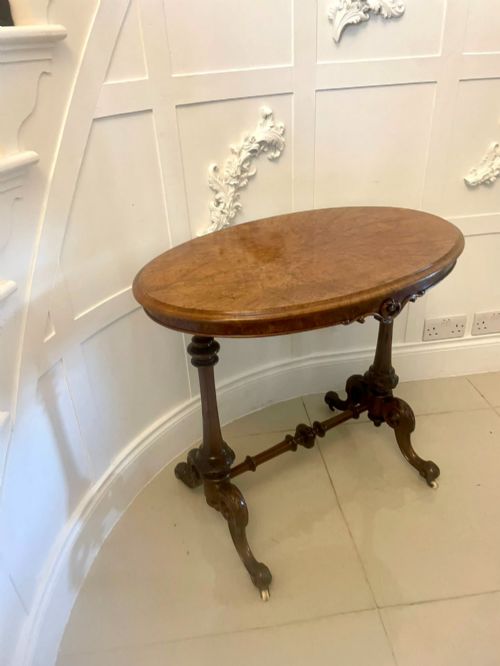
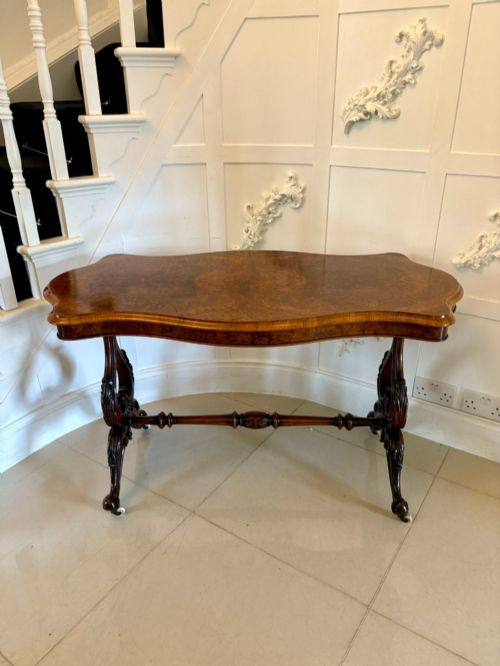
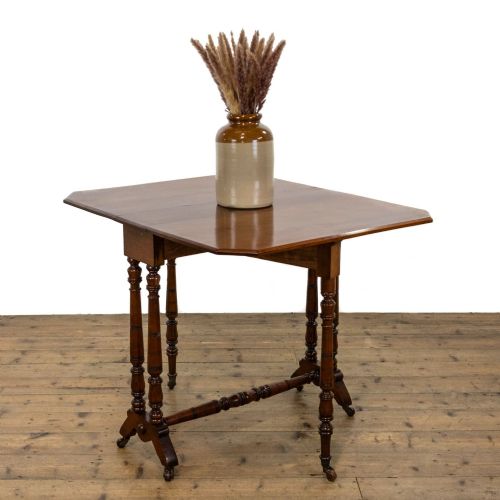
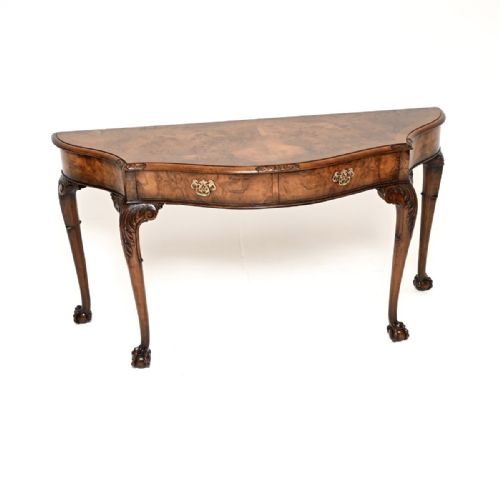
The furniture forms span centre tables, salon suites, chaise longues, and multi-seat settees.
What varies in quality
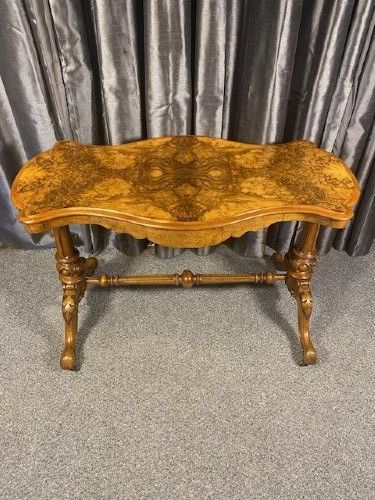
Depth and crispness of the hand-carved detail separate standard production frames from exhibition pieces, where botanical motifs and scrollwork show sharper undercut edges. The selection of timber also dictates visual standing, as highly figured burr walnut veneers display intricate grain patterns absent in plain stock.
Structural integrity depends on the rigidity of the joined frame and the retention of original upholstery foundations rather than modern replacements. Superior examples maintain balanced proportions across the crest rail and legs without excessive reinforcement or timber replacement.

The Carved Walnut Sofa Glossary
- Cameo back
- An upholstered oval or shield-shaped backrest framed by carved wood, resembling a cameo brooch. This shape is characteristic of mid-nineteenth-century salon seating.
- Burr walnut
- A prized timber veneer gathered from the abnormal growth growths of walnut trees, showing swirling, knotted patterns. It was frequently utilised on high-grade Victorian tabletops and framing elements.
- Bergere
- An enclosed upholstered armchair or sofa featuring exposed wooden frames and woven cane sides or backs. These pieces originated in France and appeared in various revival styles.
- Canape
- An antique French term for an ornamental sofa or settee designed for formal reception rooms. These items typically feature exposed carved wooden rails and upholstered seats.
Carved Walnut Sofa: Frequently Asked Questions
How do I identify a Victorian carved walnut sofa?
Victorian models typically display dark timber tones with dense, natural wood grain beneath shellac finishes. They frequently incorporate cameo backrests and heavy floral relief carving along the wooden frame.
Such pieces often rely on button-backed upholstery or exposed cabriole legs. Examining the underside reveals period construction methods, including hand-cut screws or pegged joinery.
What is a French style carved walnut sofa?
French style variants draw upon Louis XV and Louis XVI revivals, exhibiting lighter proportions and sweeping scrollwork. They frequently incorporate cane panels into the arms or backrest alongside giltwood accents.
These sofas were built for formal salons and boudoirs across continental Europe. Their carved ornamentation tends to feature asymmetrical floral patterns and trailing ribbons.
How should I care for an antique walnut frame?
Maintain stable indoor humidity levels to prevent the walnut timber from drying out and splitting. Avoid placing the sofa near direct heat sources or strong sunlight that might fade the polish.
Dust the carved wooden elements regularly with a dry, soft cloth. Refrain from using modern silicone-based sprays, which can degrade historic finishes over time.
Can these sofas be used daily?
Historic frames provide sturdy seating if the internal joints and webbing remain secure. Many surviving examples are robust enough for regular domestic use when handled with reasonable care.
Heavier daily wear may require periodic upholstery updates while preserving the original timber structure. Consulting a specialist ensures the structural integrity supports continuous seating.