




Walnut Upholstered Settee
When you search for a walnut upholstered settee, you are looking at substantial timber frames paired with period textiles designed for formal reception rooms.
Walnut Upholstered Settee
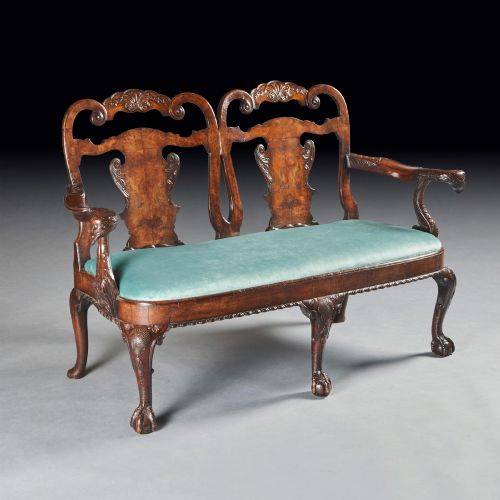
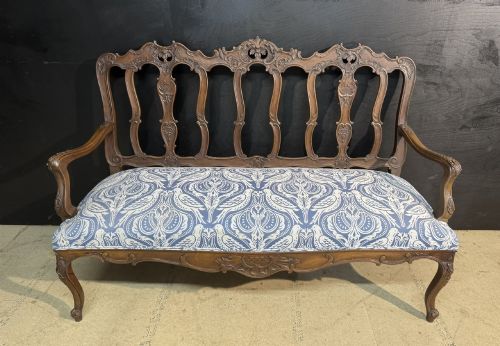
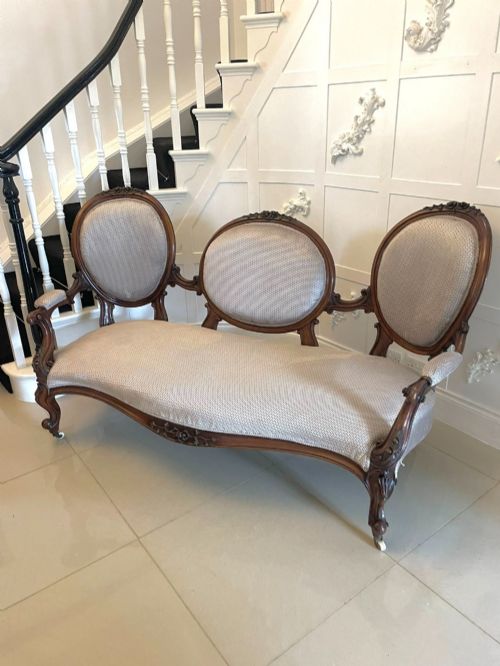
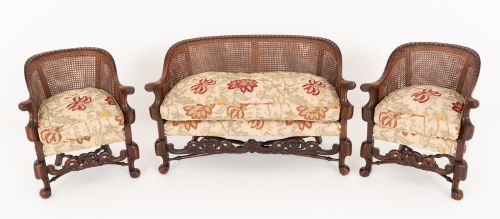
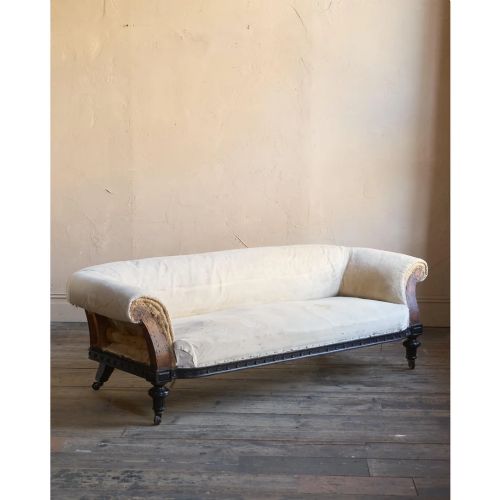
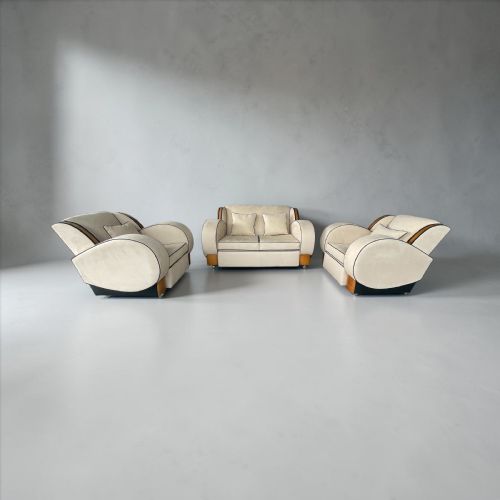
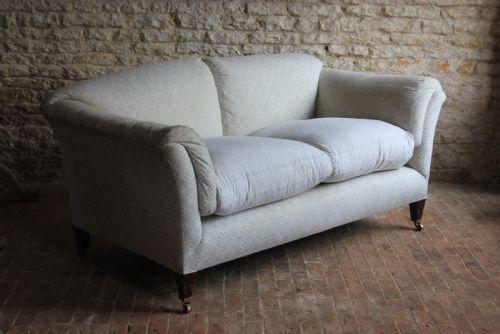
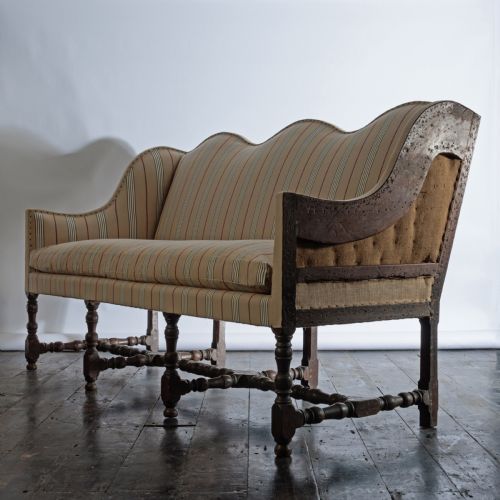
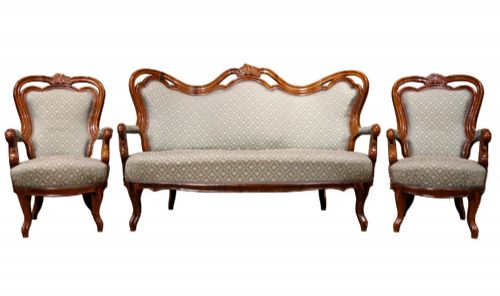
A walnut upholstered settee brings together a rich timber show-frame and soft seating, appearing frequently in Victorian iterations alongside earlier revival styles. These pieces range from compact two-seater couches to expansive salon suites comprising matching armchairs.
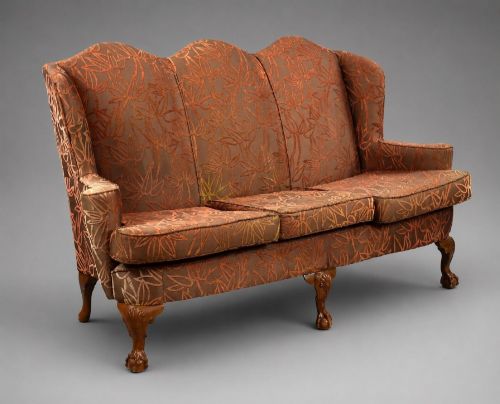
The silhouettes span across centuries, taking inspiration from Queen Anne, Louis XV, and George II designs executed in solid walnut. Makers often utilised curved cabriole legs, carved crest rails, and open armrests to define the character of each seating arrangement.
Materials and construction
Craftsmen shaped dense walnut timber to form the structural skeletons, often incorporating hand-carved flourishes along the show-frames and cabriole legs. These wooden frames were then joined using traditional methods to support heavy daily use.
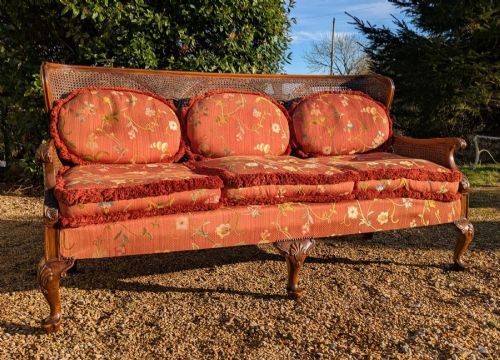
Textiles played an essential role, with original pieces upholstered in velvet, silk damask, or heavy fabric, sometimes secured with brass buttoning. Caning also appears on specific panels, adding textural contrast to the polished wood.
Listings feature walnut settees spanning from the seventeenth century through to the 1930s, incorporating cane, velvet, and silk damask materials.
Distinguishing quality
The refinement of the timber carving and the integrity of the underlying joinery separate standard examples from exceptional ones. Sharp, deep relief work on the walnut frame indicates superior craftsmanship.
The choice of upholstery textile and the preservation of the original show-wood finish dictate the overall harmony of the piece. Well-balanced proportions and untouched period fabrics elevate an example above standard reconstructions.
Howard and Sons
The Walnut Upholstered Settee Glossary
- Cabriole leg
- A furniture leg that curves outward at the knee and inward at the ankle, finishing in a pad or scroll foot. This form derives from ancient Chinese designs and became popular in European furniture during the eighteenth century.
- Button back
- An upholstery style where depressions are formed in the padding by pulling buttons tight through to the wooden frame. This technique creates a diamond pattern that secures the internal stuffing.
- Caning
- A woven lattice pattern made from peeled rattan or cane strips used for seat panels or backs. It provides lightweight ventilation and visual contrast against solid timber frames.
- Crest rail
- The top horizontal member of a chair or settee back. Carvers often decorated this area with elaborate motifs or maker signatures.
Walnut Upholstered Settee: Frequently Asked Questions
What is a walnut upholstered settee?
A walnut upholstered settee is an antique seating piece featuring an exposed wooden frame made from walnut and padded textile seating for multiple people. These items served as central furniture pieces in drawing rooms and parlours.
They appear in various revival styles spanning from the seventeenth century through to the Edwardian era. The designs range from simple two-seater couches to elaborate multi-piece salon suites.
How do I date a walnut settee?
Dating a settee involves examining the stylistic revival influences, such as Queen Anne cabriole legs or Victorian button-backed upholstery. The construction techniques and types of secondary woods used in the frame also provide clues to the era of manufacture.
Many pieces reflect the revival tastes of the nineteenth century while mimicking eighteenth-century aesthetics. Comparing the carving depth and textile choices helps narrow down the specific decade.
Where were these settees used?
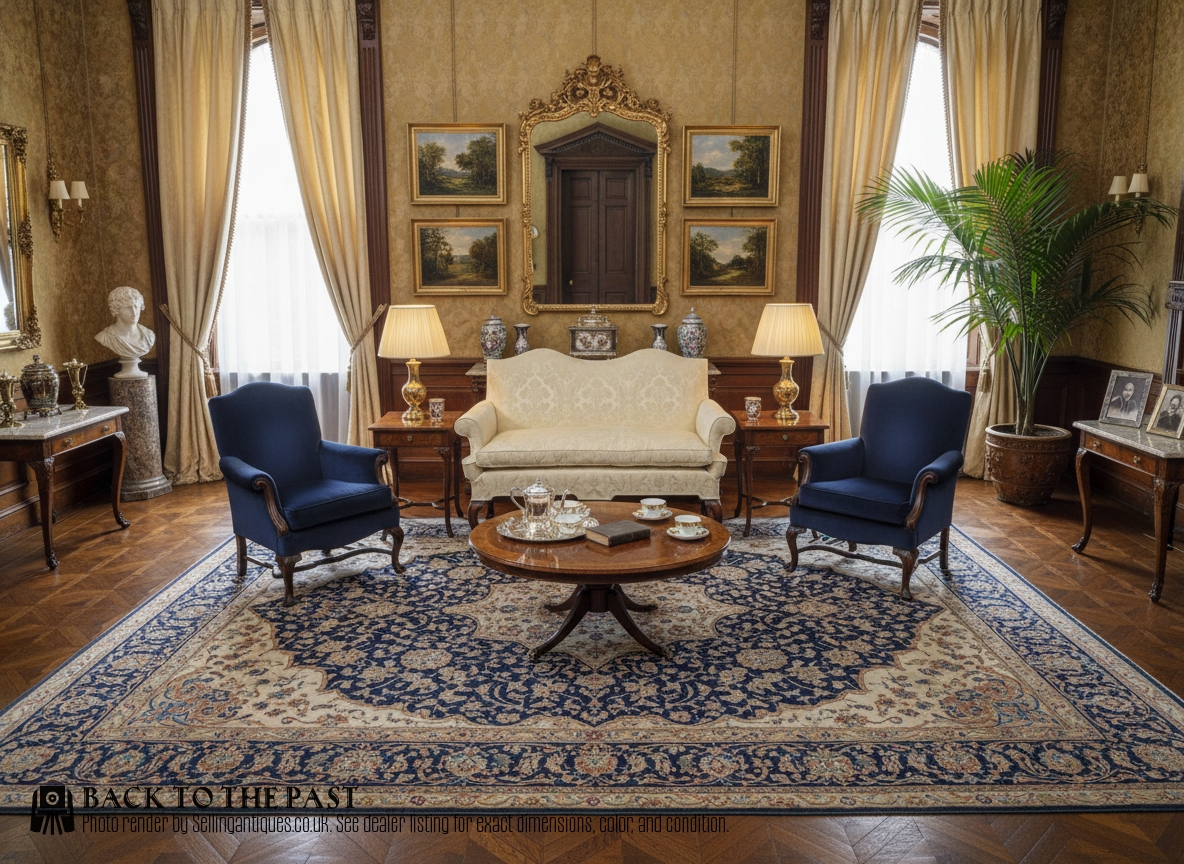
These settees were traditionally placed in formal reception rooms, drawing rooms, and large country house parlours. They provided comfortable seating for entertaining guests and displaying household status.
Today, they function well in contemporary living spaces, bedrooms, or hallways as statement seating. Their durable walnut frames allow them to integrate into both traditional and modern interior schemes.
Are these settees comfortable?
Comfort levels depend on the internal padding and whether the piece retains its original spring system or feather cushions. Many period examples offer deep seating and supportive upholstered backs designed for long periods of sitting.
Some historical pieces prioritize formal posture over relaxed lounging, featuring upright backs and firm padding. Assessing the depth of the seat helps determine how the settee suits modern daily use.