





Carved Tripod Urn Stand
These carved tripod urn stand examples bring architectural form to nineteenth century interiors, offering sturdy display surfaces for plants and decorative objects.
Carved Tripod Urn Stand
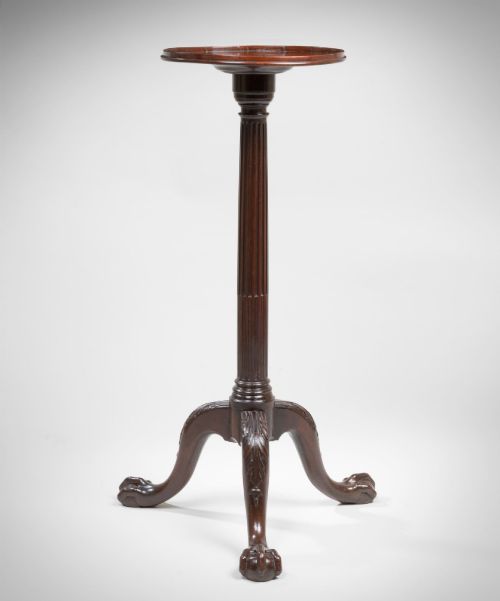
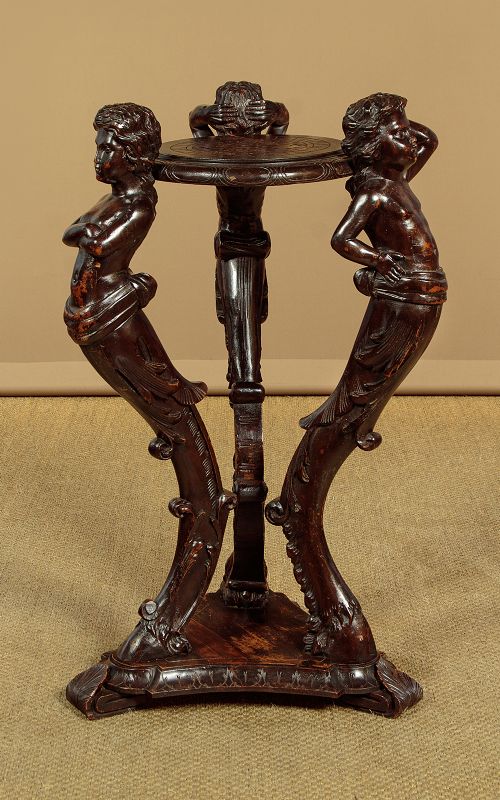
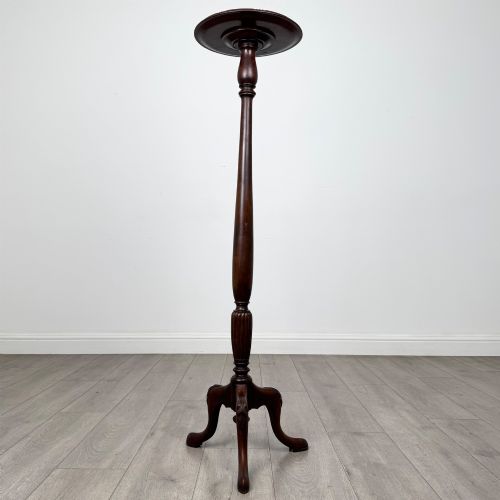
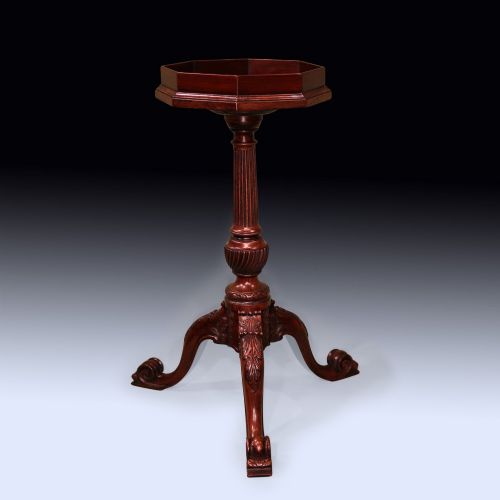
When you search for a carved tripod urn stand, you enter a category defined by elevated display furniture supported on three legs, spanning the eighteenth, nineteenth, and early twentieth centuries. The selection encompasses tall torcheres, kettle stands, jardiniere holders, and occasional tables designed to support urns, plants, or lamps.
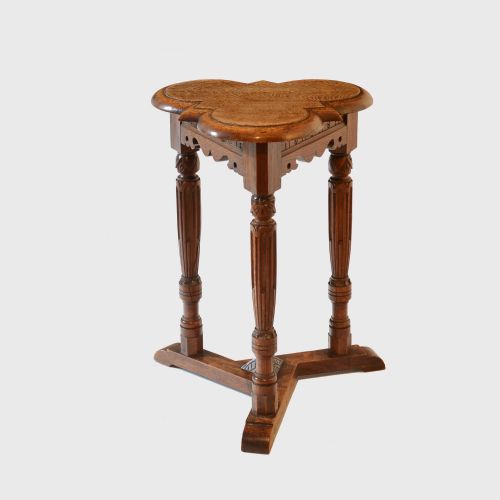
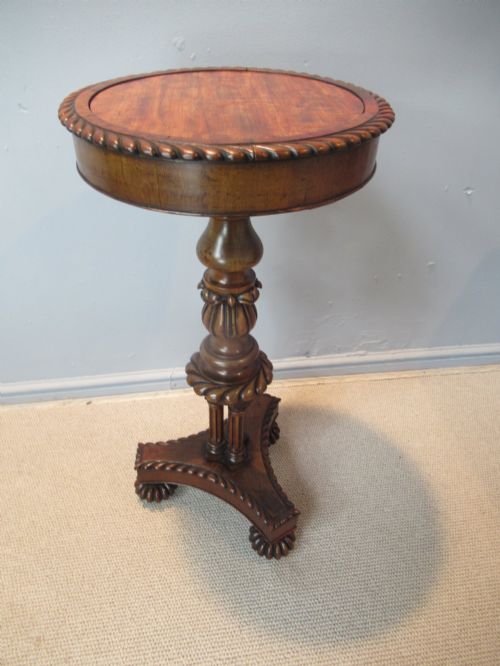
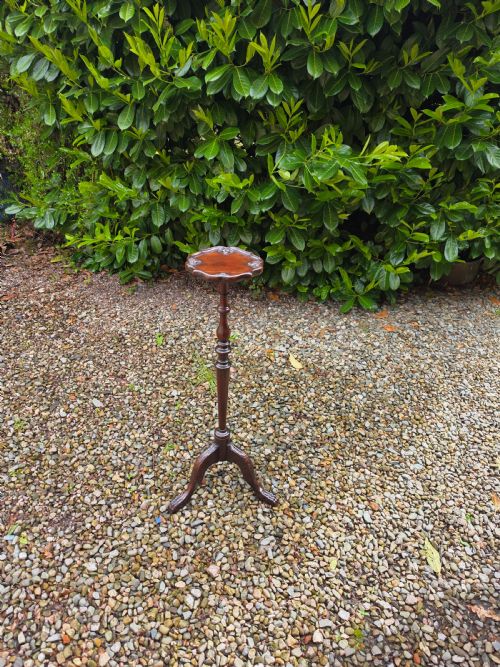
The prevailing form on this page is the mahogany torchere or plant stand from the Victorian and Edwardian eras, alongside earlier George III examples. You will also encounter specialised variations including Gothic oak trefoil tables, Anglo-Indian ebony jardiniere stands, and Chinese Qing Dynasty carved hardwood tables with inset marble tops.
Originating from British workshops as well as Italian, Anglo-Indian, and Chinese makers, these pieces served practical domestic functions in drawing rooms and halls. Their compact tripod footprints allowed them to occupy corners and alcoves while providing a stable platform for heavy decorative items.
How they were made
Construction relies heavily on dense timbers such as mahogany, walnut, rosewood, oak, and hardwood, chosen for their structural strength under upright loads. Cabinetmakers shaped these materials using traditional joinery to anchor three-legged bases securely to central columns.
Carving technique distinguishes the surface ornamentation, ranging from crisp Georgian knee details to intricate Anglo-Indian floral motifs and Gothic trefoil patterns. Brass components and inset marble tops appear in specific examples, adding weight and varied texture to the timber frames.
Carved Tripod Urn Stand Retail Price Guide 2026
Typical asking prices for carved tripod urn stand among the pieces listed under this phrase on Sellingantiques today, from the lower quarter to the upper quarter. They describe what is for sale here now, not the wider market.
Listings span multiple eras from the eighteenth to the early twentieth century, incorporating Victorian, Edwardian, Georgian, and Regency periods.
What varies in quality
Quality separates along the depth and precision of the carved decoration on the knees, shafts, and tripod bases. Pieces bearing attribution to established makers like Gillows demonstrate superior timber selection and finer joinery than standard commercial equivalents of the period.
The integrity of the timber and the balance of the three-legged support structure determine the overall standard. Examples retaining original surfaces, undisturbed patination, and substantial gauge timber command greater appreciation among collectors.
Gillows
The Carved Tripod Urn Stand Glossary
- Torchere
- A tall, slender stand designed to support a lamp, urn, or decorative object. Originating in the seventeenth century, these pieces became popular for illuminating dark corners of large rooms.
- Kettle stand
- A small occasional table utilised during the eighteenth century for holding tea kettles and associated paraphernalia. They typically feature raised galleries or dished tops to secure vessels safely.
- Jardiniere
- A decorative container or stand intended to hold plants or floral arrangements. In nineteenth-century interiors, these often incorporated metal liners or waterproof inserts.
- Trefoil
- A graphic ornamentation consisting of three overlapping rings or leaf-shaped lobes. This motif appears frequently in Gothic Revival furniture designs from the Victorian and Edwardian periods.
- Tripod base
- A support structure comprising three legs radiating from a central column to provide stability on uneven floors. This configuration is standard for torcheres and small occasional tables.
Carved Tripod Urn Stand: Frequently Asked Questions
What is a torchere stand used for?
These tall stands were traditionally manufactured to elevate lighting devices or decorative urns above floor level. In modern rooms, they function effectively as plant stands or display surfaces for sculptures and lamps.
Their narrow profile allows them to fit into tight spaces where larger tables cannot go. They bring vertical interest to room corners and empty wall spaces.
How do I date a mahogany stand?
Dating relies on examining the timber density, the style of the carving, and the construction methods used in the tripod base and column. Eighteenth-century George III pieces often show refined proportions and distinct cabinetmaking signatures compared to later Victorian iterations.
Later nineteenth and early twentieth century examples incorporate revival styles such as Gothic, Adam, or Chippendale. Comparing the secondary timbers and wear patterns helps confirm the period of manufacture.
Are marble top stands fragile?
The marble inserts found on certain nineteenth-century hardwood and Chinese tables provide a durable, heat-resistant surface for plants or urns. While the stone itself is heavy and stable within its frame, it requires careful handling during relocation.
The wooden frames supporting the marble are built to bear the considerable weight of the stone. Regular maintenance involves keeping the timber nourished around the stone margins.
Where should I place a tripod stand?
Position these pieces in corners, beside seating, or in hallways where their three-legged bases remain stable and out of high traffic paths. Ensure the weight of the displayed object aligns centrally over the tripod footprint to maintain balance.
Keep them away from direct heat sources and strong sunlight to protect the polish on woods like mahogany, walnut, and rosewood. Periodic repositioning prevents uneven fading of the timber surface.