

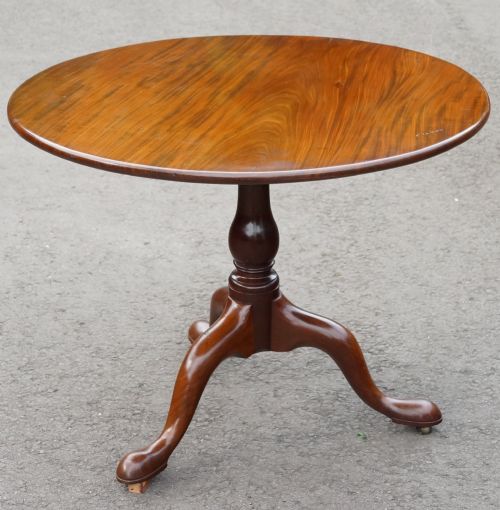
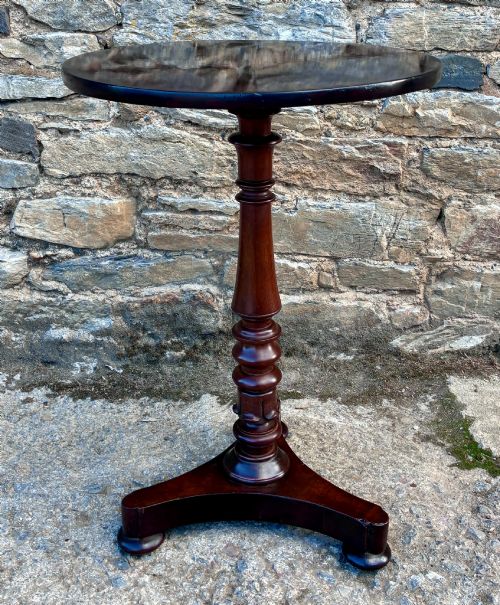
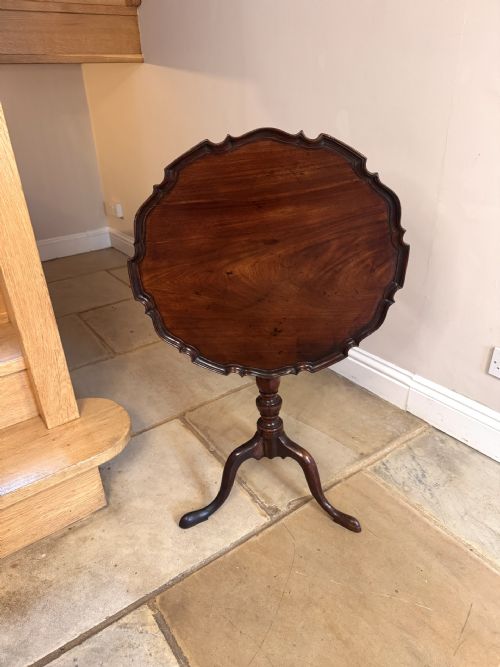
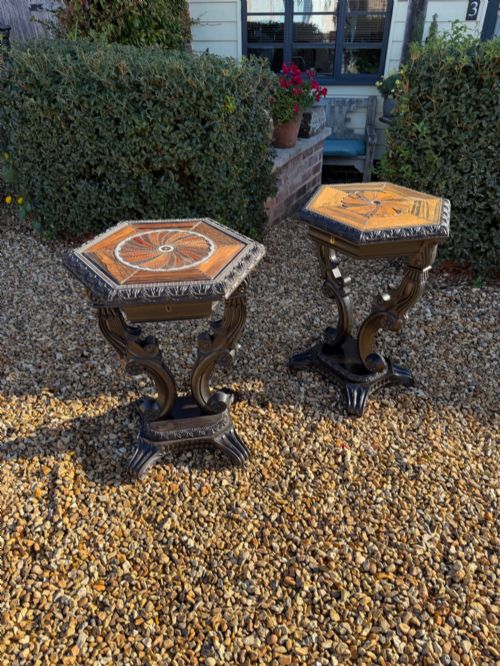
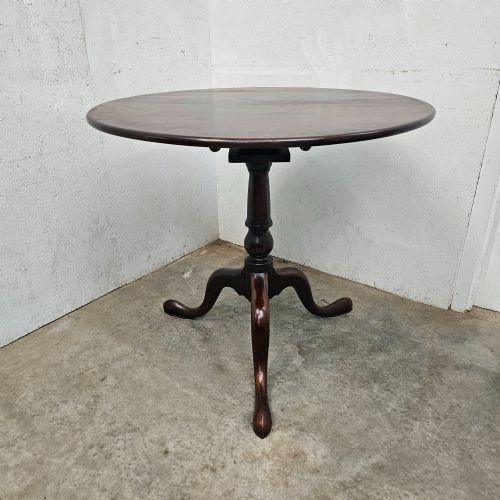
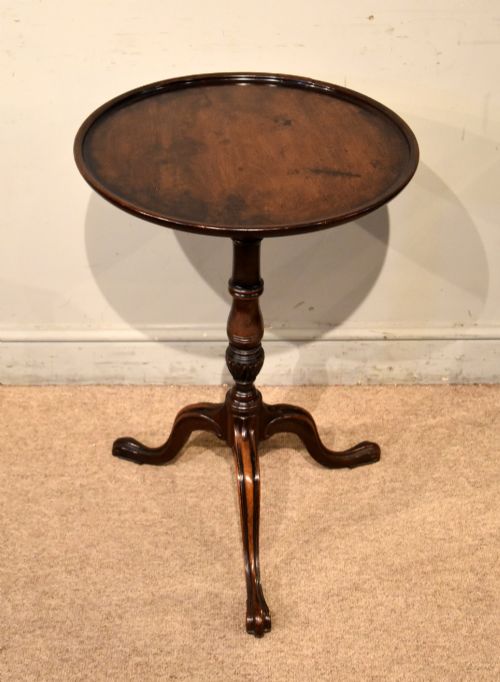

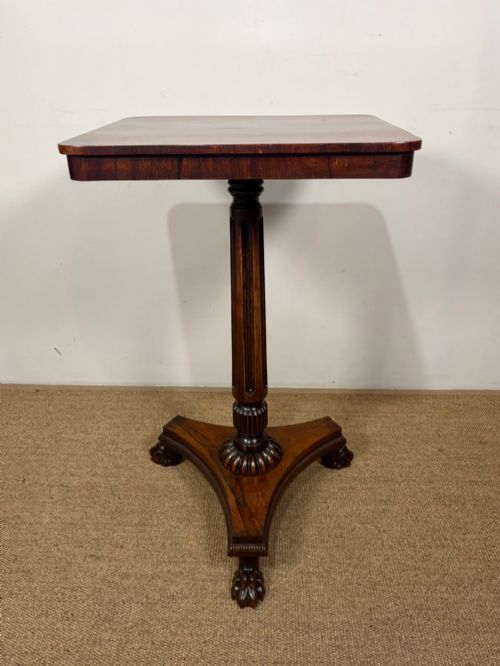
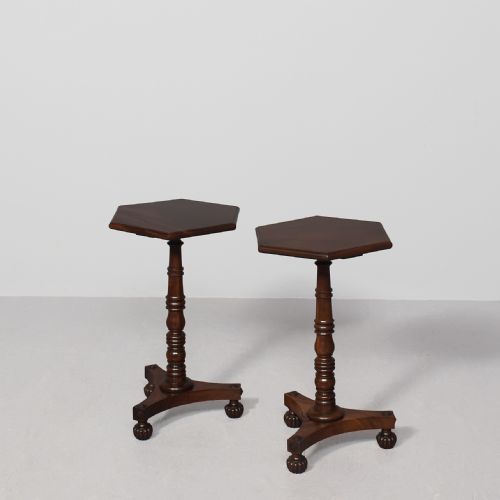

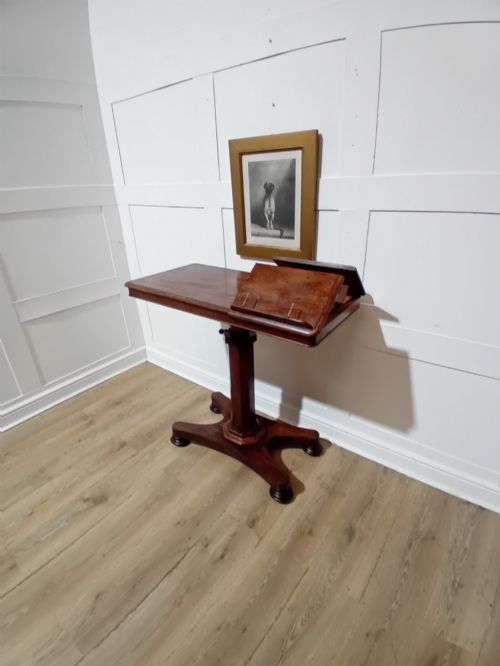
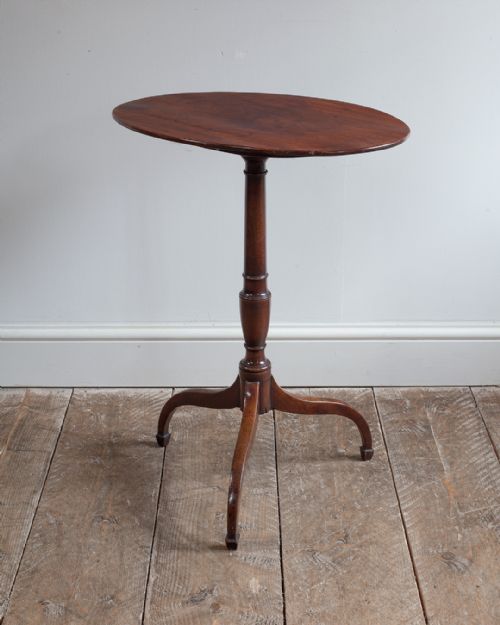
Dark Wood Pedestal Stand
These dark wood pedestal stands are elevated display surfaces rooted in the nineteenth century, built to lift sculptures, plants and decorative objects above the floor.
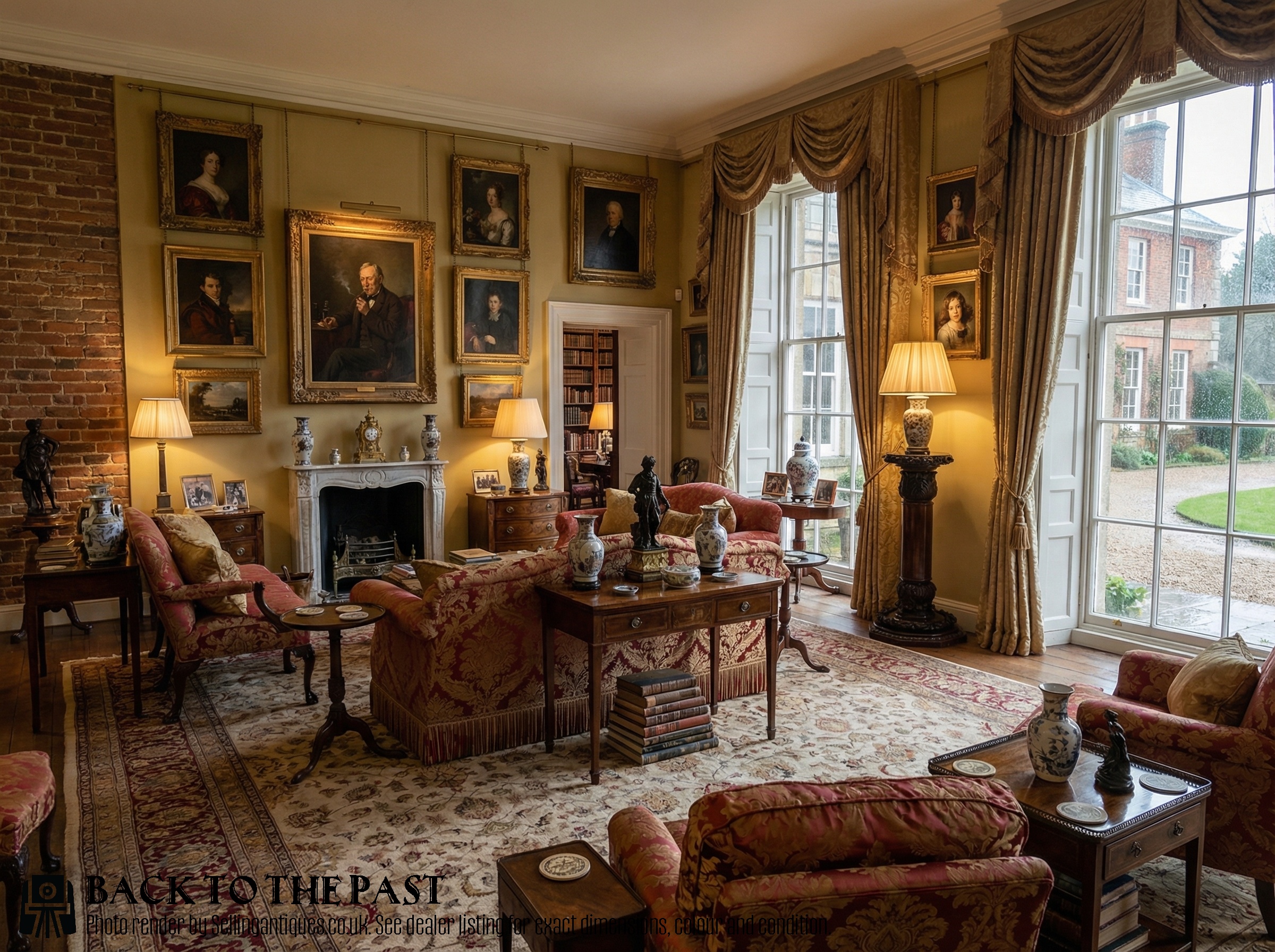
Dark Wood Pedestal Stand
A dark wood pedestal stand takes the form of a tall, slender support designed to showcase a single object in a room. These pieces emerge from the nineteenth century across various stylistic revivals, functioning as focal points for interior display.
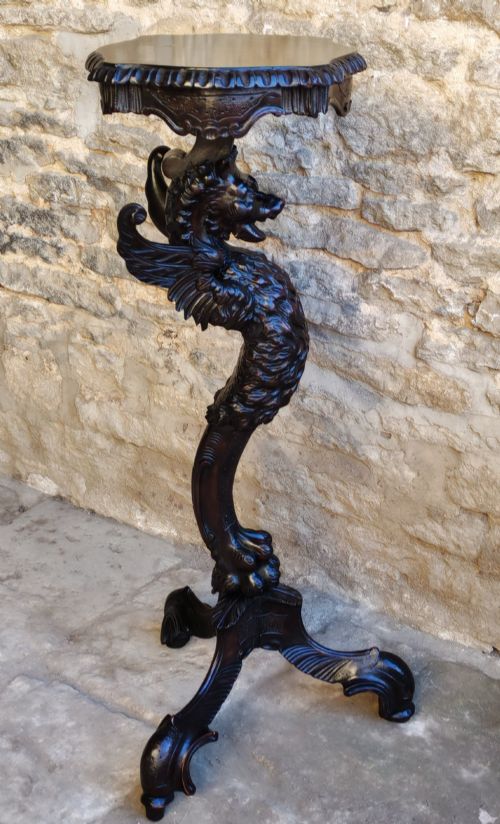
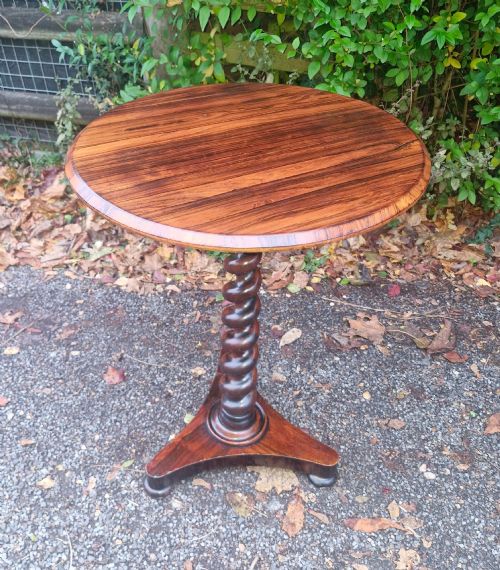
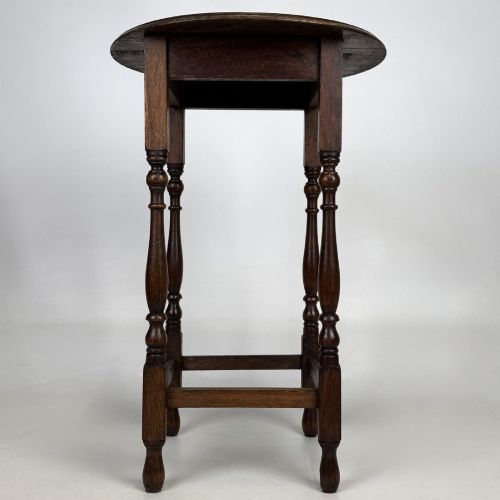
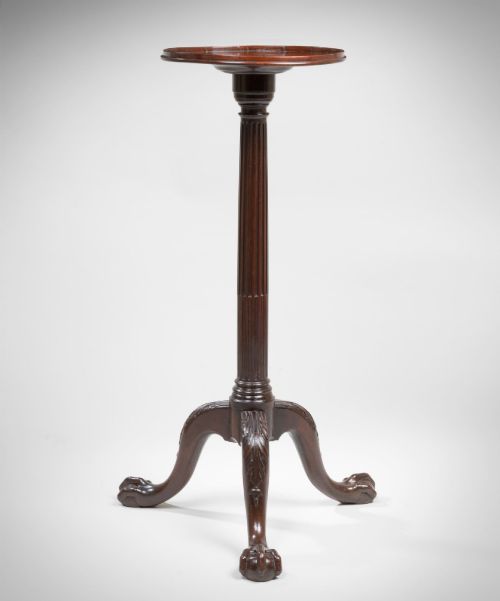
The selections recorded here span the Victorian, Arts and Crafts, Renaissance Revival, Venetian Baroque, and Chinese Qing Dynasty styles. Forms range from simple circular cake stands to large carved figural pedestals and torchiere lamps.
Makers and origins vary from European workshops to Japanese production exported through Liberty of London, alongside Chinese dragon torchieres. Buyers most frequently encounter carved hardwood, walnut, mahogany, and stained birch constructions.
How they were made
Constructed from solid timbers such as mahogany, birch, walnut, and various hardwoods, these stands rely on dense woods capable of supporting weight at height. Ebonised finishes and dark stains achieve a deep, uniform colour across the structural elements.
Carpenters and carvers employed traditional joinery combined with intensive hand carving to render intricate motifs like figures and dragons. Turned shafts and circular tops demand precise lathe work alongside sculptural detailing.
Dark Wood Pedestal Stand Retail Price Guide 2026
Typical asking prices for dark wood pedestal stand among the pieces listed under this phrase on Sellingantiques today, from the lower quarter to the upper quarter. They describe what is for sale here now, not the wider market.
One versatile Victorian design doubles as a cake or cheese stand, proving that nineteenth-century furniture took dessert presentation very seriously.
What varies in quality
Quality rests upon the depth and ambition of the carving, distinguishing mass-produced turnery from bespoke sculptural work. Deeply undercut figures and detailed dragon motifs require advanced sculptural skill compared to simpler fluted columns.
The choice of timber and the stability of the central shaft govern the structural integrity of each stand. Heavier, denser hardwoods paired with balanced, wide bases command greater visual authority than lighter, more utilitarian birch examples.
Liberty of London
The Dark Wood Pedestal Stand Glossary
- Torchiere
- A tall stand or floor lamp designed to hold a light source or display an object high above the ground. These pieces often feature elaborate carved columns.
- Ebonised
- Wood treated with a dark stain or chemical process to imitate ebony. This finish became popular in nineteenth-century cabinet making for a dramatic, dark aesthetic.
- Pedestal
- An architectural support or base for a statue, urn, or column. In domestic furniture, it serves as an independent display table.
- Qing Dynasty Style
- Design characteristics originating from the last imperial dynasty of China, known for intricate dragon carvings and rich surface detailing.
Dark Wood Pedestal Stand: Frequently Asked Questions
What is a dark wood pedestal stand used for?
These stands elevate decorative items, sculptures, or potted plants to bring them into the line of sight within a room. They act as vertical display furniture that utilises empty corner space.
Historically, they also served as torchieres to hold lighting or functioned as specialised tables for serving cheese and cakes in Victorian dining settings.
How do I date a pedestal stand?
Dating relies on identifying the prevailing stylistic influences, such as Victorian mahogany or Arts and Crafts simplicity, alongside the type of wood and carving techniques used. Nineteenth-century pieces often show specific joinery methods and patination consistent with age.
Makers' marks or retail labels, when present, provide more precise chronological markers for when the piece was retailed or manufactured.
Are these stands stable enough for heavy items?
Most of these stands are built from dense timbers like mahogany or walnut designed to support substantial weight at height. Their stability depends primarily on the width and weight distribution of the base.
Heavier figural supports and wide-footed designs offer greater security for displaying heavy bronze sculptures or large ceramic urns.
How do I care for antique dark wood?
Maintenance involves dusting regularly with a soft, dry cloth and avoiding placement near direct heat sources or strong sunlight that can dry out the timber. Periodic application of appropriate wax helps preserve the finish and nourish the wood.
Care should be taken around carved recesses where dust tends to accumulate over time.