





Carved Timber Torchere
A carved timber torchere brings height and architectural presence to a room, serving as a classical pedestal or plant stand.
Carved Timber Torchere
When you search for a carved timber torchere, you are looking at tall stands designed to elevate plants, sculptures, or urns. The pieces on this page span from the nineteenth century into the early twentieth century, taking the form of pedestals, plant stands, and column supports.
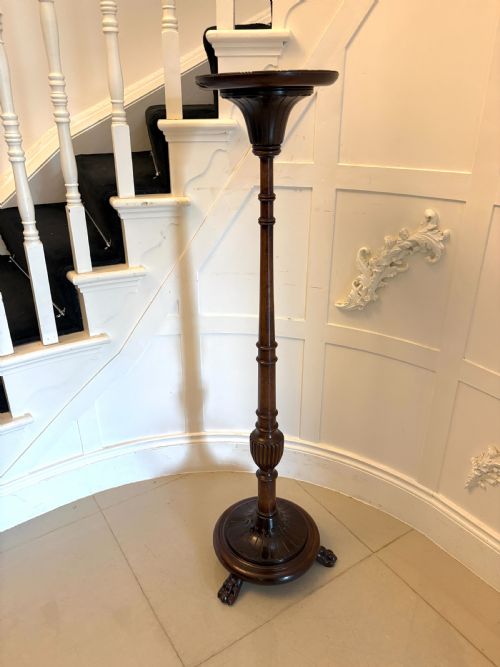
You will encounter various interpretations, ranging from Victorian mahogany and walnut columns to Venetian Baroque Revival figures and Anglo-Indian designs. These items function equally as decorative focal points and practical display surfaces within a traditional interior.
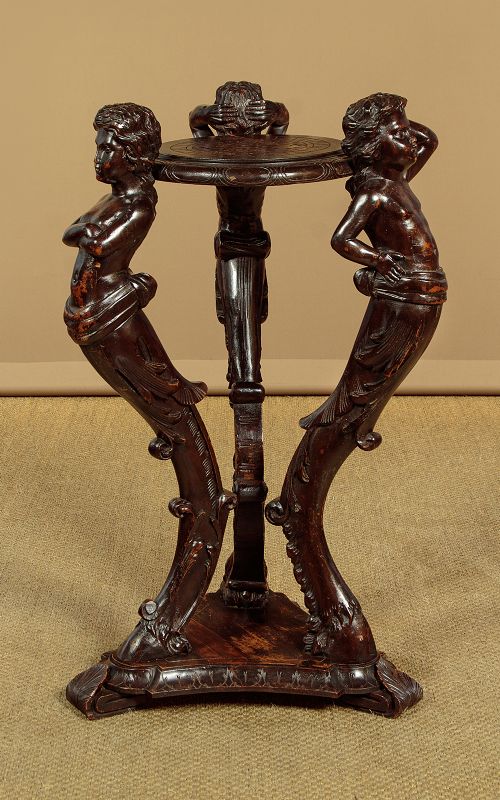
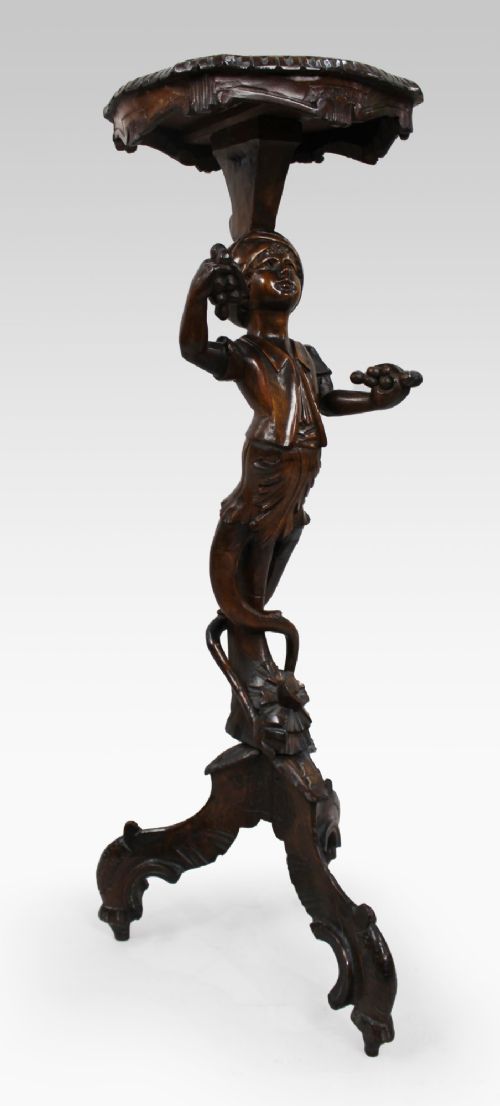
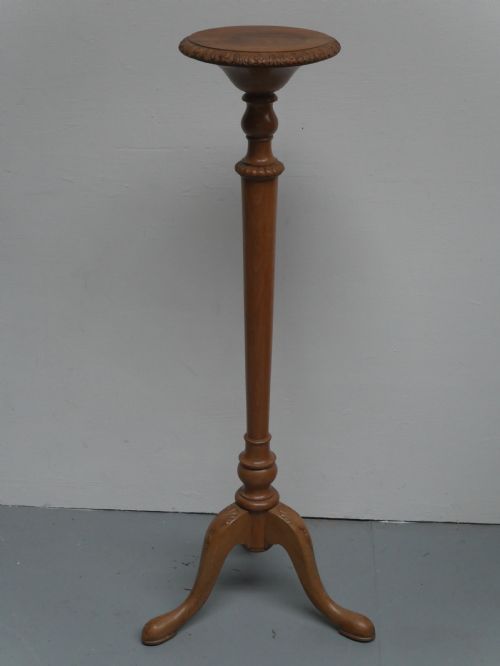
The selection includes specific figural works such as Blackamoor and caryatid stands alongside simpler turned or carved wooden columns. Such variety reflects the diverse aesthetic tastes of the nineteenth and early twentieth centuries, from English country house styles to Italian craftsmanship.
Materials and construction methods
These stands are constructed from woods such as walnut, mahogany, oak, pinewood, and ebonised wood, often shaped through intensive hand carving. Artisans utilised both dense hardwoods and softer pines depending on the intended weight and decorative detail of the column or figure.
Surface work on these pieces relies on traditional carpentry techniques combined with detailed chiselling for figural elements like caryatids and crouching figures. The structure typically consists of a stable base, a slender or columned shaft, and a flat top plate for display.
Carved Timber Torchere Retail Price Guide 2026
Typical asking prices for carved timber torchere among the pieces listed under this phrase on Sellingantiques today, from the lower quarter to the upper quarter. They describe what is for sale here now, not the wider market.
Several stands double as crouching figures and caryatids, cheerfully holding up the room on their carved wooden shoulders.
Distinctions in quality
Quality in a carved timber torchere rests primarily on the depth and execution of the carving, particularly on figural supports and floral motifs. Finer pieces demonstrate precise anatomical proportions in figures and crisp detailing that remains sharp across the entire column.
The choice of primary timber also influences the character of the piece, with richly grained walnut and dense mahogany generally commanding greater attention than simpler pinewood versions. Furthermore, the overall stability and proportion between the top platform and the heavy base determine the structural success of the stand.
The Carved Timber Torchere Glossary
- Torchere
- A tall ornamental stand originally intended to carry a torch or candle, later adapted for lamps, plants, and statues. These pieces are characterised by their elevated height relative to their modest footprint.
- Caryatid
- A sculpted female figure serving as an architectural support taking the place of a column or pilaster. In these stands, the figure bears the weight of the top display platform.
- Jardiniere
- A decorative container or stand for holding plants and flowers, often matching the height of a pedestal. Examples in this category combine a supportive column with a receptacle top.
- Ebonised wood
- Timber treated with a finish to give it the appearance of ebony. This dark, uniform treatment was frequently utilised in nineteenth-century decorative woodwork.
- Baroque Revival
- A nineteenth-century style reviving the dramatic, ornate characteristics of the seventeenth-century Baroque period. Pieces in this style often feature elaborate scrollwork and dynamic figural carving.
Carved Timber Torchere: Frequently Asked Questions
What is a torchere used for?
A torchere functions primarily as an elevated display stand for plants, sculptures, or decorative objects. It draws the eye upward and adds vertical interest to corners or empty wall spaces.
Historically rooted in lighting supports, these timber stands now serve purely decorative roles in modern domestic interiors.
How do I style a torchere at home?
Place a torchere in an empty corner, beside a fireplace, or framing a doorway to create architectural height. You can top it with a trailing houseplant, a bronze figure, or a ceramic bowl.
Ensure the stand has adequate floor stability if you plan to place heavier decorative objects on the upper platform.
How do I date a wooden pedestal?
Dating relies on identifying the timber species, the carving style, and construction methods characteristic of periods like the Victorian era or the late nineteenth century. Details such as ebonisation or specific revival motifs offer strong chronological clues.
Examining the wear patterns on the base and top plate also helps determine the age of the woodwork.
Are these stands structurally stable?
Most antique stands are designed with weighted or wide bases to support the height of the column safely. However, slender shafts require careful placement away from high-traffic areas to prevent tipping.
Regularly check the joints where the shaft meets the base and top plate to ensure lasting structural integrity.