





Carved Figure Plant Stand
A carved figure plant stand brings sculptural presence into a room, holding foliage upon the shoulders or hands of finely worked wooden figures.
Carved Figure Plant Stand
A carved figure plant stand combines decorative sculpture with a functional surface, taking the form of pedestals, torcheres, and small tables designed to elevate plants or decorative objects. Buyers searching this phrase encounter nineteenth-century works spanning Victorian, Venetian, Anglo-Indian, and African tribal traditions, alongside Renaissance Revival and Italian styles.
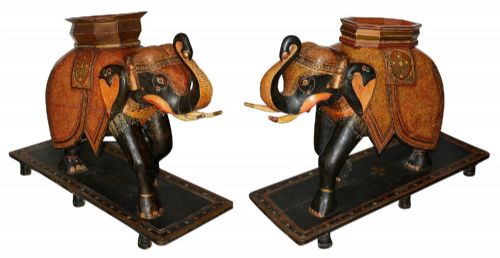
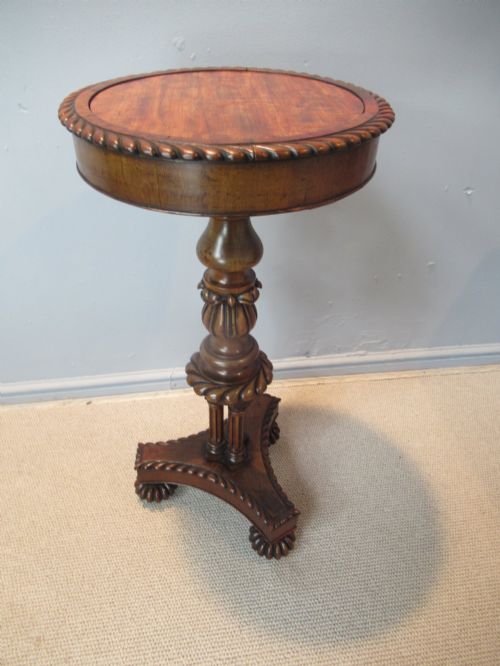
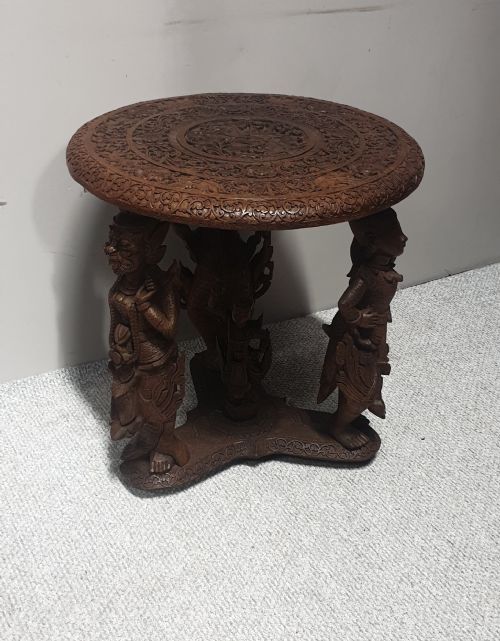
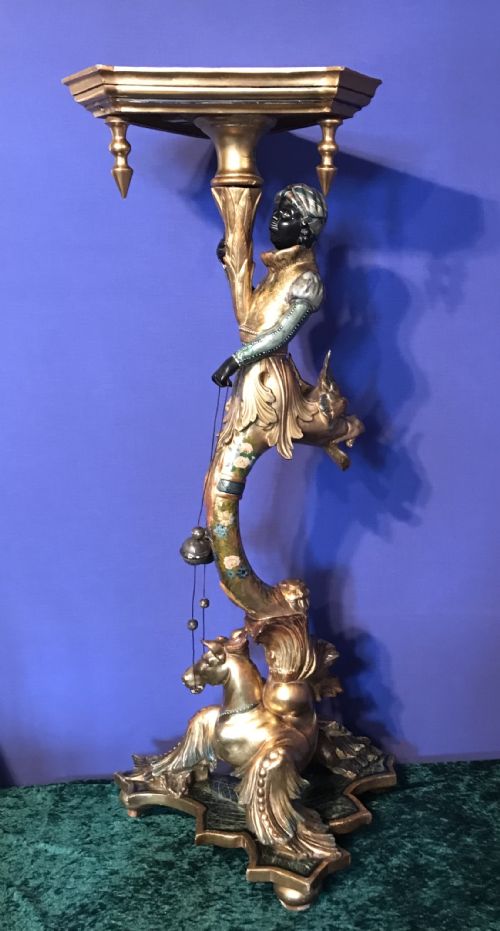
The most common examples on this page are Venetian blackamoor figures and torchere stands from the nineteenth century, often rendered in polychrome paint or ebonised wood. Other frequent forms include walnut and mahogany pedestals featuring caryatids, elephants, and crouching figures, alongside carved oriental and Kashmiri pieces.
These stands serve primarily as focal points in a room, offering height and architectural interest while supporting planters, sculptures, or urns. Their origins trace across European workshops and international trading routes, resulting in diverse cultural interpretations of the human and animal form supporting a load.
How they were made
Makers utilised a variety of hardwoods including walnut, oak, and mahogany as the structural foundation for these stands, carving the figures and columns by hand. Giltwood accents and polychrome paint finishes were frequently applied to enhance the theatricality of Venetian and Italian pieces.
Lacquer and ebonised treatments appear across nineteenth-century examples to alter the appearance of the timber, matching the aesthetic demands of the period. Joinery combined traditional carpentry with intricate sculptural carving, integrating the plant platform securely with the supporting figure or pedestal.
Carved Figure Plant Stand Retail Price Guide 2026
Typical asking prices for carved figure plant stand among the pieces listed under this phrase on Sellingantiques today, from the lower quarter to the upper quarter. They describe what is for sale here now, not the wider market.
Elephants feature in Kashmiri lacquer work alongside human figures, proving that nineteenth-century botanists were not the only ones bringing the jungle indoors.
What varies in quality
Surface preservation dictates much of the standing of an individual piece, particularly on polychrome and gilt surfaces where original paint layers convey the intended coloration and texture. Altered or later-painted surfaces diminish the integrity of the object compared to those retaining their original nineteenth-century finishes.
The Carved Figure Plant Stand Glossary
- Caryatid
- A sculpted female figure serving as an architectural support taking the place of a column or pilaster. These figures appear frequently on nineteenth-century pedestals and plant stands supporting the platform above.
- Torchere
- A tall ornamental stand intended to carry a light or a plant. Venetian examples from the Victorian era often take this form.
- Blackamoor
- A European artistic depiction of figures from North or Sub-Saharan Africa, frequently rendered in carved and polychrome-decorated wood as decorative furniture during the nineteenth century. These pieces usually function as torchere stands or tables.
Carved Figure Plant Stand: Frequently Asked Questions
What is a figure plant stand?
A figure plant stand is a piece of furniture where a carved human or animal figure supports a platform for holding plants or decorative objects.
These stands functioned historically as ornamental display pieces in nineteenth-century interiors, combining sculpture with utility.
How do I date a carved figure stand?
Dating relies on examining the timber species, tool marks, finishing materials, and stylistic markers such as Victorian revival motifs or Venetian regional characteristics.
Most pieces on this page originate in the nineteenth century, spanning periods from the 1850s to the early 1900s.
Where should I place a torchere stand?
A torchere stand suits corners, hallways, or reception rooms where height and vertical emphasis add architectural interest to an empty space.
They require a stable floor surface and careful placement away from heavy foot traffic to protect delicate carved elements and supported plants.
What woods were used for these stands?
Makers utilised hard timbers like walnut, mahogany, and oak because these materials support intricate hand-carving without splitting under weight.
Other surfaces received ebonisation or polychrome paint finishes to mimic exotic materials or enhance decorative effect.