






Tripod Base Display Stand
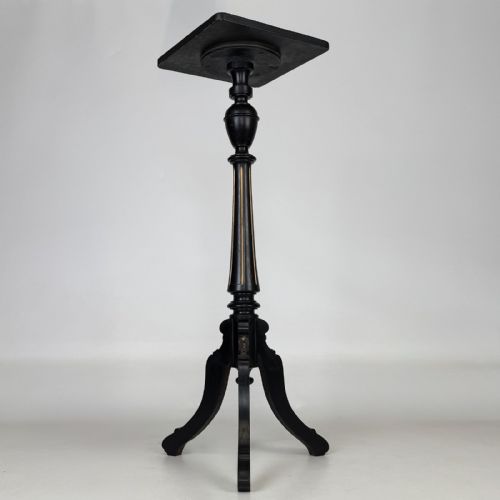
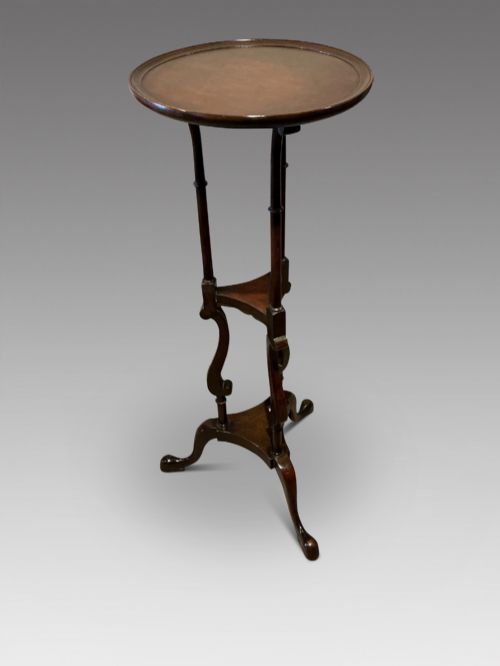
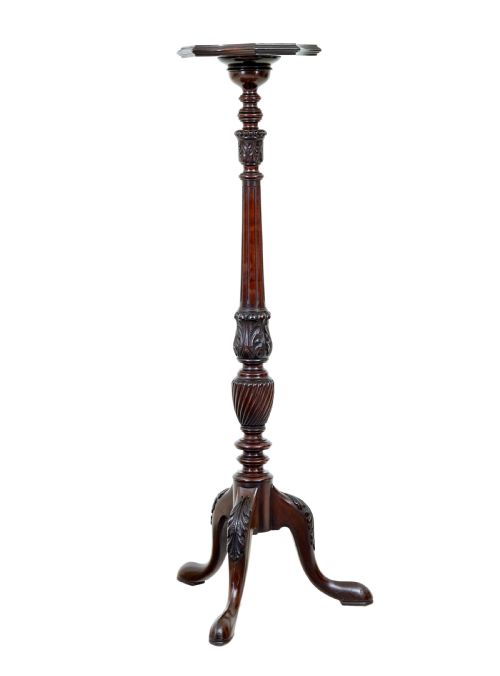
These tripod base display stand examples range from torcheres to music stands, offering elegant elevation for your cherished objects.
Tripod Base Display Stand
A tripod base display stand serves to elevate plants, lamps, or sculptural items with a stable three-legged foundation. These pieces emerge in forms such as torcheres, plant stands, music stands, and occasional tables across various periods.
The selections span from the 18th century through the early 20th century, encompassing Georgian, Victorian, Regency, and William IV styles alongside utilitarian studio works. Mahogany and walnut dominate the offerings, frequently accompanied by oak, pine, and painted or gilt finishes.
Torcheres and plant stands represent the primary visual forms encountered on this page, often featuring slender columns and carved details. Music stands and dumb waiters also appear, providing functional alternatives with the same characteristic three-legged support.
How they were made
Construction relies heavily on timbers like mahogany, walnut, and oak, shaped into turned or rope twist columns. Carpenters joined these uprights to three-legged bases designed for stability while supporting elevated surfaces.
Surface treatments involve polishing timber to highlight natural grain, alongside painted and gilt finishes seen on specific pedestals. Carved ornamentation appears on select walnut and mahogany examples, adding texture to columns and surfaces.
Tripod Base Display Stand Retail Price Guide 2026
Typical asking prices for tripod base display stand among the pieces listed under this phrase on Sellingantiques today, from the lower quarter to the upper quarter. They describe what is for sale here now, not the wider market.
Mahogany and walnut remain the predominant timbers across these listings, spanning the Georgian, Victorian, and Edwardian eras.
What varies in quality
The sophistication of carving distinguishes standard utility pieces from more elaborate examples, particularly on columns and bases. Timber selection also plays a role, with richly figured mahogany and walnut marking out finer items.
Mechanical complexity separates simple stands from adjustable music stands and tiered dumb waiters. Superior engineering in these moving parts ensures smooth operation and enduring structural integrity.
The Tripod Base Display Stand Glossary
- Torchere
- A tall ornamental stand originally designed to hold a candle or torch. Modern usage typically applies the term to tall plant or display stands.
- Dumb waiter
- A tiered piece of furniture featuring multiple revolving or stationary trays on a central column. These served to hold dishes or books near seating areas.
- Duet music stand
- A wide adjustable stand designed to hold sheet music for two musicians simultaneously. They often feature pivoting desks and screw adjustments.
- Rope twist column
- A carved wooden upright resembling the spiral form of a twisted rope. This decorative motif appears frequently on 19th-century supports.
Tripod Base Display Stand: Frequently Asked Questions
What were tripod stands used for?
These pieces served multiple domestic purposes, primarily holding candles, plants, or books in parlours and drawing rooms. Tall torcheres illuminated dark corners, while music stands supported scores for performers.
Tiered dumb waiters held food and tableware near dining tables, acting as convenient movable surfaces. Their three-legged design provided stable placement on uneven historic floorboards.
How do I style a torchere stand?
Place a torchere in an empty corner to draw the eye upward and utilise vertical space in a room. They work well supporting a heavy ceramic bowl, a trailing plant, or a sculptural lamp.
Ensure the weight of the placed object matches the stability of the three-legged base. Taller stands suit areas with high ceilings where low furniture leaves walls feeling empty.
How do I identify Georgian stands?
Georgian pieces display restraint in their carving, relying on architectural proportions and quality mahogany timber. Look for subtle details like pad feet or claw and ball supports on the three legs.
Later Victorian and revival interpretations often feature heavier ornamentation and deeper colour tones. Construction methods inside joints also help distinguish 18th-century work from later imitations.
Are music stands adjustable?
Many period music stands incorporate screw mechanisms or ratchets to alter the height and angle of the desk. These functional elements allowed musicians to read scores while seated or standing.
Check the mechanism carefully to ensure the metal or wooden adjustments move correctly. Fixed stands also exist on this page, serving purely as static display surfaces.