







Carved Timber Urn Stand
A carved timber urn stand raises your ornaments and plants to eye level, bringing solid Victorian and Chinese craftsmanship into the room.
Carved Timber Urn Stand
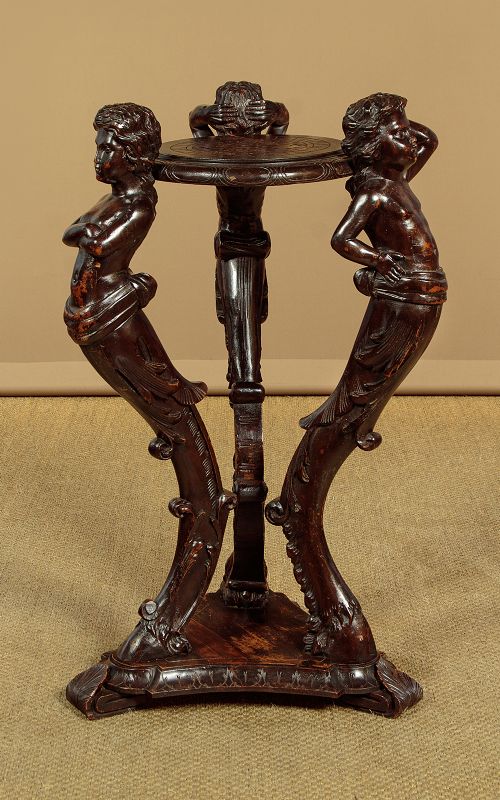
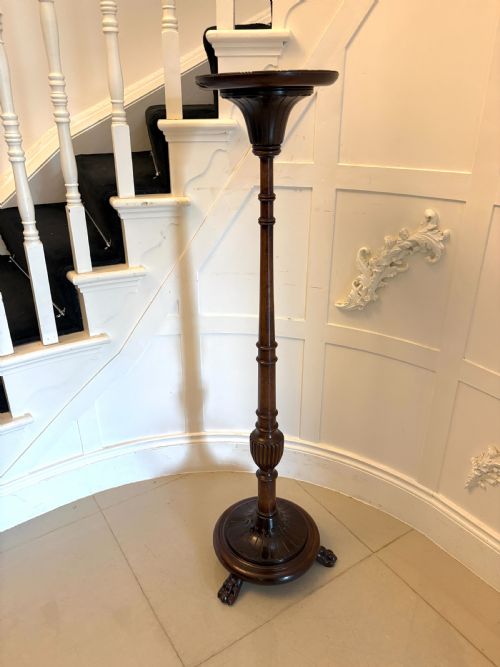
A carved timber urn stand functions primarily as an elevated platform for vases, jardinieres, busts, and decorative urns. The selections found here span the nineteenth century, including Victorian pieces alongside Chinese export and Qing dynasty style examples.
The dominant forms on this page include tall torchieres, tripod tables, pedestals, and low plant stands designed to hold heavy vessels. Buyers frequently encounter variations featuring inset marble tops, mother-of-pearl inlay, and elaborate relief carving.
Origins vary between English country house aesthetics and intricate Oriental workshops. Walnut, mahogany, oak, and dense oriental hardwoods provide the structural foundations for these utilitarian display pieces.
Materials and construction
Cabinetmakers utilised dense timbers such as mahogany, walnut, rosewood, and heavy oriental hardwoods to support the substantial weight of stone and ceramic vessels. These durable woods allowed artisans to carve deep relief patterns without compromising the structural integrity of the central column or tripod legs.
Insets of polished marble and delicate mother-of-pearl inlay frequently decorate the upper surfaces of Chinese export and Victorian pieces. Joinery techniques relied on sturdy framing, secure turned columns, and occasionally concealed compartments within the pedestal body.
Carved Timber Urn Stand Retail Price Guide 2026
Typical asking prices for carved timber urn stand among the pieces listed under this phrase on Sellingantiques today, from the lower quarter to the upper quarter. They describe what is for sale here now, not the wider market.
Assessing craftsmanship and design
The distinction between standard production and superior craftsmanship rests in the depth and precision of the wood carving. Crisp hand-chiselled foliage, well-defined caryatids, and balanced proportions separate exceptional examples from simpler turned columns.
Material selection also dictates the tier of the piece, particularly where flawless inset marble slabs or intricate mother-of-pearl detailing remain fully intact. Form dictates value, with tripod tables of unusual configuration or matching pairs commanding greater presence than single standard pedestals.
The Carved Timber Urn Stand Glossary
- Torchiere
- A tall standing pedestal or lamp holder originally designed to carry a light source. These slender columns elevate displays significantly above standard table height.
- Jardiniere stand
- A specialised low table or pedestal intended to support a heavy ceramic or metal plant container. They often feature water-resistant marble tops to protect the underlying timber.
- Caryatid
- A sculpted female figure serving as an architectural support in place of a column. They appear on heavier nineteenth-century pedestals and architectural stands.
- Qing dynasty style
- A design influence reflecting the artistic traditions of the last imperial dynasty of China. These pieces utilise dense hardwoods and traditional mortise and tenon joinery.
- Tripod table
- A small freestanding table supported by three legs. This configuration provides steady balance on uneven floors.
Carved Timber Urn Stand: Frequently Asked Questions
What is an urn stand used for?
These stands serve as elevated display platforms for heavy vases, bronze urns, and indoor plants. They draw the eye upward and protect delicate floor surfaces from moisture and weight.
Historically, they occupied prominent corners of drawing rooms and hallways to showcase decorative arts at eye level.
How do I clean a marble top stand?
Wipe the stone surface gently with a soft damp cloth using neutral soap if necessary. Avoid acidic cleaners that etch polished marble.
Treat the surrounding timber frame with appropriate wax, keeping moisture away from unsealed wood joints.
Are these stands sturdy enough for heavy planters?
Nineteenth-century hardwood and oak pedestals are built with dense timber and stable tripod or column bases designed to bear considerable weight. Marble inserts further add to the load-bearing capacity.
Ensure the base sits level on the floor to prevent tipping when holding heavy ceramic vessels.
How do I distinguish Victorian from Chinese export pieces?
Victorian stands typically display revival motifs like heavy oak carving, classical columns, or dark mahogany finishes. Chinese export pieces utilise dense oriental hardwoods, intricate pierced aprons, and occasional mother-of-pearl inlay.
Both traditions date predominantly from the nineteenth century but draw on distinct regional joinery and aesthetic vocabularies.