




Carved Timber Saint Figure
A carved timber saint figure brings centuries of devotion, dramatic form, and rich historic surface directly into a room.
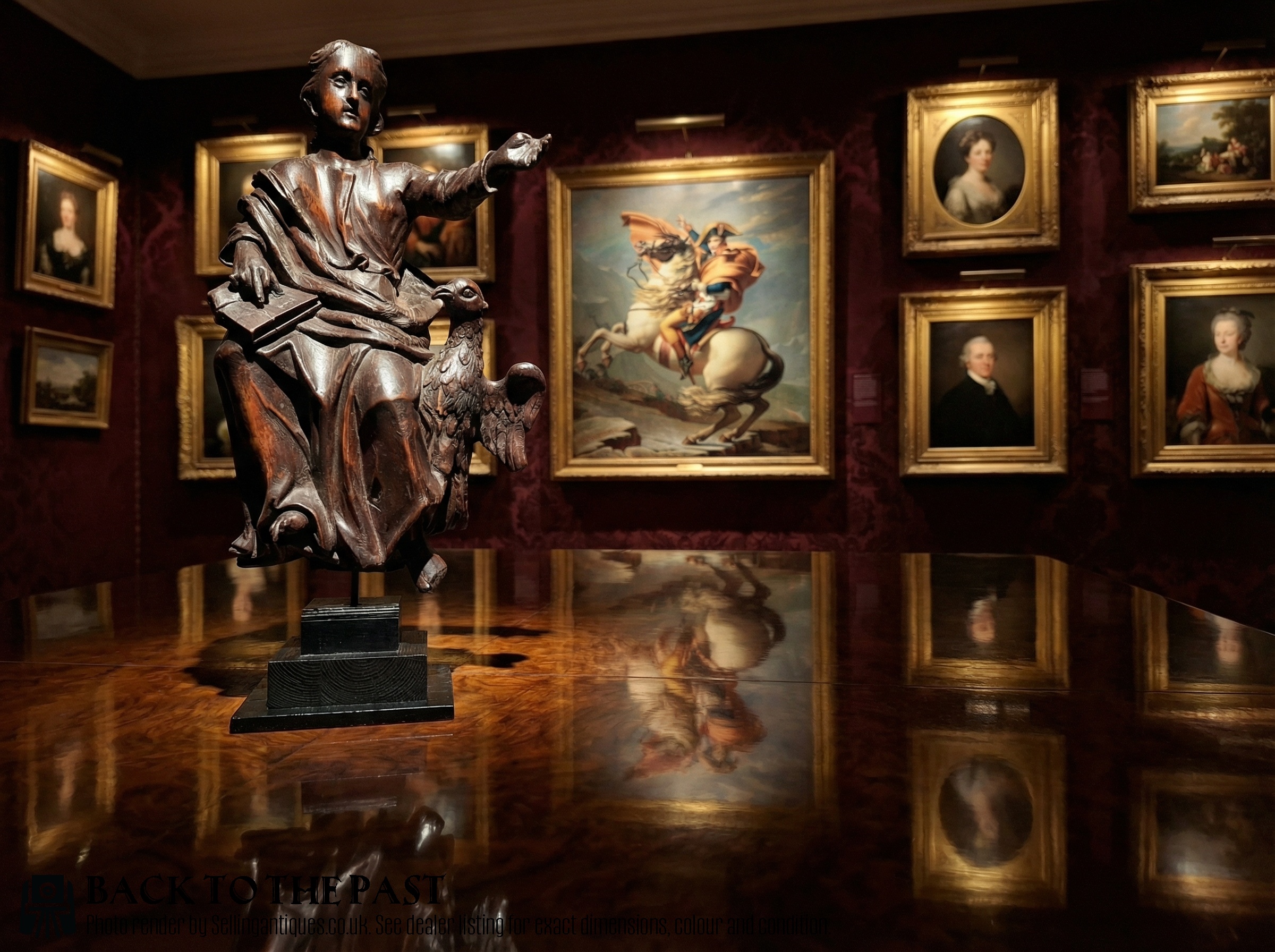
Carved Timber Saint Figure
A carved timber saint figure represents religious devotion, liturgical art, and historic craftsmanship spanning multiple centuries of European church and domestic life. When searching for a carved timber saint figure, buyers encounter representations of apostles, martyrs, and biblical figures carved from solid woods.
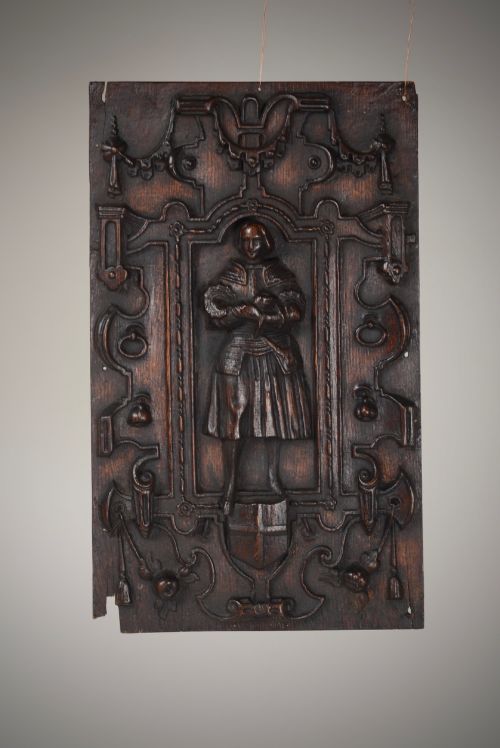
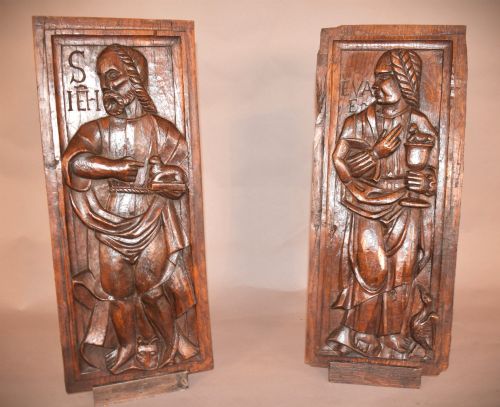
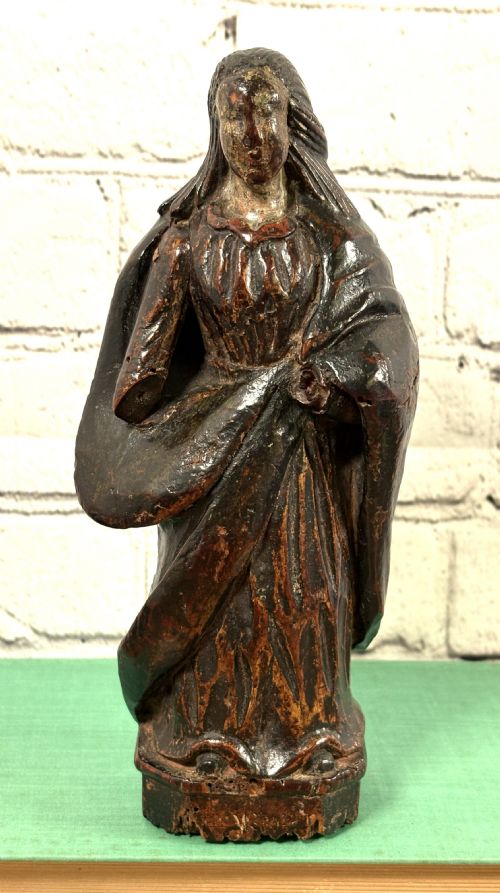
The selections available here range from pre-sixteenth century medieval church sculptures and Renaissance fragments to seventeenth-century limewood and oak figures, alongside eighteenth-century polychrome statues and later revival pieces. Forms vary from full-standing statues of figures like Saint Nicholas, Saint Roche, and the Virgin Mary to relief panels and smaller devotional busts.
Originating from workshops across France, Germany, Flanders, and Italy, these pieces reflect distinct regional aesthetics from Gothic sternness to Baroque movement and Alpine folk art. Buyers most frequently meet oak, limewood, and walnut examples adorned with remnants of original paint, gesso, and gold leaf.
Materials and methods of construction
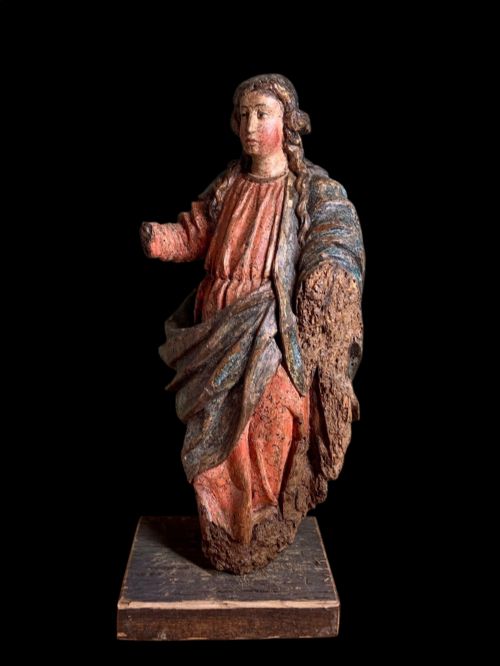
Surfaces were frequently prepared with a layer of gesso before receiving polychrome paint layers in tempera or oil, often enriched with gold leaf details. Over centuries, these layered finishes have acquired characteristic wear, revealing the warm timber substrate underneath.
Listings feature oak, walnut, limewood, and applewood substrates spanning periods from pre-sixteenth century Gothic work to the twentieth century.
Factors of quality and execution
Quality in a carved timber saint figure rests upon the anatomical precision of the carving, the dynamism of the drapery folds, and the expressive depth given to the face and hands. Master carvers achieved a fluid realism or striking stylistic intensity that lesser workshops missed.
The survival of original surface finishes, including polychrome paint and gilding, significantly elevates a piece's integrity. Sculptures retaining untouched historical pigment layers display a visual depth that scrubbed or heavily restored timber surfaces lack.
Franz Keller
The Carved Timber Saint Figure Glossary
- Polychrome
- Painted in several colours. This term describes historic wooden sculptures finished with layers of pigment, often applied over a gesso ground.
- Gesso
- A plaster mix used as a surface preparation. Artisans applied gesso to timber before painting and gilding to create a smooth base for detail work.
- Limewood
- A soft, pale wood prized by historic carvers. Its fine, even grain allowed sculptors to execute intricate undercut details without splitting.
- Panel
- A flat piece of wood used for pictorial relief carvings. These architectural elements often depicted saints or biblical narratives within church interiors.
- Fragment
- A surviving portion of a larger sculptural work. Time often reduces full altarpieces to isolated figures or architectural remnants.
Carved Timber Saint Figure: Frequently Asked Questions
How old are these wooden saint figures?
The pieces span from pre-sixteenth century medieval and Gothic works up to nineteenth-century revival and twentieth-century carvings. Dating relies upon tool marks, wood species, and stylistic traits typical of specific regional periods.
Earlier examples from the fifteenth and sixteenth centuries exhibit distinct Gothic or Renaissance characteristics, while seventeenth and eighteenth-century pieces often show Baroque movement and richer surface polychromy.
How do I care for antique wood sculptures?
Keep wooden figures away from direct sunlight, heating vents, and rapid humidity shifts to prevent the timber from splitting or warping. Dust gently with a soft, dry brush and avoid applying modern polishes or cleaning liquids.
Stable indoor environments preserve both the underlying timber and any fragile historic paint or gesso layers that remain on the surface.
Were these figures originally painted?
Many historic figures were brightly painted and gilded to enhance their visual impact within dim church interiors. Over centuries, much of this pigment wore away or was stripped, leaving exposed wood with only traces of the original colour.
Traces of pigment and gold leaf are prized by collectors as evidence of a piece's authentic liturgical history and age.
What woods were commonly used?
Carvers utilised local hardwoods suited to their region, most notably oak, limewood, walnut, and applewood. Oak provided robust strength for large architectural pieces, while limewood offered a fine grain ideal for intricate detail.
Each timber reacts differently to age, contributing unique surface textures and patination to the surviving sculpture.