


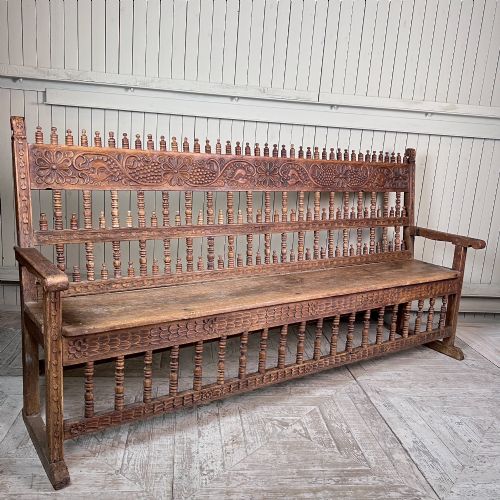
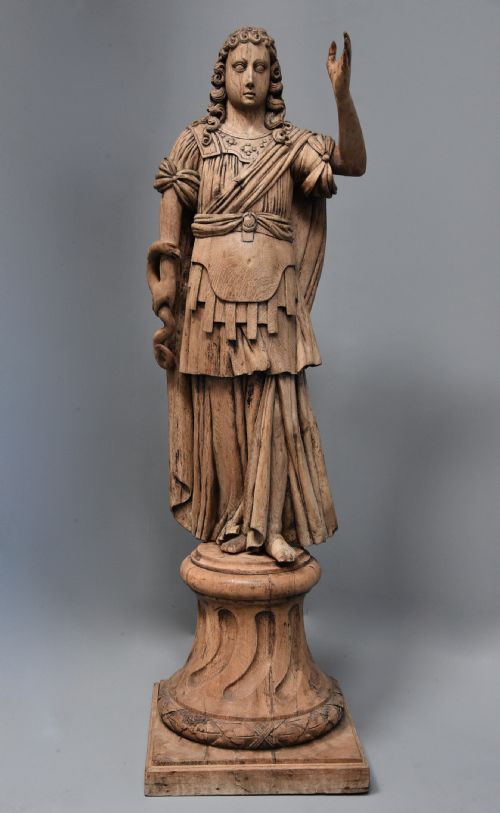
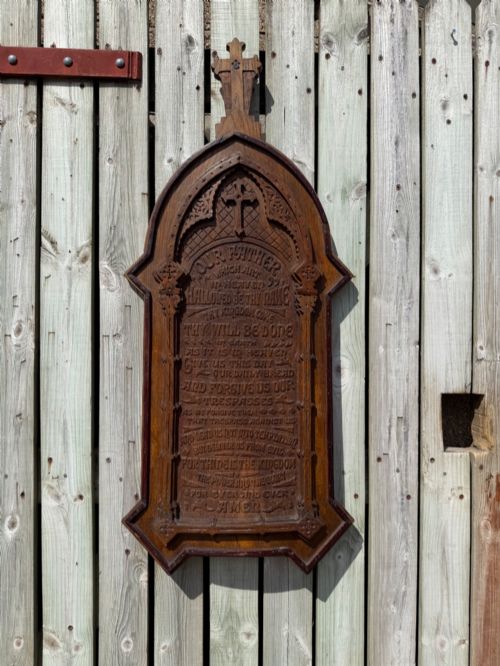
Antique Church Wood Carving
These antique church wood carving pieces bring centuries of devotional art and craftsmanship directly into domestic spaces.
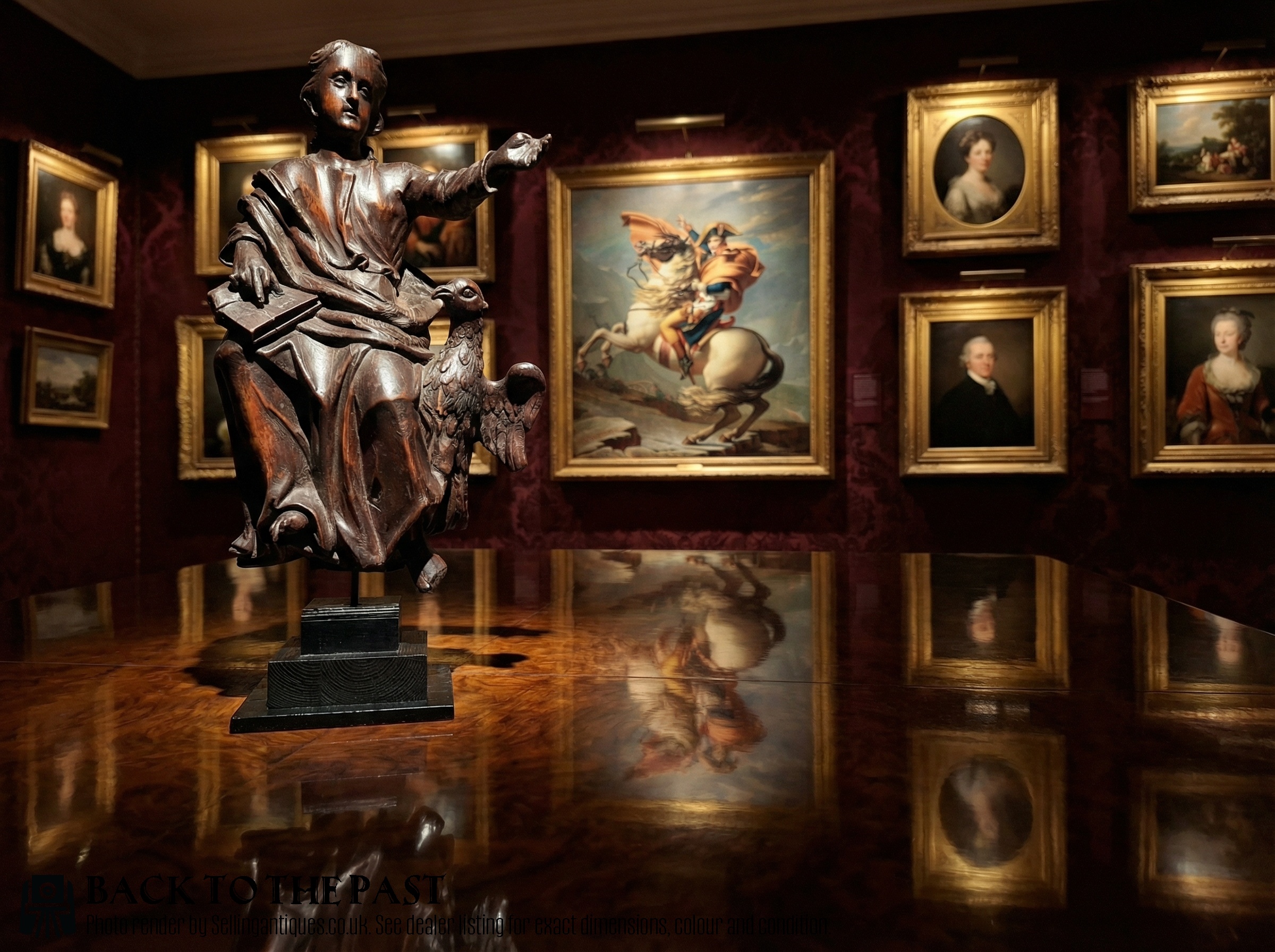
Antique Church Wood Carving
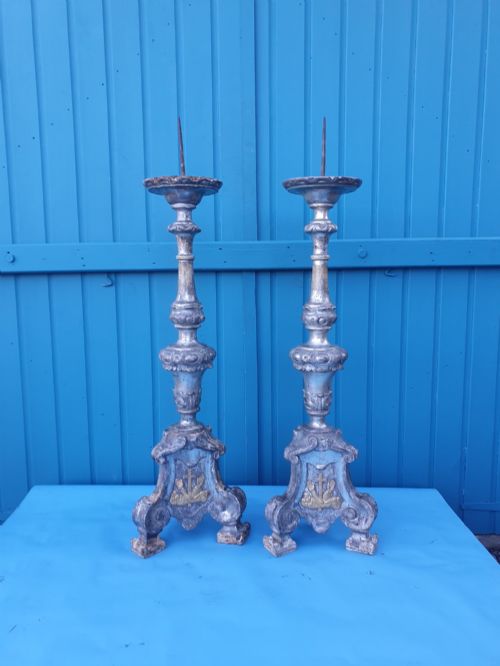
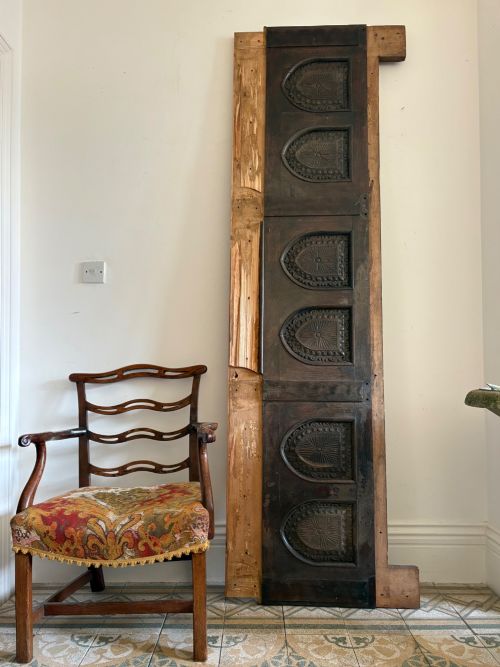
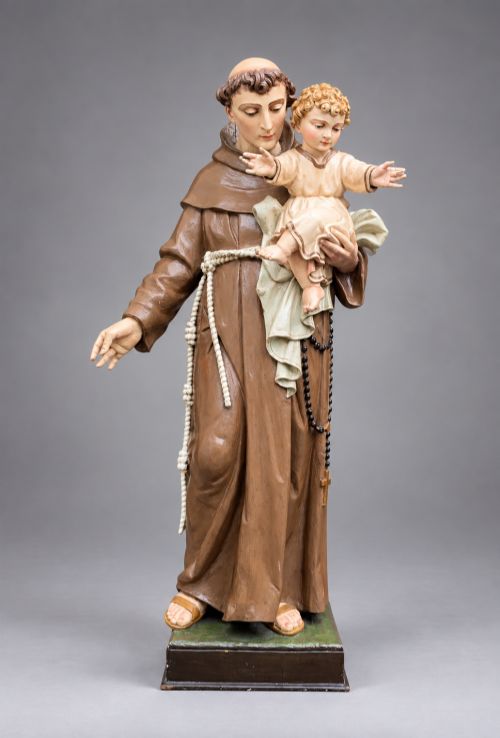
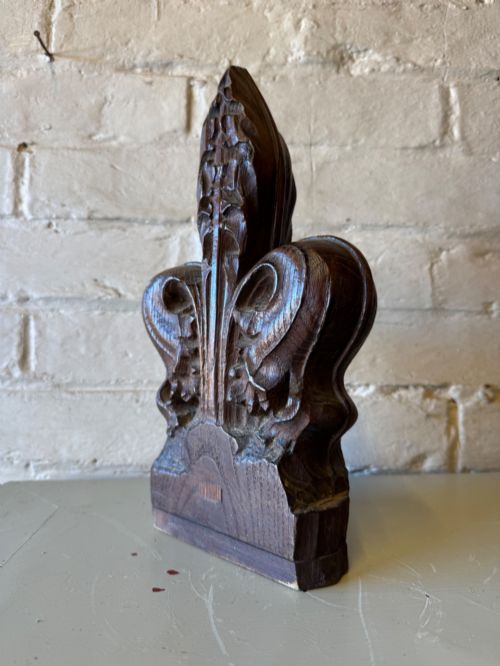
An antique church wood carving represents centuries of ecclesiastical devotion, spanning from pre-sixteenth century figures to nineteenth century Gothic Revival furnishings. Buyers encounter architectural fragments, devotional statues, altar candlesticks, and liturgical furniture designed originally for sacred spaces.
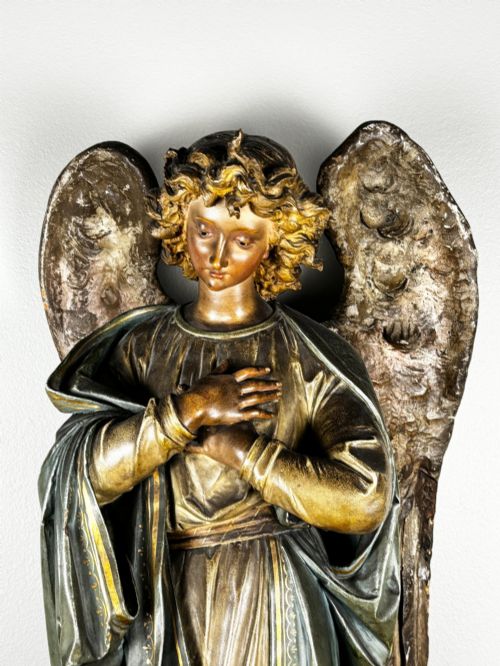
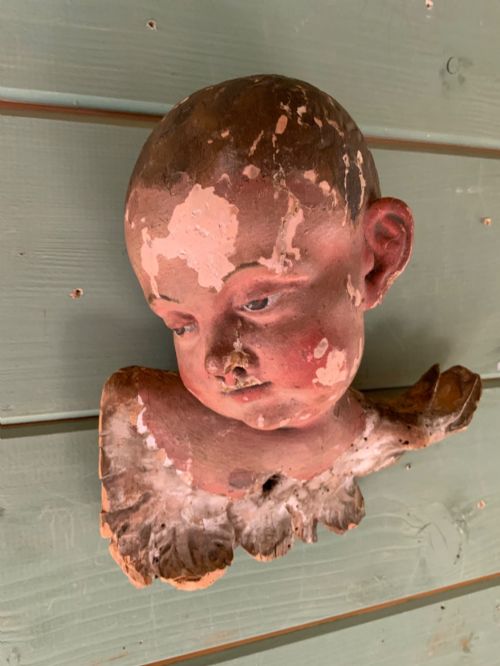
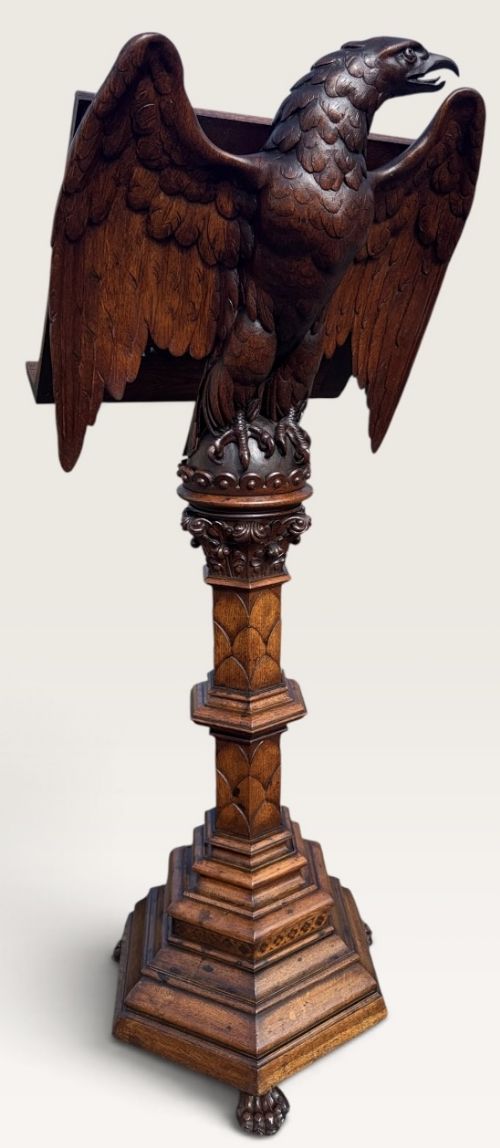
The material record on this page draws heavily from Continental and English workshops, ranging from austere sixteenth century oak panels to ornate eighteenth century giltwood figures. Forms include life-size saints, winged angels, prayer desks, and lecterns shaped as eagles.
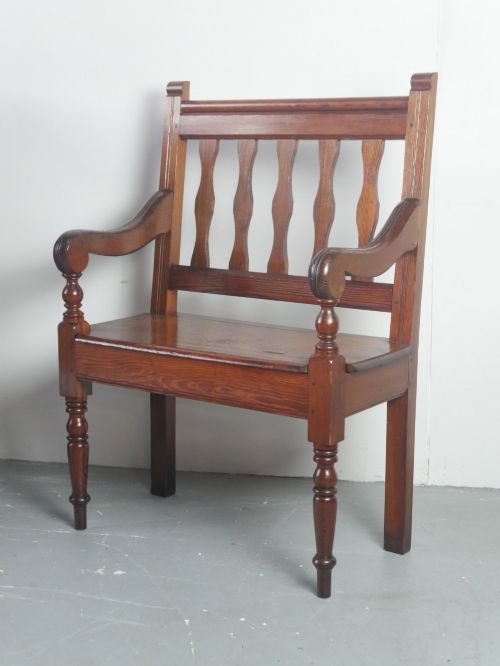
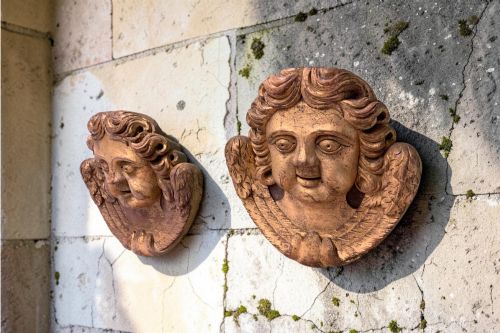
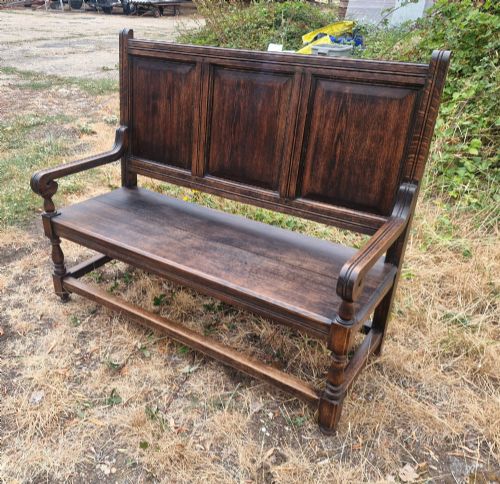
Domestic interiors accommodate these pieces readily through benches, settles, and smaller wall reliefs. The selection balances raw timber surfaces against polychrome paint and gold leaf finishes.
Materials and Construction
Oak and assorted hardwoods form the structural core of these ecclesiastical works, shaped by carvers using traditional gouges and chisels. Timber selection dictated the depth and durability of the relief work, whether executed on structural panels or freestanding devotional sculptures.
Surface decoration frequently involves gesso applied as a ground for gold leaf or silvering. Polychrome paint layers, often built up with natural pigments, survive on many figures to reveal original carnation tones and drapery colours.
Continental workshops combined pine, hard woods, and gesso layers to achieve elaborate Baroque and Renaissance forms. Gilding techniques varied from water gilding on bole to oil size applications on altarpieces and candlesticks.
Antique Church Wood Carving Retail Price Guide 2026
Typical asking prices for church wood carving among the pieces listed under this phrase on Sellingantiques today, from the lower quarter to the upper quarter. They describe what is for sale here now, not the wider market.
The material record on this page spans solid oak, carved softwood, gesso, and gold leaf.
Judging Quality and Execution
The distinction between standard ecclesiastical joinery and master carvers rests in the anatomical precision of figures and the fluidity of drapery folds. Superior pieces maintain crisp undercut details in the wood, whereas lower grade items rely on repetitive, shallow stamping.
Original surface integrity dictates the standing of a piece within its period. Traces of early polychrome paint and intact gold leaf elevate an artefact, while heavy modern stripping or indiscriminate overpainting diminishes the historical read of the carving.
Proportion and scale separate functional furniture from significant sculpture. Life-size figures and altarpiece panels demand complex structural engineering to prevent timber warping over centuries.
The Antique Church Wood Carving Glossary
- Polychrome paint
- Decoration applied in several colours to wood or gesso surfaces. This technique brings depth and realism to carved devotional figures.
- Giltwood
- Timber coated with a thin layer of gold leaf or powder over a preparation base. It is frequently seen on eighteenth century altar fittings.
- Pricket
- A sharp metal spike on a candlestick designed to hold a candle upright. Ecclesiastical examples often feature large drip pans below the spike.
- Prie Dieu
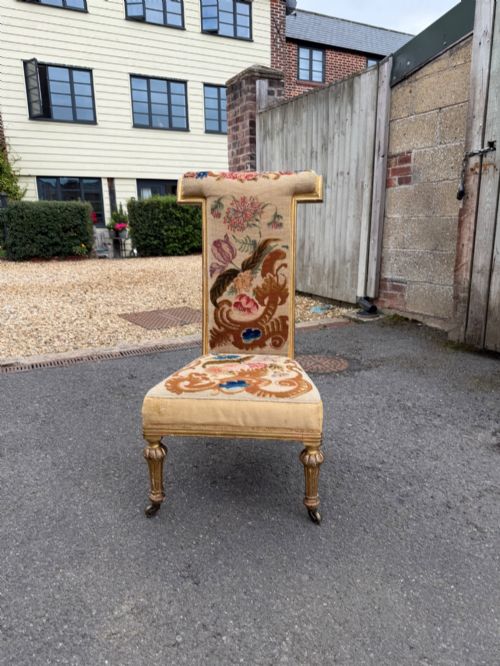
- A small desk or chair adapted specifically for kneeling and private prayer. These items often incorporate upholstered rests and storage compartments for missals.
- Gesso
- A plaster mix applied to wood as a smooth surface for gilding or painting. It helps seal the timber substrate before decoration begins.
Antique Church Wood Carving: Frequently Asked Questions
How do I date an antique church wood carving?
Dating relies on stylistic shifts like the transition from late Gothic rigidity to Baroque movement. Tool marks and timber shrinkage also offer clues.
Examination of the ground preparation beneath paint layers helps confirm period authenticity.
Where should I place a church carving at home?
Freestanding statues suit entrance halls or living spaces as focal points. Wall reliefs mount securely above consoles or fireplaces.
Benches and prayer desks function practically in hallways and studies.
How do I clean polychrome wood carvings?
Dust surfaces gently using a soft, dry brush without applying moisture. Avoid chemical cleaning agents that strip fragile historical paint layers.
Professional conservators should handle deep cleaning or flaking pigment stabilisation.
What is the difference between oak and giltwood pieces?
Oak carvings display the natural grain and are typical of earlier Gothic and Renaissance eras. Giltwood items use gold leaf over gesso and reflect Baroque splendour.
Both materials require stable humidity levels to prevent timber movement.