



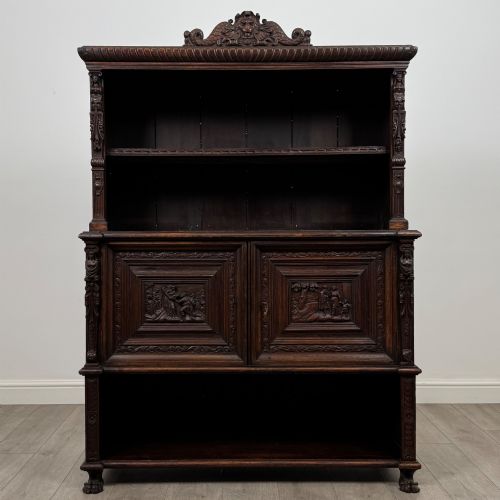
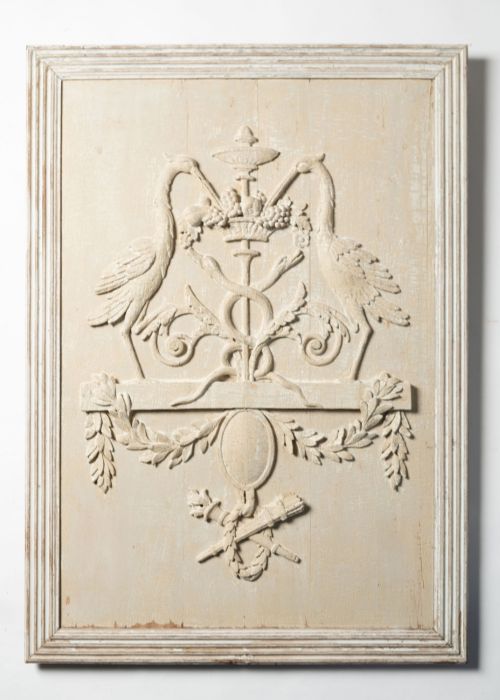
Antique Oak Relief
These pieces of antique oak relief bring heavy timber carving and centuries of hand-cut detail directly into modern rooms.
Antique Oak Relief
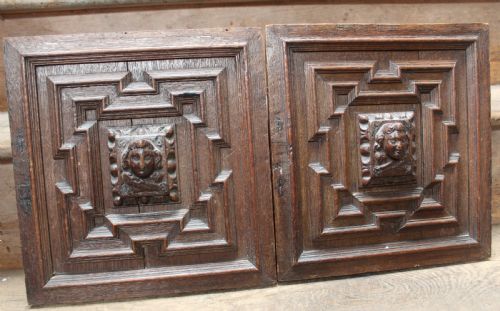
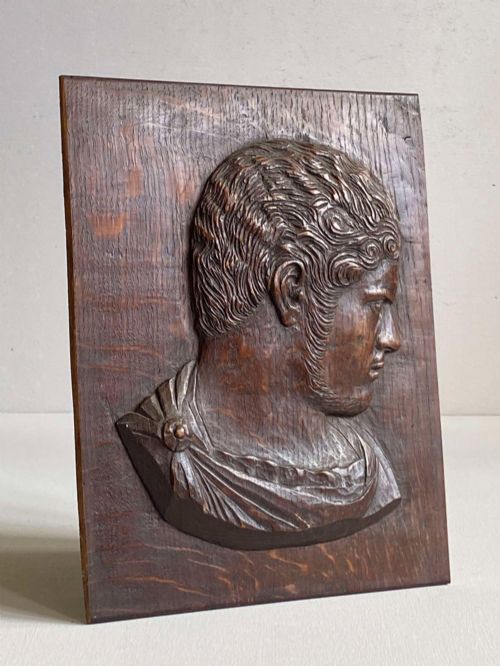
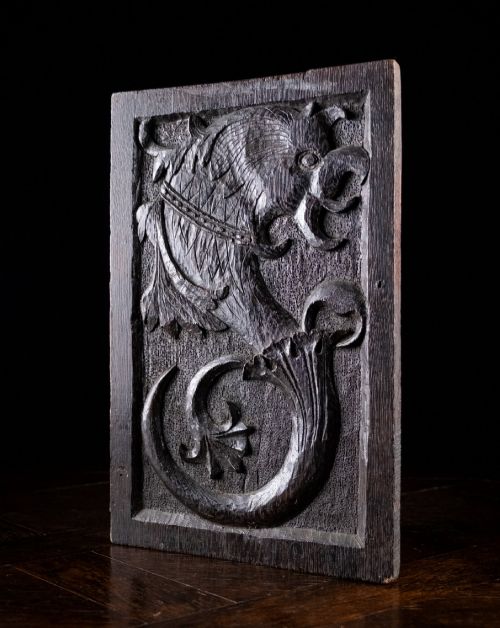
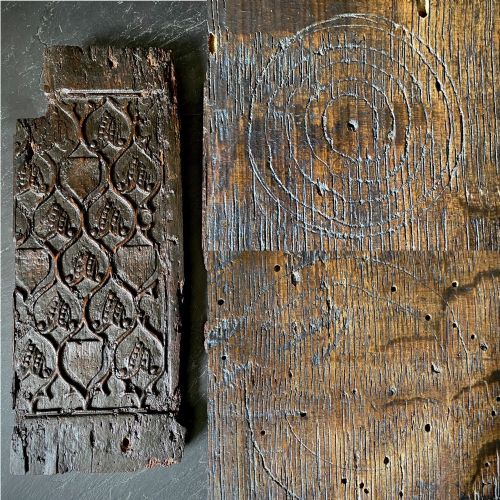
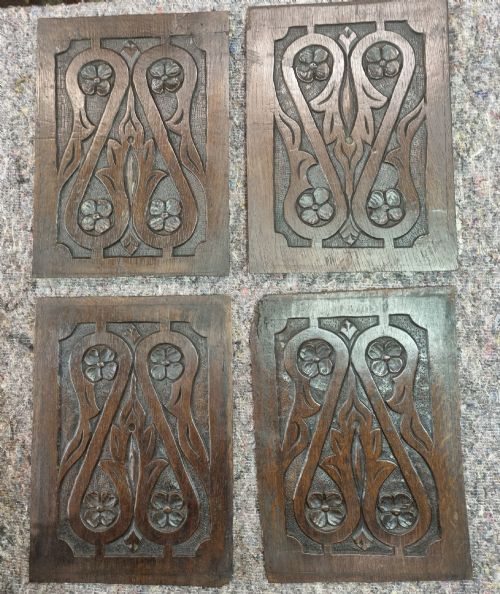
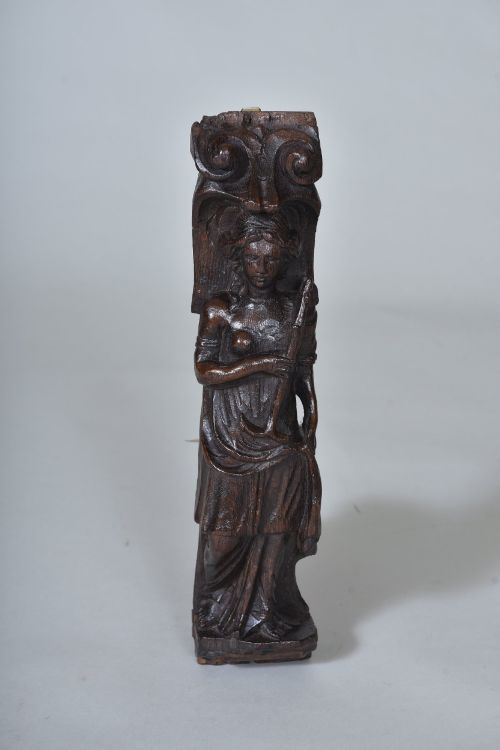
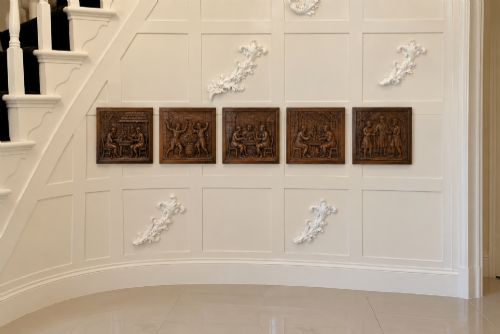
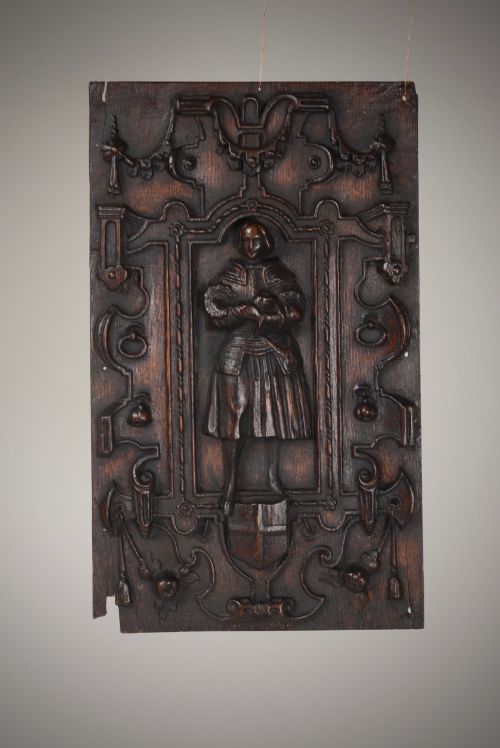
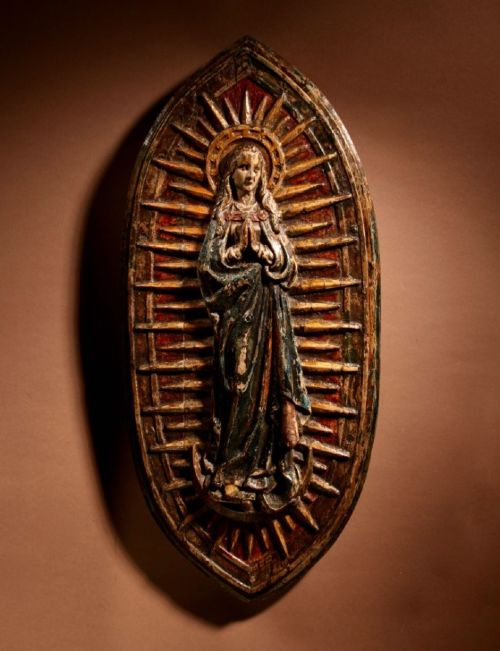
When you search for antique oak relief, you look at wall panels, architectural salvage, and carved plaques originating from the sixteenth century onwards. The most frequent pieces on this page are seventeenth-century panels and nineteenth-century revival works depicting figures, linenfold patterns, and religious scenes.
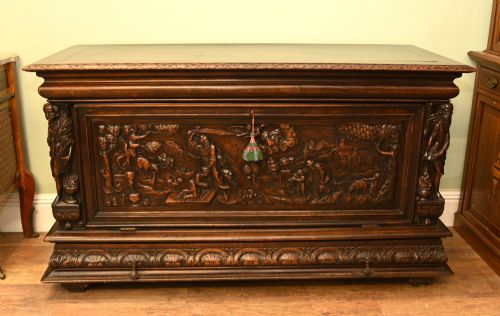
Early items often derive from larger church altarpieces, furnishings, or timber buildings, whilst later nineteenth-century examples frequently take the form of overmantles or decorative plaques. These objects display figures such as Joan of Arc, the Green Man, or classical deities carved directly into dense hardwood.
Depth and Execution
Lesser pieces exhibit mechanical stiffness or shallow, indistinct tool marks that blur the narrative of the scene. The integrity of the original timber board and the survival of crisp edges without excessive modern sanding also separate ordinary carvings from exceptional works.
Antique Oak Relief Retail Price Guide 2026
Typical asking prices for oak relief among the pieces listed under this phrase on Sellingantiques today, from the lower quarter to the upper quarter. They describe what is for sale here now, not the wider market.
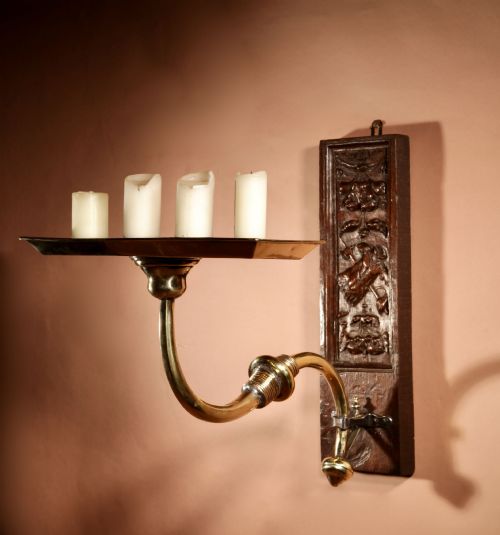
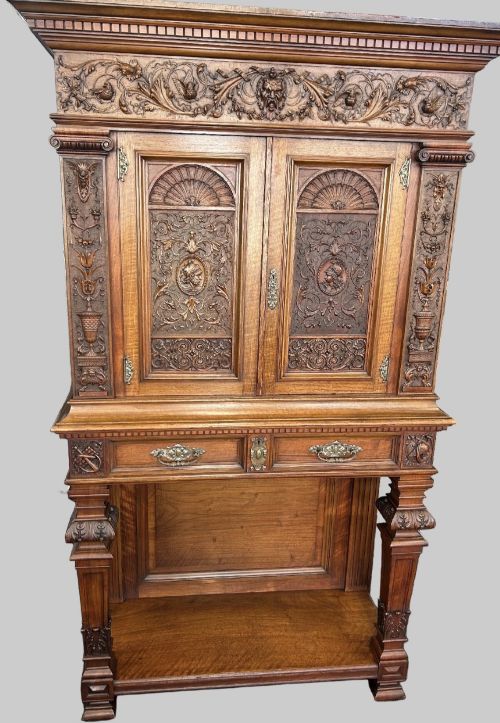
Listings span from the sixteenth century to the twentieth, incorporating oak, walnut, brass, and painted wood in architectural salvage and wall art.
Edward Pearce·Sherwin and Cotton·James Dudson
The Antique Oak Relief Glossary
- Linenfold
- A style of wood carving representing folded lengths of cloth, commonly found on sixteenth-century panels. This motif creates a textile-like texture across rigid timber surfaces.
- High-Relief
- A sculptural technique where elements project substantially from the background plane. Figures carved in this manner catch light strongly and create deep shadows.
- Ceiling Boss
- A decorative projecting block placed at the intersection of ceiling ribs. These circular wooden carvings often feature floral or figurative motifs.
- Overmantle
- A decorative architectural panel or mirror frame positioned above a fireplace opening. These large timber works frequently display coats of arms or hunting scenes.
- Green Man
- A sculptural motif depicting a human face emerging from or entwined with foliage. This ancient symbol appears frequently on architectural woodwork and church carvings.
Antique Oak Relief: Frequently Asked Questions
How do I hang a heavy carved panel?
Most antique panels require professional wall fixings or custom metal brackets designed to distribute the substantial weight of old hardwood safely.
Avoid relying on simple picture wire attached to old frames, as centuries-old timber can strain standard fixings.
How do I distinguish sixteenth-century work from revival pieces?
Sixteenth-century carvings typically show adze marks, irregular hand-cut backing boards, and distinct tool signatures left by early joiners. Nineteenth-century Gothic revival pieces often display more uniform machine-assisted sawing on the reverse while imitating earlier styles.
Examine the shrinkage cracks and fastener holes, which reveal the true age of the timber assembly.
Where were these panels originally placed?
Many panels originated as structural elements within ecclesiastical altarpieces, timber-framed wall panelling, or grand domestic furniture such as cupboards and settles. Later nineteenth-century pieces were frequently designed specifically as standalone wall art or architectural overmantles.