
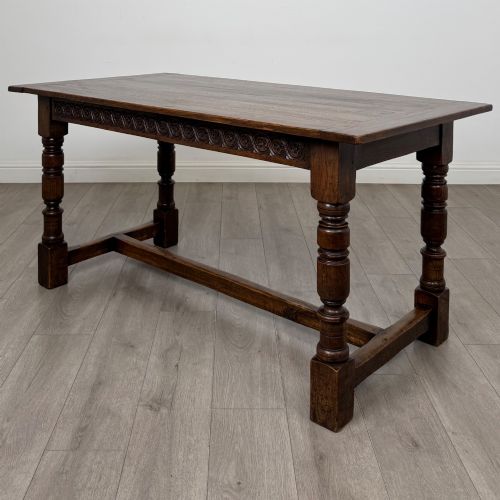
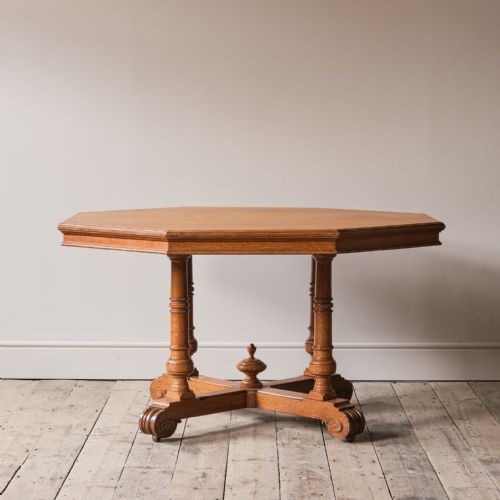
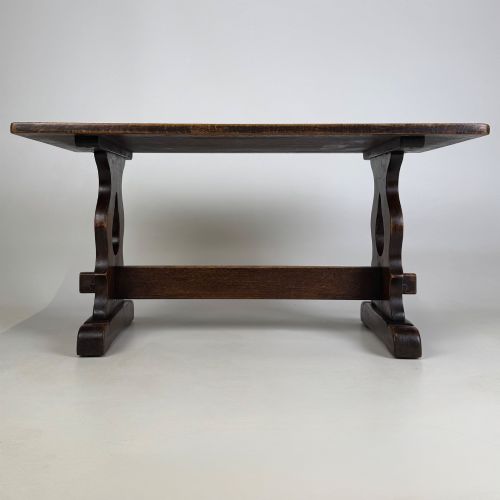
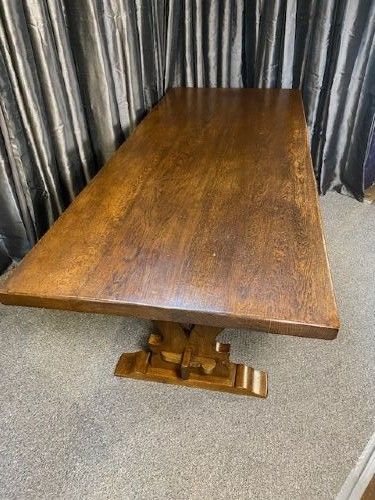
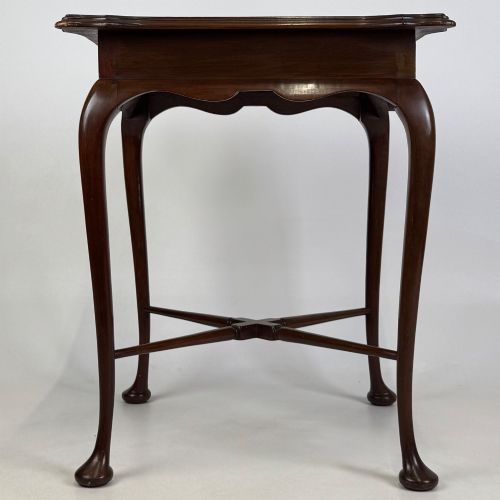
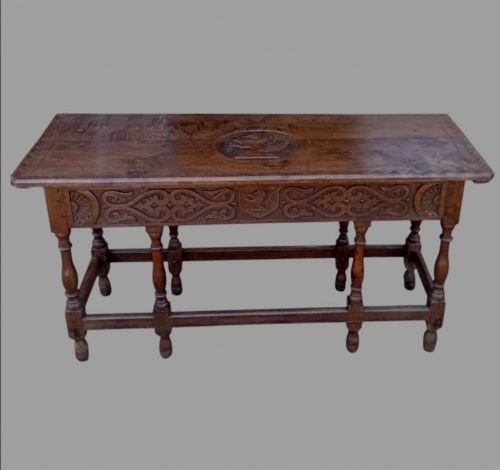
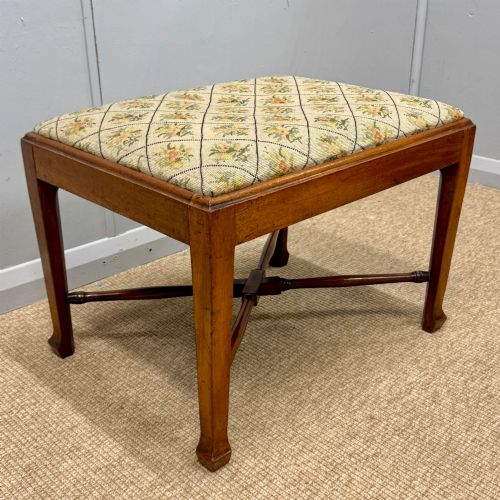
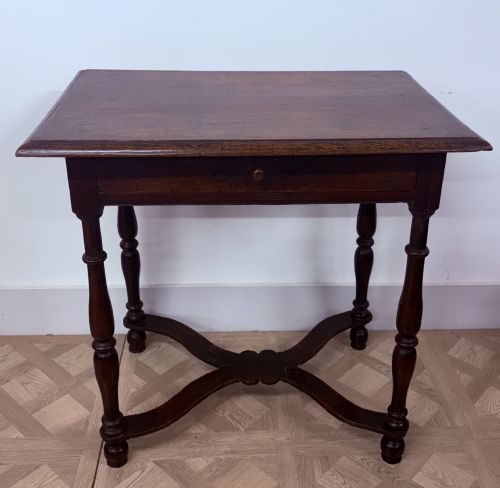
Carved Stretcher Table
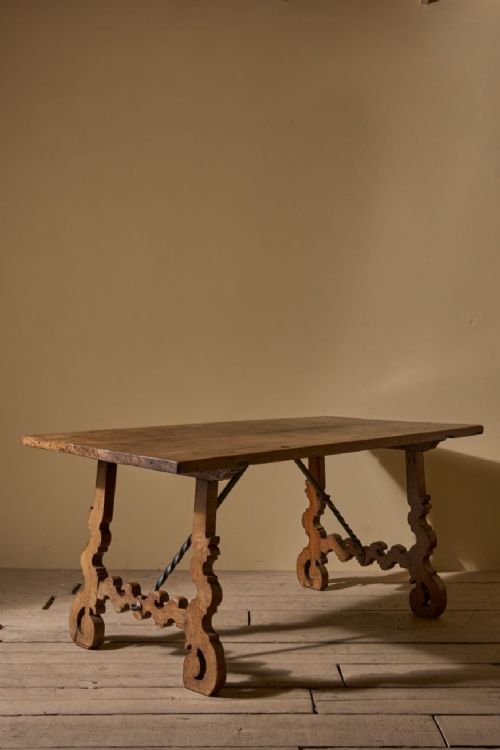
A carved stretcher table brings architectural heft and sculptural woodwork into a room, offering robust support frameworks beneath generous timber tops.
Carved Stretcher Table
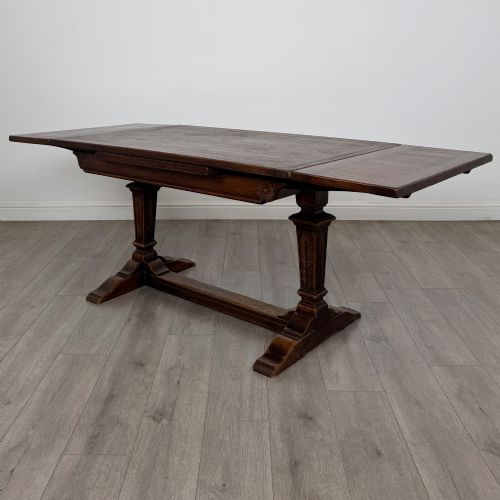
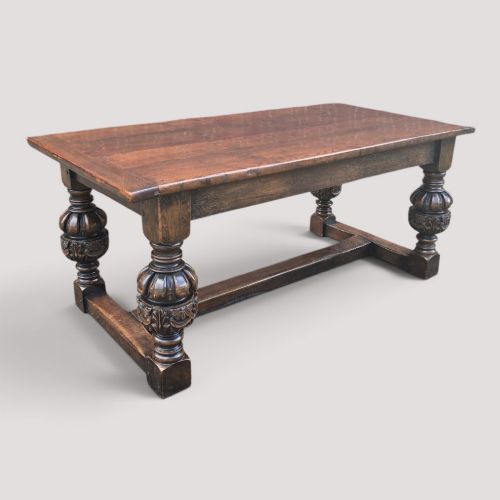
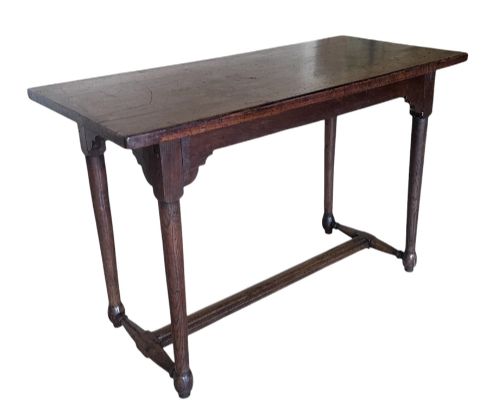
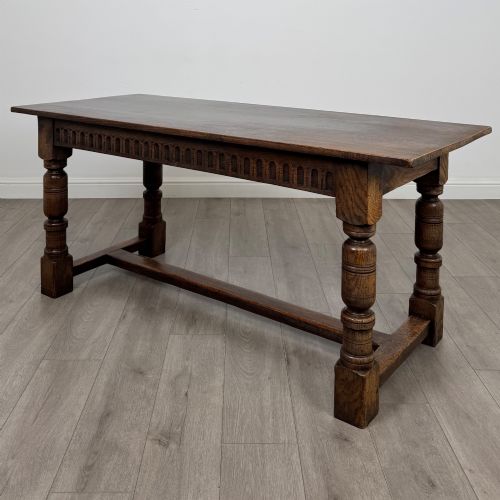
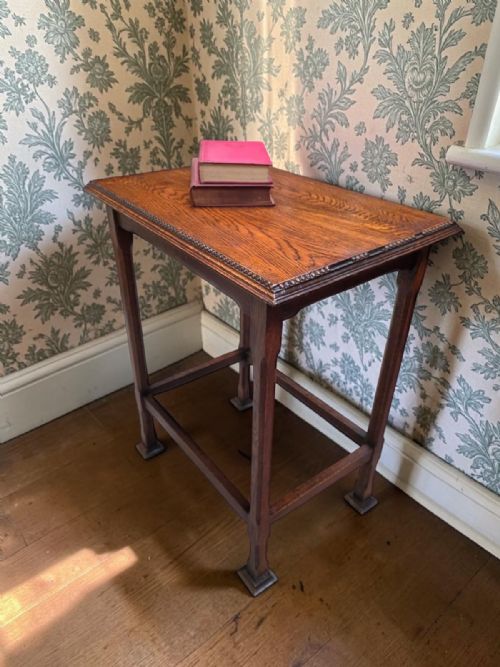
A carved stretcher table comprises a horizontal timber brace connecting the lower legs, providing structural rigidity while carrying intricate surface decoration. When searching for a carved stretcher table, buyers encounter formats ranging from compact occasional and lamp tables to expansive refectory dining boards.
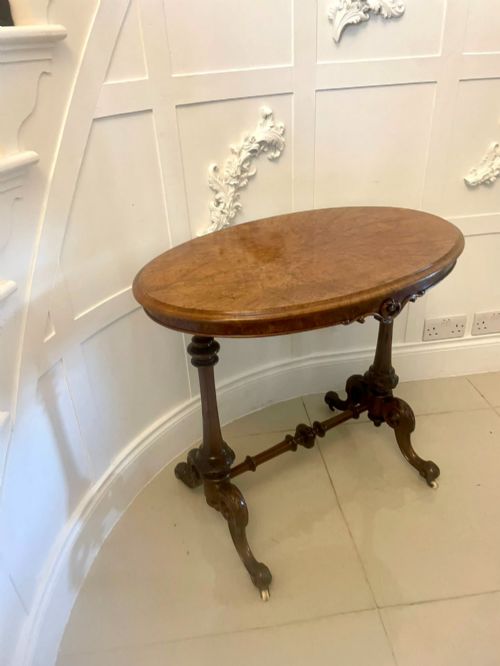
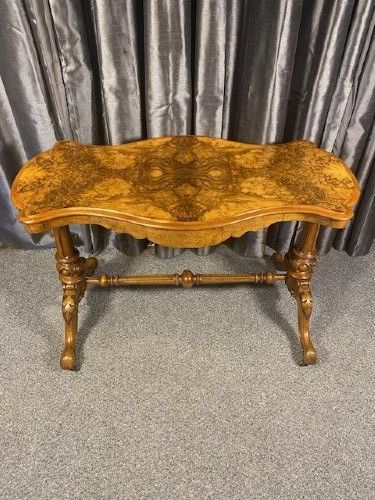
The selections span centuries of cabinetmaking, featuring robust 17th-century English and Spanish oak examples alongside refined Victorian walnut pieces and Edwardian interpretations. Forms include side tables, centre tables, and writing desks, each utilising the underframe to anchor the design visually.
Earlier examples lean towards rustic refectory and Baroque styles, while later revivals draw upon William and Mary or Jacobean vocabulary. The stretcher itself transforms a simple utility stand into a display of turning, piercing, and low-relief carving.
How they were made
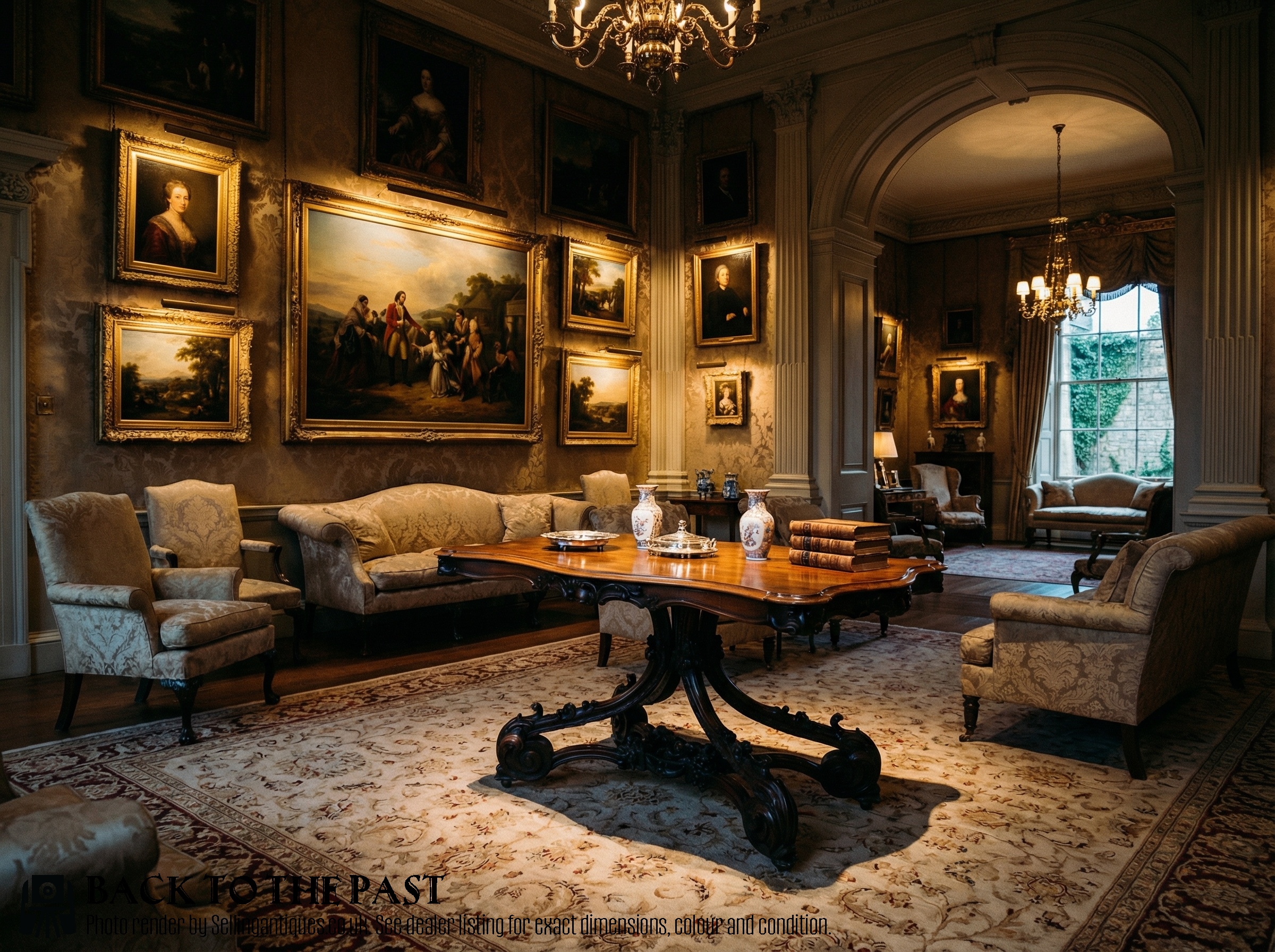
Makers constructed these pieces primarily from solid hardwoods such as oak, walnut, and mahogany, selecting timbers for their grain pattern and density. Burr walnut and satinwood veneers occasionally surface on tabletop surfaces, providing contrasting figures against solid frames.
Joinery relied on traditional mortise and tenon joints locked with wooden pegs, securing the heavy tops and stretcher rails without reliance on modern adhesives. Carving was executed by hand, utilising gouges and chisels directly into the seasoned wood to produce repeating motifs, fluting, or figurative panels.
Turned components like barley twists and bobbin turns required precise lathe work, creating rhythmic textures along the legs and connecting rails. Surfaces were finished with wax, oil, or French polish to seal the timber while highlighting the natural patina.
Carved Stretcher Table Retail Price Guide 2026
Typical asking prices for carved stretcher table among the pieces listed under this phrase on Sellingantiques today, from the lower quarter to the upper quarter. They describe what is for sale here now, not the wider market.
Early craftsmen sometimes hid charming irregularities in hand-turned barley twists, reminding modern owners that perfection belonged to machines long after these trees fell.
What varies in quality
Quality rests principally on the crispness and depth of the hand carving, where sharper chisel work distinguishes master workshops from routine production. The choice of timber also dictates grade, with dense figured oak, burr walnut, or rich Spanish walnut representing superior material selection.
Structural integrity depends on the tightness of the joinery where legs meet the stretcher rails, ensuring the lower frame bears weight without looseness or warping. The harmony of proportions between the top slab and the underframe separates thoughtful cabinetmaking from clumsy assembly.
Edwards and Roberts
The Carved Stretcher Table Glossary
- Stretcher
- A horizontal timber rail connecting the legs of a table to increase stability. It frequently acts as a decorative canvas for turning or carving.
- Refectory
- A long dining table traditionally used in communal dining halls. These pieces often feature substantial timber tops and heavy stretcher bracing.
- Barley twist
- A type of turning that resembles a spiral rope or screw thread. This decorative motif appears frequently on 17th-century and Victorian supports.
- Burr walnut
- Timber harvested from walnut tree growths, producing a highly figured grain with swirling patterns. Cabinetmakers prize this material for decorative tabletops.
- Patina
- The surface sheen and colour acquired by timber through age, handling, and regular polishing. A deep natural patina indicates years of careful maintenance.
Carved Stretcher Table: Frequently Asked Questions
What is a carved stretcher table used for?
These tables function across domestic spaces as dining surfaces, writing desks, or central display stands. The lower framework provides a solid foundation for daily use.
Smaller formats serve as lamp or occasional tables, while longer examples accommodate seating for multiple diners in a principal room.
How do I identify a 17th century piece?
Seventeenth-century examples typically display heavy oak or walnut construction with pegged joinery and hand-cut chamfers. Surface patination tends to be deep and dry.
Turned elements like bobbin or barley twist motifs are common markers of this era, alongside simpler, utilitarian framing.
Are these tables suitable for modern dining?
Many historical examples provide adequate height and surface area for contemporary dining or workspace needs. Solid timber construction handles regular daily use reliably.
Buyers should verify clearance heights beneath the stretcher rails to ensure comfortable seating posture for guests.
How should I care for the timber top?
Maintain the wood by applying natural beeswax periodically to nourish the grain and protect against moisture. Avoid placing untreated timbers in direct sunlight or near heat sources.
Soft, dry cloths suffice for routine dusting, preventing the buildup of grit that might scratch the polish.