




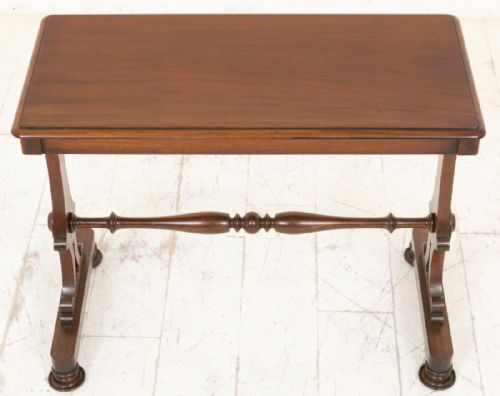


Rosewood Stretcher Table
A rosewood stretcher table brings rich timber grain and structural timber bracing to a room, offering both centre-stage presence and everyday surface utility.
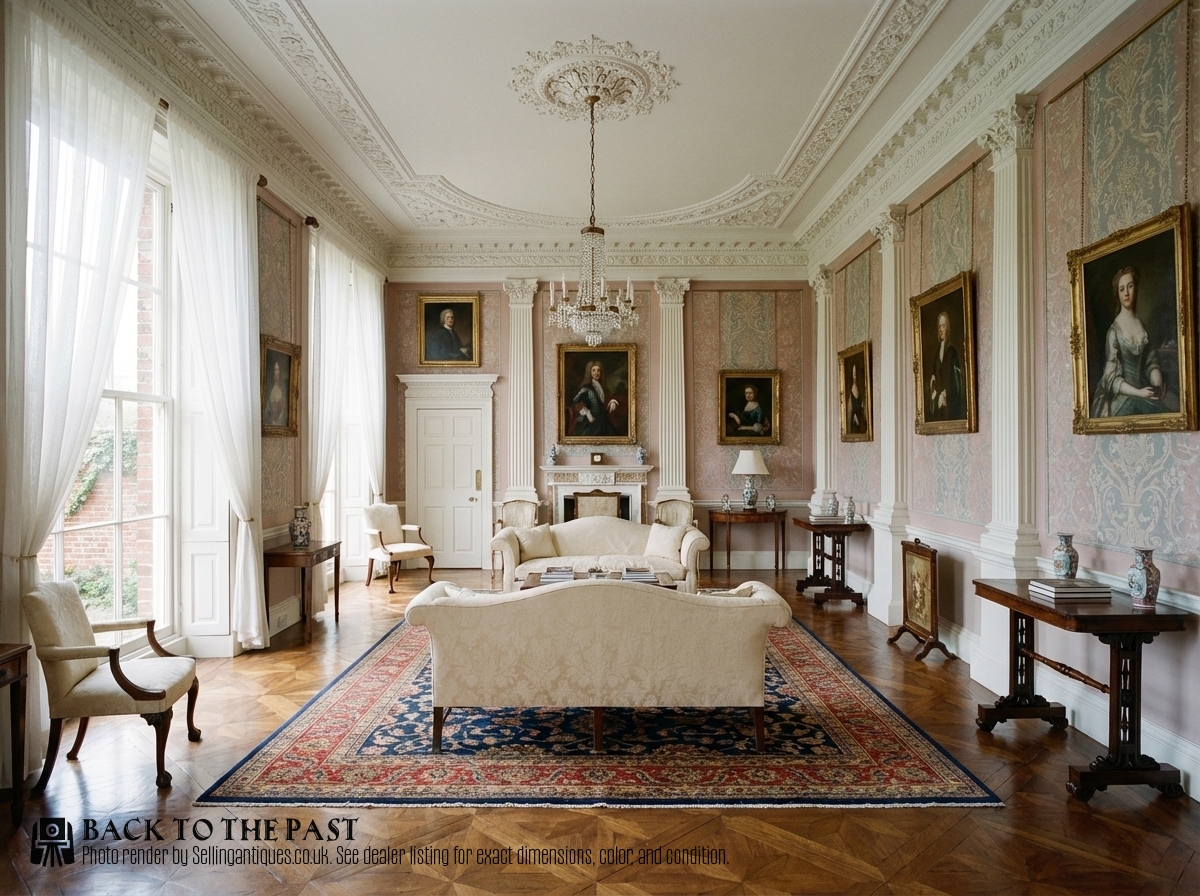
Rosewood Stretcher Table
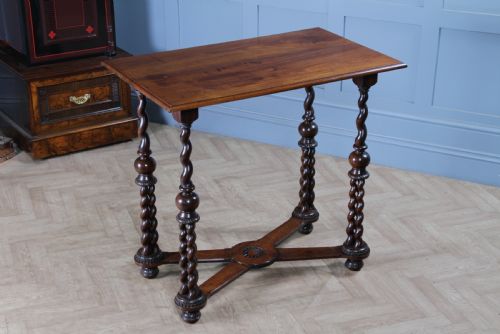
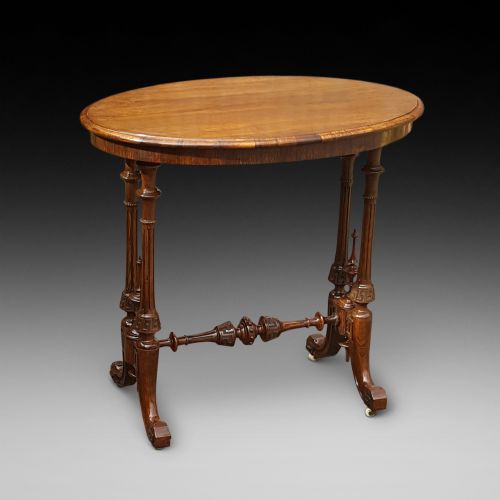
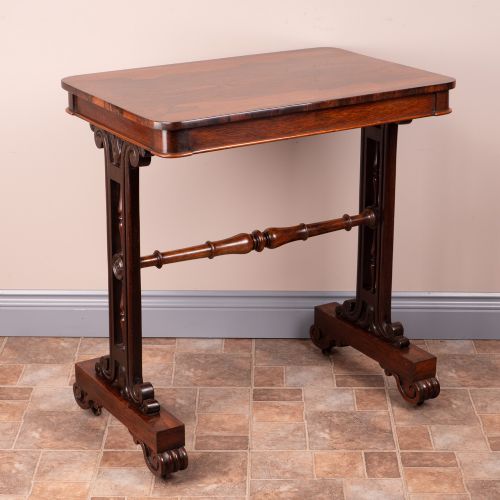
A rosewood stretcher table is a domestic surface defined by its distinctive underframe bracing, uniting the legs beneath the top. When searching for a rosewood stretcher table, you encounter pieces spanning the nineteenth century, including William IV and various Victorian iterations. These forms frequently double as library tables, occasional tables, or side pieces.
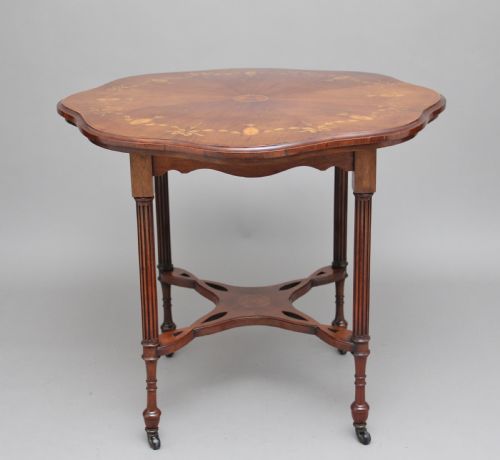
The material palette centres on dense, figured rosewood and Rio rosewood, sometimes accented with mahogany, brass, or wood inlay and marquetry. Centre tables and occasional tables dominate the forms, while library and window variants demonstrate the utility demanded by nineteenth-century households. Portuguese Colonial examples also appear, broadening the geographic origin of these timber pieces.
Victorian and William IV pieces form the backbone of the selection, moving from early nineteenth-century restraint to later Victorian revivalism. You will find rectangular formats alongside octagonal occasional tables and occasional lamp tables. The stretcher element itself varies, appearing as a simple transverse rail or incorporating decorative pierced woodwork.
Materials and construction
Makers utilised solid rosewood and rich veneers applied to secondary woods, harnessing the deep natural figuring and dark tones of the timber. Brass castors frequently facilitated movement across heavy nineteenth-century carpets, while intricate wood inlay and marquetry added surface contrast to tabletops.
The underframe stretcher construction provided rigidity to tables that often supported heavy volumes in libraries or decorative objects in drawing rooms. Joinery techniques of the period ensured stable framing beneath the expansive top boards, accommodating the substantial weight of dense exotic hardwoods.
Some nineteenth-century readers apparently tested table stability by resting elbows on the corners while debating politics.
Assessing quality in rosewood furniture
Quality rests significantly on the selection of the rosewood timber and the richness of its grain pattern, particularly in Rio rosewood variants. Superior examples display thoughtful matching of veneers across the top and harmonious proportions between the legs, top, and supporting stretcher.
The crispness of carved details, such as barley twist supports or pierced stretcher elements, distinguishes finer workshop output from plainer utility items. Intricate marquetry and well-executed inlay further elevate a piece, showing meticulous hand-cut precision rather than hurried assembly.
Gillows Of Lancaster
The Rosewood Stretcher Table Glossary
- Marquetry
- The art of applying decorative pieces of wood veneer to a structure to form intricate patterns. This technique frequently graces tabletop surfaces.
- William IV
- A design period spanning the early nineteenth century characterised by robust classical proportions and substantial timber forms. Pieces from this era often show bold architectural lines.
- Centre table
- A freestanding table designed to be viewed from all sides in the middle of a room. These forms frequently incorporate sturdy stretcher bracing.
Rosewood Stretcher Table: Frequently Asked Questions
What is a stretcher table used for?
These tables served various domestic functions, acting as central display surfaces in drawing rooms or functional writing and reading desks in libraries. Their sturdy underframes made them reliable for holding heavy books and lamps.
Today, they adapt easily to modern living spaces as hallway consoles, lamp tables, or occasional surfaces. Their architectural framing allows them to sit comfortably against walls or stand independently in open rooms.
How do I date a rosewood table?
Dating relies on observing stylistic shifts from the classical restraint of William IV pieces to the ornate revivalism of the late Victorian era. Foot construction, timber selection, and edge profiles offer further chronological clues.
Earlier nineteenth-century examples often display bolder architectural proportions, while later Victorian pieces embrace eclectic revival styles. Examining secondary woods and hardware helps confirm the period of manufacture.
How do I care for rosewood furniture?
Protect the timber by keeping tables away from direct sunlight and steady heat sources that can dry out the polished surface. Regular dusting with a soft, dry cloth preserves the natural lustre of the rosewood.
Avoid applying silicone-based polishes, which can build up and dull the grain over time. Occasional gentle waxing maintains the moisture and depth of the nineteenth-century finish.