
Carved Rosewood Console
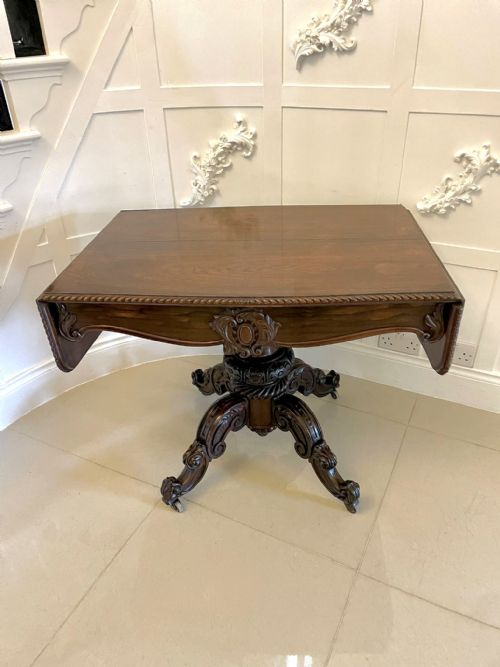
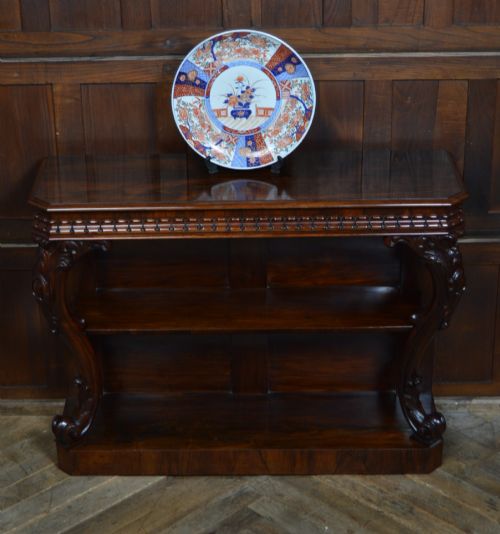
A carved rosewood console table brings heavy grain, deep colour and architectural presence to a hallway or drawing room.
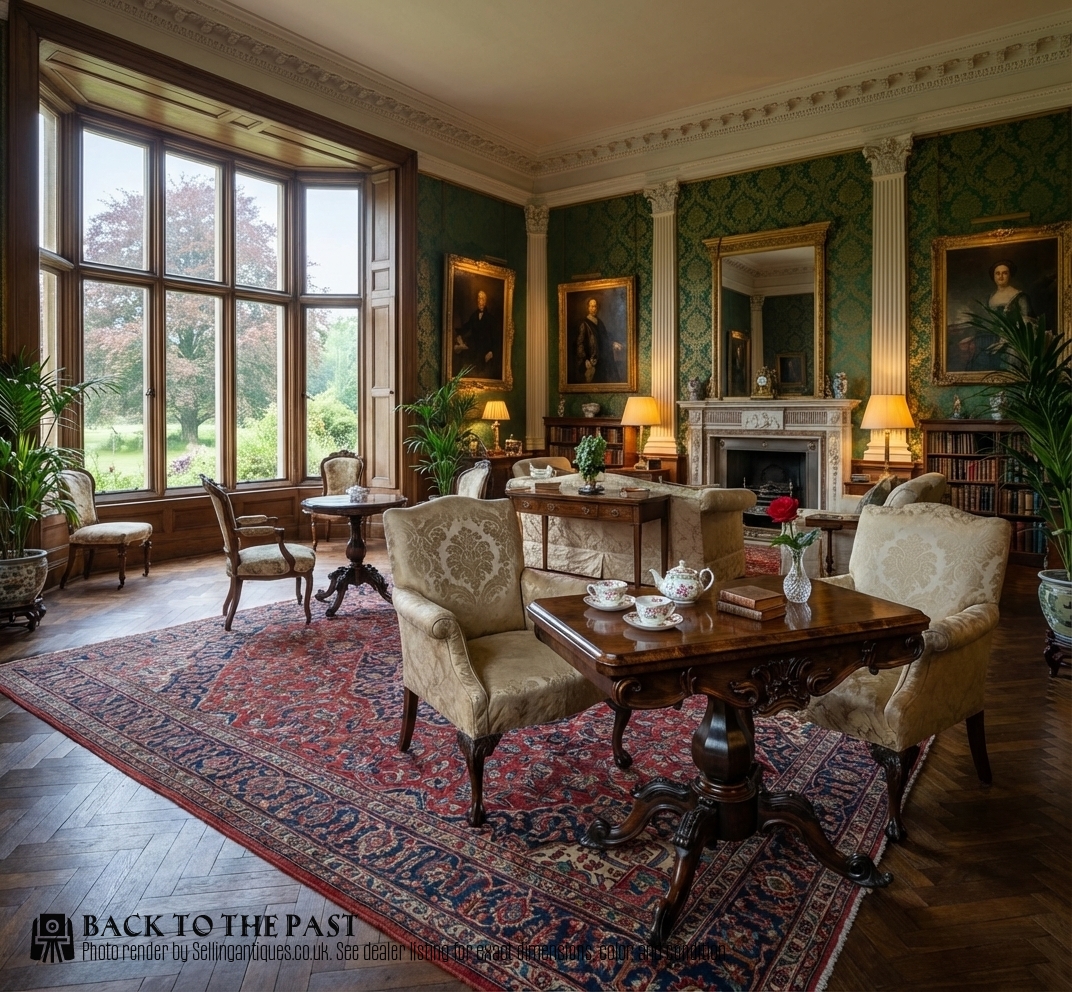
Carved Rosewood Console
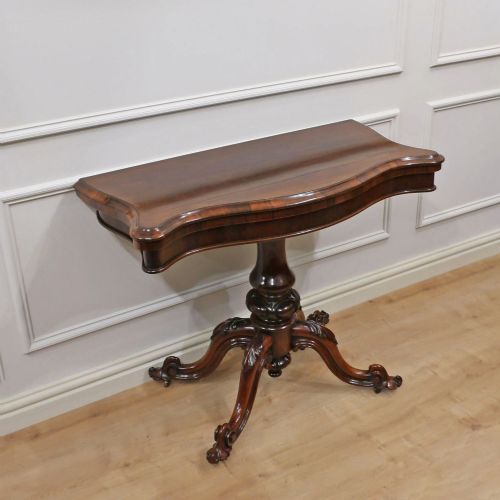
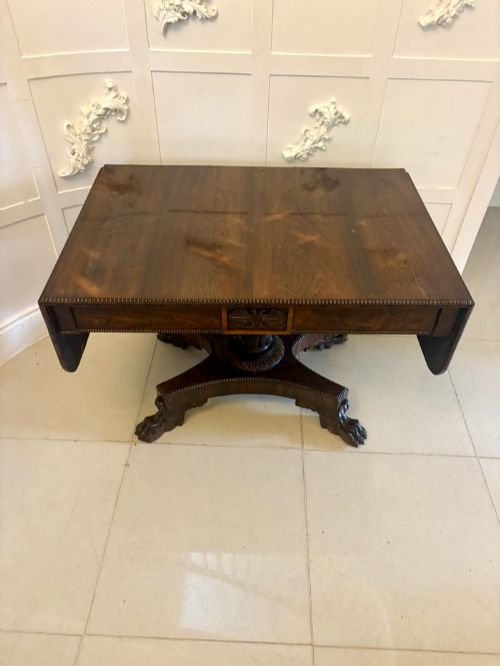
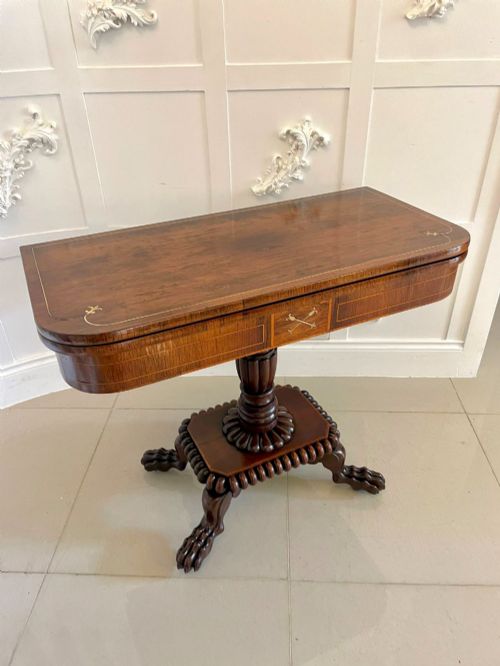
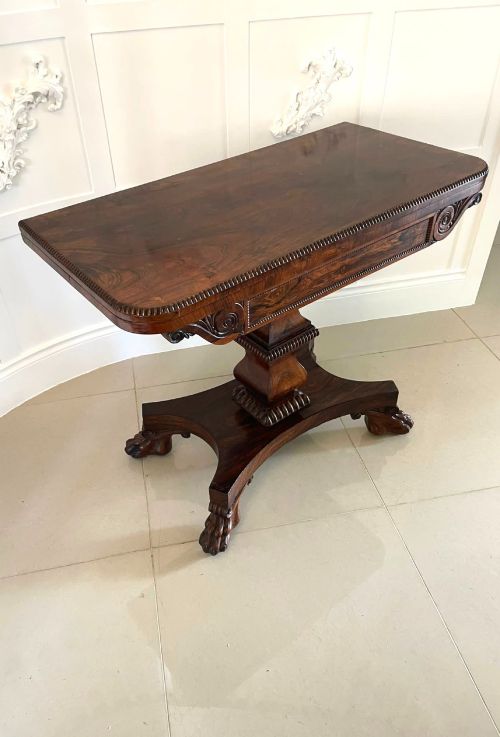
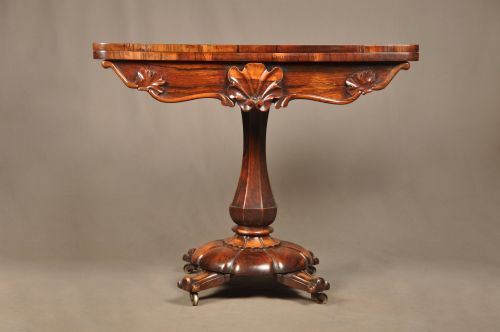
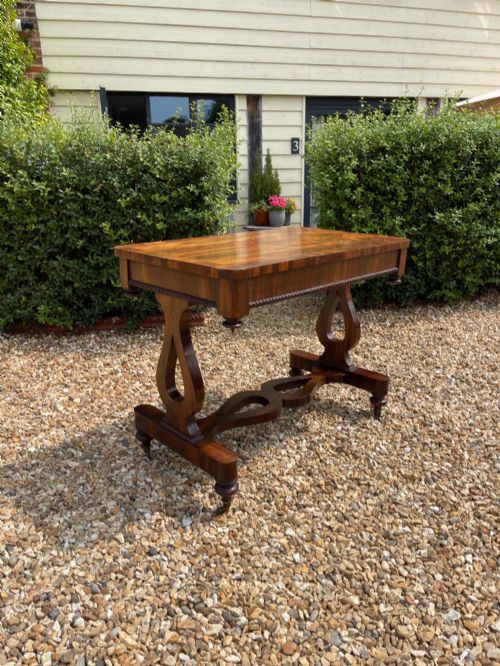
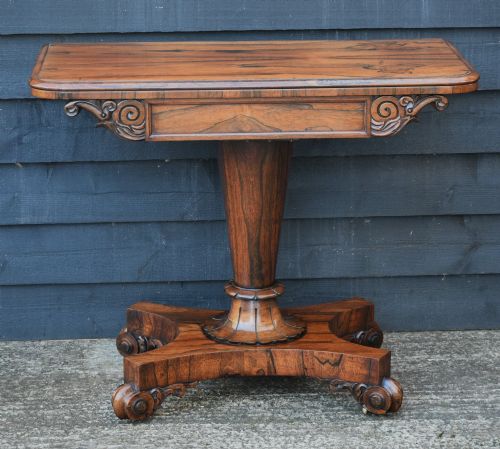
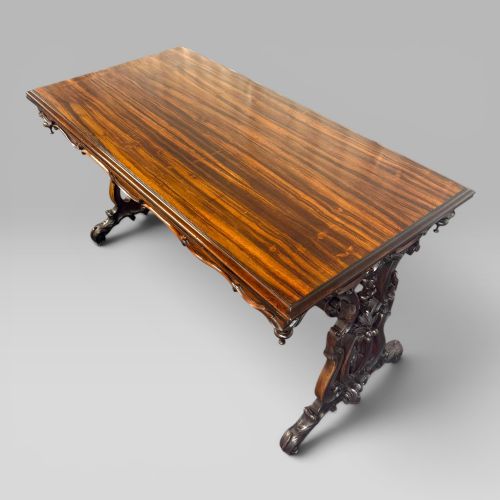
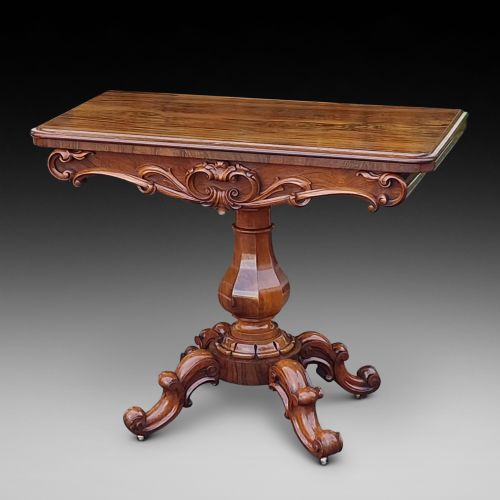
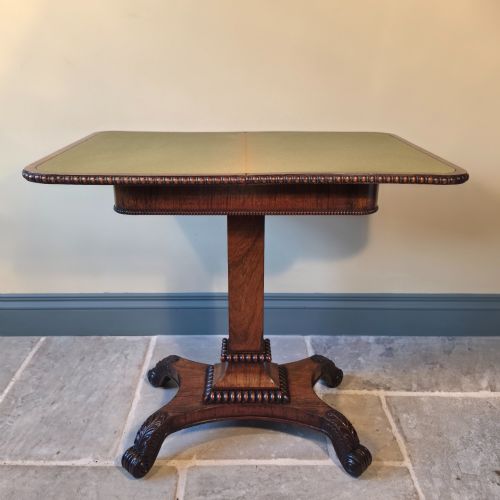
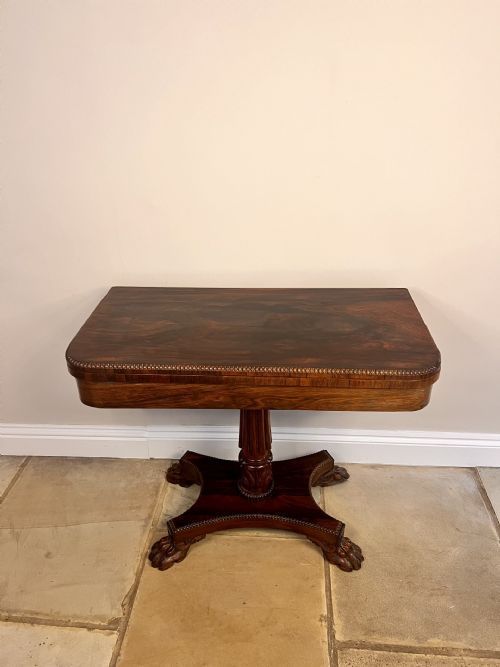
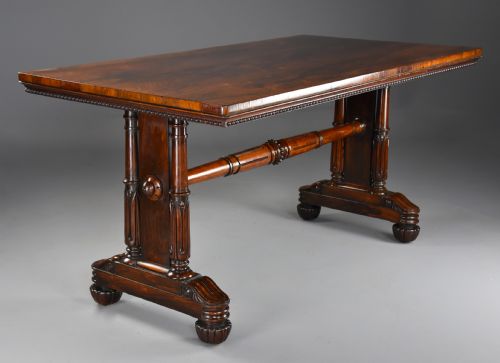
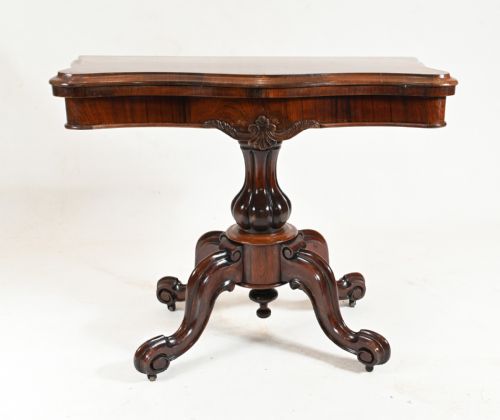
A carved rosewood console stands against a wall, often accompanied by related forms such as card tables, tea tables, sofa tables, side tables and centre tables from the nineteenth century. The selection spans Regency, William IV, Victorian and Early Victorian periods, alongside Anglo-Indian and Qing Dynasty pieces.
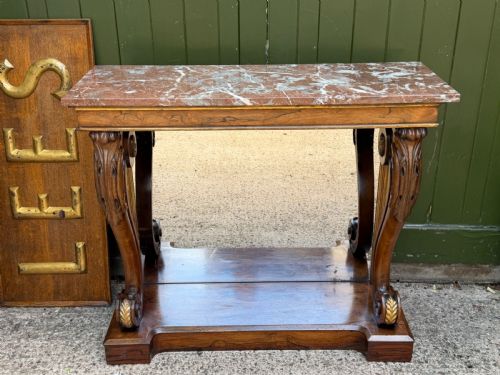
Console tables in this timber frequently feature structural elements like mirror-backs, marble tops, parcel-gilt details and carved bases. Buyers will encounter both British workshops and international traditions, including Chinese hardwood examples with rouge marble panels and heavily carved Anglo-Indian designs.
Materials and Technique
Maker-joiners utilised solid rosewood and veneers over secondary timbers, incorporating brass inlay, satinwood stringing and baize or leather writing surfaces. Tops are frequently formed from figured marble or polished stone fitted directly into the timber frame.
Carving techniques include deeply modelled foliage, scrolls, and sculptural supports such as dolphins or triple barley twists. Frames rely on traditional joinery, fold-over hinged mechanisms for card and tea tables, and heavy pedestal or pillar bases.
Carved Rosewood Console Retail Price Guide 2026
Typical asking prices for carved rosewood console among the pieces listed under this phrase on Sellingantiques today, from the lower quarter to the upper quarter. They describe what is for sale here now, not the wider market.
Some nineteenth-century tables swap standard wooden pedestals for carved marine dolphins.
Judging Quality
Quality rests upon the crispness of the hand-carving and the depth of figure in the rosewood grain. Superior examples display seamless movement in fold-over table tops, tightly fitted marble inserts and substantial, well-balanced pedestals.
Pieces attributed to notable makers or specific design houses demonstrate finer detailing in brass inlay and parcel-gilt work. Poorer versions show mechanical stiffness in mechanisms, weaker secondary woods or heavy surface repairs that obscure the original timber.
Gillows·Robert Strahan
The Carved Rosewood Console Glossary
- Console table
- A table designed to stand against a wall, often secured to it or supported by front legs and a heavy plinth.
- Fold-over card table
- A dual-purpose table with a hinged top that opens to reveal a baize or leather-lined playing surface.
- Mirror-back
- A mirrored panel fitted to the rear frame of a console or sideboard to reflect light and the room interior.
- Parcel-gilt
- Partially gilded woodwork where thin gold leaf highlights specific carved details or mouldings.
- Rouge marble
- A deep red decorative limestone used frequently for table and console inserts.
Carved Rosewood Console: Frequently Asked Questions
Where should I place a console table?
These tables suit hallways, entryways or reception rooms where wall space allows the piece to anchor the room. Mirror-back versions work particularly well in darker corridors to bounce ambient light.
Ensure the depth of the console matches your clearance requirements, especially if the top is a fold-over design that extends outward.
How do I care for rosewood furniture?
Keep nineteenth-century rosewood away from direct heat sources and strong sunlight to prevent the timber and veneers from drying out. Dust regularly with a dry, soft cloth and avoid modern silicone polishes.
Marble tops require simple wiping with a damp cloth, avoiding acidic cleaners that etch the polished stone surface.
How do I date a nineteenth-century console?
Dating relies on stylistic markers such as Regency parcel-gilt and brass inlay, William IV pedestal bases, or Victorian barley twist supports. Examining the secondary woods beneath the veneer also helps determine the manufacturing decade.
Consulting cabinet-making traits connects pieces to specific periods between 1800 and 1880.