



Colonial Rosewood Furniture
Colonial rosewood furniture brings together dense tropical timbers and intricate carving, offering substantial forms that anchor a room with distinct historic character.
Colonial Rosewood Furniture
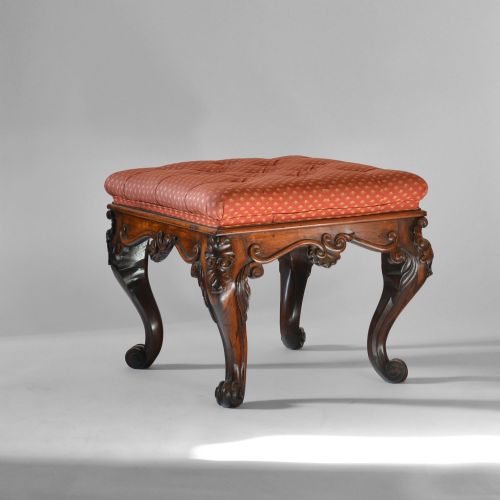
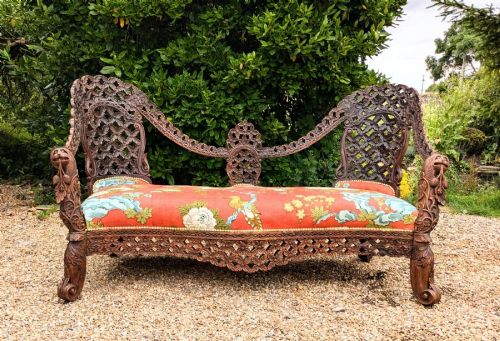
Colonial rosewood furniture encompasses heavily carved cabinets, tables, and seating produced during the nineteenth century under British and Portuguese influence. When searching for colonial rosewood furniture, buyers encounter Anglo-Indian and Portuguese colonial designs spanning periods from the 1830s through to the early twentieth century.
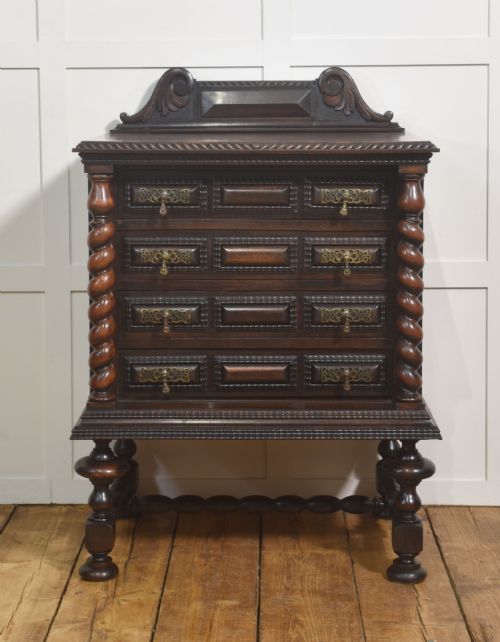
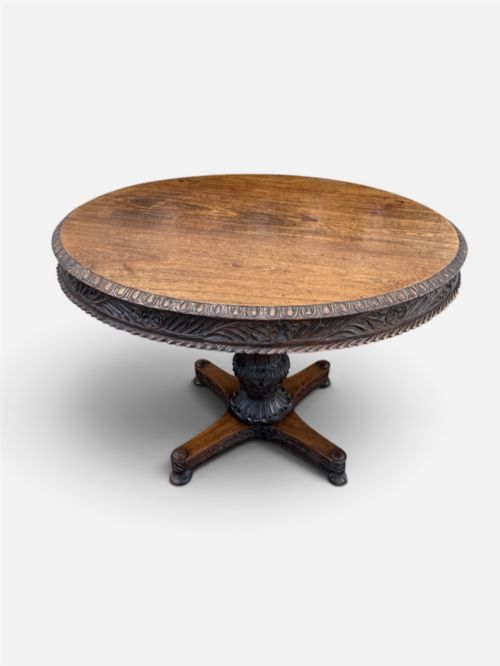
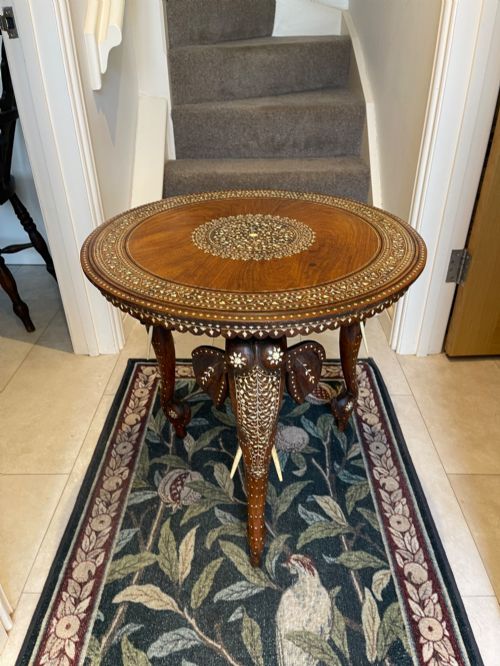
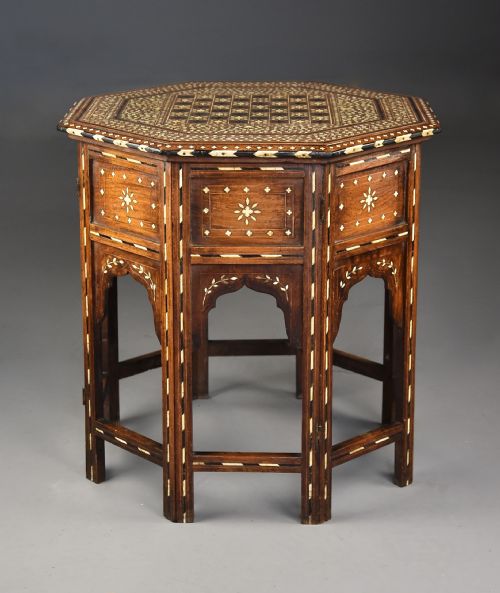
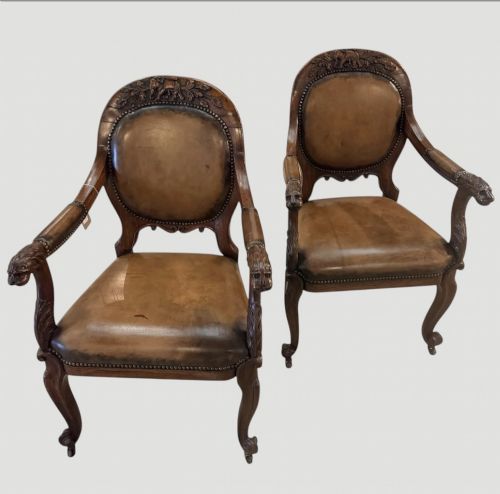
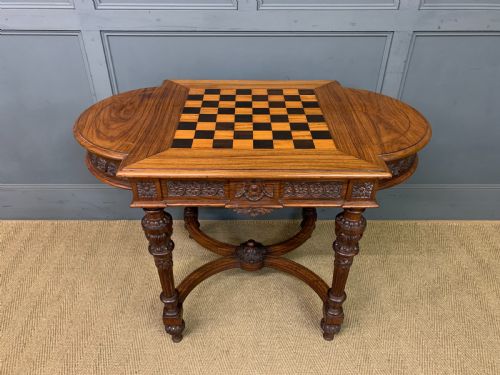
The pieces on this page lean heavily toward Anglo-Indian production, featuring occasional tables, centre tables, and substantial sideboards alongside seating forms such as library chairs and planters chairs. Forms range from octagonal Hoshiarpur tables to library chairs and campaign chests, reflecting both domestic utility and formal display.
Geographic origins extend across specific regional workshops in India and Portuguese territories, producing dense hardwood pieces that combine European furniture shapes with local decorative motifs. Cabinets, chests on stands, and low tables dominate the selection, each demonstrating the adaptation of domestic forms to tropical materials.
Judging Quality and Execution
Quality rests upon the crispness and depth of the hand-carving, where superior examples display sharp undercut foliage and secure, flush inlay work rather than shallow, softened definition. The selection of the timber grain, particularly in solid Rio rosewood or padouk surfaces, dictates the visual harmony of the finished piece.
Structural integrity separates standard utilitarian items from finer decorative pieces, visible in the stability of pedestal bases, the precision of folding mechanisms on occasional tables, and the tightness of joints in heavily carved frames. The preservation of original secondary materials, such as cane seating or bone and mother-of-pearl inserts, influences the overall integrity of the construction.
Colonial Rosewood Furniture Retail Price Guide 2026
Typical asking prices for colonial rosewood furniture among the pieces listed under this phrase on Sellingantiques today, from the lower quarter to the upper quarter. They describe what is for sale here now, not the wider market.
Listings feature nineteenth-century pieces incorporating rosewood, teak, padouk, bone inlay, and cane seating across diverse forms.
The Colonial Rosewood Furniture Glossary
- Anglo-Indian
- Furniture made in India by local craftsmen for British residents, combining European forms with indigenous carving styles. This designation covers a wide variety of domestic tables, seating, and storage pieces.
- Hoshiarpur
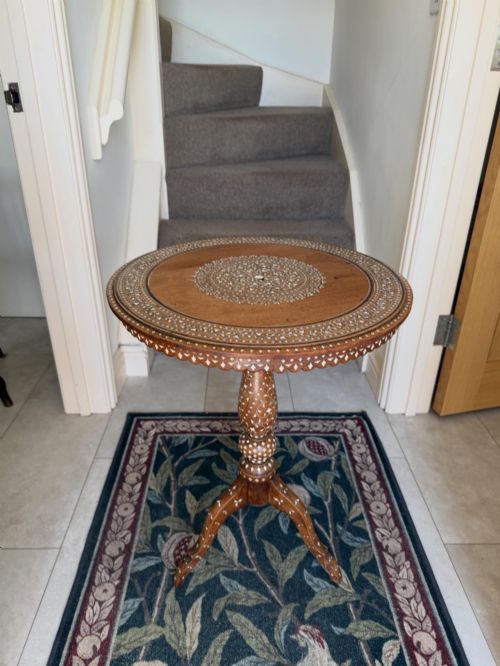
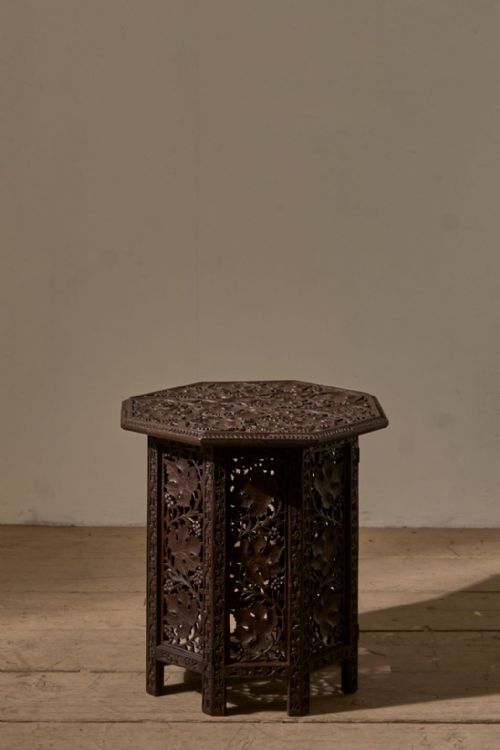
- A style of decorative woodwork originating from Punjab, characterised by intricate geometric inlay in bone or brass upon dense timber surfaces. Tables and stands from this tradition often feature folding octagonal tops.
- Planters Chair
- An armchair featuring exceptionally broad, extended arms designed for reclining, frequently constructed from solid rosewood or teak. These chairs often incorporate cane panels for ventilation in tropical environments.
- Teapoy
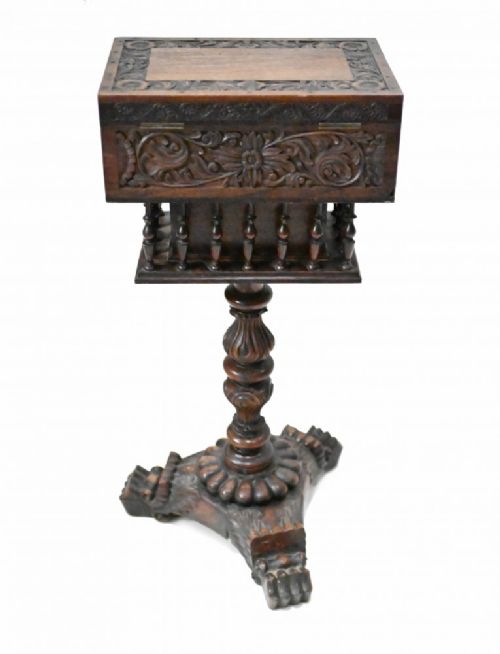
- A small occasional table or chest intended for holding tea caddies and related equipment, often raised on a central pillar with carved supports. Surviving examples demonstrate compact proportions and detailed woodwork.
- Padouk
- A heavy, durable tropical hardwood with a reddish-brown hue that darkens with age, utilised extensively in colonial cabinet making. It provides a stable base for deep relief carving.
- Campaign Chest
- A modular storage chest built in sections with recessed brass fittings, designed for easy dismantling and transport by military officers or administrators. These items prioritise robust construction and portability.
Colonial Rosewood Furniture: Frequently Asked Questions
What is colonial rosewood furniture?
Colonial rosewood furniture comprises tables, cabinets, and seating produced during the nineteenth century in regions under British and Portuguese rule, notably India. These items fuse European domestic forms with local carving traditions.
Craftsmen utilised dense tropical timbers like rosewood and padouk, embellishing the surfaces with deep relief carving, bone inlay, or cane work. The resulting pieces served administrative, domestic, and social functions for colonial residents.
How do I identify Hoshiarpur tables?
Hoshiarpur tables are identified by their intricate surface inlay, typically executed in bone or brass set into a dark hardwood base. They frequently feature folding octagonal or hexagonal tops covered in dense geometric patterns.
Originating from the Punjab region, these tables utilise clever folding construction that allows the base to collapse flat. The dense arrangement of floral and geometric motifs covers every visible surface of the timber.
Where was colonial furniture made?
Colonial furniture was produced in various regional workshops across the Indian subcontinent and Portuguese colonial territories. Major production centres included Bombay, Portuguese outposts, and northern craft hubs like Hoshiarpur.
Local artisans adapted British and European furniture designs, such as Pembroke tables, library chairs, and pedestal desks, to suit local materials and aesthetic preferences. This exchange created distinct regional styles within the broader category.
How should I care for rosewood?
Rosewood furniture requires stable environmental conditions away from direct heat sources and strong sunlight to prevent the timber from drying out or splitting. Maintaining consistent indoor humidity helps preserve the structural integrity of dense tropical hardwoods.
Dusting with a soft, dry cloth is generally sufficient for routine maintenance, avoiding silicone-based polishes that can build up on carved surfaces. Care must be taken around inlaid elements like bone or mother-of-pearl to protect the surrounding adhesive and timber.