





Exotic Carved Wood Table
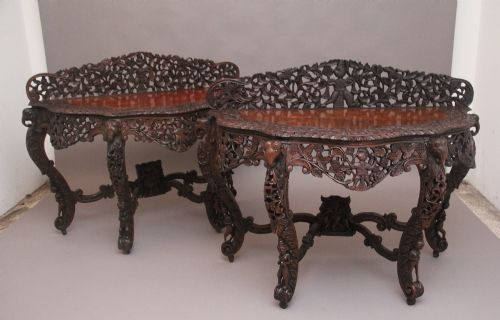
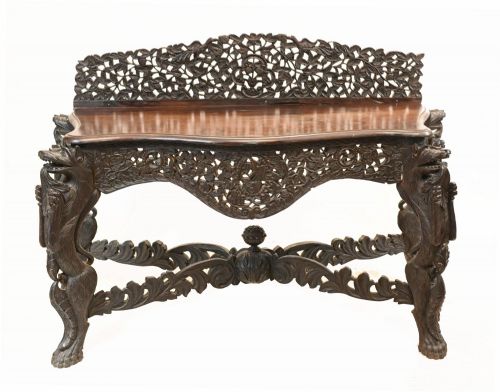
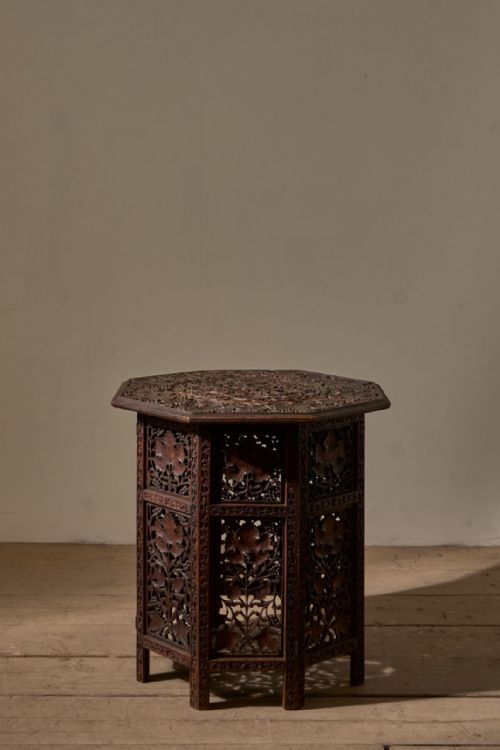
An exotic carved wood table brings distinct regional character into a room through dense carving and rich native timbers.
Exotic Carved Wood Table
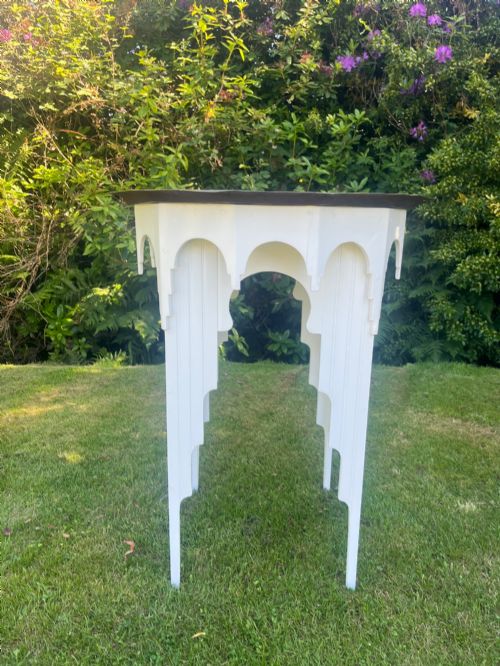
When you search for an exotic carved wood table, you encounter diverse forms ranging from centre tables and side tables to work tables and occasional tables. These pieces originate from distinct global workshops and colonial trade routes, spanning the nineteenth century up to the art deco period.
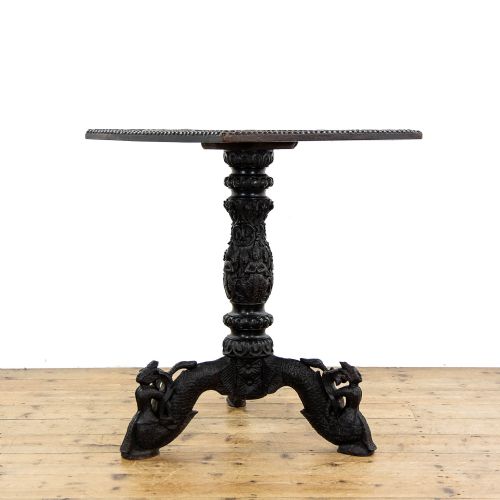
The version you are most likely to meet on this page is the nineteenth century Anglo-Indian or Ceylonese occasional table, often featuring intricate surface carving and dense native hardwoods. Side tables and larger centre tables also appear frequently, alongside occasional pieces from Burmese and Moorish revival traditions.
Makers and regional hubs such as Hoshiarpur and the Galle district defined specific local carving styles, utilising dense timbers like padauk, rosewood, and ebony. These tables served both as practical furniture and as decorative statements for nineteenth-century collectors displaying global reach.
Materials and construction
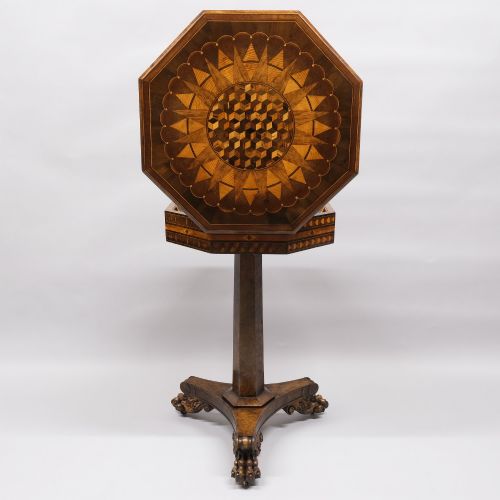
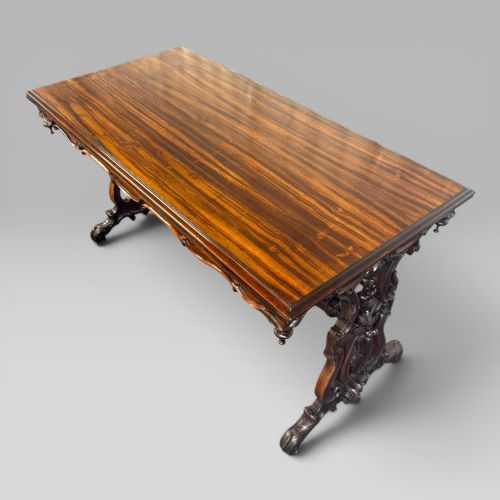
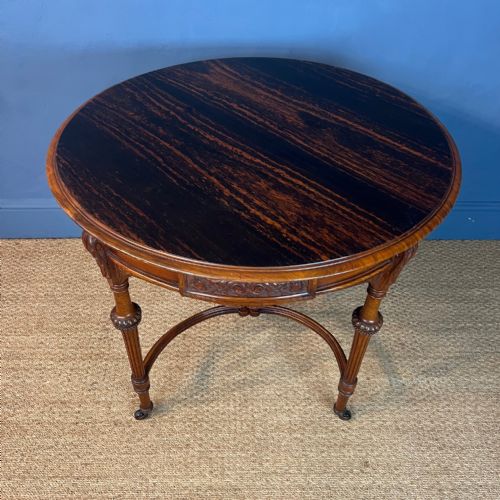
Makers constructed these tables from a variety of dense exotic timbers, recording mahogany, rosewood, ebony, teak, walnut, and specialised woods such as albuera wood, gonçalo alves, palm wood, and coromandel. Specimen wood tables often incorporate numerous contrasting timbers arranged in geometric or parquetry patterns across the top.
Carving and inlay techniques defined the aesthetic, utilising brass wire and sheet metal inlaid into ebony or rosewood grounds alongside deep relief foliage. Joinery supported heavy turned pedestals, quadrapartite legs, and serpentine profiles designed to support substantial timber tops.
Exotic Carved Wood Table Retail Price Guide 2026
Typical asking prices for exotic carved wood table among the pieces listed under this phrase on Sellingantiques today, from the lower quarter to the upper quarter. They describe what is for sale here now, not the wider market.
Some nineteenth-century tables feature twelve-sided tops designed to show off twelve different exotic tree species to visiting guests.
Judging the work
Quality rests upon the depth, sharpness, and consistency of the hand carving across the timber surface. Superior examples display crisp relief work without splintering in dense woods like ebony and padauk, whereas lesser pieces show shallower or softer detail.
The selection and stability of the timbers dictate the upper tier of the range, particularly in specimen wood and parquetry pieces where precise geometric fitting prevents warping. Original brass inlay work that remains entirely flush with the surrounding rosewood or ebony surface indicates skilled execution.
Gillows·Ralph Turnbull
The Exotic Carved Wood Table Glossary
- Anglo-Indian
- Furniture made in India during the British colonial period, often combining British furniture forms with local traditional carving.
- Specimen wood
- Furniture constructed using a multitude of different native and exotic timbers to display variety in colour and grain.
- Parquetry
- Geometric mosaic woodwork used for surface decoration on tabletops, creating patterned designs from contrasting wood veneers.
- Gonçalo alves
- A dense exotic hardwood with striking contrasting dark brown and light yellowish-brown figuring, used in nineteenth-century writing tables.
- Padauk
- A heavy tropical hardwood valued for its deep reddish-brown tone and durability under intricate hand carving.
Exotic Carved Wood Table: Frequently Asked Questions
Where were these tables made?
These pieces originated across various global workshops influenced by trade and colonial connections during the nineteenth and early twentieth centuries. Regions such as Ceylon, India, and Burma produced distinct regional forms.
Local artisans utilised native timbers and traditional carving motifs, which were then shipped to Western markets or made specifically for European residents abroad.
How do I clean carved wood?
Dust intricate carved surfaces gently with a soft, dry brush to prevent dirt accumulation within the deep recesses. Avoid liquid polishes that build up in the carved crevices over time.
Apply a minimal amount of high quality microcrystalline wax occasionally to feed the timber and maintain a soft sheen without darkening the detailed grain.
Are specimen wood tables durable?
Specimen wood surfaces are robust when maintained in stable indoor environments with consistent humidity. The multitude of individual timber pieces responds differently to extreme temperature shifts.
Keep these tables away from direct heat sources and strong sunlight to prevent timber shrinkage and potential movement in the parquetry top.
What defines an occasional table?
An occasional table is a smaller, moveable piece designed for specific, intermittent use within a principal reception room. They served functions such as holding books, tea, or decorative objects.
Their lighter scale allowed servants or residents to reposition them easily around a room as needed throughout the day.