
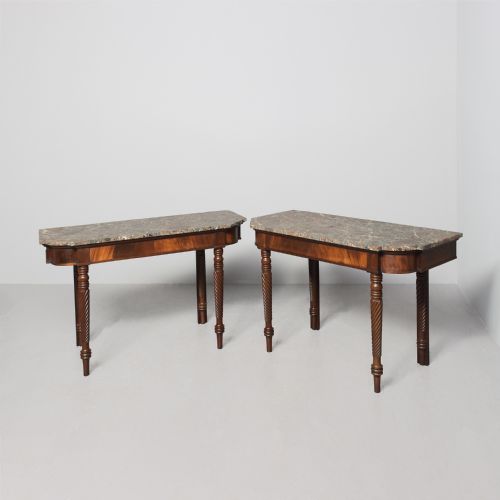
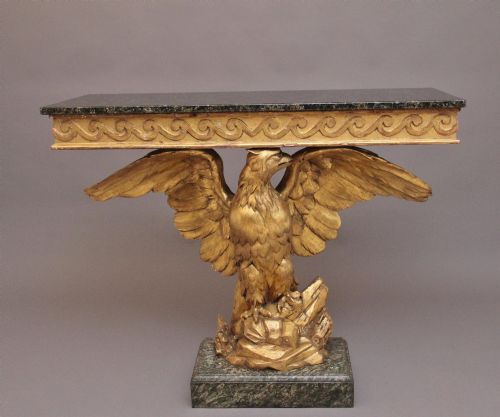
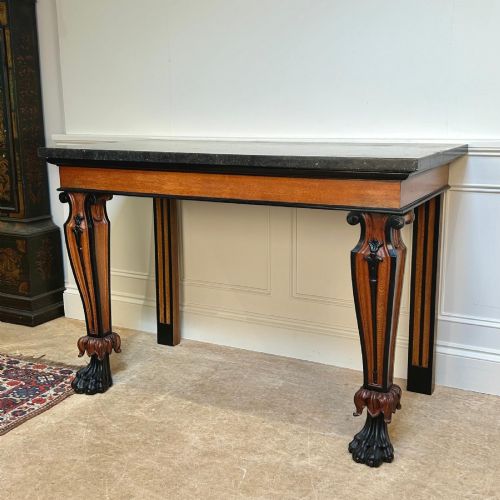
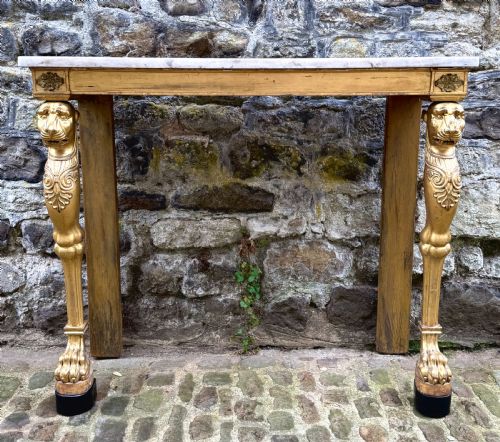

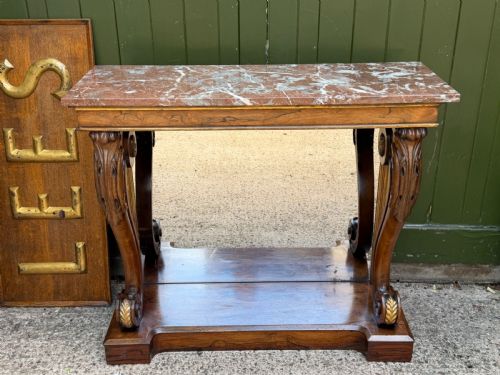
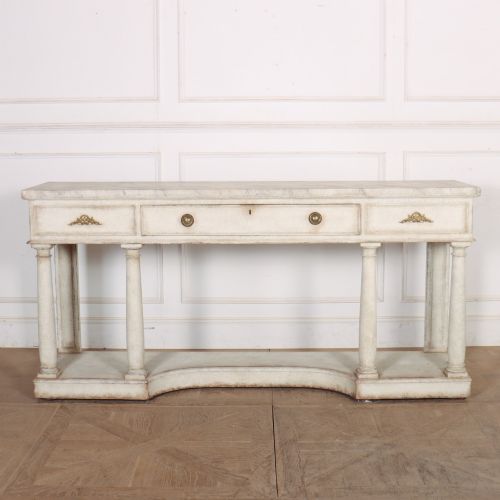


Regency Marble Pier Table
A regency marble pier table brings architectural stone and figured timber together for a disciplined wall display.
Regency Marble Pier Table
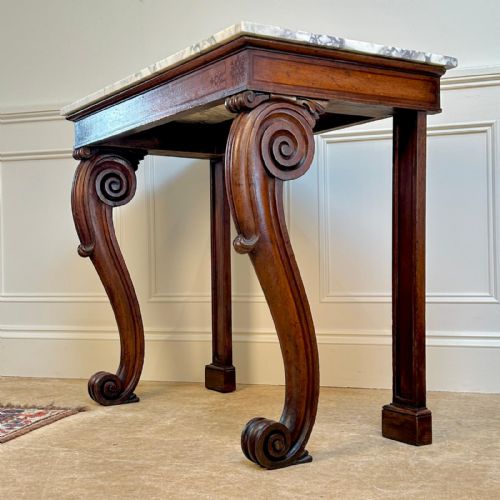
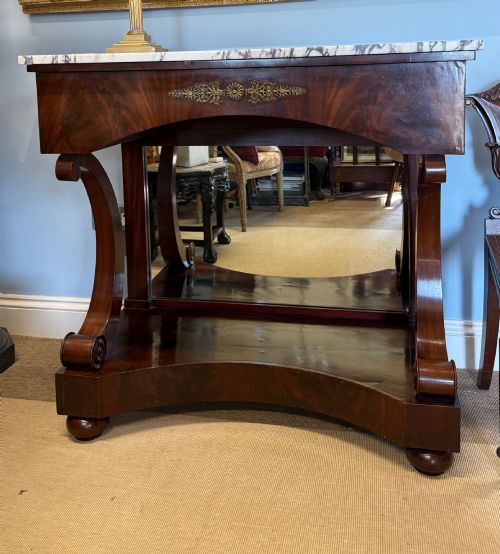
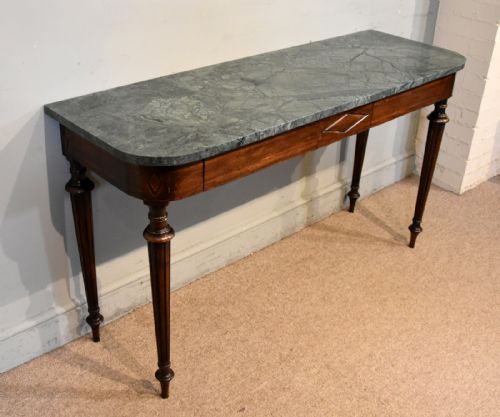
A regency marble pier table sits flush against a wall, frequently beneath a mirror or window pier, fulfilling a specific role in formal nineteenth-century interior design. The pieces available here encompass substantial console tables, side tables, and washstands featuring inset marble slabs.
The dominant variations span authentic Regency and William IV periods through to later revival interpretations from the early twentieth century. Cabinets, chiffoniers, and centre tables also appear, carrying the characteristic stone tops and timber frames that define the grouping.
Materials and Technique
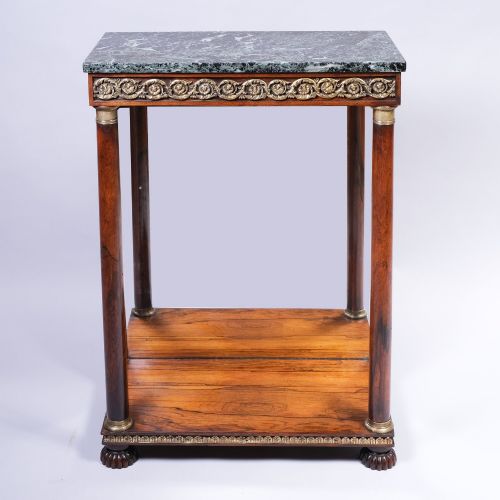
Cabinetmakers utilised dense hardwoods including mahogany, rosewood, and oak for the structural frames, often applying parcel-gilt or paint finishes to achieve a rich surface contrast. Giltwood and gesso appear on more decorative interpretations, providing carved ornamentation along the friezes and supports.
Heavy marble slabs form the functional surface, paired with glass mirror-backs in several examples to amplify light within the room. Brass mounts frequently secure and accent the rosewood and mahogany structures, grounding the classical proportions.
Regency Marble Pier Table Retail Price Guide 2026
Typical asking prices for regency marble pier table among the pieces listed under this phrase on Sellingantiques today, from the lower quarter to the upper quarter. They describe what is for sale here now, not the wider market.
Several tables feature mirror backs, presumably designed to trick guests into thinking the room held twice as many visitors.
Assessing the Workmanship
The distinction between standard production and top tier execution lies in the selection of timbers, such as figured flame mahogany or rich rosewood, and the crispness of the carved giltwood details. Friezes assigned to specific workshops display superior joinery and more refined classical proportions than lesser equivalents.
The integration of the marble top relative to the wooden base dictates the structural integrity of the piece. Superior examples maintain balanced weight distribution and precise joint work across both the timber framework and the applied brass mounts.
Gillows
The Regency Marble Pier Table Glossary
- Pier table
- A side table designed to stand against the wall between two windows, typically positioned beneath a wall-hanging mirror. These forms anchor the decorative scheme of a formal room.
- Giltwood
- Timber that has been coated with a thin layer of gold leaf or gold paint over a prepared ground. This technique adds bright reflective highlights to carved mouldings and supports.
- Console table
- A table supported by wall brackets or console legs rather than four independent vertical posts. They often feature flat backs to secure stability against vertical surfaces.
- Parcel-gilt
- Partially gilded woodwork where specific carved details or mouldings receive gold leaf while the surrounding timber remains exposed. This creates a controlled contrast across the surface.
- Serpentine
- A curved line or edge that waves outward and then inward in a continuous sweep. This contour softens the rectangular geometry of stone tops.
Regency Marble Pier Table: Frequently Asked Questions
What is a pier table?
A pier table is a fixed surface designed to stand against a wall, traditionally placed in the architectural space between two windows.
These pieces often support decorative objects and pair visually with matching mirrors hung directly above them.
How do I spot a reproduction?
Distinguishing period work from later revivals requires examining the construction methods of the wooden frame and the age of the marble.
Revival pieces from the early twentieth century often display different timber seasoning and machine-cut joinery compared to nineteenth-century originals.
Where were these tables placed?
Nineteenth-century interiors utilised these tables primarily in formal entrance halls, drawing rooms, and parlours.
Their shallow depth allowed them to occupy circulation spaces without obstructing movement through the room.
Are the marble tops original?
Marble slabs on these tables were cut to fit specific frames, though replacements occasionally occurred due to breakage over long periods of use.
Examining the underside of the stone and its seating rebate helps determine if the marble matches the age of the timber base.