


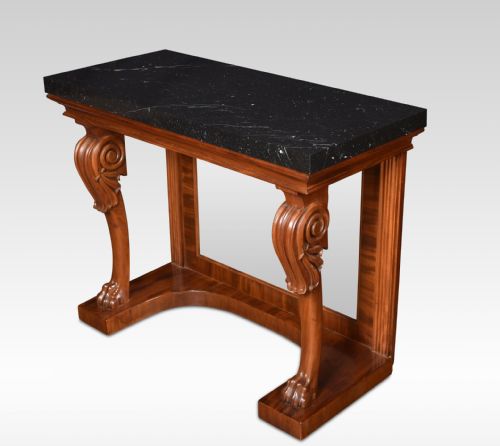


Nineteenth Century Pier Table
A nineteenth century pier table brings architectural presence to a hall or drawing room, anchoring the wall below a mirror.
Nineteenth Century Pier Table
A nineteenth century pier table takes many forms on this page, appearing as console tables and side cabinets alongside traditional console shapes. Makers built these pieces to stand flat against a wall, frequently sitting directly beneath a pier glass mirror.
The materials span mahogany, rosewood, walnut, and pollard oak, often paired with heavy marble tops and giltwood enrichment. Pieces emerge from distinct design movements including Regency, William IV, French Empire, and French Rococo Revival.
Most examples date across the nineteenth century, with specific items attributed to periods like eighteen seventy and eighteen eighty. Proportion varies from substantial scale down to delicate side tables.
How they were made
Cabinetmakers constructed the main carcases from dense timbers such as mahogany, rosewood, and walnut, frequently selecting figured flame veneers for the primary surfaces. Workshops applied marquetry inlay and parcel gilt details to enhance the visual weight of the furniture.
Surfaces received thick marble slabs fitted directly to the wooden frame to provide a cool, durable top. Brass mounts, gesso mouldings, and glass elements completed the construction of these substantial interior furnishings.
Some tables are so substantial they require a sturdy wall to lean on, proving that nineteenth century entertaining demanded serious furniture.
What varies in quality
The standard of timber selection determines the visual impact of the piece, with richly figured flame veneers marking the superior end of production. Substantial proportions and well-executed parcel gilt or gesso work elevate an example above standard cabinetmaking.
Attribution to known workshops or adherence to specific high-style designs like French Empire or Gillows influences the character of the furniture. The inclusion of heavy marble tops and fine brass mounts distinguishes the finer pieces on the page.
Jean Joseph Chapuis·Gillows
The Nineteenth Century Pier Table Glossary
- Pier table
- A table designed to stand against the wall between windows, typically positioned beneath a pier glass mirror.
- Console table
- A table supported against a wall by console brackets or legs, sharing a close architectural form with the pier table.
- Giltwood
- Wood that has been coated with gold leaf or gold paint to create a rich, reflective decorative surface. This finish appears frequently on frames and mounts from the Regency and Empire periods.
- Marquetry
- Decorative veneer applied to a wood structure in patterned designs using various woods and other materials. It defines the surface of French Louis XV style pieces.
- Parcel gilt
- Woodwork that is partially gilded, highlighting specific carved details against a contrasting painted or polished wood ground.
Nineteenth Century Pier Table: Frequently Asked Questions
Where should a nineteenth century pier table go?
These tables belong flat against a wall, traditionally positioned in the space between two windows. Placing one beneath a matching mirror completes the historical arrangement.
Their shallow depth allows them to sit comfortably in hallways and drawing rooms without blocking circulation.
How do I identify a Regency pier table?
Regency pieces often display rich rosewood or pollard oak timbers, sometimes combined with giltwood details. Look for classical restraint and architectural lines.
Proportions tend to be substantial, and many examples feature substantial marble tops resting on solid frames.
What is the difference between a pier table and a console table?
Historically, a pier table specifically occupied the wall space between architectural piers or windows, often paired with a hanging mirror above it. A console table uses wall brackets or legs for support but shares a very similar form.
In nineteenth century furniture, makers used these terms interchangeably depending on the domestic context.
How do French styles differ from British ones?
French Empire and Louis XV style pieces utilise marquetry inlay, walnut, and elaborate gesso or parcel gilt work. They lean towards curved serpentine shapes and decorative mounts.
British Regency and William IV examples favour dense mahogany and rosewood with an emphasis on timber grain and classical proportion.