
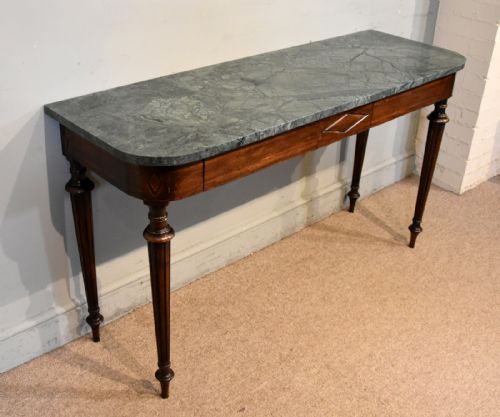
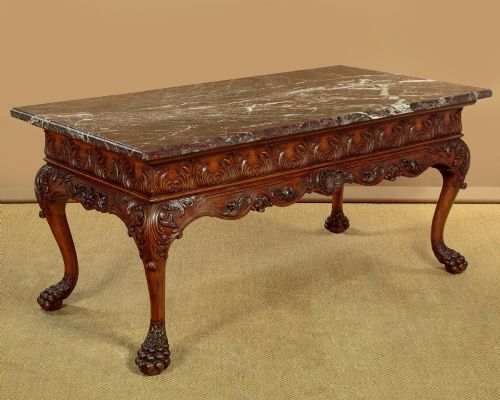

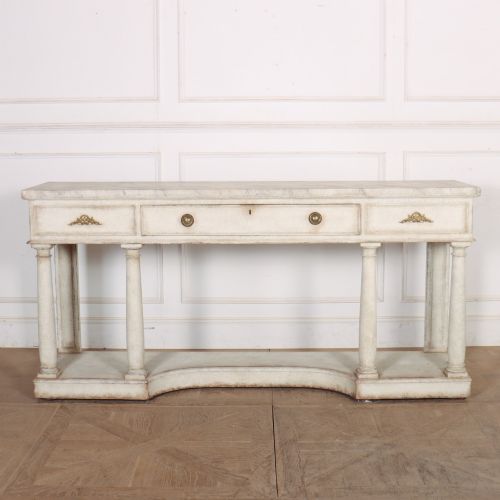


Georgian Marble Top Table
A georgian marble top table brings solid stone and warm timber together, offering a grand surface for a hallway or reception room.
Georgian Marble Top Table
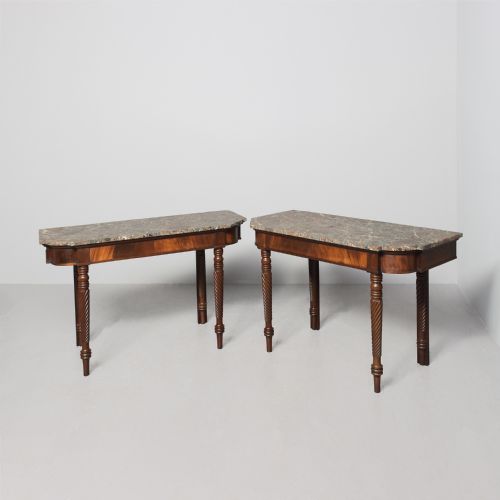
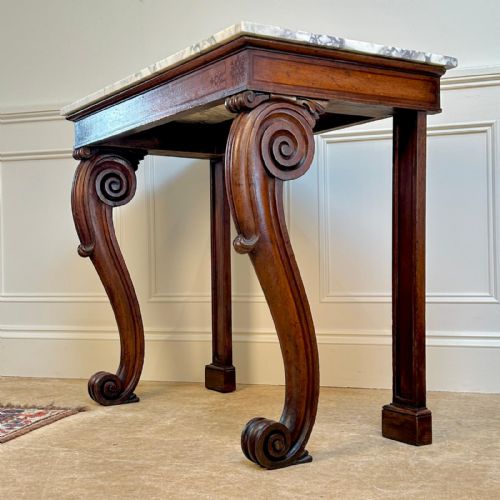
A georgian marble top table typically takes the form of a console, side table, or centre table designed to anchor a room. The listings reveal numerous console and side tables alongside occasional tables and desks, spanning the eighteenth and nineteenth centuries with later revivals.
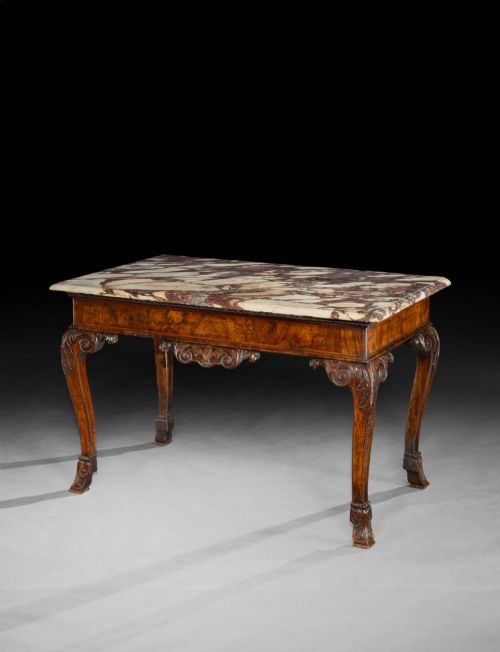
Makers of these pieces drew upon Regency, William IV, Neoclassical, and Rococo idioms. Buyers most frequently encounter mahogany, walnut, or giltwood frames paired with plain or specimen marble surfaces.
Materials and Construction
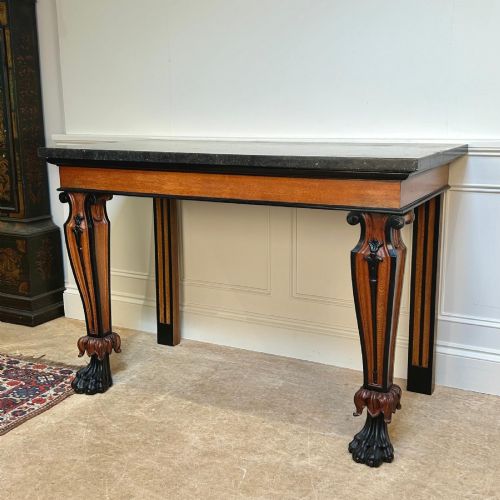
Cabinetmakers worked dense timbers such as mahogany, walnut, and oak into sturdy frames, often adding hand-carved details like lion masks, paw feet, or elaborate giltwood borders. These structural elements support heavy stone slabs.
The stone itself ranges from simple white marble to complex specimen arrangements and pietra dura work. Brass mounts and ebonised accents occasionally appear to complement the primary wood.
Craftsmanship and Proportion
Quality rests in the crispness of the timber carving and the precise fit of the stone top within its wooden frame. Superior examples display balanced proportions and sophisticated decorative carving rather than mechanical replication.
The selection of the marble slab also dictates worth, particularly where multi-coloured specimen pieces or fine pietra dura work are employed. Untouched original timber surfaces command greater regard than later painted or altered finishes.
John Mclean·William Kent
The Georgian Marble Top Table Glossary
- Console table
- A table designed to stand against a wall, frequently secured to it with brackets for stability. These pieces often feature decorative front legs while the rear relies on wall fixings.
- Specimen marble
- A top composed of various coloured marbles fitted together in geometric patterns or pictorial designs. This technique demands high precision from the stonemason.
- Giltwood
- Timber that has been coated with a thin layer of gold leaf or gilt paint. It is commonly found on Neoclassical and Rococo frames.
- Pietra dura
- An inlay technique using cut and fitted polished coloured stones to create formal designs. It appears on select high-status tabletops.
- Demi-lune
- A half-moon shape characteristic of certain side and console tables built to fit snugly against a flat wall.
Georgian Marble Top Table: Frequently Asked Questions
Where should I place a console table?
Console tables sit best against a flat wall in a hallway, drawing room, or dining space. Their shallow depth allows them to occupy narrow circulation areas without blocking movement.
Pair the table with a mirror or a picture above to create a balanced focal point upon entering a room.
How do I care for the stone surface?
Marble requires gentle cleaning with a damp cloth and mild, neutral soap. Avoid acidic liquids or abrasive pads that can etch or scratch the polished finish.
Promptly wipe away spills to prevent staining, particularly on porous or specimen stone tops.
Are these tables sturdy enough for daily use?
Original tables were built to support heavy ornaments, lamps, or serving dishes, making them structurally robust. Many console variants rely on wall brackets for absolute stability.
Check that the timber frame remains tight at the joints and that the heavy stone top sits securely in its rebate.
How do I distinguish original period pieces from revivals?
Examine the timber shrinkage, tool marks on the underside, and the construction methods used in the frame. Eighteenth and nineteenth-century pieces show distinct ageing patterns absent in later revival furniture.
Consult the recorded period, which spans from eighteenth-century originals to twentieth-century reproductions, to understand the exact age of the piece.