
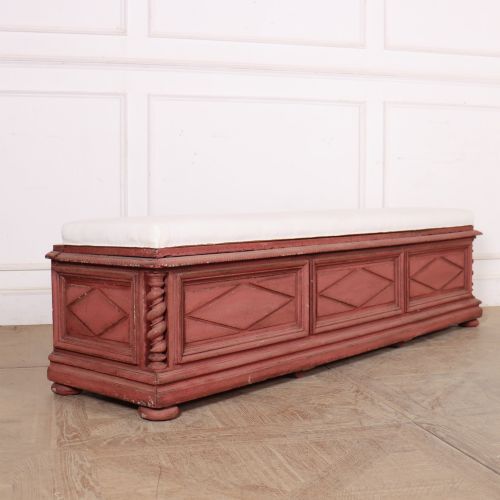


Carved Painted Coffer
A carved painted coffer is a robust storage piece offering historical character and folk art charm for modern interiors.
Carved Painted Coffer
A carved painted coffer combines traditional storage utility with decorative surface work, spanning forms such as blanket chests, mule chests, and cassones. These items serve practical linen and household storage while anchoring a room with distinct historical presence.
Buyers encounter diverse regional traditions through these listings, including Hungarian folk art, Italian neoclassical and gothic pieces, Chinese lacquerwork, and Spanish colonial designs. The selection ranges from 17th century walnut cassones down to late 19th century primitive shepherds coffers and dowry chests.
The forms extend beyond standard blanket boxes to encompass benches, trunks on stands, and altar table designs. Each piece reflects the specific domestic customs and aesthetic priorities of its origin, whether European or Asian.
How they were made
Construction relies primarily on solid woods such as pine and walnut, shaped into heavy chests and supported occasionally by carved stands. Iron and brass hardware, including hinges and locks, secures the heavy lids and provides structural reinforcement.
Surface decoration involves direct application of paint, gilt, and lacquer over wood, creating regional styles like Chinoiserie and Moorish ornamentation. Artisans applied pigments and protective coatings by hand, resulting in layered finishes that survive across centuries.
Several chests double as seating benches, proving that ancestors appreciated multipurpose furniture just as much as modern homeowners do.
What varies in quality
The distinction between standard utility items and finer examples lies in the execution of the surface decoration and the sophistication of the woodwork. Intricate hand-painted motifs, original polychrome layers, and refined carving elevate certain pieces above utilitarian storage boxes.
Structural integrity and the survival of original decorative surfaces determine the standing of an individual coffer. Pieces retaining undisturbed early paintwork or gilding command greater interest than those with heavily restored or replaced finishes.
The Carved Painted Coffer Glossary
- Cassone
- A traditional Italian large chest or marriage chest, often elaborately carved or painted for ceremonial use. These pieces typically served to hold a bride's trousseau.
- Mule chest
- A traditional chest featuring one or more drawers at the base beneath a primary compartment. This form developed during the Georgian period.
- Dowry chest
- A storage container created to hold household goods and valuables assembled for a bride upon marriage. Such chests frequently display specific regional folk art decoration.
- Chinoiserie
- European decorative style reflecting Chinese artistic traditions, often seen in lacquered furniture and intricate surface patterns. This aesthetic was popular across various historical periods.
- Gilt
- Applied gold leaf or gold paint used to embellish wooden surfaces and carved details. This finish highlights specific architectural elements on older furniture.
Carved Painted Coffer: Frequently Asked Questions
What is a carved painted coffer used for?
These pieces function primarily as deep storage containers for blankets, linens, and household goods while serving as decorative focal points in living spaces.
Their sturdy construction also allows them to double as benches or surface display tables depending on the specific form.
How do I date an antique painted chest?
Dating relies on examining the underlying wood construction, joinery methods, and the composition of the paint or lacquer layers over time.
Stylistic markers such as regional folk motifs, hardware types, and historical design influences further help narrow the period of origin.
Where were these painted coffers made?
The available pieces originate from diverse workshops across Europe and Asia, reflecting distinct regional styles like Italian gothic, Hungarian folk art, and Chinese export design.
Local material availability and cultural traditions dictated the specific form and decorative techniques employed in each area.
How should I care for painted wood?
Preserving these surfaces requires keeping them away from direct sunlight and maintaining stable indoor humidity to prevent wood movement and paint flaking.
Dusting gently with a dry cloth is sufficient for routine maintenance without the need for modern chemical polishes.