
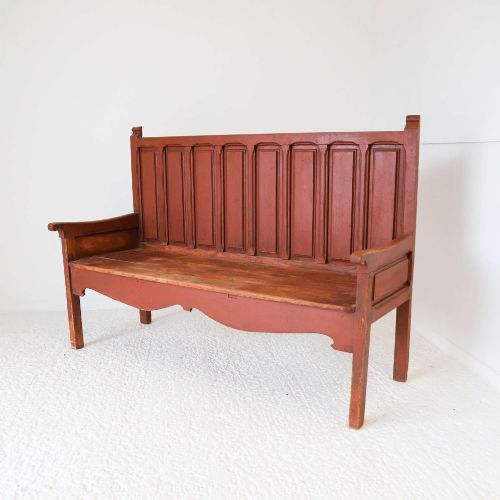
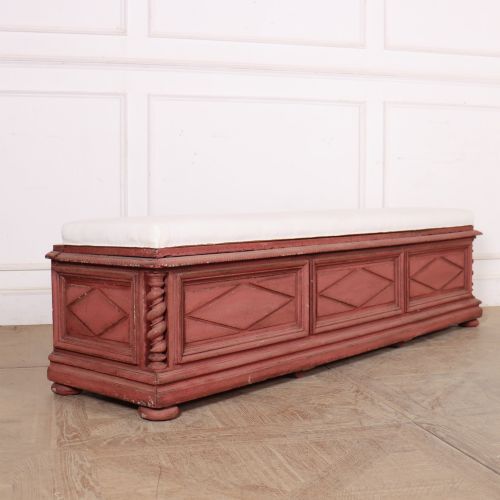


Red Painted Bench
A red painted bench brings instant character to a hallway or kitchen, offering rustic charm through weathered timber and bold colour.
Red Painted Bench
When you search for a red painted bench, you encounter sturdy seating created across various European countries during the eighteenth and nineteenth centuries. These items range from simple pine settles and rustic tavern seating to more decorative French and Italian examples.
The pieces on this page heavily feature country house forms from Sweden, Spain, and Austria, alongside English tavern benches and continental settles. Many retain their original surface treatments, displaying the rich patination accumulated over generations of domestic use.
While traditional wooden benches dominate the selection, the category occasionally includes related seating forms such as settees, sofas, and settles with backrests and arms. Each piece serves as both a practical seat and a strong decorative focal point within a room.
How they were made
Construction relies primarily on solid pine and other native timbers, joined using traditional methods suited to everyday utility and heavy use. Blacksmith-made ironwork and cast iron components often reinforce the structural integrity of industrial or heavier country examples.
Surface finish is paramount, achieved through the application of traditional oil or water-based paints directly onto the wood. Subsequent wear and layering create the characteristic distressed aesthetic prized by collectors of country furniture.
Listings span the eighteenth and nineteenth centuries, demonstrating the enduring utility of painted pine seating across European country workshops.
What varies in quality
Quality rests heavily on the integrity of the painted surface, distinguishing pieces with genuine untouched age from later repaintings. Original pigment provides historical depth and tactile character that modern applications simply cannot replicate.
Proportion and structural survival also dictate distinction, separating utilitarian workshop pieces from more refined continental seating. Surviving joinery that remains tight without excessive modern intervention preserves the true integrity of the item.
John Tesch
The Red Painted Bench Glossary
- Settle
- A wooden bench with a high back, solid arms, and often a storage box beneath the seat. This form protected sitters from draughts in older homes.
- Pine
- A softwood commonly utilised in the construction of country furniture across northern and central Europe. It accepts paint readily and provides a stable base for decorative finishes.
- Patina
- The surface sheen and textural change acquired by wood and paint through age, handling, and wear. It serves as a key indicator of authenticity.
- Canape
- An upholstered French sofa featuring an exposed wooden frame, often carved and painted. These pieces reflect courtly styles adapted for formal interiors.
Red Painted Bench: Frequently Asked Questions
How do I care for original painted surfaces?
Dust gently with a dry, soft cloth and avoid chemical polishes that can soften historic oil or water-based paints. Keep the wood away from direct heat sources to prevent the pine from shrinking and cracking.
Minor flaking is normal for authentic country pieces and should be left undisturbed to preserve the historical character of the object.
Are these benches comfortable for daily sitting?
Country benches were built for utility and tend to feature firm wooden seats rather than sprung upholstery. Adding loose cushions can easily increase comfort for prolonged sitting.
Some continental variations include high backs and enclosed sides originally designed to trap heat and block cold draughts in older properties.
How can I tell an older painted finish from a recent one?
Original finishes exhibit natural micro-cracking, uneven fading, and wear patterns concentrated around high-touch areas like armrests and seat edges. Modern repaints often feel uniform and lack the subtle depth created by decades of oxidation.
Examining the underlying timber through gaps in the paint often reveals the true age and tool marks of the underlying construction.