

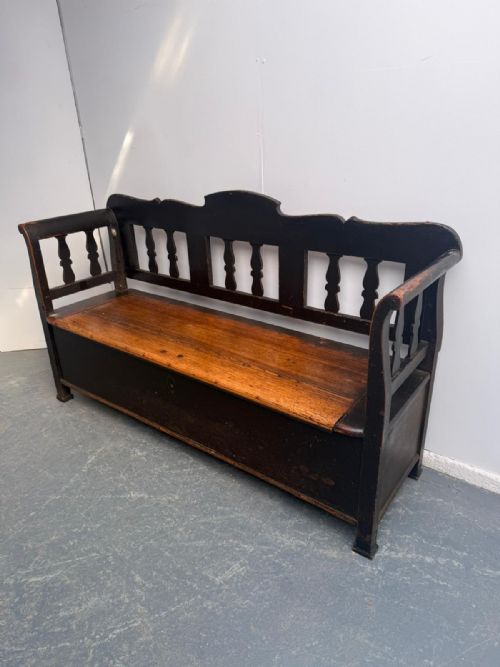

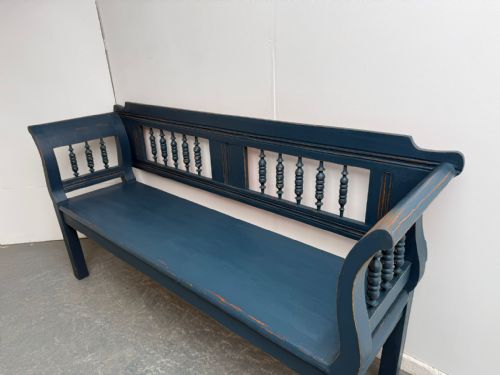

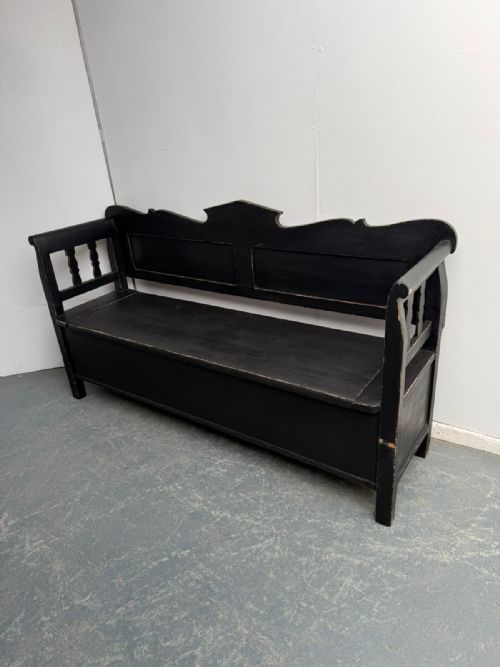


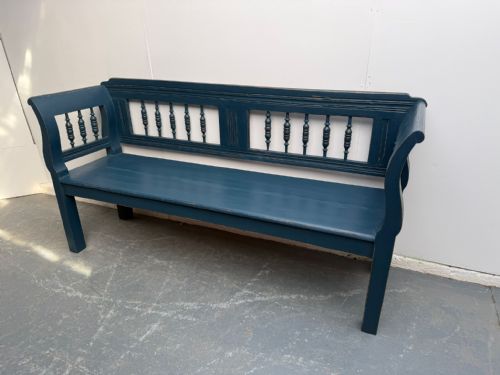


Painted Hall Bench
A painted hall bench brings immediate character to an entryway, offering sturdy seating combined with regional charm across European and English country styles.
Painted Hall Bench
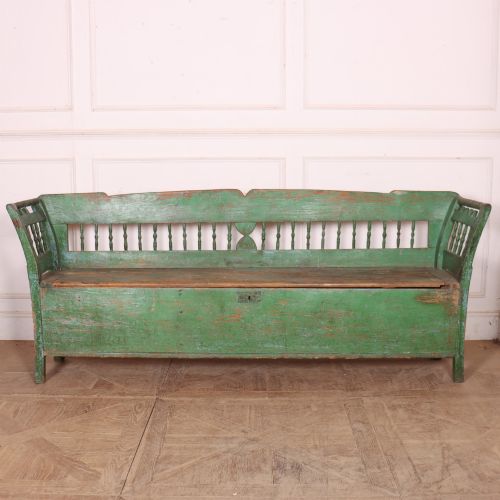
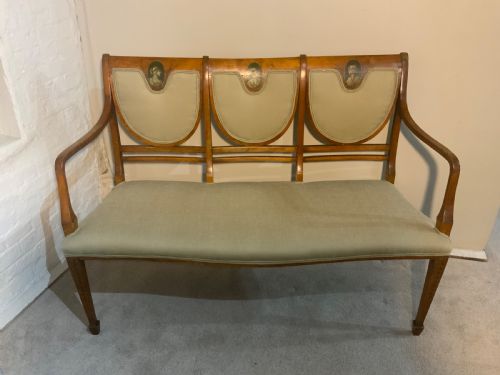
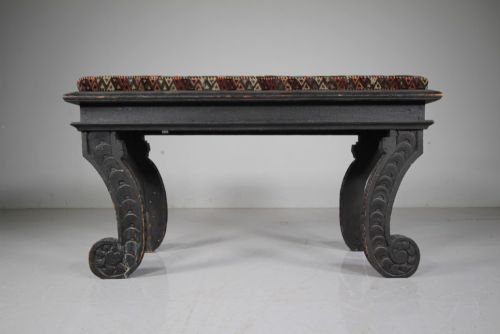
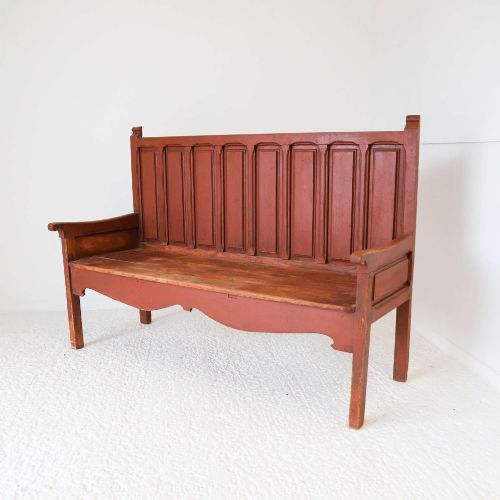
When you search for a painted hall bench, you encounter seating forms ranging from simple pine settles and storage benches to elegant Regency satinwood settees and Gustavian sofas. These pieces span the eighteenth, nineteenth, and early twentieth centuries, reflecting diverse domestic traditions from England, Sweden, Austria, Hungary, and Spain.
How they were made
Carpenters typically built these benches using domestic softwoods such as pine, occasionally incorporating hardwoods like beech, satinwood, or iron for structural reinforcement. Joinery methods relied on traditional pegging, mortise and tenon joints, and sturdy framing to withstand heavy daily use in busy corridors.
Surface decoration involved applying layers of paint, sometimes over preparatory grounds, with finishes ranging from simple monochrome coats to intricate folk motifs and parcel gilding. Many surviving examples retain their patinated original paint, showing the natural wear of generations.
Some nineteenth-century farmhouse sitters enjoyed built-in storage boxes beneath their seats, perfect for concealing muddy boots from unexpected guests.
What varies in quality
Quality rests significantly on the survival and integrity of the original surface finish, as untouched historic pigment distinguishes an honest vernacular piece from later decorative intervention. The crispness of the joinery and the balance of proportions, particularly in provincial folk furniture and refined Neoclassical settees, dictate the visual strength of the object.
Structural originality also defines the piece, ensuring that elements like box storage lids, backboards, and turned or tapered supports remain intact without extensive timber replacement. Finer cabinetmaking is evident in pieces utilising satinwood and detailed turning, contrasting with the robust utility of primitive pine settles.
Thonet
The Painted Hall Bench Glossary
- Settle
- A wooden bench with a high back, solid arms, and often a hinged seat lifting to reveal a storage box below. This form protected sitters from draughts in historic hallways.
- Gustavian
- The Swedish interpretation of French Neoclassical design, characterised by restrained carving, light painted finishes, and elegant proportions. It developed during the late eighteenth century.
- Scumble
- A decorative painting technique involving a translucent top layer dragged or dabbed over a lighter base coat to imitate grain or texture. It appears frequently on primitive pine furniture.
- Window seat
- An elongated chair or bench designed specifically to fit the recess of a bay or window, often featuring upholstered elements or open spindle backs.
- Parcel gilt
- Partially gilded decoration applied to carved details, mouldings, or motifs to contrast against a painted wooden ground.
Painted Hall Bench: Frequently Asked Questions
Where were painted hall benches used?
These benches traditionally stood in entrance halls, passages, and corridors of larger homes, farmhouses, and inns to provide convenient seating for visitors removing outerwear.
In more modest dwellings or rural properties, they served multipurpose roles near hearths or windows, combining seating with essential household storage.
How do I care for original paint?
Preserving historic painted surfaces requires keeping the furniture away from direct sunlight and maintaining stable indoor humidity to prevent flaking or timber movement.
Dust gently with a dry, soft cloth and avoid chemical cleaning agents, modern waxes, or abrasive polishes that might strip fragile historic pigments.
How do I distinguish regional styles?
Swedish and Gustavian pieces typically favour pale greys, creams, and restrained neoclassical lines, whereas Hungarian and Austrian folk furniture often displays vibrant pigments and floral motifs.
English country pieces rely more on utilitarian pine construction, tavern proportions, or primitive scumble glazes.