

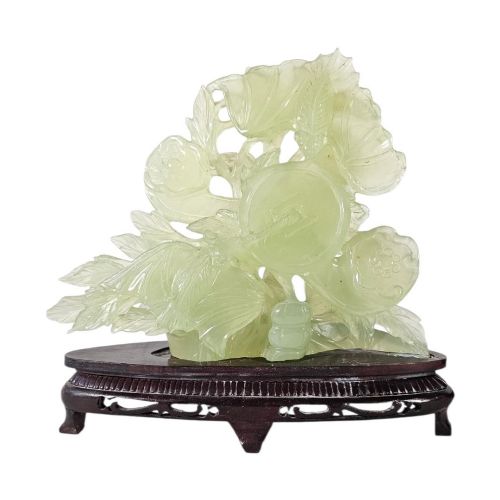







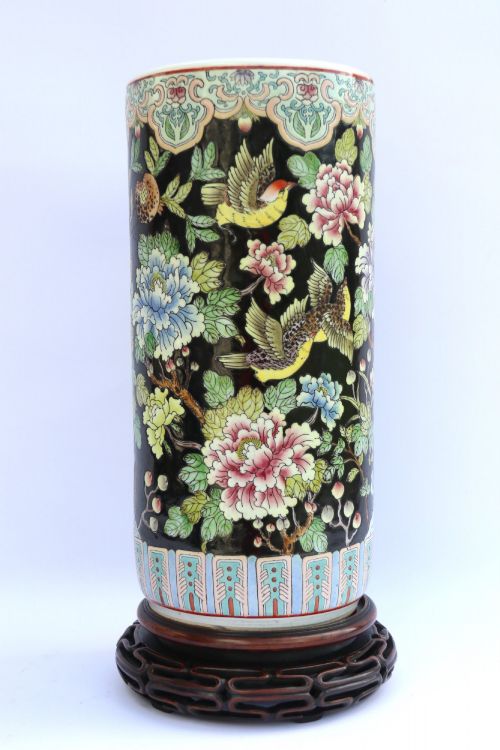


Carved Oriental Flower Stand
A carved oriental flower stand brings organic form and dense timber into a room, serving as a sturdy stage for trailing foliage and heavy urns.
Carved Oriental Flower Stand
A carved oriental flower stand typically takes the form of a small table, torchère or low pedestal designed to elevate plants, vases and decorative objects within a room. These pieces range from square pot stands to multi-tiered pedestals, serving as functional furniture that breaks up floor space and adds height variation.
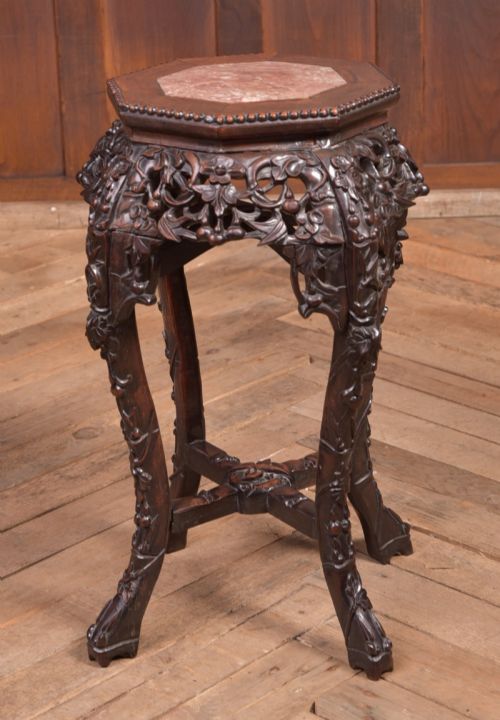
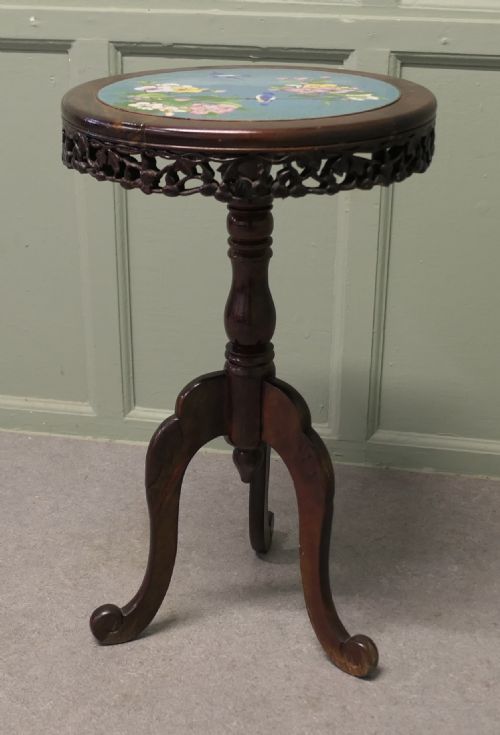
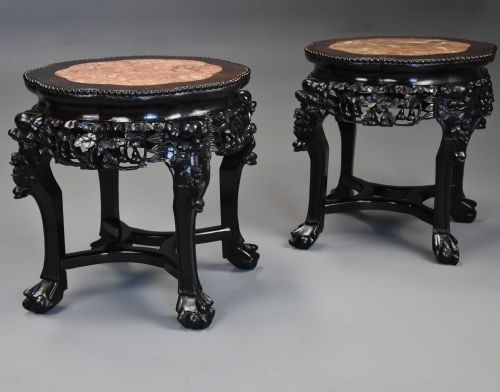
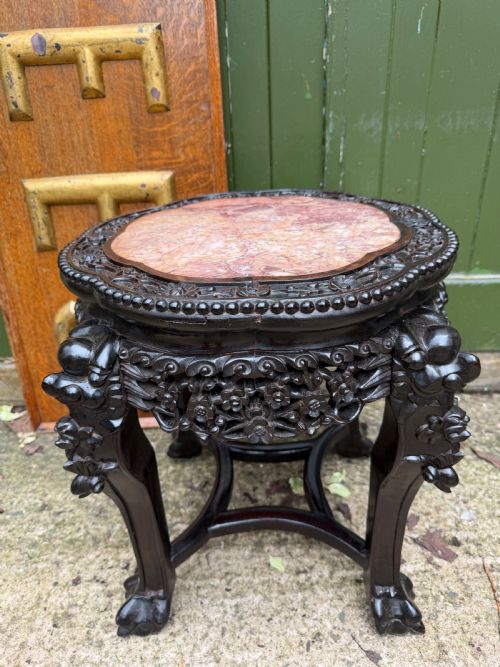
The version most commonly encountered on this page is the Chinese hardwood stand featuring an inset marble top and dense floral carving. Dating primarily from the nineteenth century through the early decades of the twentieth century, these pieces demonstrate traditional joinery methods and imported dense timbers.
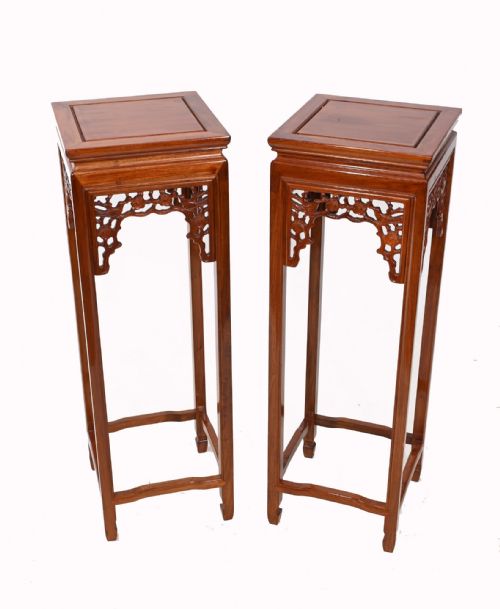
Makers and workshops produced these stands in various heights, from low jardiniere platforms meant for heavy ceramic vessels to tall torchères intended for display. Alongside traditional Chinese designs, pieces associated with English retailers appear, linking Eastern manufacture with Western domestic interiors of the period.
Materials and construction methods
Construction relies heavily on dense exotic timbers such as hongmu, padouk, rosewood and general hardwood, chosen for their ability to hold intricate relief carving without splitting. Woodworkers joined these dense sections using traditional framing techniques that accommodated the natural seasonal movement of the timber.
Many tables incorporate an inset panel of variegated marble or stone at the centre of the top surface, providing a cool, flat resting place for damp flower pots. Workshops also integrated mother-of-pearl inlay or lacquer finishes on specific examples to contrast against the dark tone of the primary wood.
Carvers worked freehand to produce deep relief motifs of prunus blossom, foliage and dragons around the aprons and legs of each stand. This manual cutting creates crisp edges and varied depths that reflect the individual hand of the maker.
Carved Oriental Flower Stand Retail Price Guide 2026
Typical asking prices for carved oriental flower stand among the pieces listed under this phrase on Sellingantiques today, from the lower quarter to the upper quarter. They describe what is for sale here now, not the wider market.
The documented periods span the Victorian era, the nineteenth century, and the early decades of the twentieth century.
Assessing quality and craftsmanship
Quality rests significantly on the density and selection of the timber used for the frame, with heavier woods commanding greater durability and finer detail in the finished carving. Superior examples display crisp, undercut relief work where petals and leaves stand free from the background rather than appearing flat.
The integration of the inset marble top dictates the level of refinement in a piece, with tight joints and well-polished stone showing superior workshop standards. Finer stands maintain structural stability through pegged joinery that remains firm without relying on excessive modern metal fasteners.
Liberty of London
The Carved Oriental Flower Stand Glossary
- Hongmu
- A traditional Chinese term denoting dense, dark hardwoods used for fine furniture and decorative stands. It translates literally as red wood and includes species with rich natural grain.
- Padouk
- A heavy, durable tropical timber with a characteristic reddish hue that darkens with age and exposure to light. It provides a stable base for detailed woodcarving.
- Jardiniere stand
- A low table or pedestal specifically proportioned to hold a large ceramic flower pot or plant container. These stands often feature water-resistant stone tops.
- Torchere
- A tall, slender stand or pedestal designed to support a lamp, vase, or decorative urn. The form elevates display items to eye level.
- Chinoiserie
- European artistic style reflecting Chinese motifs and decorative techniques. It appears on domestic furniture adapted for Western export markets.
Carved Oriental Flower Stand: Frequently Asked Questions
What is a carved oriental flower stand used for?
These pieces function primarily to elevate potted plants, ceramic vases, and heavy floral arrangements above floor level. Their sturdy timber frames and stone insets provide a stable platform that protects underlying surfaces from moisture.
Beyond horticulture, owners utilise them as occasional lamp tables, side tables, or pedestals for decorative art objects within sitting rooms and hallways.
How do I date a Chinese hardwood stand?
Dating relies on examining the timber density, tool marks, and overall construction style visible beneath the piece. Nineteenth-century examples often exhibit heavier woods and hand-cut joinery without modern adhesives.
Stylistic shifts also help establish age, moving from traditional Qing dynasty forms toward transitional export pieces influenced by Western Arts and Crafts tastes.
Why do many stands have marble tops?
Marble insets provide a practical, waterproof surface that prevents water damage from damp flower pots and heavy watering. The cool stone surface also offers a contrasting texture and colour against the dark surrounding hardwood.
This construction method ensures the timber frame remains stable and free from rotting or staining over decades of domestic use.
How should I care for antique rosewood furniture?
Maintenance requires keeping the timber away from direct heat sources and sudden humidity changes that cause wood to split. Regular dusting with a soft, dry cloth preserves the natural sheen of the polished surface without building up residue.
Applying a traditional beeswax sparingly helps nourish dense timbers like hongmu and padouk while maintaining their characteristic depth of colour.