

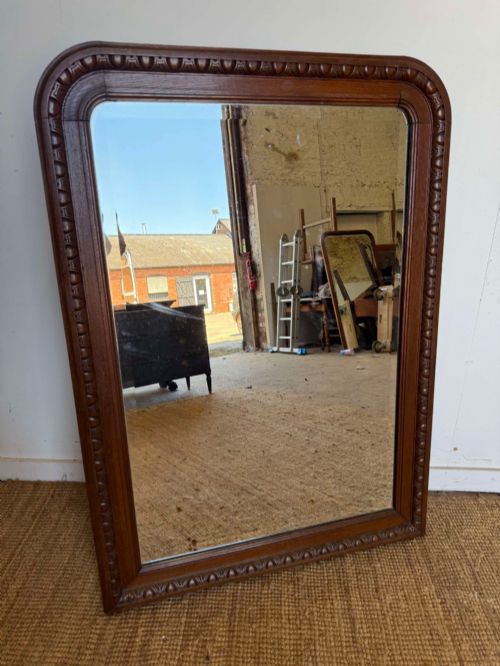
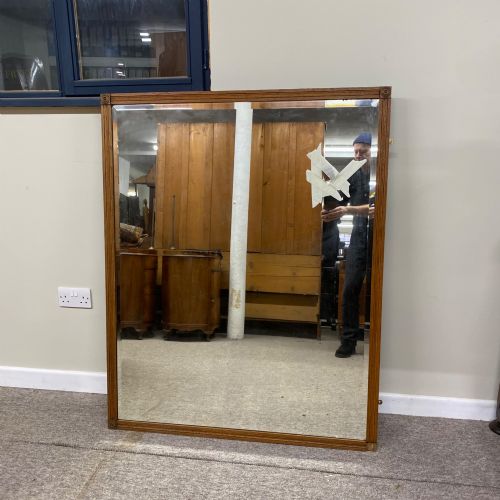
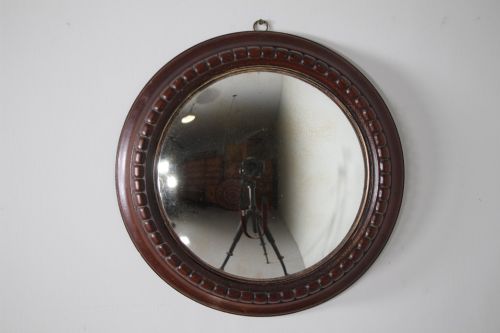
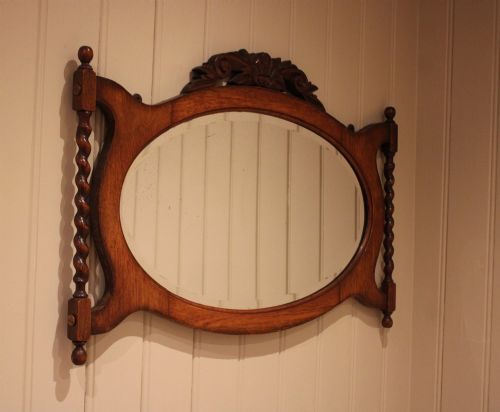
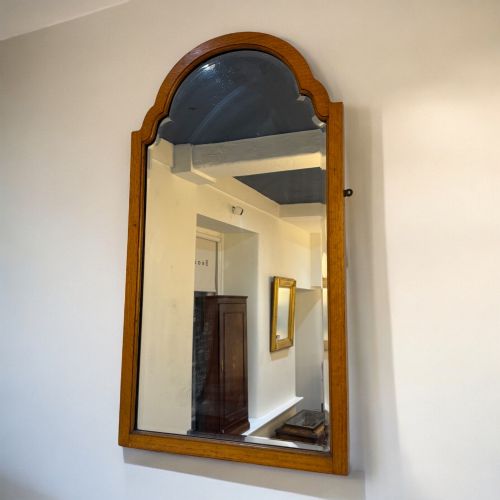

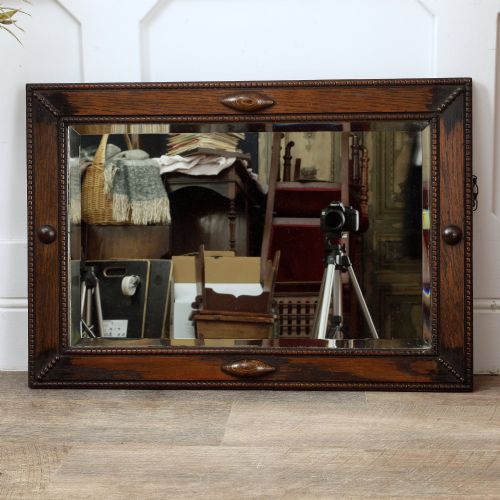
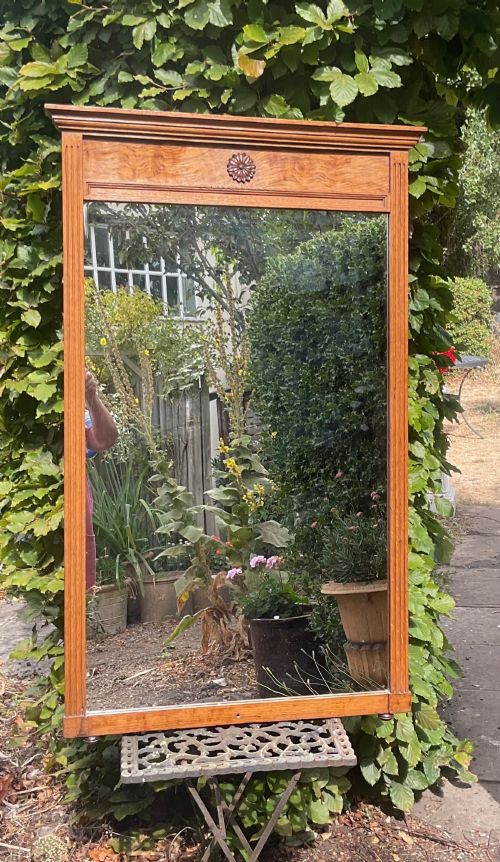
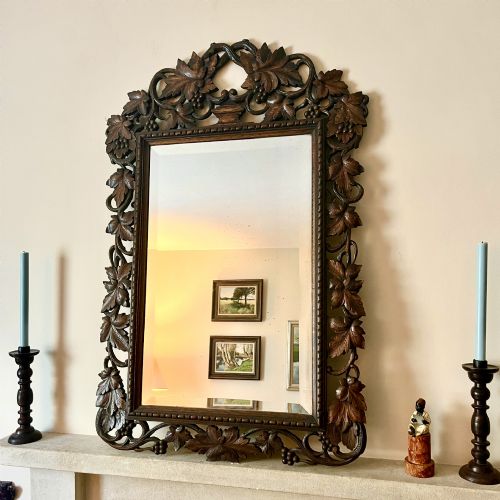

Carved Oak Mirror Frame
A carved oak mirror frame brings solid timber character and robust period presence to any room, offering both functional reflection and striking architectural texture.
Carved Oak Mirror Frame
A carved oak mirror frame is a sturdy domestic or architectural furnishing built to house glass, spanning domestic wall mirrors, overmantels, and dressing pieces. Buyers seek these items for their rich grain and heavy sculptural borders, which anchor interior spaces with traditional weight.
The most common versions encountered on this page date from the nineteenth century into the early twentieth century. These pieces encompass diverse revival styles, from Gothic and Jacobean influences to French provincial and Arts and Crafts designs.
How they were made
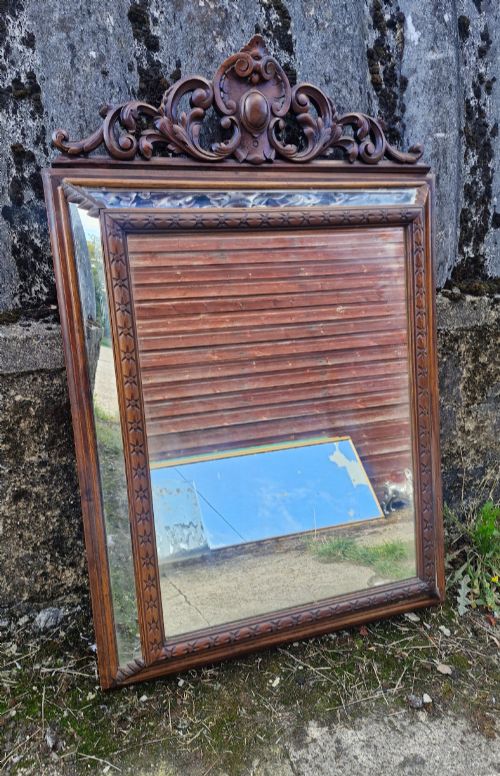
Carpenters and cabinetmakers constructed these frames using solid oak timber, often shaped into deep cushion profiles or heavy architectural mouldings. Surface enrichment relied on hand-chiselled relief work, depicting natural motifs, scrolls, or geometric patterns directly into the wood.
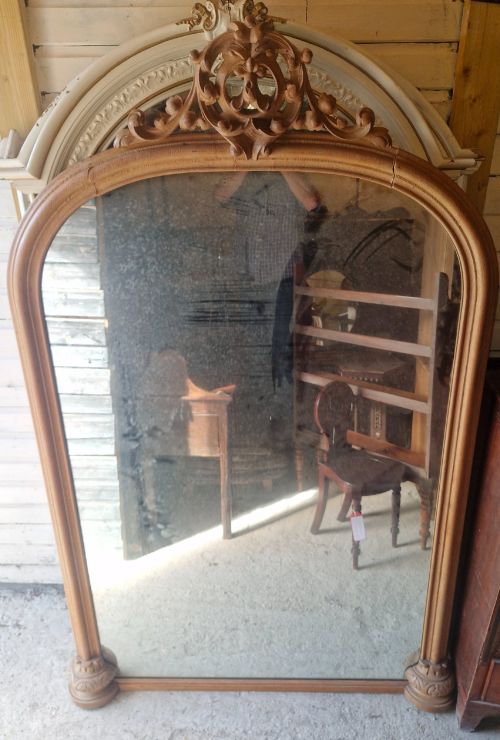
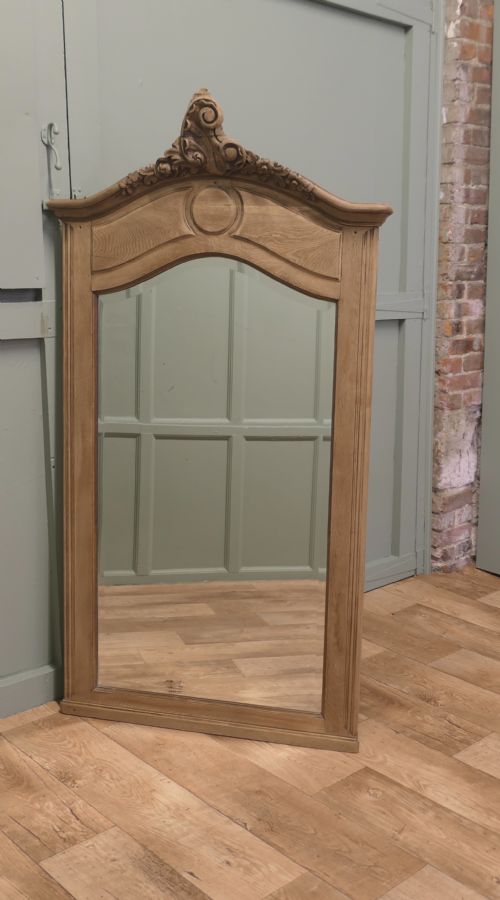
Many examples incorporate secondary materials such as gesso, gold leaf, or brass accents to highlight the carved details. Mirror glass was then fitted behind bevelled or plain edges, sometimes secured within rebated frames alongside structural side columns or crestings.
Carved Oak Mirror Frame Retail Price Guide 2026
Typical asking prices for carved oak mirror frame among the pieces listed under this phrase on Sellingantiques today, from the lower quarter to the upper quarter. They describe what is for sale here now, not the wider market.
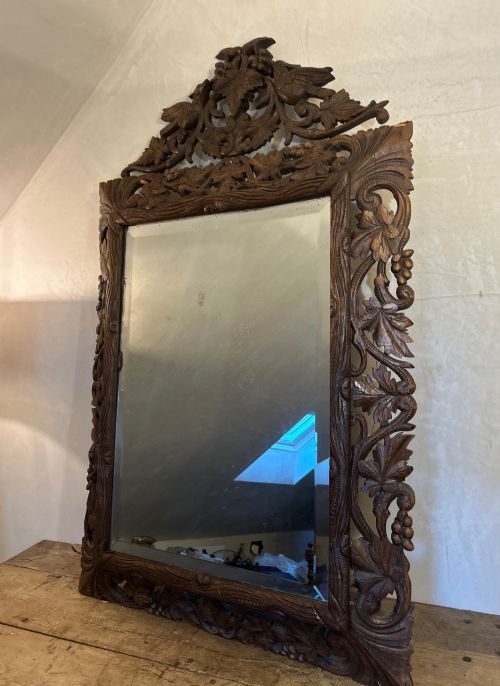
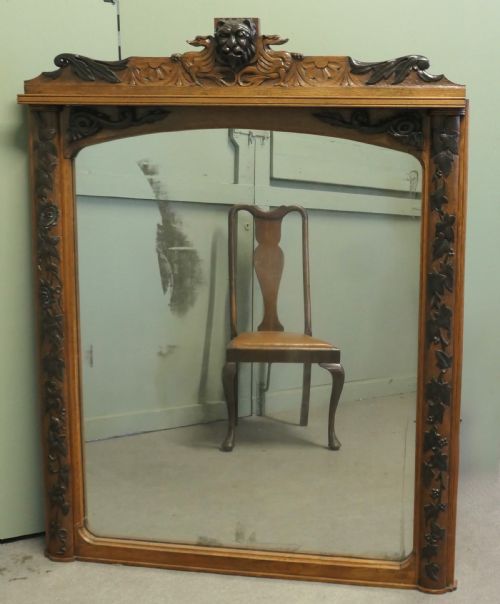
Several spirited frames stare back from the wall, featuring traditional carved green men peering out through winding oak foliage.
What varies in quality
The distinction between ordinary and exceptional pieces rests upon the depth and ambition of the hand-carving. Crisp undercut foliage, expressive figural elements, and well-balanced proportions separate mass-produced factory items from master-carved workshop productions.
Structural integrity and timber selection further define the tier of a piece. Dense, figured oak with minimal splitting demonstrates superior material choice, while carefully integrated joints and original mirror plates maintain historical authenticity.
The Carved Oak Mirror Frame Glossary
- Overmantel mirror
- A large mirror designed to hang specifically above a fireplace mantelpiece. These pieces often feature horizontal proportions and substantial frames to match interior woodwork.
- Cushion frame
- A convex, rounded frame profile that swells outwards from the mirror glass towards the outer edge. This bold form was favoured during revival periods to create optical depth.
- Gesso
- A plaster-like mixture applied to wood surfaces as a smooth base for gilding or painting. It allows intricate ornamental details to be moulded before applying gold leaf.
- Gothic Revival
- An architectural and decorative style drawing inspiration from medieval design. Pieces often incorporate pointed arches, tracery, and Puginesque motifs.
- Bevelled edge
- A glass edge angled by grinding to create a decorative tapered border. This technique catches light at the perimeter of the reflection.
Carved Oak Mirror Frame: Frequently Asked Questions
Where should I hang a heavy oak overmantel mirror?
These large mirrors sit best above a functional or decorative fireplace surround, anchoring the focal point of a principal reception room.
Ensure the wall fixings anchor directly into solid masonry or substantial studwork to safely support the heavy timber frame.
How do I identify a Gothic Revival oak mirror?
Look for characteristic medieval architectural motifs such as pointed arches, quatrefoils, and heavy, dark-finished timber mouldings.
Many of these examples reflect nineteenth-century interest in ecclesiastical and historic revival aesthetics.
How should I clean an antique carved wood frame?
Dust the deep recesses of the carving gently using a soft-bristled brush to prevent the buildup of particulate matter over time.
Avoid harsh chemical cleaning agents and excess moisture, applying only traditional wax polish sparingly if the wood appears dry.
Are these frames made of solid oak?
Most listings feature solid oak construction, sometimes complemented by applied gesso elements or walnut and brass details on specific revival pieces.
The substantial weight of the timber requires robust hanging hardware and careful wall placement.