




Antique Mantelpiece Mirror Frame
An antique mantelpiece mirror frame anchors a room, combining architectural presence with reflected light above a hearth.
Antique Mantelpiece Mirror Frame
An antique mantelpiece mirror frame is typically found as an overmantel mirror designed to sit directly above a fireplace surround. These pieces dominate the chimney breast, bringing scale and historical character to a reception room.
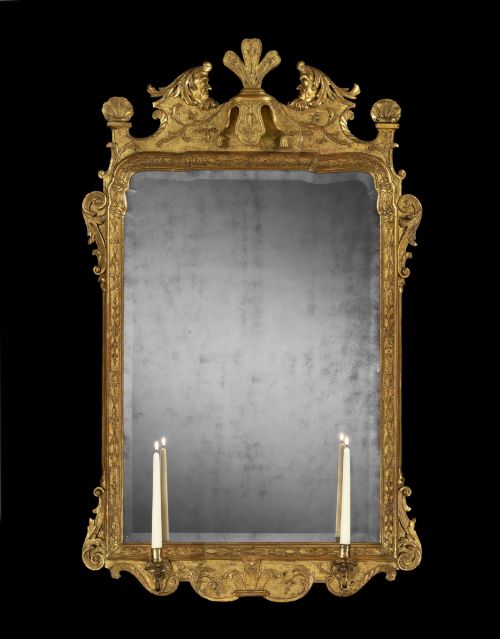
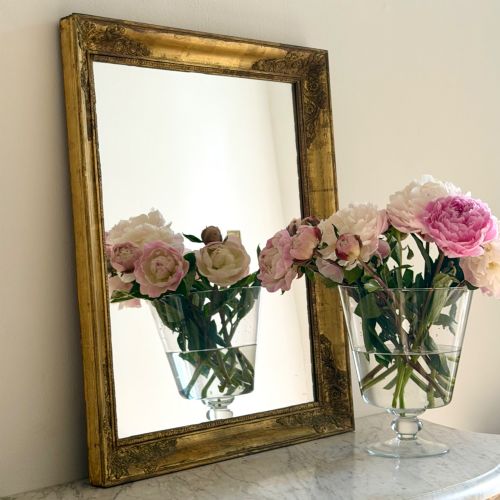
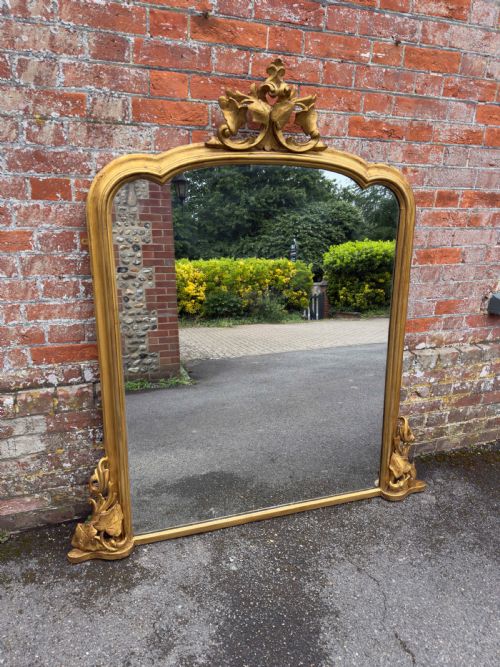
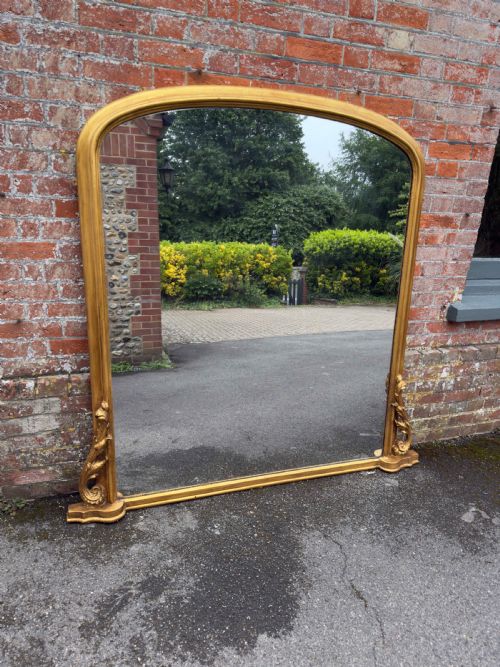
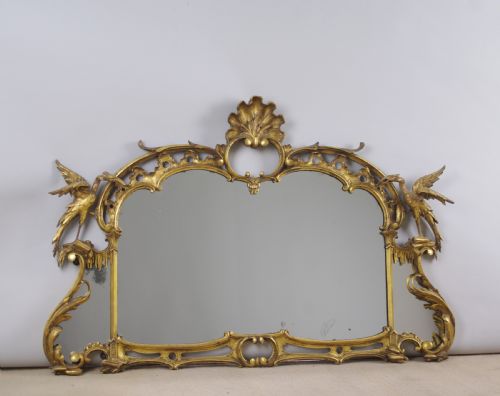
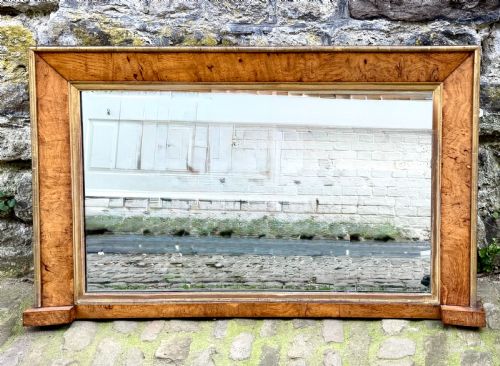
Most examples on this page date from the nineteenth century, spanning Victorian, Regency, and French Louis Philippe styles. They appear in grand arched formats, rectangular proportions, and cartouche or compartmental layouts.
Makers shaped these timber and composition frames to catch the firelight and visually expand the proportions of period drawing rooms. They survive today as focal points that retain the decorative vocabulary of Georgian, Rococo Revival, and neoclassical design.
How they were made
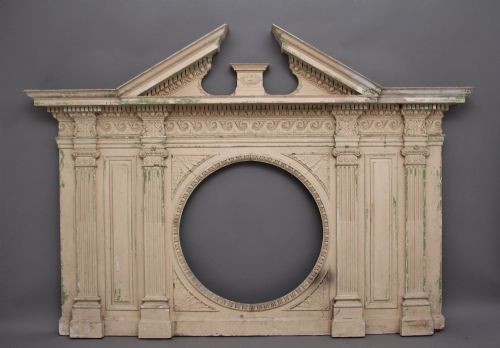
Craftsmen built the core structures from pine, oak, or mahogany, providing a stable foundation for heavy glass plates. Wood carvers shaped floral motifs, scrollwork, and architectural moulding directly into the timber or applied carved wooden sections.
Moulded composition and gesso layers were applied over wooden frames to build up crisp relief ornament such as acanthus leaves and beaded borders. These decorative surfaces received coats of gold leaf, paint, or parcel-gilt finishes to achieve a rich metallic sheen.
A watchful lion's head gazes down from carved gesso crestings on select nineteenth-century frames.
What varies in quality
The depth and crispness of the hand-carved detail set finer frames apart from simpler commercial output. Crisp gesso work and well-defined wooden mouldings reflect a higher degree of artisan skill during construction.
The integrity of the original gilding and the harmony between the wooden carcass and its decorative ornaments dictate the overall distinction of the piece. Superior examples retain their original mirror plates and integrated structural joinery without heavy modern intervention.
The Antique Mantelpiece Mirror Frame Glossary
- Overmantel mirror
- A large mirror specifically designed to hang or rest upon the mantelpiece above a fireplace. These frames often feature landscape orientations or tall arched tops suited to chimney breasts.
- Gesso
- A plaster-like mixture applied to wood frames to create a smooth surface for gilding or to be moulded into relief ornamentation. Artisans carved and built up this material to form intricate decorative motifs.
- Giltwood
- Timber that has been coated with a thin layer of gold leaf. This finish provided a durable, luminous surface that reflected candlelight in period interiors.
- Cartouche
- An ornamental frame resembling a scroll or folded sheet of paper, often enclosing a central motif. This sculptural shape appears frequently in French-influenced mirror designs.
- Compartmental mirror
- A mirror plate divided into multiple sections within a single frame, often seen in Regency designs. This layout adds architectural complexity to the glass surface.
Antique Mantelpiece Mirror Frame: Frequently Asked Questions
How do I hang a heavy overmantel mirror?
These substantial frames require secure fixing directly into masonry or heavy timber studs behind the plaster. Professional mirror hangers use robust steel brackets that take the full weight of the wooden carcass and glass safely.
Most antique overmantels also benefit from resting their base weight directly on the mantel shelf itself. This distributes the load downward while wall fixings prevent the tall frame from tipping forward.
What is a Louis Philippe mirror?
A Louis Philippe mirror originates from mid-nineteenth-century France and is characterised by a subdued rectangular shape with a rounded upper corners. These frames offer a restrained elegance without excessive ornamentation.
They fit comfortably into both traditional and contemporary interiors due to their clean architectural lines. The subtle beaded or channelled moulding defines the style without dominating the room.
Are the mirror plates original?
Older mirror plates often display characteristic signs of age such as light foxing, minor speckling, and gentle distortion. These natural imperfections confirm the historical age of the glass within the frame.
Clearer, uniform reflections can indicate a later replacement plate fitted during the long history of the piece. Collectors often value original mercury or early silvered glass for its authentic muted tone.
How do I clean a giltwood frame?
Delicate gilt surfaces require only very gentle dusting with a soft, dry artist brush or ostrich feather duster. Moisture and modern cleaning chemicals can strip the fragile gold leaf and underlying gesso.
Avoid pressing down on raised composition ornaments, as the historic material can become brittle over time. Regular light maintenance keeps dust from settling into the intricate recesses of the carved decoration.