

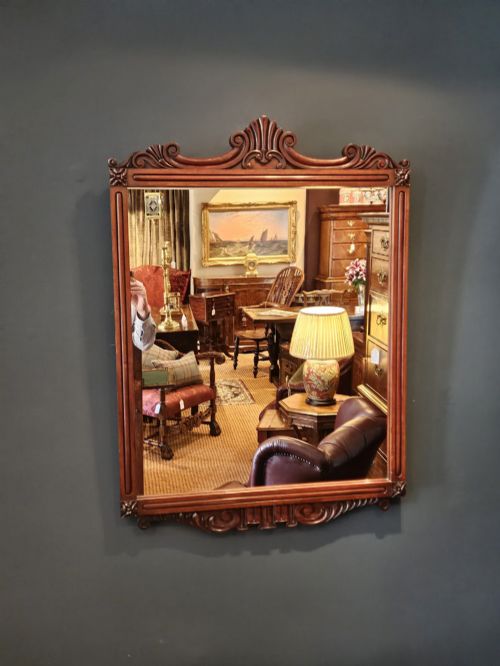


Carved Wooden Hallway Mirror
A carved wooden hallway mirror brings both function and presence to an entrance, combining timber frames with glass to anchor the space.
Carved Wooden Hallway Mirror
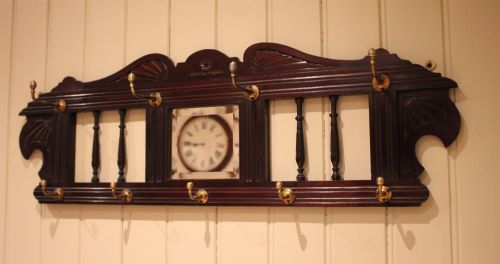
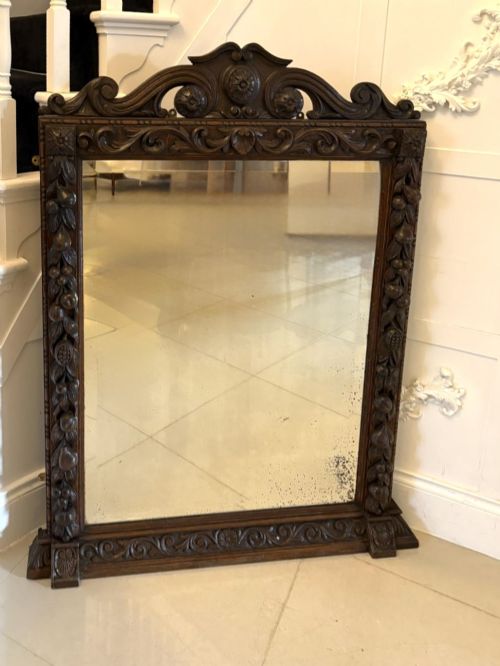
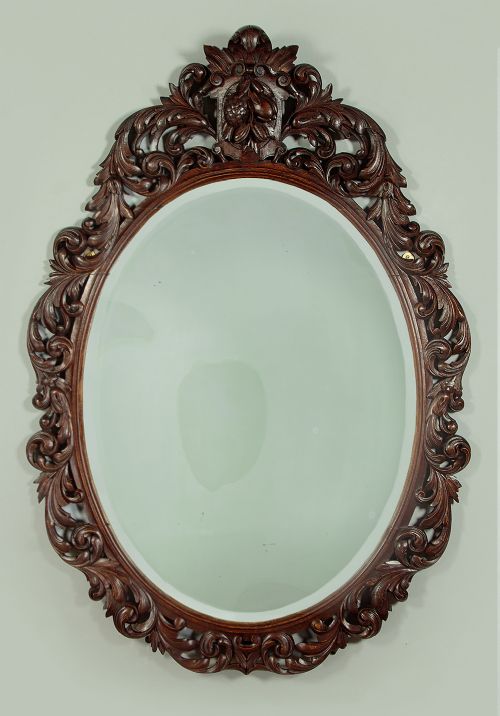
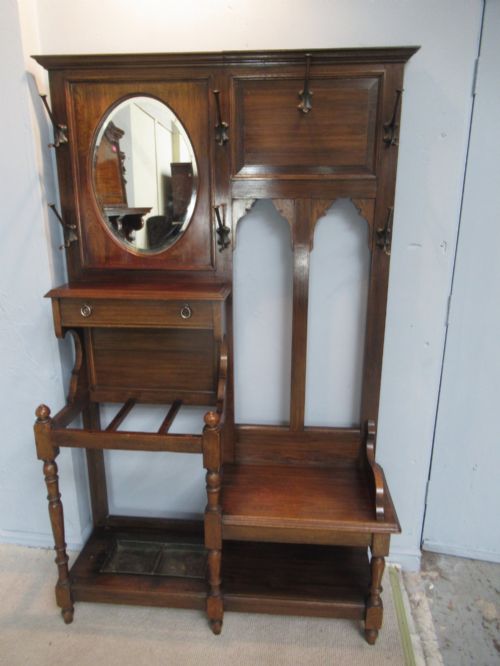
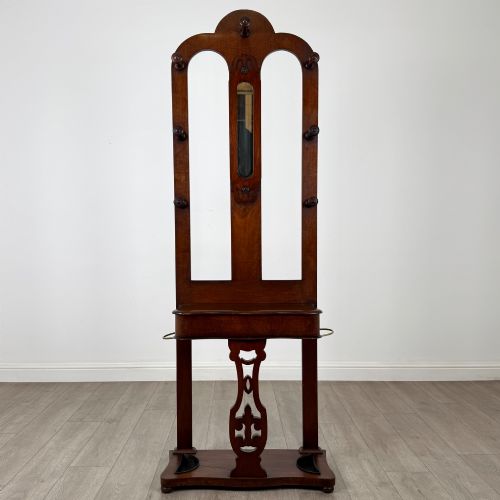
A carved wooden hallway mirror appears in various configurations, most frequently as an oak wall mirror or a mahogany coat rack designed for an entrance.
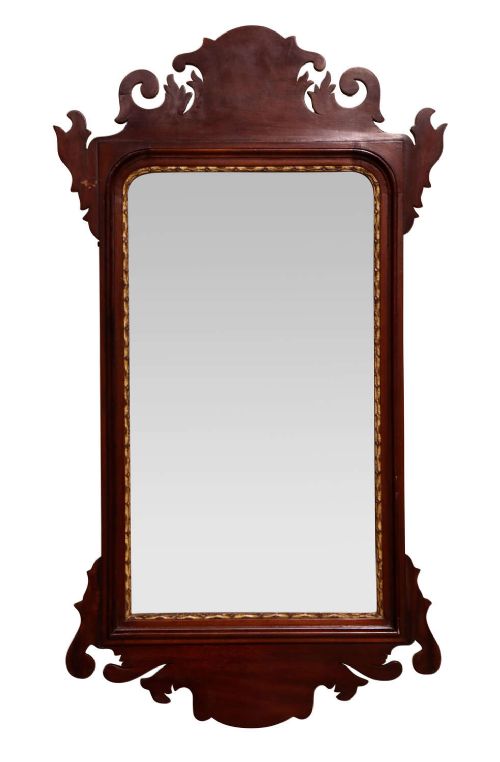
The pieces on this page span the Victorian, Edwardian, and Art Deco periods, alongside earlier Georgian and Queen Anne styles.
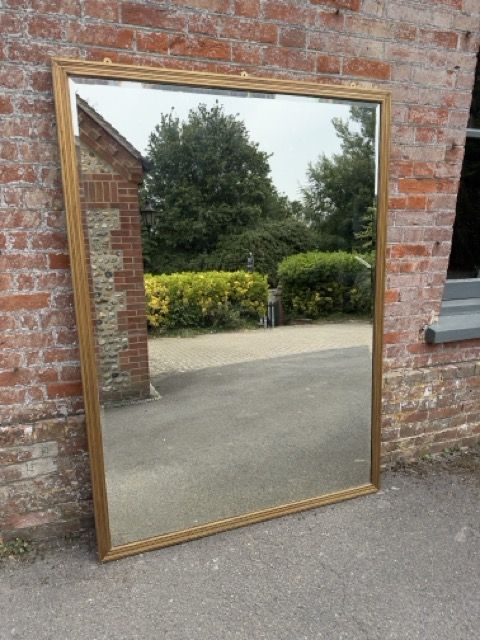
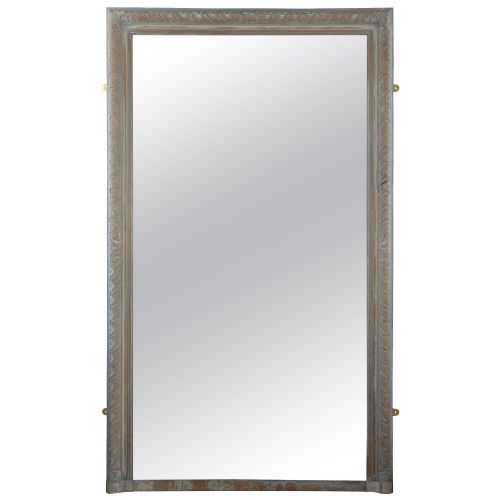
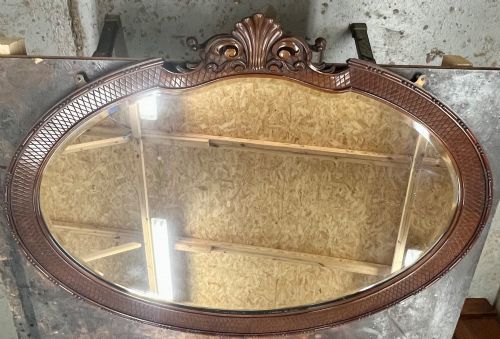
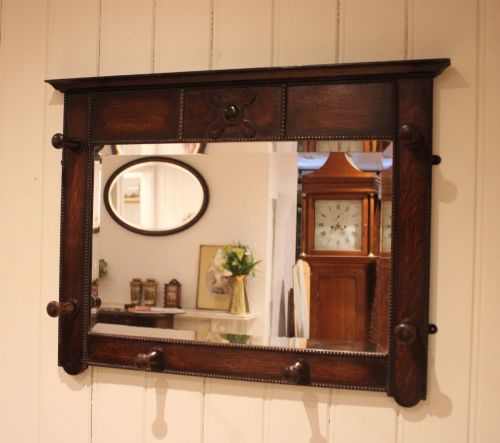
Buyers will encounter simple oval frames, large rectangular wall mirrors, and functional hall stands fitted with brass hooks and shelves.
Materials and Construction
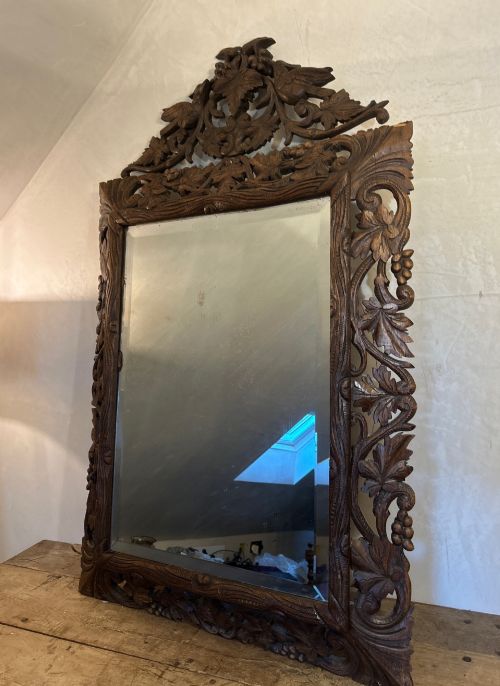
Craftsmen utilised solid timbers such as oak, mahogany, and walnut, often shaping the wood with deep relief carving or fretwork.
Mirrors frequently incorporated functional hardware including brass coat hooks, cast iron elements, and wooden shelves for everyday utility.
Judging Quality
The distinction between standard examples and superior pieces rests on the depth and crispness of the wood carving, alongside the quality of the timber grain.
Proportion and execution define the hierarchy, where well-balanced frames with integrated brass fittings and bevelled glass plates demonstrate higher workshop capability.
The Carved Wooden Hallway Mirror Glossary
- Fretwork
- Openwork ornamentation cut from a thin board of wood. This technique creates intricate geometric or scroll patterns on mirror frames.
- Pier mirror
- A tall mirror designed to hang on the wall between windows. These pieces often feature matching console tables or shelves beneath them.
- Overmantle mirror
- A wide mirror intended for placement above a fireplace mantel. Many examples from this selection share similar proportions to large wall hanging mirrors.
- Bevelled plate
- Glass with an angled edge polished around the perimeter. This treatment adds depth and refracts light across the room.
Carved Wooden Hallway Mirror: Frequently Asked Questions
How do I hang a heavy oak mirror safely?
Heavy wooden frames require secure wall fixings distributed evenly across the back structure. Utilising appropriate wall plugs and screws matched to your wall type ensures stability.
Professional mirror plates or heavy-duty wire rated for the weight of the timber and glass provide the safest suspension method in a busy hallway.
What is the difference between an Edwardian and a Victorian hall stand?
Victorian hall stands generally display heavier proportions, darker carved oak or mahogany, and ornate detailing such as Rococo or Chippendale revival motifs.
Edwardian examples often present a lighter aesthetic with simpler lines, reflecting a shift in domestic interior taste around the turn of the twentieth century.
Can I use a hallway mirror in a bathroom?
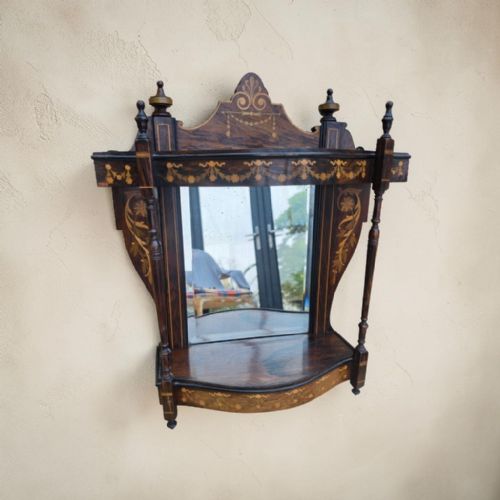
Certain compact wall-hanging mirrors with shelves or cabinets originate as bathroom shaving mirrors from the Edwardian era. Checking the backboards and timber treatment helps determine suitability for humid environments.
Unsealed antique wood requires careful placement away from direct moisture to preserve the finish and the silvering on the glass plate.
How do I care for antique wood and glass?
Cleaning the wooden frame involves dusting with a dry microfibre cloth and applying appropriate wax sparingly to nourish the timber grain. Avoid modern silicone sprays that build up over time.
Glass plates respond best to standard glass cleaner applied to the cloth rather than directly to the surface, preventing moisture from seeping behind the frame edge.